


 INTERNATIONAL
INFORMATION AND ANALYTICAL
COMMUNITY


+ Join
Support INTERNATIONAL



Valeriia Kostiuchenko, A student of the Faculty of History at Taras Shevchenko National University of Kyiv. Researcher of the history of Lithuania and Central and Eastern Europe.

Denys Klymenko, Specialist in the Middle East and North Africa. Author of the “MENAlysis” project.
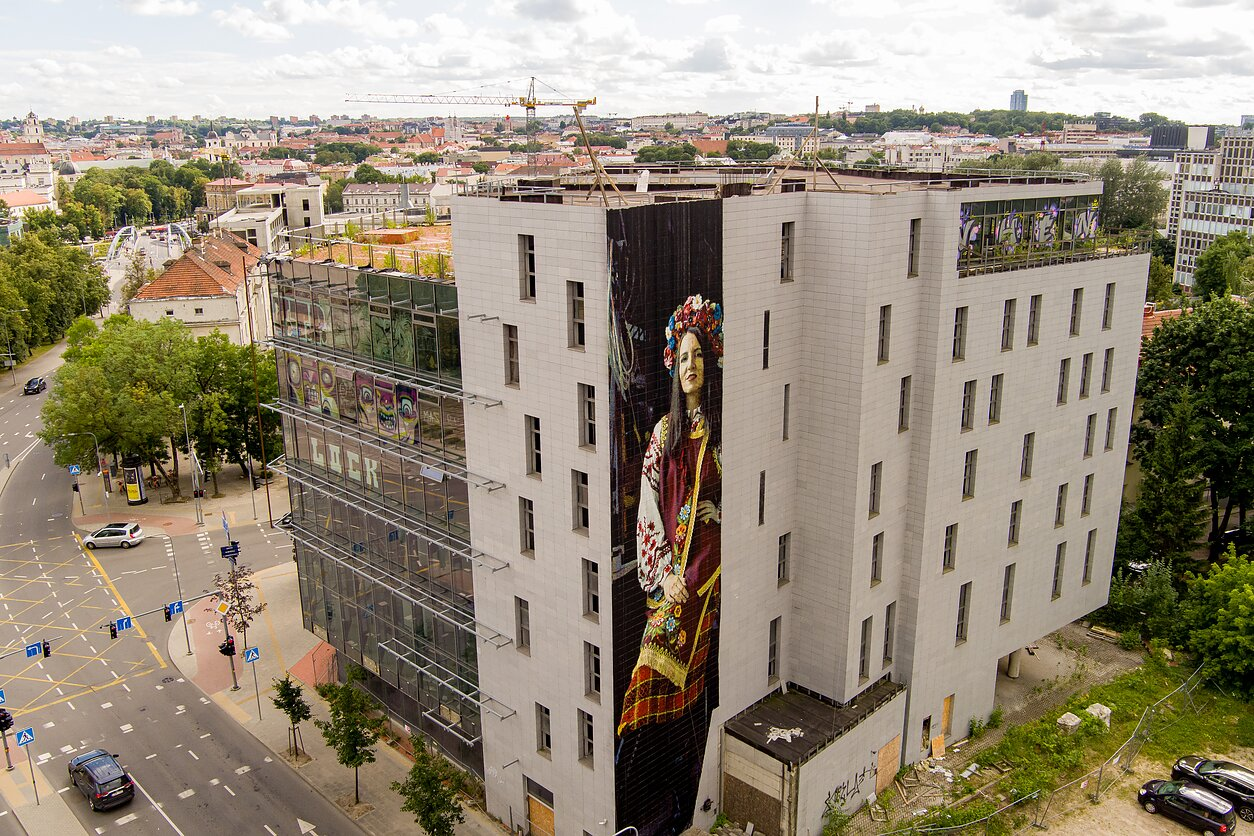 House of Moscow in Vilnius. After 2022, it was decorated with a mural "Do Peremogi / Iki Pergalės" in support of Ukraine. | D. Umbraso / LRT nuotr
According to the conclusions of the inspection, the building was erected with violation of the height and density of buildings, which was the first formal reason for the cancellation of building permits. It visually "overlapped" the panorama of the old city. The Moscow House emphasized the ambitions of the Russian Federation to dominate the Lithuanian capital, but this was still an assumption. Nevertheless, this building posed other information-related threats to Lithuania, especially against the backdrop of the escalation in the mid-2010s and now Russia also uses any cultural object in Europe as its means of information influence.
The idea of the House of Moscow in Vilnius has been developing since 2004, after the arrival of the then mayor of Moscow Yuri Luzhkov in the Lithuanian capital. The building was supposed to become the center of cultural and business cooperation between Lithuania and Russia, aimed at developing good-neighborly relations , when all the leaders of the states of the Western world were sincerely convinced that autocratic tendencies would disappear in Russia and the past conflicts of the Cold War would be forgotten. At the same time, a similar project of the House of Vilnius in Moscow was planned.
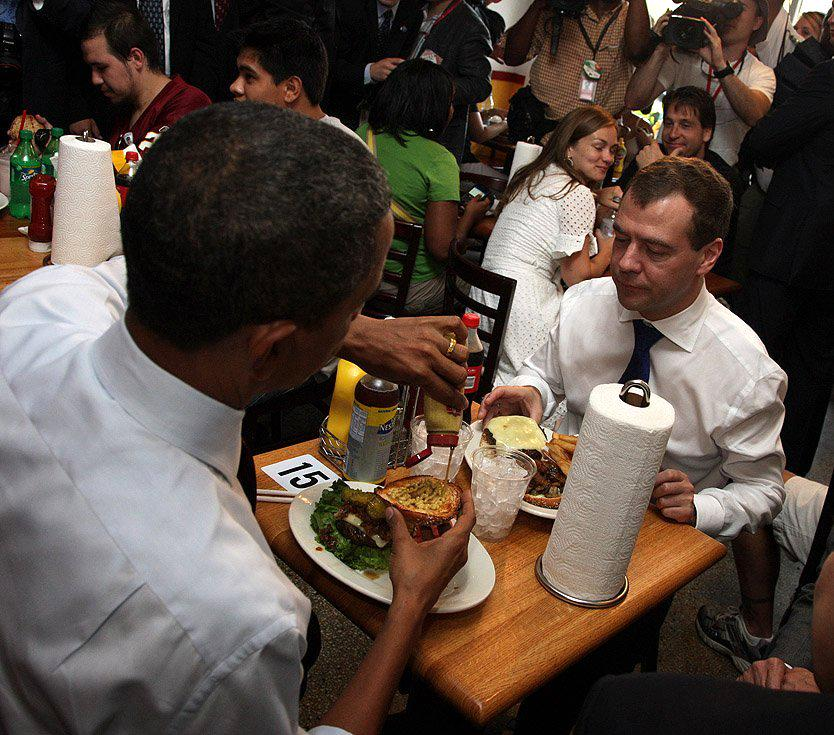 Russian President Dmitry Medvedev eats at Ray's Hell Burger with U.S. President Barack Obama in Arlington, Virginia, 2010. Mandel Ngan, AFP
Even before 2014, the Russian embassy in the Czech Republic, together with Rossotrudnichestvo, organized a scheme according to which hundreds of thousands of euros earned from renting apartments did not go to the budget. Concerns have been raised that the unfinished building could serve as a platform for Russian influence and propaganda, as well as coordinated pro-Russian rallies in the German capital and financed the trips of activists to the territory of ORDLO in Ukraine. In their reports, analysts pointed out that quite often persons affiliated with the FSB or the Foreign Intelligence Service of the Russian Federation were appointed to key positions in "Russian houses".
Favoritism towards these buildings was explained simply: secrecy, Russia could appeal to "oppression" in the event of blocking the work of cultural institutions, the status of diplomatic immunity, as well as simplified schemes for financing ultra-radical eurosceptic movements in the European Union, such as the "National Rally" of France or the "Alternative for Germany".
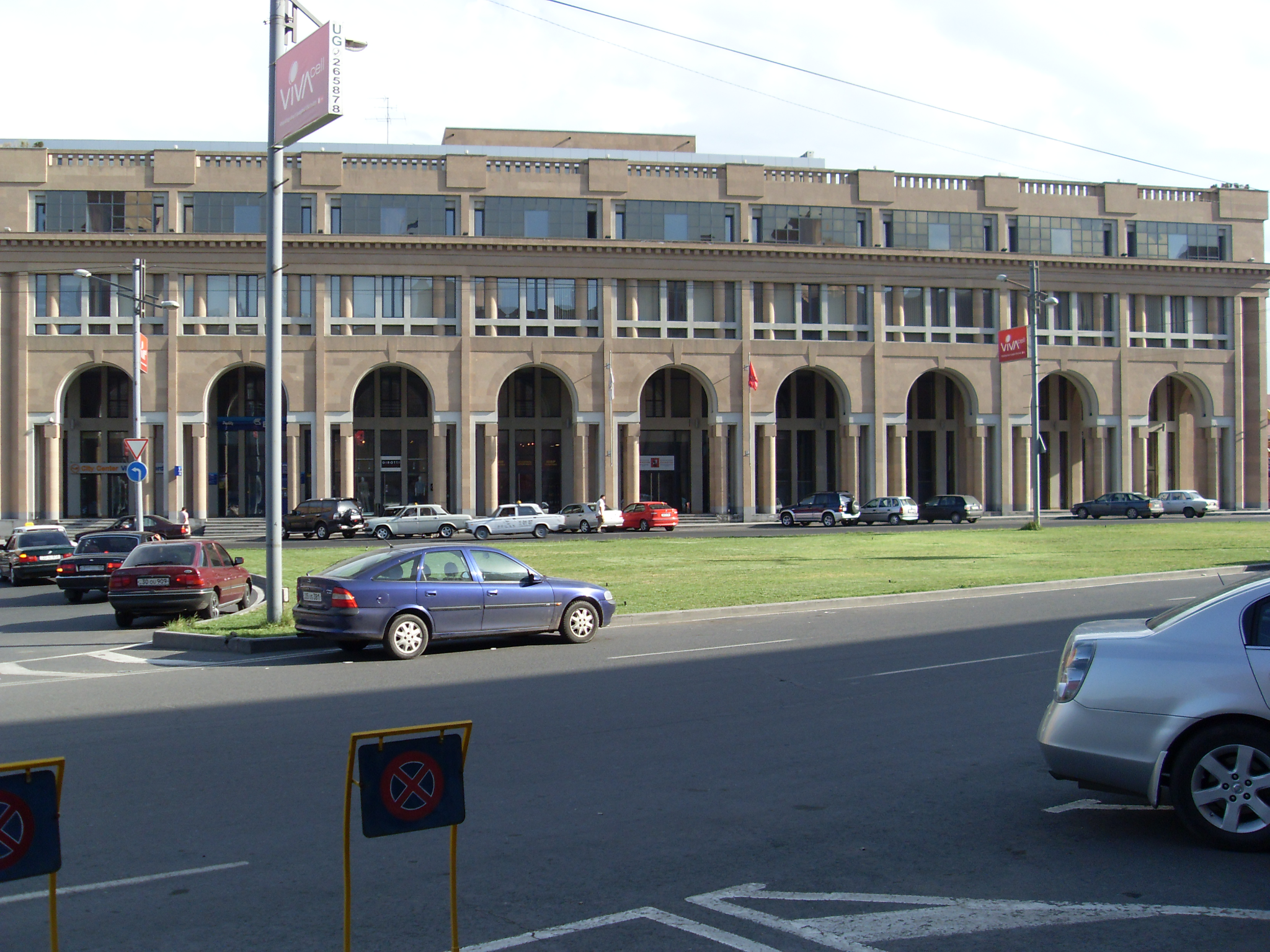 Moscow Cultural and Business Center "House of Moscow" in Yerevan, Armenia
In December 2016, the Vilnius City District Court declared the building permit invalid. The building remained unfinished and without a definite status for the following years.
With the beginning of Russia's full-scale war against Ukraine in 2022, the perception of the House of Moscow in the center of the Lithuanian capital has changed significantly. The unfinished construction and the question of its future fate have become of critical importance for the national security and state policy of Lithuania. At the same time, the object became the subject of active discussion in the public and political space, emphasizing the symbolic aspect of its presence in the capital. Similar actions were carried out by most EU member states, and after mass closures or the introduction of strict monitoring in 2022-2023, Lithuania decided to act similarly.
If the symbolic meaning of the building has been transformed, and in public discourse it increasingly appears as an element of the undesirable presence of the aggressor state, does this mean its automatic and rapid removal? It is at this stage that it becomes obvious that a change in the political context does not always equal a change in legal mechanisms.
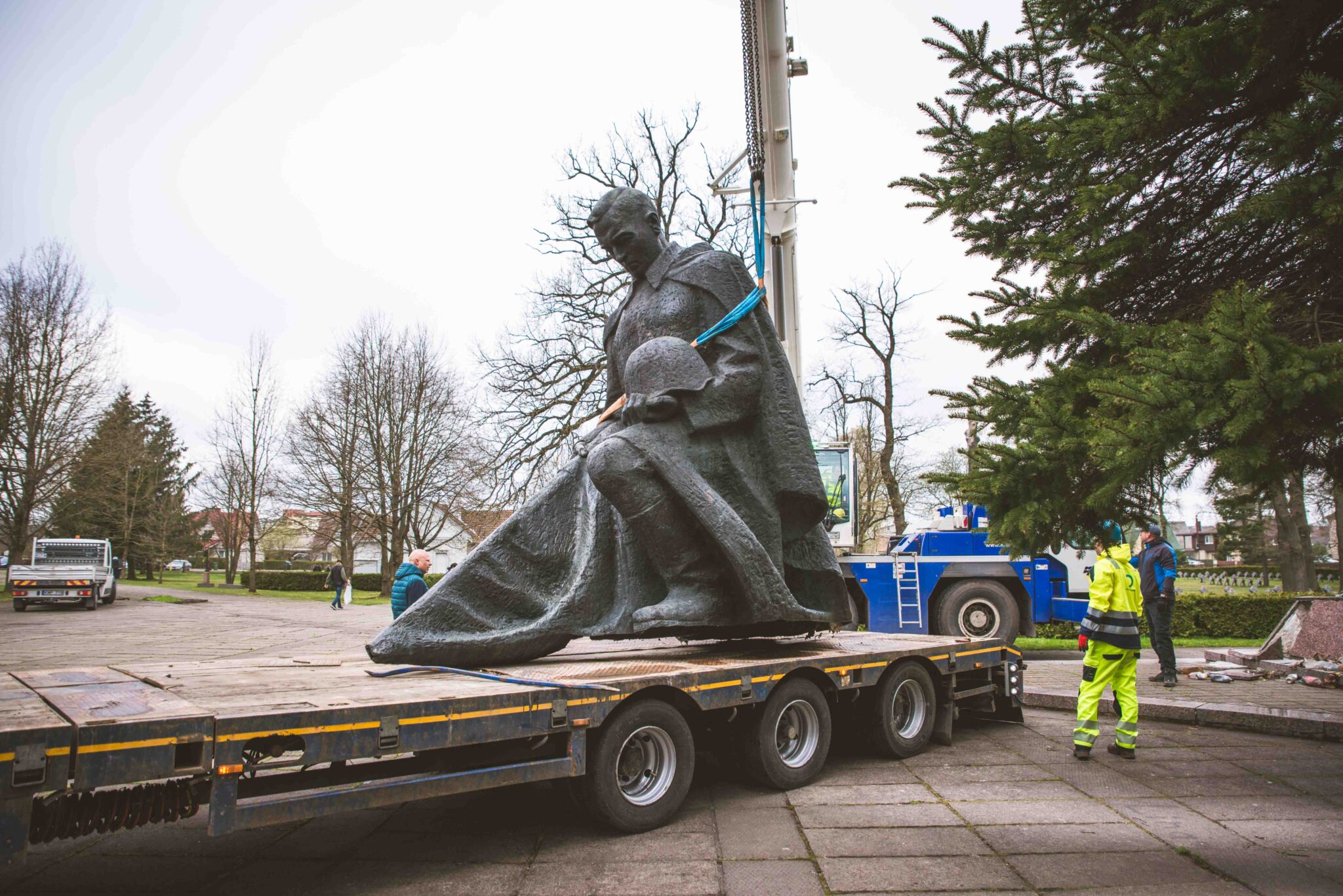 The dismantling of the Warrior Monument in Kaunas in Lithuania is another example of the fight against Russian cultural influence. April 2022
Because any work of state bodies falls under the law on public procurement, which obliges to conduct a public tender. It is this procedure that not only regulates the procedure for performing work, but also ensures transparency and accountability of public spending, while at the same time meeting the standards of Lithuania and the EU for the management of public resources. However, it was at this stage that practical difficulties arose, which significantly slowed down the dismantling of the House of Moscow.
Despite the court's decision, the inspectorate was unable to complete the procedure for selecting a contractor for the dismantling work for several years. Thus, with the announcement of the first tender, the proposals were rejected, since some companies did not meet the requirements for safe and professional performance of complex dismantling works in the city center, while others did not submit the necessary documents.
In addition, litigation around tender decisions also led to delays. Defenders of individual participants appealed against the rejection of their proposals, which led to the temporary suspension of the tender procedure until a final decision was made. For example, this situation developed with the rejected tender application of Vilniaus BDT, after which the Regional Court of Kaunas ruled on the illegal exclusion of the company from the tender.
After long disputes with the company "Vilniaus BDT", which was first eliminated and then won a lawsuit against the building inspectorate, the Lithuanian authorities took a radical path. Special legislative acts were adopted that allow the demolition of objects that threaten national security without the consent of the owner, if he ignores the instructions.
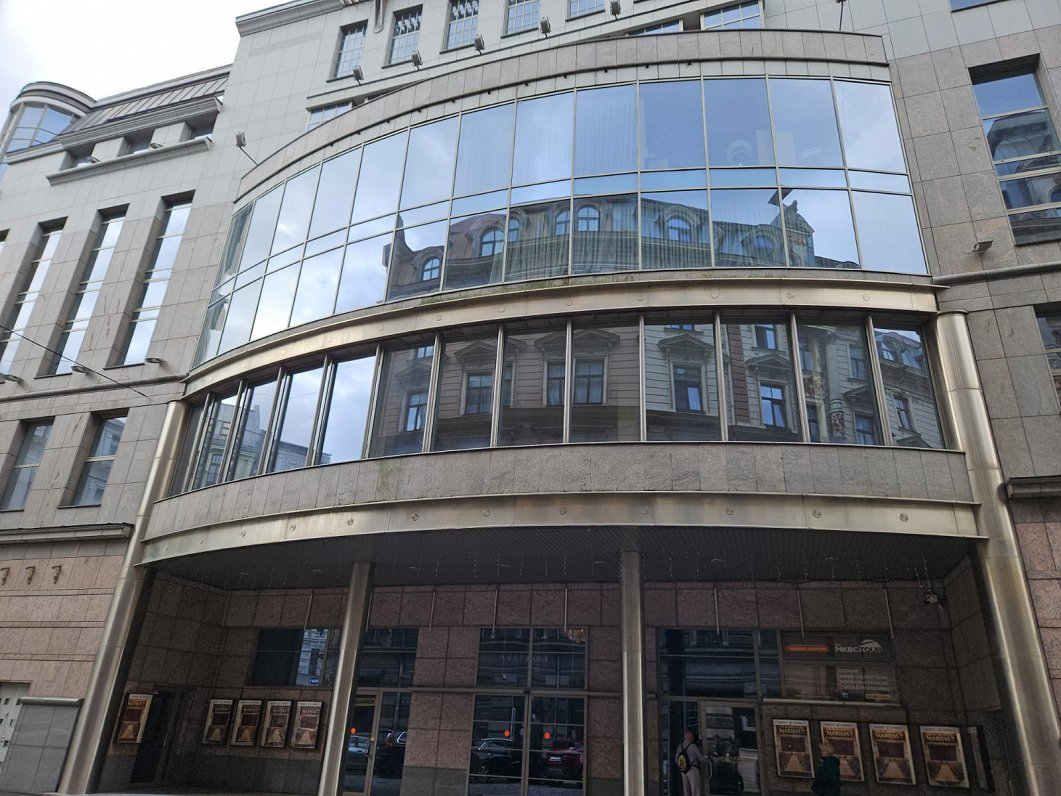 House of Moscow in Riga, Latvia
The cost of the dismantling is estimated at about 2 million euros. Since the owner (Moscow City Hall through the cultural center) refused to pay, Lithuania has applied a mechanism for the recovery of funds through seized Russian assets or through the future sale of the land plot. As of March 2026, Lithuania has not yet completed the dismantling of the building. Nevertheless, proposals have already begun to appear in the public information space of the country name this place after Lithuanian volunteers or give a name related to Ukraine, thus interrupting the "Russian imperial narrative".
As a result, a paradoxical, but indicative situation for the democratic system is formed: the object is politically condemned, its symbolic meaning is transformed during the war, but the actual demolition is delayed due to legal restrictions. This delay does not indicate a lack of political will, but rather demonstrates the limits within which this will can be realized.
In this context, symbolic objects become points of tension between politics and law, testing the ability of the state to simultaneously ensure national security and adhere to its own legal principles. Such dilemmas are not limited to Vilnius. In Central and Eastern Europe, such objects have often become and are the subject of complex political and legal decisions.
For example, in Riga, the Latvian Saeima adopted the law on the nationalization of the House of Moscow for reasons of national security. The state put the building up for several auctions, but potential buyers did not participate due to the status of the object and the risks associated with international disputes. As a result, the building still remains unsold, demonstrating that a political decision to remove an unwanted symbolic object does not guarantee its rapid implementation. Nevertheless, the Latvian government said that the funds from the sale will go to support Ukraine.
Monuments and memorials of the Soviet era are usually regulated by laws on decommunization, supported by a clear state policy of remembrance, which identifies objects that symbolize the totalitarian past and regulates the procedures for their elimination, although not always everything is so simple – it all depends on the specific country and its legal and political practices. Accordingly, modern facilities associated with the Russian Federation are becoming both symbolically and legally complex. Their elimination requires a balance between political will, legal procedures and public perception, especially when it comes to the property of Russian citizens or legal entities.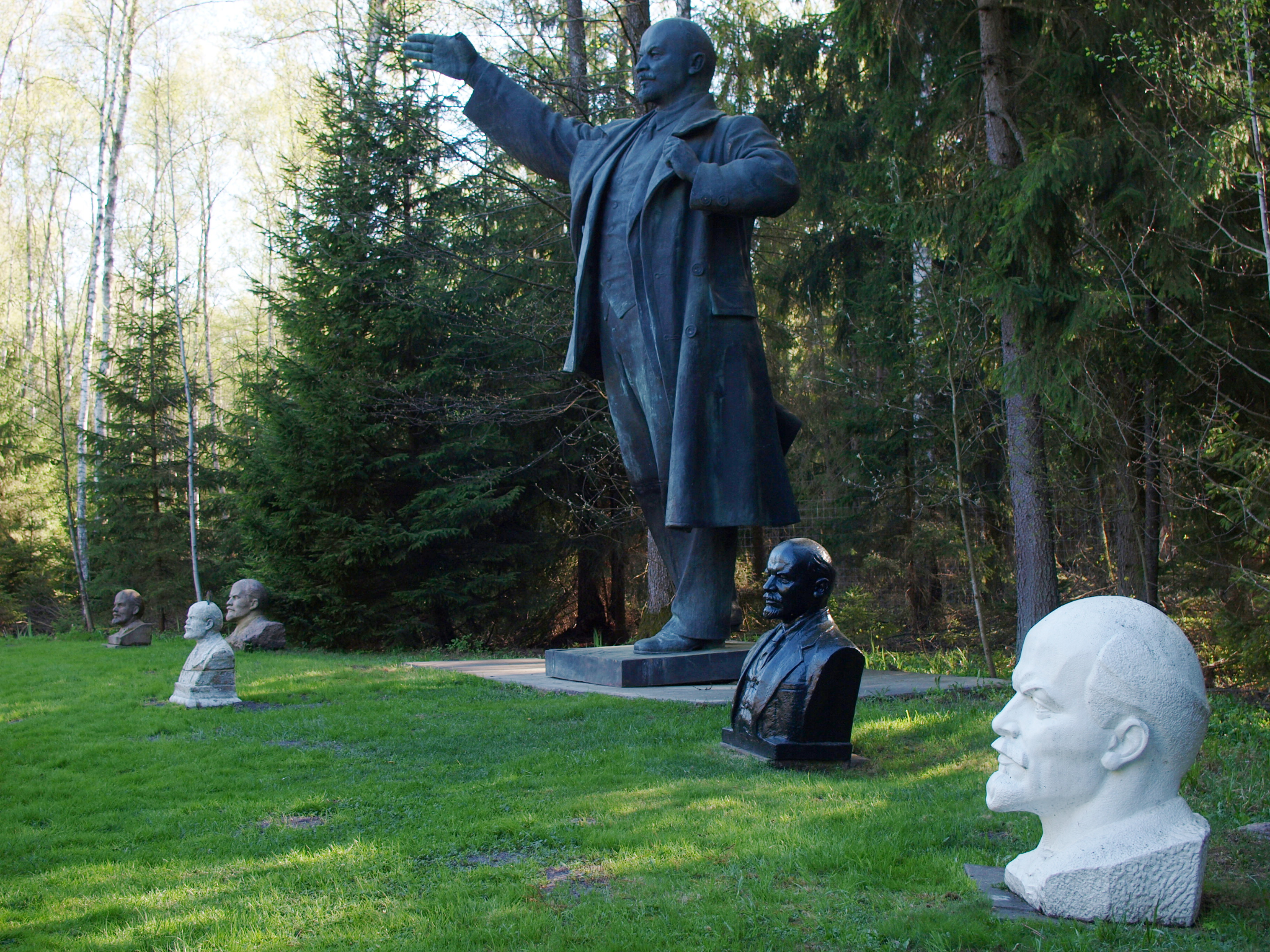 Open-air museum "Grūtas Park" in Druskininkai with collected dismantled Soviet monuments in Lithuania
The story of the House of Moscow in Vilnius is a vivid illustration of how democracy becomes a hostage to its own principles in the fight against hybrid threats. Although the facility is recognized as a direct threat to national security and an instrument of influence of the Russian special services, the legal system of Lithuania faces many obstacles on the way to complete dismantling. The need to comply with public procurement procedures, protection of property rights and the possibility of legal appeals by contractors create a legal vicious circle. This underscores a key dilemma: how to effectively defend against the aggressor without destroying the principles of the rule of law on which the EU rests.
In addition, this case demonstrates the problem of Europe's awareness of Russian "soft power". Projects that were presented as cultural exchange and good neighborliness in the 2000s turned out to be infrastructure nodes for financing radicals and coordinating propaganda twenty years later. The difference in the ease of dismantling Soviet monuments and the complexity of the disposal of modern objects of the Russian Federation lies precisely in the legal status: modern real estate is protected by international law and private interests much more strongly than memorials. In the end, the final dismantling of the building and its symbolic renaming in honor of volunteers or Ukraine should be not just the completion of long-term construction, but an act of ideological liberation of urban space from the symbol of Russian imperialism.
Valeriia Kostiuchenko, A student of the Faculty of History at Taras Shevchenko National University of Kyiv. Researcher of the history of Lithuania and Central and Eastern Europe.
Denys Klymenko, Specialist in the Middle East and North Africa. Author of the “MENAlysis” project.