


 INTERNATIONAL
INFORMATION AND ANALYTICAL
COMMUNITY


+ Join
Support INTERNATIONAL


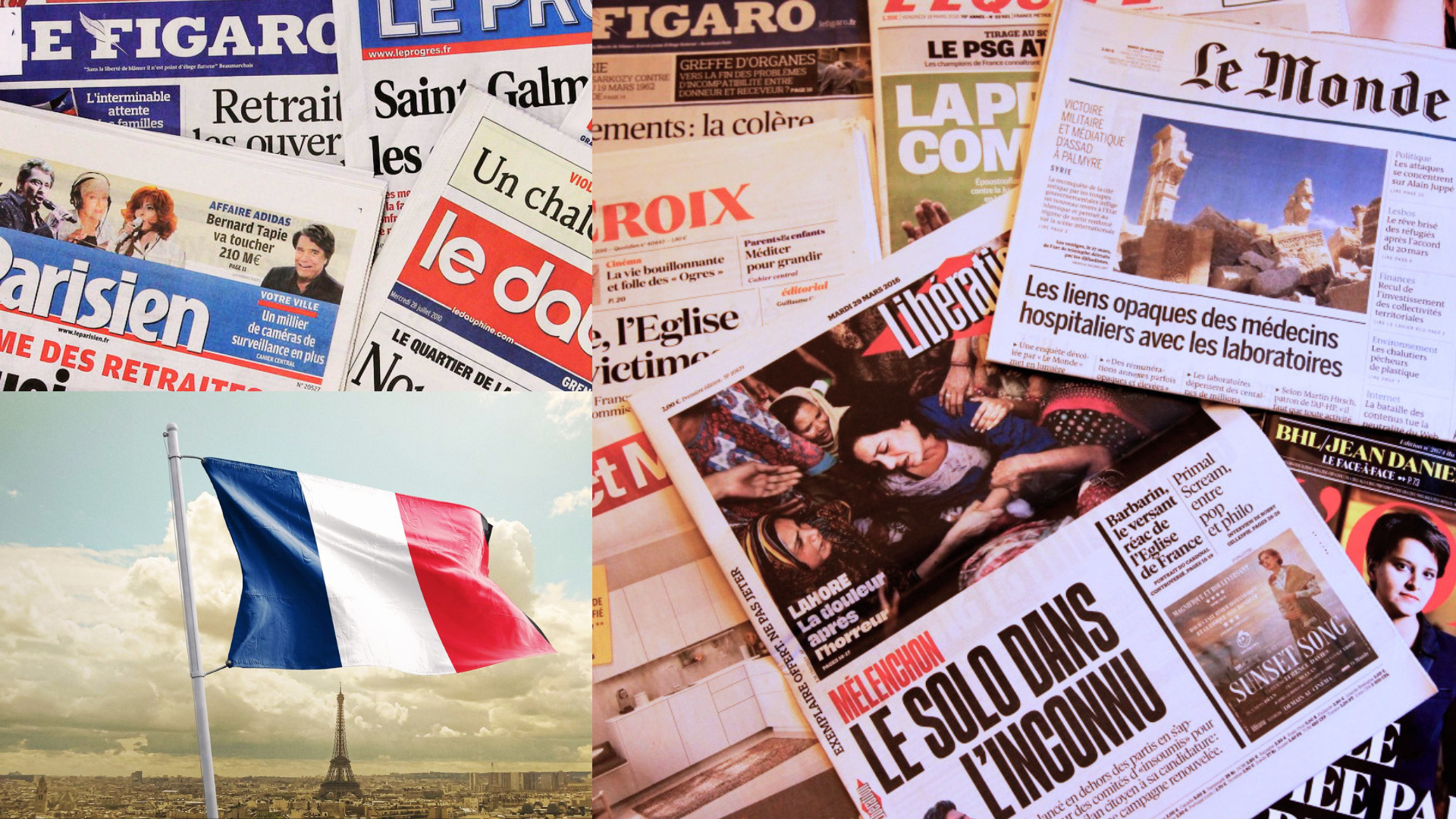 How French media shape the perception of the war: findings of a Resurgam study
How do leading French media tell their readers about events in Ukraine?
On 23 April, the Media Center Ukraine hosted the presentation of the results of a large-scale content analysis of French media conducted by the analytical community Resurgam.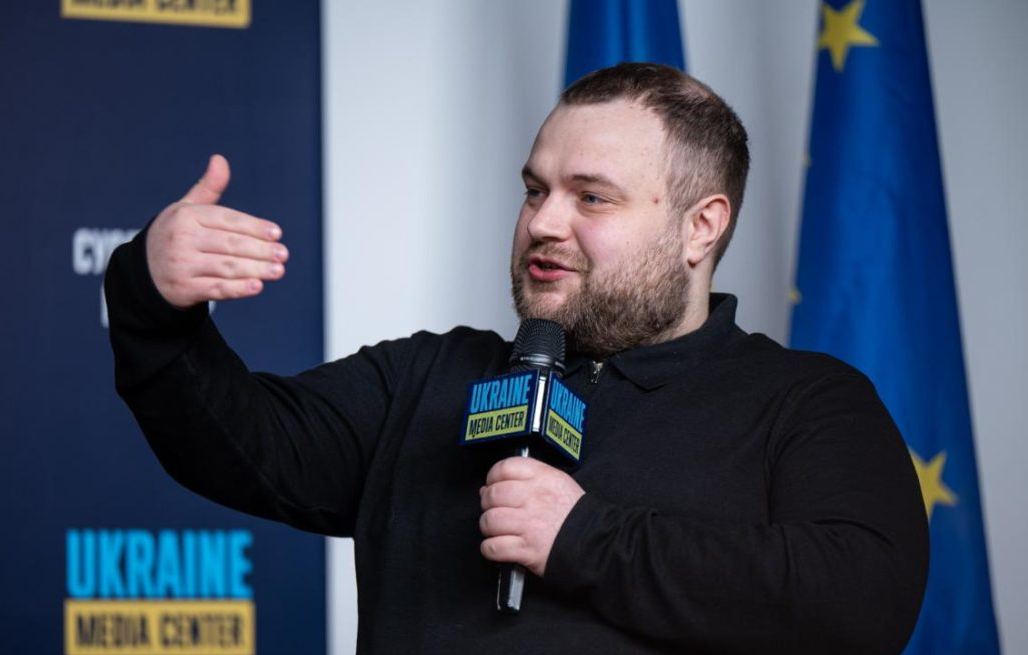 Dmytro Korniienko, founder of the Resurgam analytical community, during the presentation of the study at the Ukraine Media Center
As emphasized by Resurgam founder Dmytro Korniienko, the study does not claim to provide a comprehensive analysis of the French information landscape. Its aim is to identify key trends and potentially problematic practices in the coverage of the war that may influence the way the French audience perceives the Russo-Ukrainian context. This is why the sample includes media outlets that address different segments of society and have a significant impact on shaping public opinion.
Within the study, 3,893 articles published in 2024 were analyzed.
The analysts classified them according to their level of compliance with journalistic standards:
Green zone (50.5%) — high-quality and objective reporting. The highest scores were recorded for Le Point, Le Monde, L’Express, and Le Nouvel Obs.
Yellow zone (47%) — generally accurate texts, but with factual inaccuracies or a lack of context. Materials from Libération and La Provence most often fell into this category.
Red zone (2.5%) — articles with signs of manipulation or the reproduction of pro-Russian narratives. The lowest level of objectivity in this category was recorded for Le Journal du Dimanche.
From these 99 articles from the red zone:
57 were published without attribution or as agency/editorial content,
42 were authored and signed.
The team also compiled a list of authors who systematically violate journalistic standards, spread distorted information, and may contribute to the amplification of Russian narratives. This, in turn, affects how the French audience perceives Russia’s war against Ukraine.
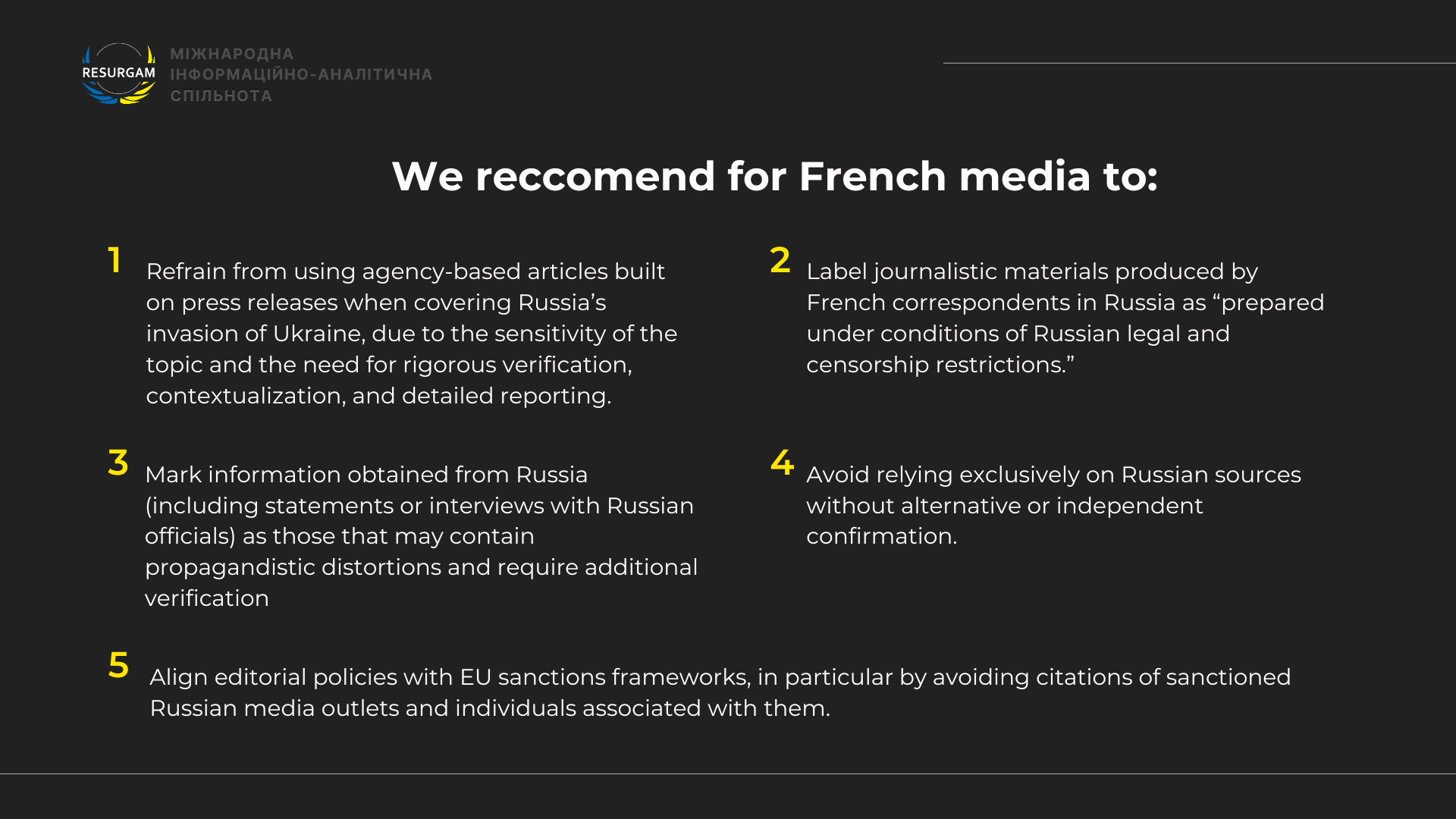
One of the key challenges identified by the researchers is media dependence on news agencies (including AFP).
The problem is not the news itself, but the lack of editorial context. Very often, media outlets simply relay press releases from Russian institutions or statements by Russian politicians without any explanation. For the reader, this appears to be a verified fact, while in reality it may be the direct reproduction of propaganda messages, notes Dmytro Korniienko.
As a result, such materials may be perceived as fully fledged editorial content, even though in practice they reproduce external narratives without critical processing.
This issue was also confirmed by one of the foreign journalists from Canada present at the presentation.
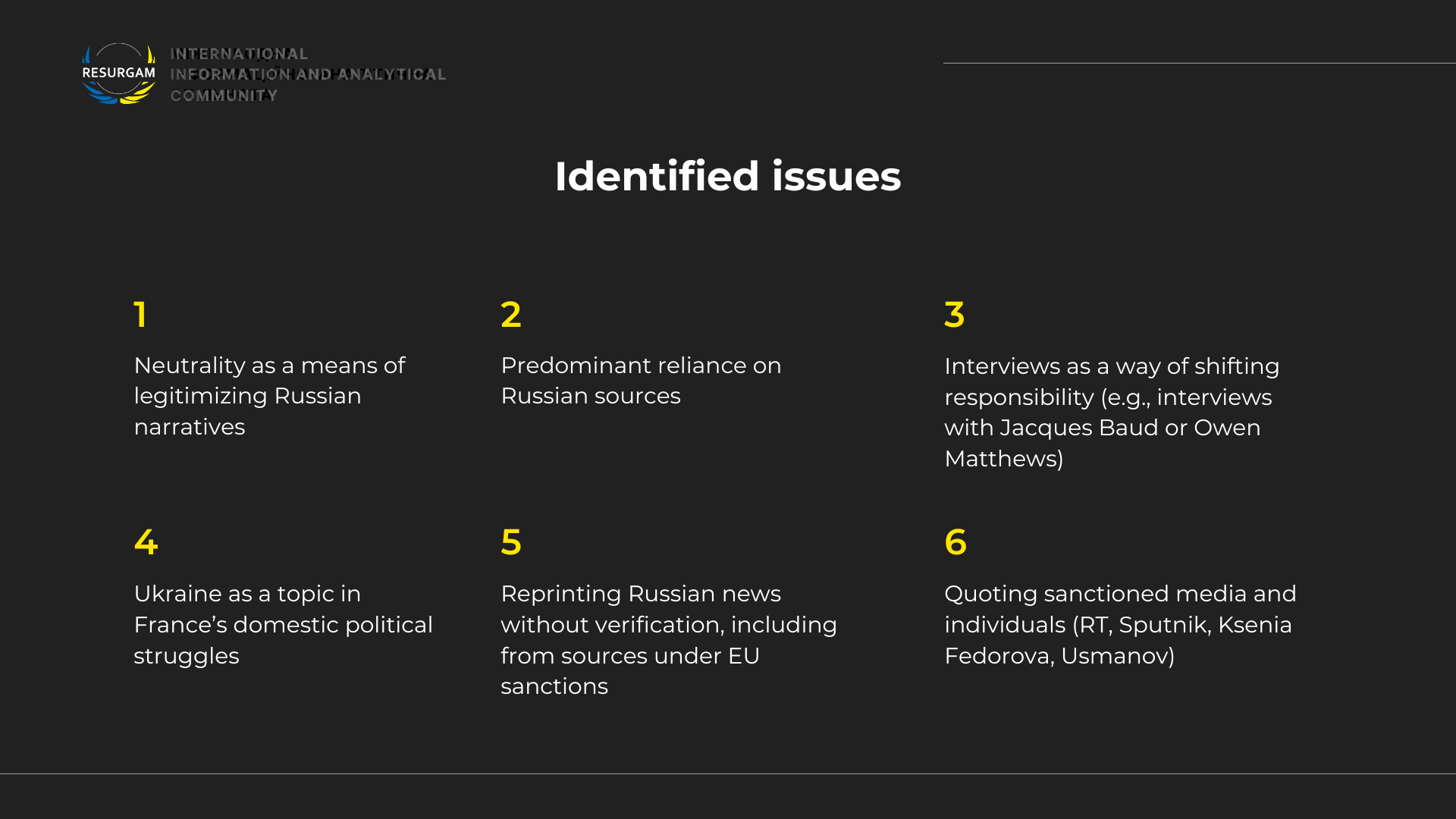
Among other identified trends, Dmytro Korniienko highlighted specific ways in which Russian messaging is legitimized:
False neutrality — attempts to present the aggressor and the victim as equal sides through the “two-sides” approach, despite the clear international legal definition of the status of the parties.
Mask of rationality — texts that begin by urging readers to “take a sober look” or “seek a peaceful solution”. Such materials are often authored by experts who are already under sanctions.
Another issue identified was the use of materials from sanctioned Russian media outlets, including RT and similar sources, as primary references, which directly or indirectly shape the information agenda.
At the same time, it is important to emphasize that the majority of French media outlets analyzed demonstrate a high level of journalistic standards.
The highest levels of objectivity were recorded for Le Monde, Le Point, L’Express, and Le Nouvel Obs.
Le Journal du Dimanche recorded the lowest level of objectivity, with a noticeable influence of ideological bias on its editorial policy.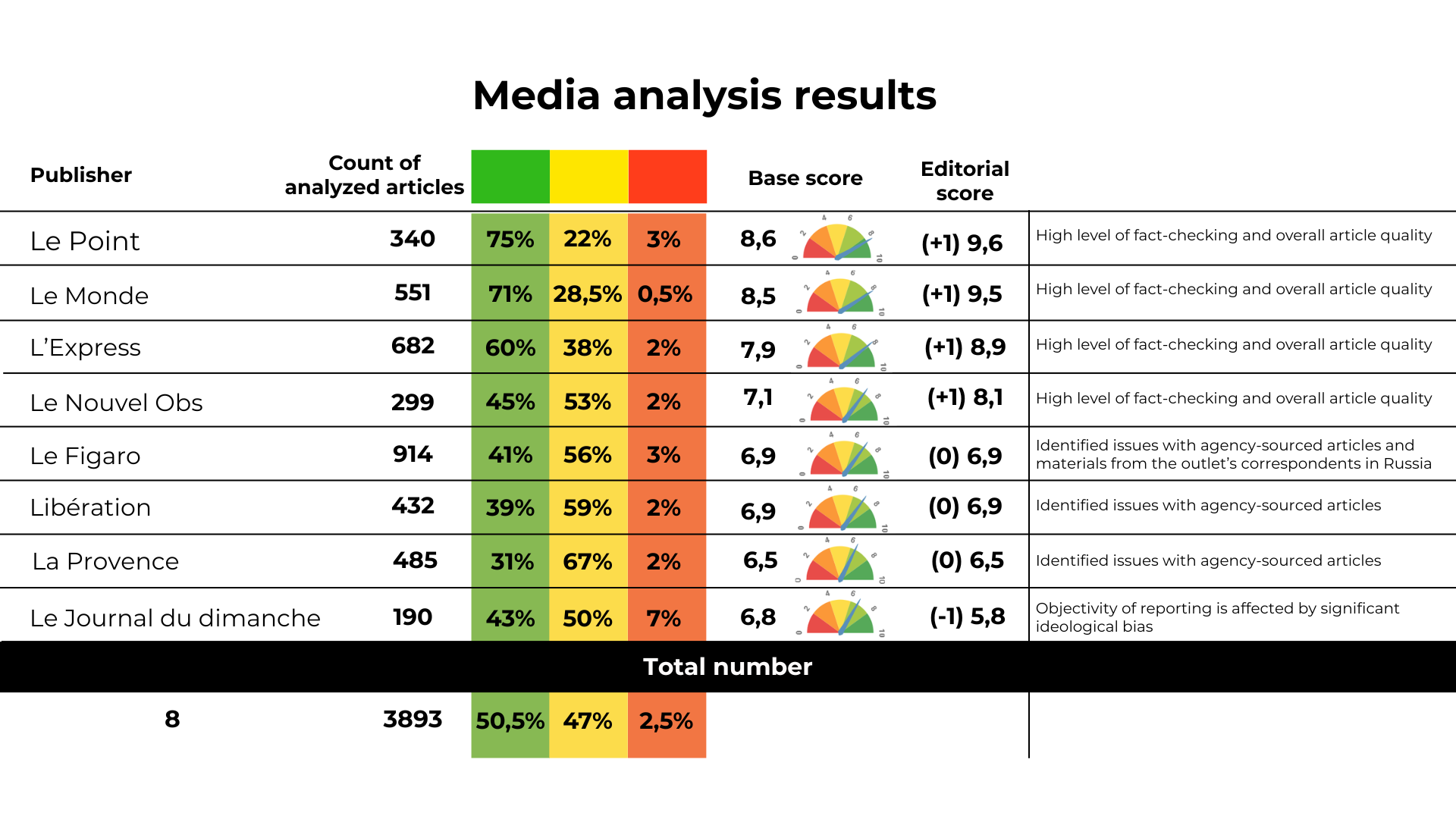
Russia’s cognitive warfare is waged for the attention and perception of European societies, on whose stance support for Ukraine largely depends. Such studies contribute to a better understanding of the mechanisms of information influence and the tools used in the external information space.
At the end, Dmytro Korniienko emphasized that the study is an initiative of the Resurgam community itself. It was carried out with the involvement of the team and volunteers and is funded exclusively from its own resources.
The research on Spain and France has now been completed, while work is currently underway on the analysis of media in Germany and the United Kingdom.
You may read about the research methodology on the website in the “Scoring methodology” section.
Full recording of the presentation.
Live stream with English interpretation.
Article on the Spain study: “Disinformation map. Results of the study on the quality of coverage of Russia's invasion in Ukraine in leading Spanish media outlets”.