


 INTERNATIONAL
INFORMATION AND ANALYTICAL
COMMUNITY


+ Join
Support INTERNATIONAL


Mykyta Nosik, an intern at the think tank Resurgam
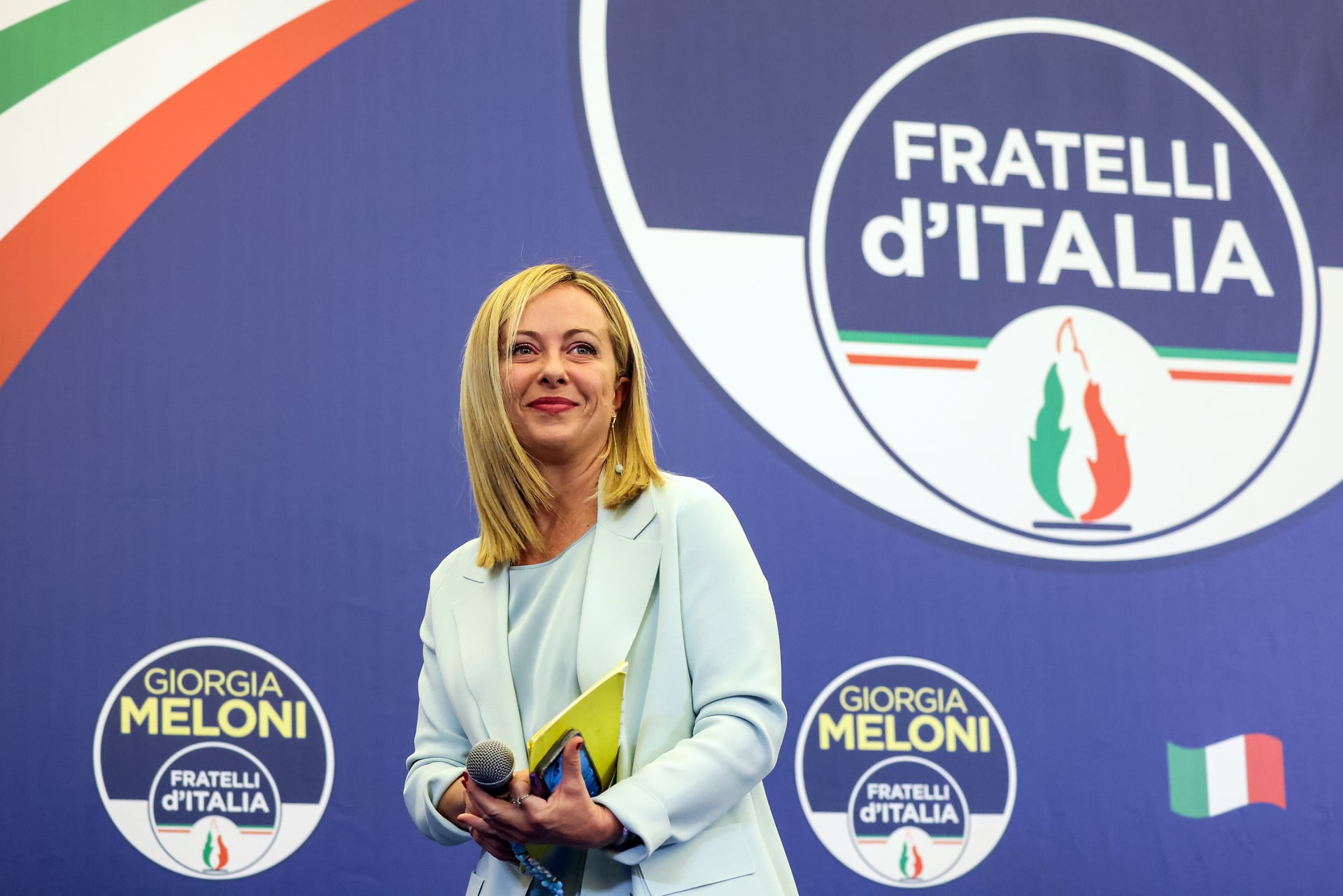 Prime minister of Italy Giorgia Meloni. Source
In 2027, Italy will hold parliamentary elections that will be among the most consequential political events in Europe this decade. They will determine not only the domestic course of the eurozone’s third-largest economy, but also the balance of power within the European Union amid the rise of populism, growing geopolitical fragmentation, and Russia’s ongoing war against Ukraine.
The key figure in the current government, which will seek re-election, remains prime minister Giorgia Meloni, the first woman to hold the office in Italy’s history. She has led the government since October 2022, following snap parliamentary elections held after President Sergio Mattarella dissolved parliament. Meloni’s coalition comprises three parties from the right and centre of the political spectrum: Brothers of Italy (Fratelli d’Italia, FdI), Meloni’s own party; Matteo Salvini’s League (Lega); and Antonio Tajani’s Forza Italia (FI).
During her four years in office, Meloni has pursued a pragmatic approach to governance, combining moderate right-wing populist rhetoric with cautious economic policies. Her government has made active use of EU funding under the National Recovery and Resilience Plan (NRRP/PNRR), helping to sustain investment activity despite the broader economic slowdown. Among the key achievements of the Meloni government is the reduction of youth unemployment to a historic low of 15.1% in May 2026.
The government has also introduced reforms to the tax system:
a reduction in personal income tax (IRPEF) for salaries in the €28,000–€50,000 range,
an extension of parental leave, which, since 2026, employees have been able to take flexibly until their child reaches the age of 14.
In the area of migration, the government reports a 54% decrease in irregular migration in the first half of 2026, pursuing a policy that the prime minister herself has described as a “model to follow” — combining strict border controls with pragmatic legal migration to meet labour market needs. In particular, the government has approved nearly 500,000 work visas for “non-EU citizens” for the 2026–2028 period, while the annual Decreto Flussi quota for 2026 (a government regulation that sets quotas for the legal entry and employment in Italy of citizens from countries outside the European Union), stands at 195,000 workers, up from 151,000 in 2024.
At the same time, the government has faced serious domestic political challenges. Its biggest setback was the failure of the 2026 constitutional referendum on judicial reform, in which a majority of Italians voted against the government’s initiatives. This triggered a wave of resignations from the cabinet, including that of tourism minister Daniela Santanchè, who was under investigation on charges of fraud and falsifying accounting documents. The referendum defeat created a “snowball effect” — increasing tensions within the coalition and intensifying criticism from the opposition.
In addition, the Meloni government has come under international pressure over the rule of law. According to the Liberties Rule of Law Report 2026, Italy was placed in the “dismantlers” category — countries where the rule of law is being systematically and deliberately weakened. The report documents growing political pressure on the judiciary, restrictions on civic space through the so-called “Security Decree”, as well as increased interference in the work of the media. CILD’s analysis confirms that Italy is among the five “dismantlers” of the rule of law, alongside Hungary, Slovakia, Bulgaria and Croatia, creating additional risks for its relations with Brussels.
As of today, Italy’s political landscape is marked by fragmentation within the right-wing camp and the rise of new political players, making the election outcome considerably more difficult to predict. As of July 2026, the governing coalition is experiencing a period of stagnation and declining support. According to aggregated data from PolitPro, the parties’ ratings are as follows: FdI — 27.4% (the leader, but by a narrow margin), the Democratic Party (PD) — 21.4%, the Five Star Movement (M5S) — 12.7%, FI — 7.8%, the Green and Left Alliance (AVS) — 6.3%, Lega — 6.1%, Futuro Nazionale — 6.0%, and Azione — 3.1%. According to PolitPro’s corresponding parliamentary projection, the current governing parties may win around 46.5% of the seats, meaning they would not secure an absolute majority, without taking into account the potential impact of the new electoral system.
At the same time, some July polls point to a more competitive situation. According to EMG data from 20–21 July 2026, FdI stood at 24.6%, PD at 21.2%, M5S at 12.5%, Forza Italia at 8.3%, Lega at 7.7%, and Futuro Nazionale (FN) at 7.2%.
Thus, one year ahead of the parliamentary elections, Italy’s political landscape is marked by fragmentation within the right-wing camp and the rise of new political players, making the election outcome considerably more difficult to predict.
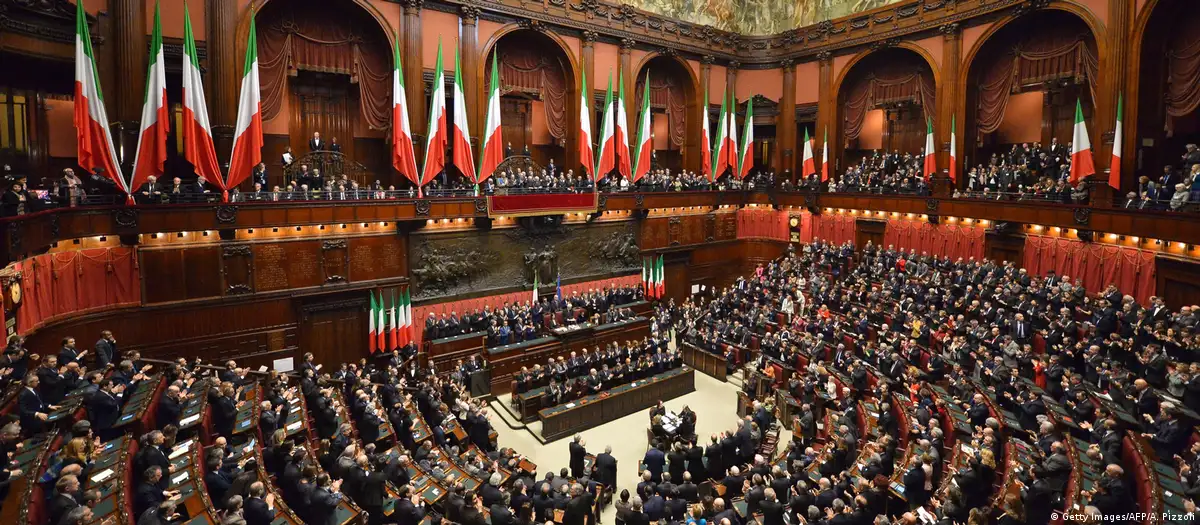 The parliament of Italy. Source
As we can see, Giorgia Meloni’s Brothers of Italy remains the country’s most popular political force. Its strategy is based on a combination of nationalist rhetoric, social reforms and a pragmatic foreign policy. Meloni presents herself as a “moderate right-wing” leader capable of governing the country amid challenging geopolitical conditions.
At the same time, Matteo Salvini’s right-wing populist party, Lega (the League), is experiencing an identity crisis. During its time in government, the party has lost a significant part of its radical base, prompting its most prominent figure, Roberto Vannacci, to leave the party. Its polling rating has fallen to 6%, a catastrophic figure compared with its peak in popularity in 2018–2019.
The centre-right party Forza Italia (“Go Italy”) retains electoral support of around 7.8%. The party is oriented towards European integration (it is a member of the EPP) and, importantly, often acts as a “brake” on Meloni’s more radical initiatives.
The most dynamic new player on the political scene is the far-right movement Futuro Nazionale (FN). The party was founded in February 2026 by former General Roberto Vannacci, who broke away from Lega. In its first six months, the party has attracted around 94,000 members and eight MPs from governing parties, including Lega and FdI. According to polls, FN is polling at around 6%, making it a potentially important factor in shaping the future configuration of the right-wing camp.
On the opposite side of the political spectrum is the centre-left Democratic Party (PD, Partito Democratico), led by Elly Schlein. Under her leadership, the party has rebuilt its support from a historic low of around 14% to 21.4%. In an interview with Agenda Pública, Schlein said that a progressive alliance could defeat Meloni, criticizing the government for Italy’s absence from key diplomatic discussions on ending the war in Ukraine and for remaining silent in response to Donald Trump’s attacks on the Pope.
Giuseppe Conte’s Five Star Movement (M5S), which positions itself as an alternative to the traditional elites, focusing on social issues and criticism of European bureaucracy, remains the third-largest party at around 12.7%, although it has lost significant ground compared with its 2018 peak.
The liberal-centrist flank is represented by Carlo Calenda’s Azione and Matteo Renzi’s Italia Viva, but their polling ratings (3.1% and 2.4%, respectively) raise doubts about their ability to clear the 3% electoral threshold. The Green and Left Alliance (AVS) is polling at around 6.3%, making it an important component of a potential centre-left coalition.
A description of the political landscape would be incomplete without considering the country’s economic realities. Italy’s public debt remains one of the highest in the European Union, reaching 138.9% of GDP at the end of the first quarter of 2026, which limits the scope for an active fiscal policy. At the same time, labour market conditions remain relatively favourable: the Bank of Italy forecasts further employment growth in 2026–2028 and a stabilisation of the unemployment rate. The implementation and completion of projects under the National Recovery and Resilience Plan (NRRP) remain an important factor supporting investment activity, particularly in areas such as digitalisation, the green transition, infrastructure modernisation and human capital development. Through these areas, as well as the related structural reforms, the plan is expected to contribute to higher productivity and the economy’s long-term resilience. According to the Bank of Italy, the implementation of the NRRP, together with investment in the digital and energy transitions, will help sustain investment in the coming years.
The OECD (Organisation for Economic Co-operation and Development) 2026 report points to a number of structural constraints on Italy’s long-term growth, including an ageing population, high public debt, weak productivity growth and skills shortages. At the same time, improving productivity requires more active adoption of innovation and new technologies, expanding opportunities for business development and strengthening human capital.
Italy’s economic engagement with the European Union under Giorgia Meloni’s government has been marked by a pragmatic combination of cooperation with European institutions and the pursuit of national interests. The government actively engages with the European Commission on the implementation of the National Recovery and Resilience Plan (NRRP), economic policy and securing European funding.
Within NATO, Italy remains a loyal ally, while Giorgia Meloni’s government has shown caution regarding certain forms of support for Ukraine. In particular, in December 2025, Foreign Minister Antonio Tajani stated that it was “premature” for Italy to discuss participation in the NATO Prioritised Ukraine Requirements List (PURL) mechanism, which is aimed at procuring US weapons for Ukraine. At the same time, Rome has maintained a consistent policy of supporting Ukraine. At the end of 2025, the government extended the military assistance mechanism through 2026, while in February 2026, government representatives confirmed that arms deliveries would continue.
In particular, in August 2026, it became known that Italy is preparing its 13th package of military aid for Ukraine, which is expected to be approved by October and will include four next-generation SAMP/T NG surface-to-air missile systems, Aster 30 interceptor missiles and seven long-range detection radars. At the same time, Italy and France are planning to grant Ukraine a licence to manufacture Aster 30 interceptor missiles.
Support for Ukraine remains one of the most sensitive issues in Italy’s domestic political discourse. Ahead of the 2027 parliamentary elections, however, the emergence of Roberto Vannacci’s far-right Futuro Nazionale to the right of the governing coalition is adding a new dimension to the political competition. The party opposes continued military assistance to Ukraine: in February 2026, its representatives backed a confidence vote in the government but voted against the decree providing aid to Ukraine, while continuing to urge for an end to arms deliveries to Kyiv. Vannacci himself has criticised the continuation of military support for Ukraine. Roberto Vannacci at a Futuro Nazionale party event in Varese. Source
An analysis of current electoral trends suggests that the 2027 parliamentary elections may be among the most competitive in recent Italian political history. Giorgia Meloni’s Brothers of Italy is likely to remain the largest single political force, but its ability to form a stable government will depend to a large extent on the performance of Lega, Forza Italia and the new right-wing challenger, Roberto Vannacci’s Futuro Nazionale. At the same time, current polling figures are not sufficient to determine the future configuration of the parliamentary majority with any certainty.
A key factor will be the new electoral system proposed by the Meloni government and approved by the Chamber of Deputies in July 2026. Under the proposed system, a party or coalition that secures more than 42% of the vote would receive a seat bonus, potentially creating a significant gap between its share of the vote and its share of parliamentary seats. Therefore, current polling figures should be viewed primarily as an indicator of electoral trends rather than a direct forecast of the future composition of parliament.
The most realistic scenario remains the right-wing camp retaining power under the leadership of FdI, albeit with a possible reshaping of the coalition’s internal configuration. If FdI, Lega and Forza Italia can consolidate a sufficient share of the right-wing vote, Meloni may have a chance to remain prime minister. At the same time, the rise of Futuro Nazionale presents a new challenge for the traditional right-wing bloc. Vannacci’s party has already demonstrated its ability to attract some voters from Lega and other right-wing forces and could potentially become one of the key players in negotiations over the future configuration of the right-wing camp.
At the same time, cooperation between Meloni and Vannacci cannot be taken for granted. Futuro Nazionale positions itself as an alternative to the traditional right-wing parties and differs from the government, among other things, in taking a tougher stance on continued military assistance to Ukraine. Therefore, bringing the party into a future governing coalition would require compromises on foreign policy and relations with the European Union.
The second main scenario is the formation of a centre-left government. A potential coalition could bring together the Democratic Party (PD), the Five Star Movement and the Green and Left Alliance. However, forming such a coalition would be complicated by ideological and policy differences among the parties, particularly on economic policy, foreign policy and relations with the EU. Therefore, rising support for the PD alone would not guarantee the formation of an alternative parliamentary majority.
A separate crisis scenario would arise if neither of the main political camps were able to form a stable government. In such a case, the options could include prolonged coalition negotiations, the formation of a broader governing arrangement or, in the absence of a political compromise, an early election. The formation of a traditional “grand coalition” between FdI and PD is improbable taking into account their deep ideological differences, but cannot be completely ruled out in the event of a major political crisis.
Regardless of the election outcome, its implications will extend far beyond Italy’s domestic politics. As the eurozone’s third-largest economy and one of the European Union’s key member states, Italy has significant influence over the EU’s common economic, migration, security and foreign policies. Political instability or a sharp change in economic policy could also affect risk perceptions in European financial markets, given the country’s high level of public debt.
For the European Union, the nature of the next government will be of particular importance. If Meloni remains in power, this would most likely mean a continuation of the current pragmatic approach. In turn, a stronger Futuro Nazionale or other more radical right-wing forces could increase pressure on the government to reconsider certain aspects of European policy, particularly in the areas of migration, climate regulation and further integration.
For Ukraine, the election outcome will also be of particular importance. If the Meloni government remains in power, this would provide the strongest basis for continuing the current policy of military, financial and diplomatic support for Ukraine, although the Italian government would likely continue to avoid direct military involvement and emphasise a diplomatic resolution. A stronger Futuro Nazionale or other forces opposed to further arms deliveries to Ukraine may create additional domestic political pressure on the government and raise questions about the scale and form of future assistance.
Thus, the 2027 elections will determine not only who leads the Italian government, but also the direction of the country’s political development and its role within the European Union. The key question is not so much which party will win, but whether the winner will be able to form a stable parliamentary majority. The competition between Meloni’s traditional right-wing bloc, Vannacci’s new political project and a potential centre-left alliance will shape the configuration of Italian politics in the first years after the election.