 INTERNATIONAL
INFORMATION AND ANALYTICAL
COMMUNITY


+ Join
Support INTERNATIONAL



Liza Linden, junior Analyst at the Resurgam Center, specializing in European affairs. Specialization: Germany; Russian influence in Europe.
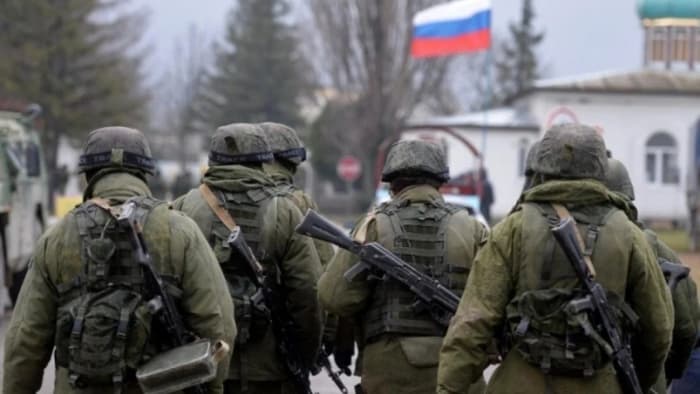 Photo: Getty Images
Although Russia systematically conducts disinformation campaigns aimed at discrediting the Ukrainian government and the Ukrainian state as a whole, its own governance of the temporarily occupied territories remains highly ineffective and inadequate. While numerous studies have examined Russian influence in Europe and its potential to undermine support for Ukraine, Russia exerts its greatest influence on Ukraine through the temporarily occupied territories (TOT) and their residents. Russian policy towards the TOT therefore requires both thorough analysis and timely action by the Ukrainian government. This issue is particularly relevant in view of the probable covert mobilisation by Russia following the 2026 parliamentary elections, which, as in 2022, may begin in the temporarily occupied territories.
According to the Ukrainian authorities, approximately 3.5 million Ukrainians continue to live in the temporarily occupied territories (TOT). The Russian government allocated 674 billion roubles to these territories for 2025 and 2026. In terms of the level of subsidies received, the so-called Donetsk People's Republic (DPR) ranks second, after the Republic of Dagestan.
The analysis focuses on Mariupol and the so-called “DPR”. Since 2022, Mariupol and other captured cities have been almost completely destroyed as a result of Russian sieges and therefore require substantial subsidies and a well-considered development strategy. However, this is not Russia’s priority.
Three levels of Russia’s state strategy can be identified through which the country turns the local population into both hostages of the situation and a resource.
A Russian state policy aimed at assimilating subjugated peoples and eradicating their identities. Its objectives are to integrate the population into the Russian sphere, “cultivate” a generation loyal to the authorities, recruit people into the Russian army, and suppress partisan sentiment. Let us examine this policy in greater detail and identify its key components.
Political scientist M. Bulyk, who is from Mariupol, emphasises that passportisation is a priority for legally entrenching the occupation regime. Possession of a Russian passport becomes a symbol of the local population’s subjugation and a means of legitimising Russian control. Refusing to obtain one is tantamount to losing property rights, employment, social benefits and access to medical care. Faced with a choice between physical survival and legal loyalty, people opt for the latter, as prolonged refusal to obtain a Russian passport can lead to deportation, threats and even arrest. At the same time, people are required to renounce their Ukrainian citizenship to create a sense of irreversibility (“Why keep a Ukrainian passport if Russia is here to stay?”). Moreover, since 2023, Russian law has classified Ukrainians without Russian passports as “foreign nationals” subject to deportation from the Russian Federation.
One of the main problems in the temporarily occupied territories is property rights. The occupation authorities offer residents apartments that already have owners or have been completely destroyed and burned down as a result of hostilities. To do so, Russia effectively expropriates private property, using the absence of residents and the lack of property registration under Russian law as grounds for declaring apartments “ownerless”.
Russia demolishes not only damaged buildings but also those that could have been repaired. Meanwhile, residents are offered housing not in newly built developments, but in neglected parts of the city and its outskirts. One of reasons for this unfair approach to the housing shortage is the concealment of its own crimes: the bodies of people killed in the first months of the full-scale invasion may still lie beneath the rubble. This is also suggested by the occupiers’ plan to rebuild the worst-affected neighbourhoods only between 2030 and 2035, while focusing for now on the historic city centre and Azovstal. This approach serves a demonstrative purpose: to show that the city is being revived under Russian control. However, the neglect of the worst-affected districts and the relocation of residents away from their homes point to the merely decorational nature of this revival, which leaves a significant proportion of the population without adequate housing.
For Ukrainians to obtain housing, even through a mortgage, they must have been officially employed for at least six months and earn a salary at a level that is impossible to achieve in Mariupol. Many people are compelledrent apartments that remained intact, which cost an average of UAH 15,000–20,000 per month.
Notably, compensation is calculated not on the basis of the actual floor area of the destroyed property, but according to a fixed allowance of 33 square metres per person, with compensation paid accordingly. Each person can receive up to USD 17,000. By comparison, new apartments in Mariupol cost between USD 45,000 and USD 100,000. The newly built housing is not occupied by Mariupol residents, but by Russians who managed to invest in mortgage-financed properties. For comparison, prices for two-bedroom apartments in newly built developments in St Petersburg and Moscow start at USD 80,000.
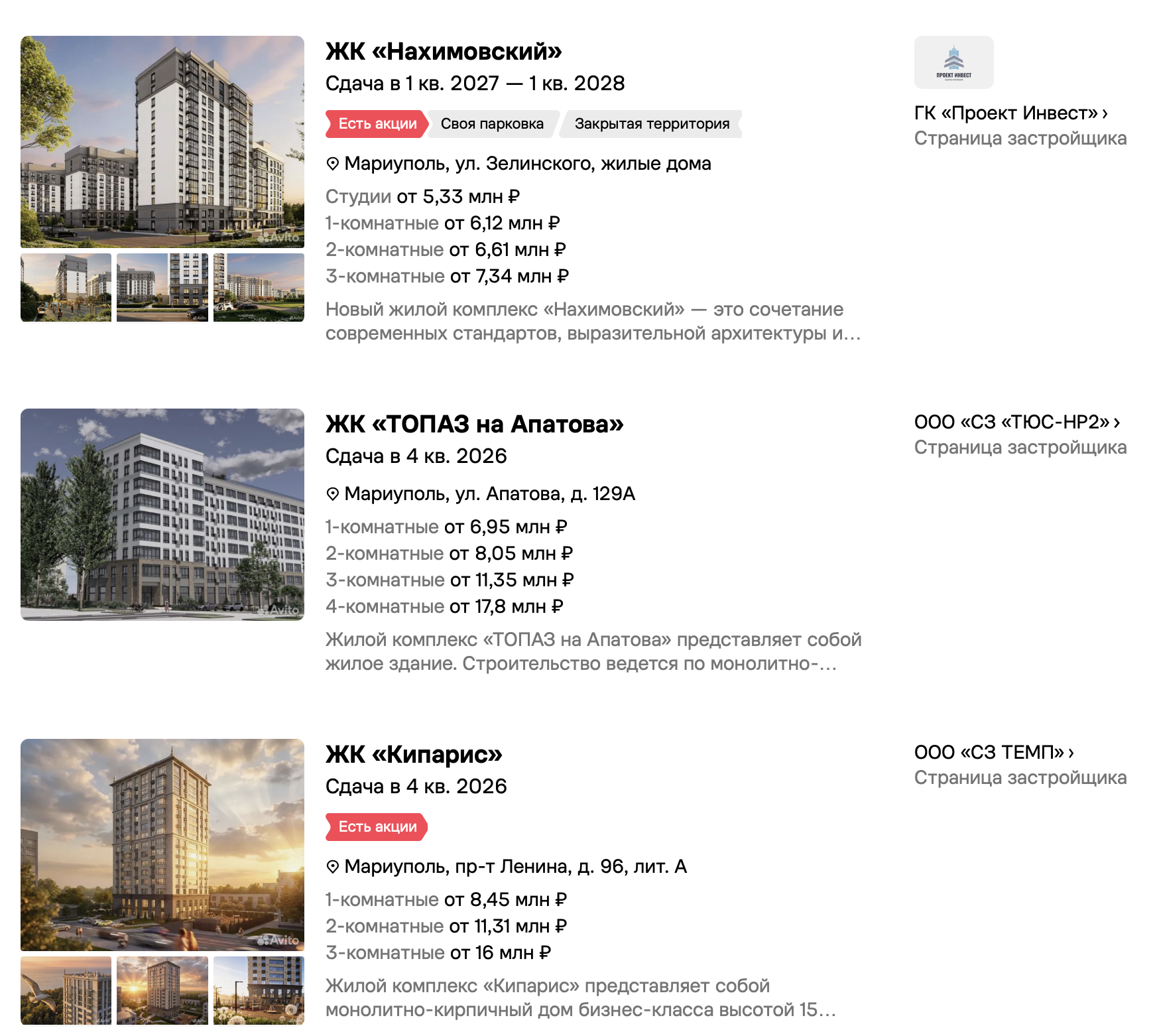 The photo shows the prices of apartments in residential complexes built by Russia in occupied Mariupol. First residential complex – “Nahimovskiy” Residential Complex. Mariupol, Zelinsky Street: - Studio apartments – from RUB 5.33 million; - One-room apartments – from RUB 6.12 million; - Two-room apartments – from RUB 6.61 million; - Three-room apartments – from RUB 7.34 million. Second residential complex – “Topaz on Apatova”. Mariupol, 129A Apatova Street: - One-room apartments – from RUB 6.95 million; - Two-room apartments – from RUB 9.05 million; - Three-room apartments – from RUB 11.35 million; - Four-room apartments – from RUB 17.8 million. Third residential complex – “Kiparis”. Mariupol, 96A Lenin Avenue: - One-room apartments – from RUB 9.45 million; - Two-room apartments – from RUB 11.31 million; - Three-room apartments – from RUB 16 million. Prices of new-build apartments in occupied Mariupol. Source
It's a complete mess and chaos, just like in the 1990s. No one is going to give us our homes back. They say the apartments are ownerless, but when you show up to claim one, you find that other people are already living there. Or the property is burned out, unfinished, or listed in Rosreestr even though it was registered by its rightful living owners.
More than 80,000 Russians currently live in occupied Mariupol, excluding military personnel. The preferential mortgage rate of 2% (compared to rates of up to 20% in Russia itself) is a way to attract Russian residents to the occupied territories and pursue a policy of population replacement. This strategy is not new: just as in imperial times, the authorities sought to consolidate control over foreign territories by bringing in Russians, diluting the local population with their own loyal ethnic group, and creating a social stratum loyal to the Russian authorities and invested in preserving the order they had established. The authorities do not consider people with a Ukrainian identity to be a reliable population, so their needs are met only on a residual basis.
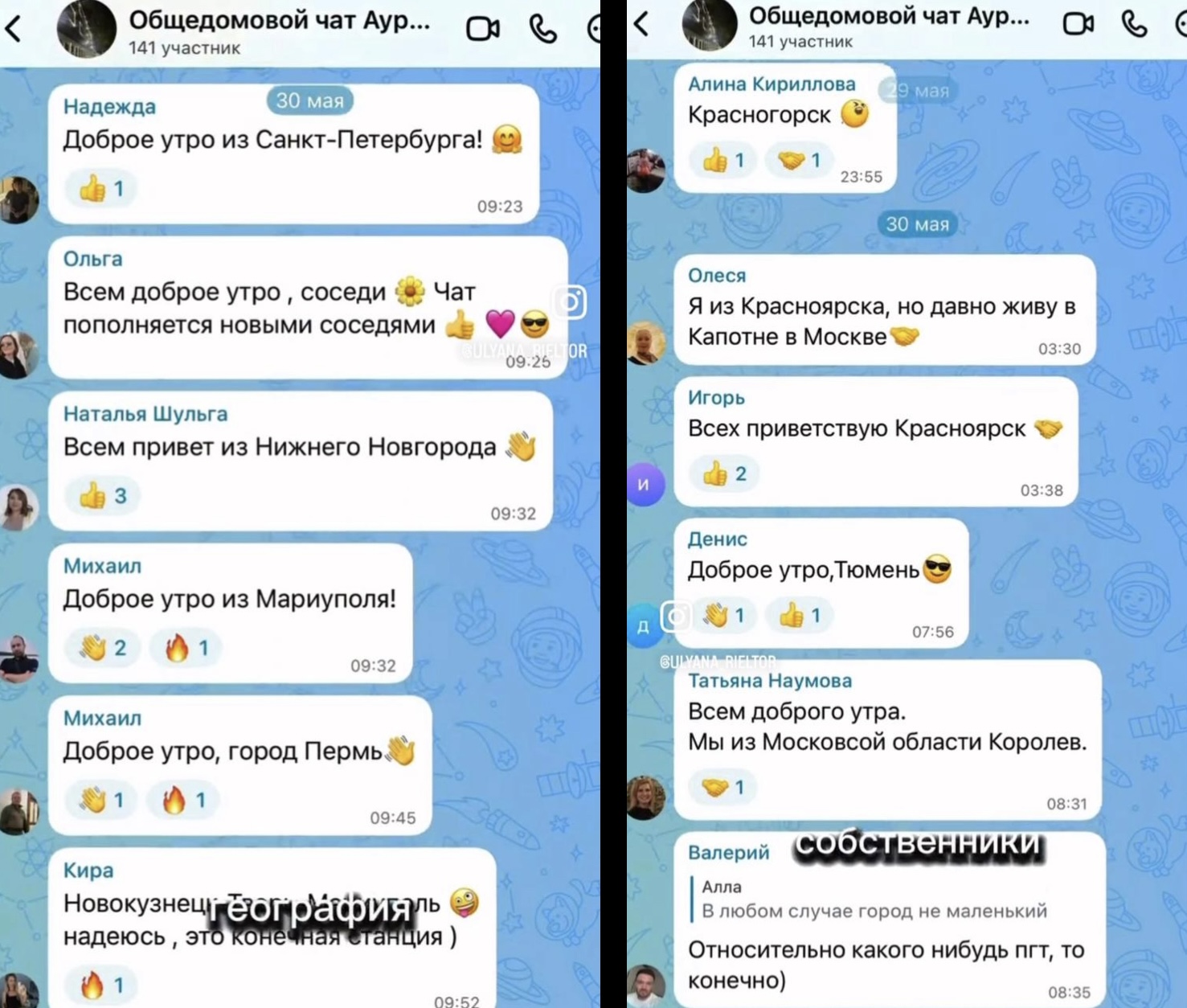 A neighbours’ chat in a newly built residential complex in Mariupol, shared on the Instagram account of a Russian real estate agent. For every nine Russian neighbours, there is just one local resident
The darker side of Russia’s presence is the extensive network of torture chambers across the temporarily occupied territories. As of March 2026, at least 2,400 civilian detainees are known to be illegally held in Russia. According to Ukraine’s ombudsman, international law prohibits the detention of civilians as prisoners of war, but does not provide clear mechanisms for their return.
The Russian occupation also contributes to the breakdown of family ties. Restrictions on social media make it difficult for families to stay in touch. Filtration procedures and bans on returning home mean that family members can meet only in a third country. Unreliable internet access and electricity, along with the difficulties older people face in using technology, further complicate communication.
However, the abduction of children contributes most significantly to the destruction of families. As part of its assimilation policy, which is also directed at Ukrainian orphaned children, Russia has launched a propaganda campaign encouraging its citizens to adopt deported children. In particular, a “catalogue” of Ukrainian children available for adoption has been created in Russia. Collaborators are involved in this process: they report where the children are, provide logistical assistance with relocating orphans, and help ensure that their documents are properly processed.
At least 19,493 children are known to have been deported to Russia or forcibly transferred from the temporarily occupied territories. Of these, only 2,145 have been returned to Ukraine.
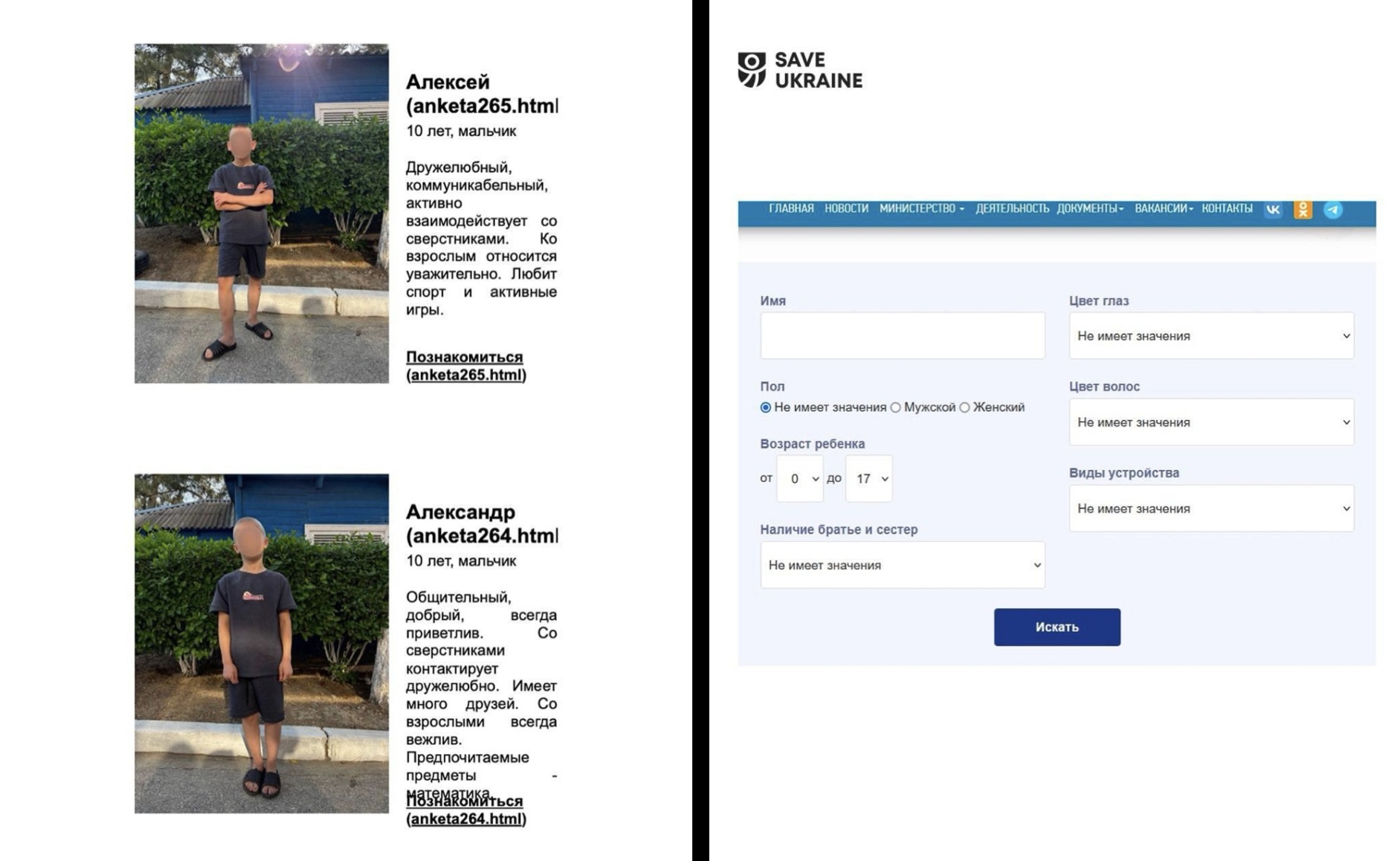 The first photo shows two boys, along with their names, ages, sex and descriptions of their personalities. The second photo shows a filter that allows users to search for children by name, sex, age, whether they have siblings, eye colour and hair colour. Illustration of an online catalogue for selecting children from the occupied territories for adoption. Source
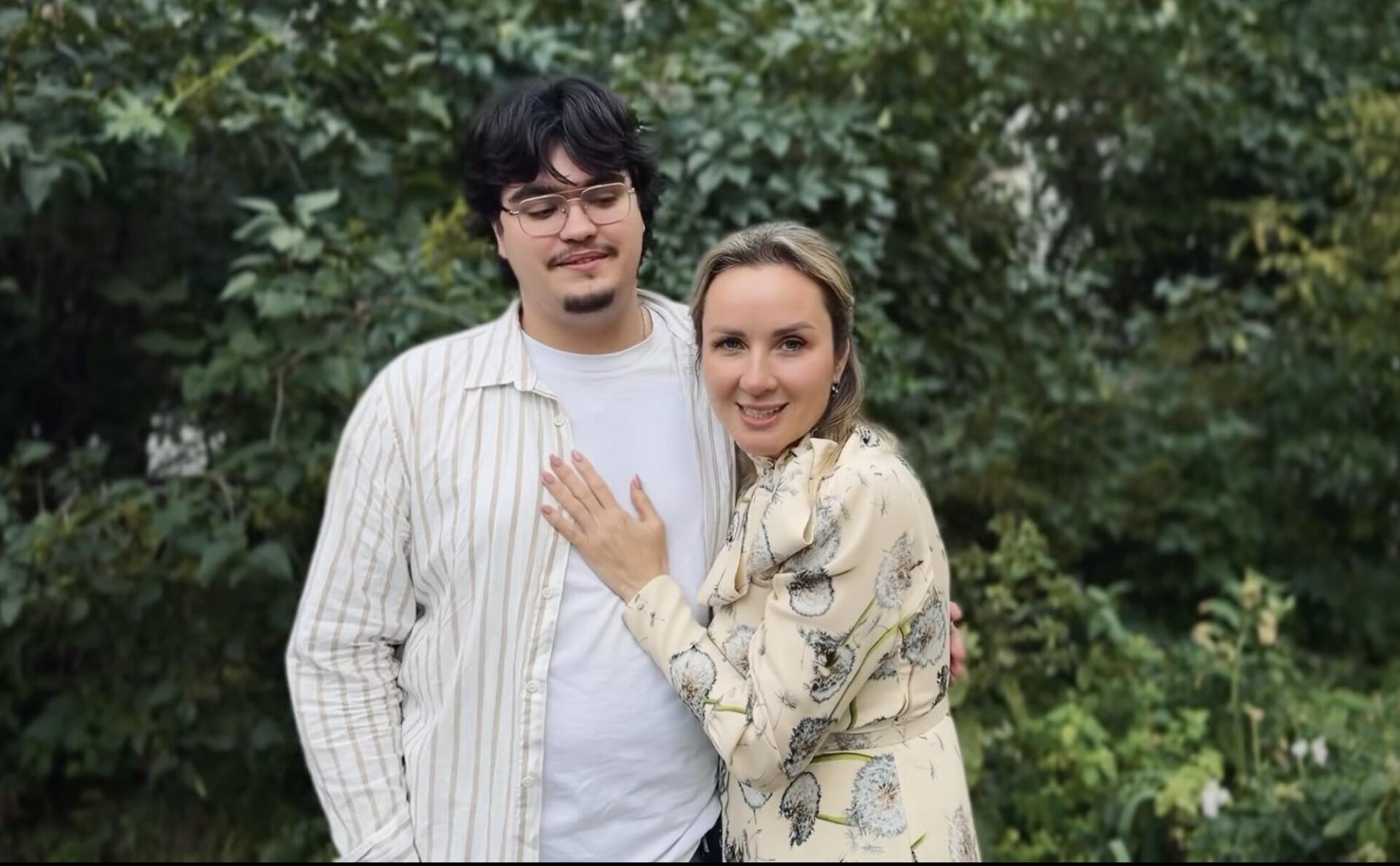 Maria Lvova-Belova and Pylyp Holovnya, the boy she adopted from occupied Mariupol. Source
Thus, the Russification of the temporarily occupied territories is carried out through the following measures: passportisation, replacement of the local population, filtration, detention of civilians, the disruption of family ties and the abduction of children. The unfair distribution of housing and the concealment of Russia’s own crimes are secondary consequences stemming from incompetence and indifference to the needs of the local population.
This once again demonstrates Russia’s intentions for the occupied territories: to reshape them according to Russian standards and for the benefit of the Russian population. As a result, Ukraine’s temporarily occupied territories rank at the bottom of Freedom House’s freedom rankings, below South Sudan, Gaza, North Korea and Eritrea. The Russian passport imposed on residents is a prerequisite for accessing any services in the occupied territories. It also allows Russia to conscript residents into military service against Ukraine or accuse them of treason.
Sergey Veselovsky, a frequent guest on the propaganda show Solovyov LIVE, summed up the purpose of Russia’s cognitive warfare in a single quote:
“[Ukrainians] have ceased to be Russian; they have ceased to be human... She is Ukrainian because she is ‘vyrus’ [Translator’s note: A derogatory Russian term referring to someone who has ceased to be Russian or rejected their Russian identity]... Unfortunately, there are many of them there. To turn them back into human beings, they must no longer be educated. They must be trained like animals.”
The difference between cognitive warfare and information warfare lies in how information is processed and in their overall objectives. While information warfare seeks to control information flows and overwhelm its target with disinformation and propaganda, cognitive warfare seeks to influence how people think and alter their perception of reality by manipulating real problems and imposing destructive interpretations. Public events, changes to cultural memory and information sources provide examples through which we can examine how this takes place.
The cultural and historical memory of nations is embodied in street and city names, the establishment of holidays and monuments. This is why Russia made the imposition of Russian cultural markers one of its first priorities. This is considered part of cognitive warfare because it is carried out by the occupation authorities in foreign territories with the aim of creating fictional, non-existent ties with Russian cities.
For example, in Mariupol, the date of the city’s annual celebration was moved forward by two weeks. Azovstalska Street, named after the Azovstal steelworks, was renamed Tula Avenue. Names that had been changed as part of decommunisation were also restored to their former Soviet-era versions: Peace Avenue became Lenin Avenue, Morskyi Boulevard became Komsomolskyi Boulevard, and so on. Mariupol residents themselves appealed for the restoration of the name Azovstalska Street, but the so-called “Supreme Court of the DPR” rejected their appeal.
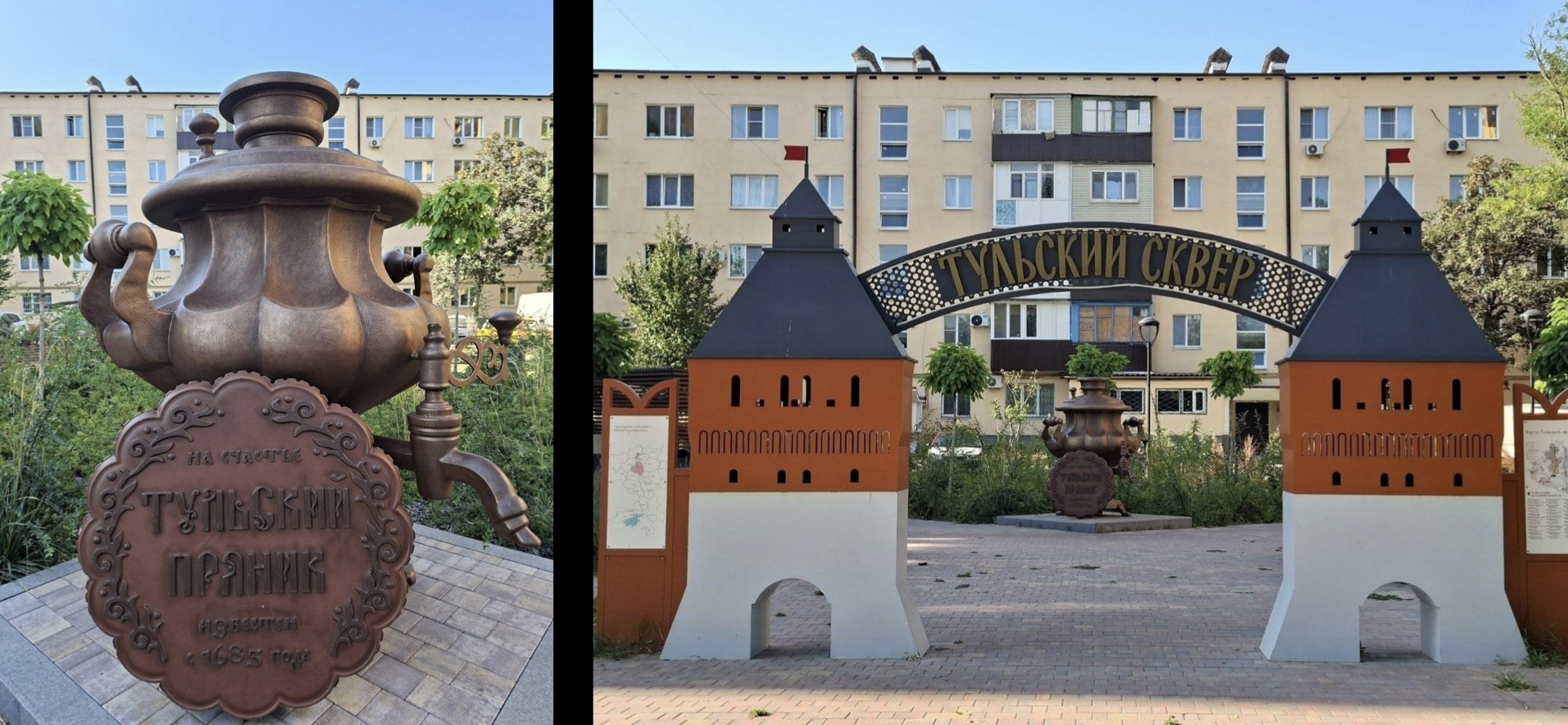 A monument and a newly constructed building commemorating the renaming of Azovstalska Street in Mariupol, as an example of the dismantling of cultural memory
As a result, new commemorative dates have been introduced, including the Day of remembrance for children who were victims of the war in Donbas and the Day of the rear of the Russian armed forces, as well as the celebration of the Day of the baptism of Rus on 28 July. Efforts are also being made to embed the importance of celebrating specifically Russian holidays in people’s minds.
For example, on 4 November, Russia’s national unity day, a memorial to the “Defenders of Donbas” was unveiled in Donetsk, while a monument to Volodymyr Zhoha, a militant of the so-called “DPR”, was erected in Volnovakha. Telegram channels glorify collaborators and war criminals who helped Russia occupy Donetsk and Luhansk regions. Meanwhile, the “Battlefield” museum presents Ukraine as the aggressor against Donbas, seeking to establish an association in people’s minds between “child, militiaman and defender”.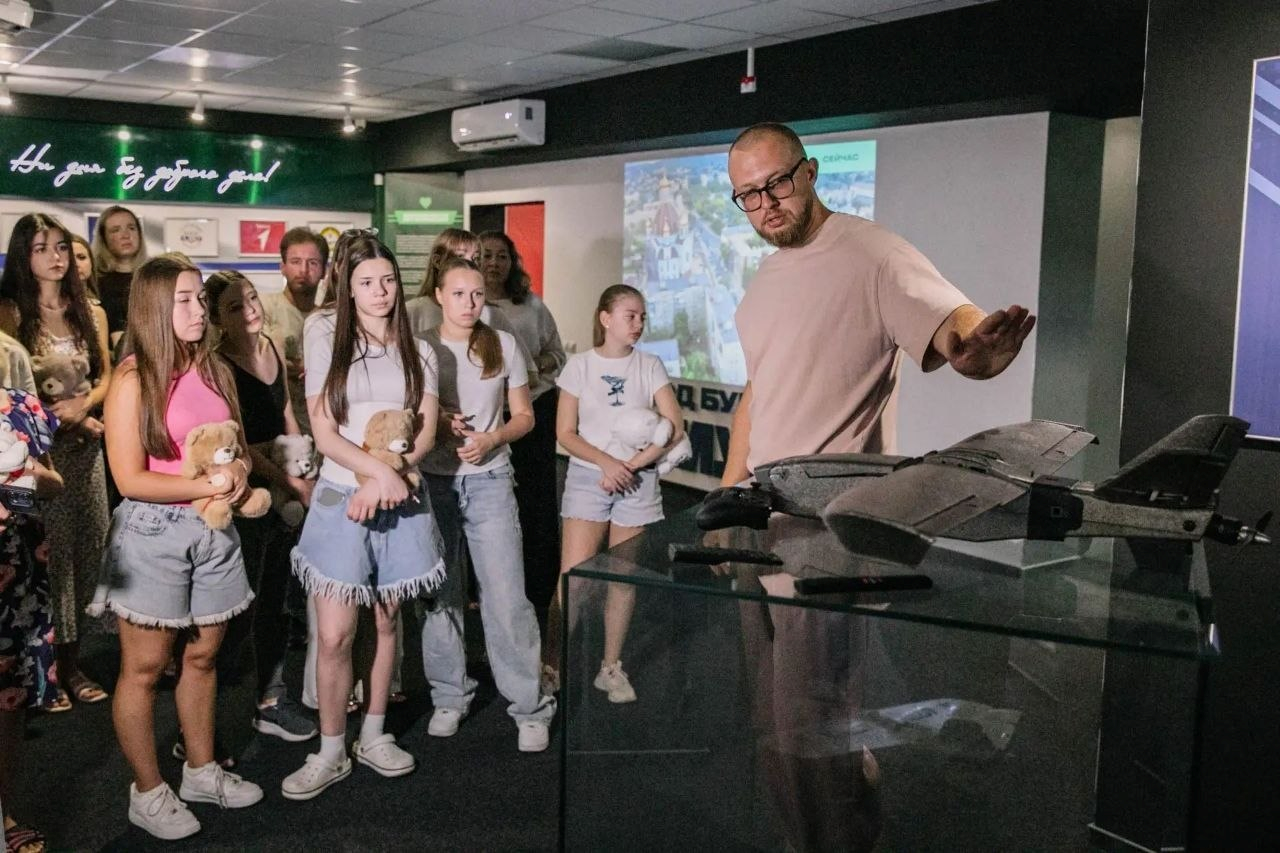 Photo from the “Battlefield” museum showing children taking part in its activities. Source
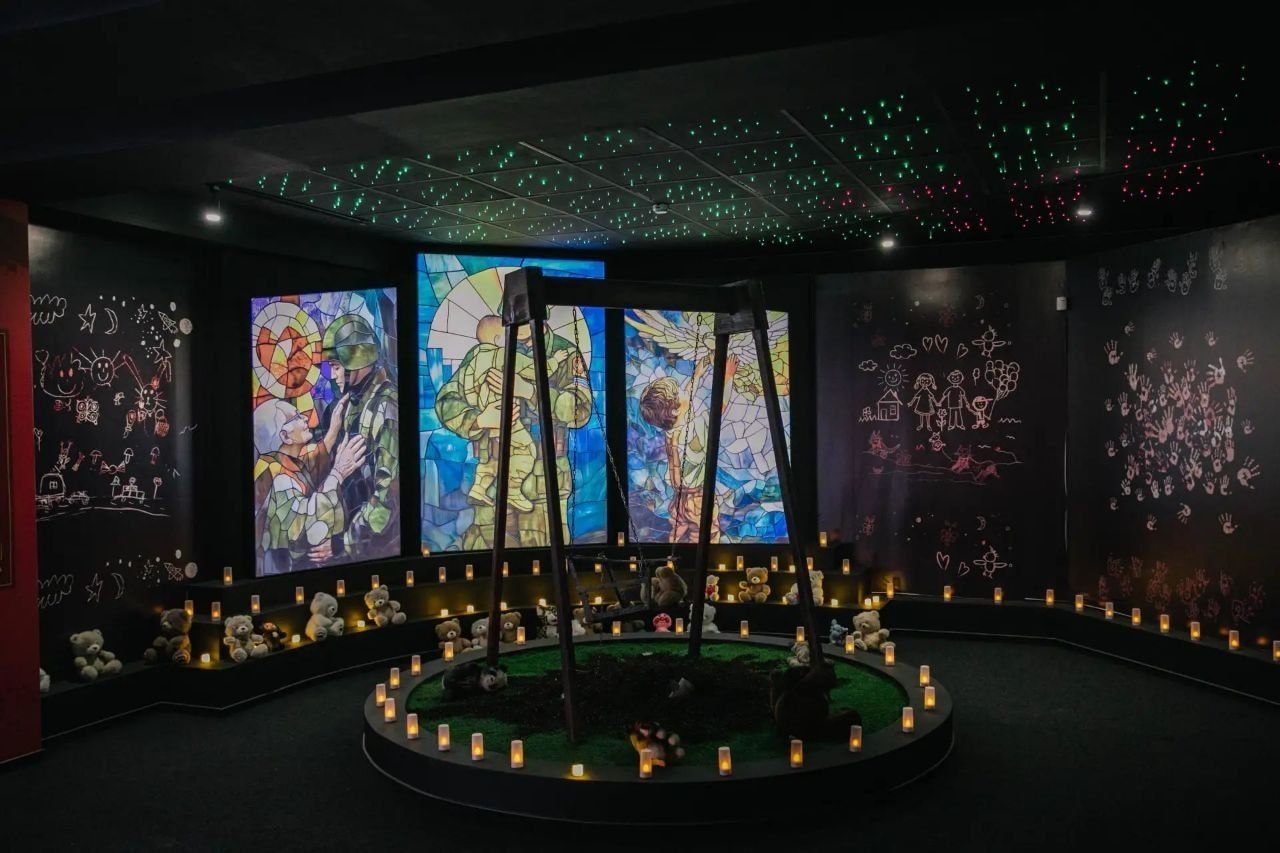 Photo from the “Battlefield” museum. Source
A common practice in the temporarily occupied territories is to place military depots, workshops and dormitories close to civilian residential areas. When these sites are hit, however, Russians, Telegram channels and occupation administrations conceal the fact that a military facility has been struck and instead claim that civilian infrastructure was the target of the attack.
When buildings are damaged or people are killed, indoctrinated Ukrainians do not fact-check the claims. Instead, they recall familiar and easily understood messages about “Nazis”, the seizure of power by the Ukrainian authorities after Viktor Yanukovych, “the wrong kind of Ukrainians” and the need to “retaliate”. Repeating this “exercise” for at least 12 years has reinforced the perception among Ukrainians in the occupied territories that they are “different”.
The systematic stigmatisation of the local population has become an important component of cognitive warfare. It involves creating a stigma around residents of the temporarily occupied territories in the eyes of the rest of the Ukrainian population: people from these regions are portrayed as “different”, “foreign” and “ideologically distant”.
Both processes are aimed at creating and entrenching the belief that returning to Ukraine is impossible, while reinforcing a sense of alienation through labels such as “waiters for Russia”, “collaborators” and “traitors”. Any contact with the occupation authorities is supposedly enough to make Ukrainian citizens second-class citizens.
Moreover, the propaganda campaign promoting hatred of Ukrainians has created another dividing line: residents of territories occupied since 2014 perceive those living in territories occupied since 2022 as “traitors” and “outsiders”. This can be explained by jealousy of the development of Ukrainian cities in the east after 2014, a desire to compete for the attention and limited resources of the occupation authorities, and Russian propaganda, which for years has been eroding the perception of Ukrainians as a single nation.
As a result, efforts are being made to artificially separate residents of the temporarily occupied territories from the rest of the Ukrainian population. For example, in Luhansk Oblast, a TV programme called Strana 404 [Translator’s note: Country 404 as error 404] is broadcast, presenting news in a distorted form, changing their meaning and using them to reinforce the claim that the country as a whole no longer exists. This propaganda show turns into an act of humiliation directed at an entire nation and is broadcast to members of that very nation who have remained in the temporarily occupied territories.
This rhetoric is not new either to residents of the temporarily occupied territories or to those living in the parts of Ukraine under Kyiv’s control. Nevertheless, it remains genocidal in nature, conditioning people to feel baseless hatred.
While adults may still question the information imposed on them, children are more vulnerable to systematic information influence. From 1 September 2026, new teaching practices based on revised textbooks are being introduced. They are intended not only to spread the Russian imperial narrative through education, but also to shape the perception of territories occupied since 2014 as a separate region with a distinct, traumatised identity. This approach is intended to gradually displace the perception of these territories as part of Ukraine, while at the same time stopping short of fully integrating the local population into Russian society.
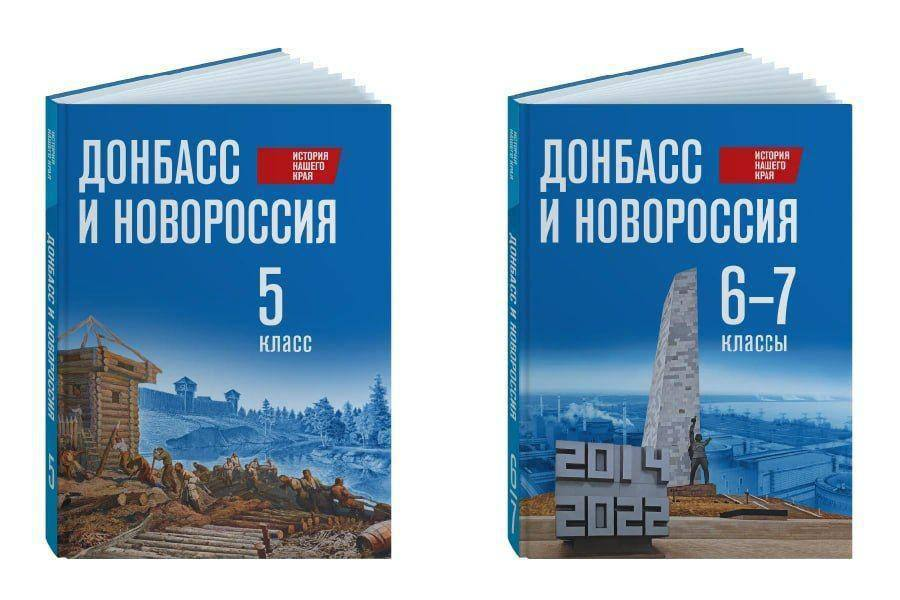 The textbook “Donbas and Novorossiya”. Source
Children from the temporarily occupied territories are regularly taken on trips to Russian cities to make them feel that these places are part of their own cultural environment. For instance, schoolchildren from Mariupol were taken to Chelyabinsk to participate in an intellectual quiz called Russian World. As a result, growing up isolated from Ukraine, a new generation loyal to Russia comes to see itself as Russian, having never had the opportunity to develop a Ukrainian identity.
Thus, the second level of Russia’s strategy — cognitive warfare — is concerned not so much with administrative control as with forcibly reshaping political consciousness to serve the interests of the Russian authorities. It is carried out through the indoctrination of children, the stigmatisation of the local population, the denial of the Ukrainian state and nation, the glorification of collaborators, and the saturation of urban spaces with Russian symbols and new commemorative holidays. As a result, expressing a Ukrainian identity becomes dangerous, while the younger generation is left with no space to identify with Ukraine. Instead, it is offered an identity as residents of Donbas, traumatised by war and destined to remain alien to Russians because of their different experiences and the latter’s failure to understand the war.
The third level of Russia’s strategy is information warfare. In the temporarily occupied territories, it is conducted on a pervasive scale, primarily through Telegram channels. These channels are among the easiest ways to access news about the occupied territories, while also providing an opportunity to gauge audience engagement and feedback. Pro-Russian Telegram channels also serve as tools of cognitive warfare, helping Russia maintain control over the sources of information available to the population.
Telegram is the main platform for reporting news from the Russian-occupied parts of mainland Ukraine. Other social media platforms, by contrast, show virtually no audience engagement. Even channels presenting themselves as Russian versions of local news outlets attract relatively little attention. For example, Mariupol Now (Russian flag) has 41,000 subscribers but only 4,000–4,500 views per post — roughly one view for every ten subscribers. Its Ukrainian counterpart, Mariupol Now (Ukrainian flag), has 126,000 subscribers and attracts 30,000–36,000 views per post, or roughly one view for every four subscribers.
Between 50% and 70% of posts on these Telegram channels focus on everyday matters, such as the city's services and local incidents. Over the past two months, water and electricity supplies have become recurring topics, as the occupation authorities have failed to adequately address the problems surrounding them. Pro-Russian channels also tend to spread disinformation about shelling, exaggerating the scale of attacks without providing any photo or video evidence.
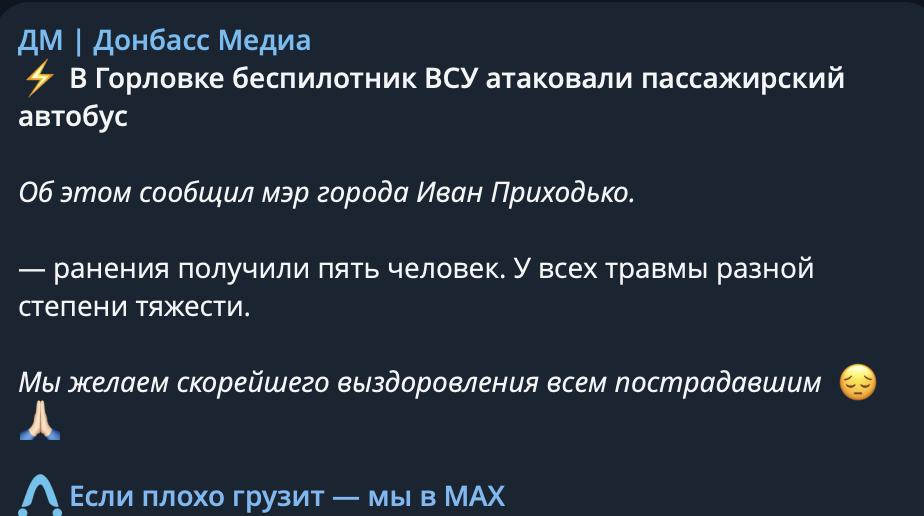 Приклади публікацій без підтвердження даних
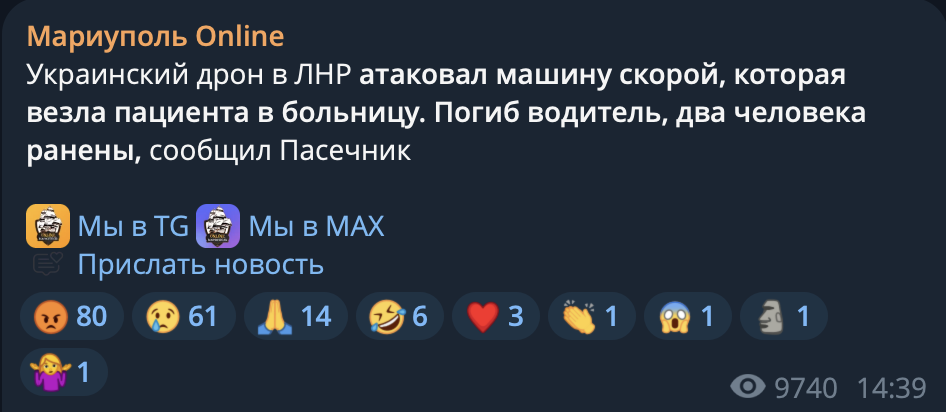 The image shows a statement by the occupation administration accusing Ukraine of attacking civilians, without providing any evidence to substantiate the claimOne Russian news website covering events in Donetsk publishes daily disinformation alleging that Ukrainian drones are deliberately targeting civilians and causing deaths. For example, on 5 August 2026, it reported that a hospital had been shelled and a female resident killed. Such an incident would ordinarily require on-the-ground reporting and photographs of the damage to the hospital to substantiate the claim. Yet all other news published over the past six months has focused exclusively on everyday developments, which are documented in considerable detail: each new project and building renovation is given its own post and accompanying photograph.
In the Russian information space, posts about shelling, the deteriorating state of local politics and citizens’ complaints are interspersed with geopolitical news highlighting Russia’s achievements on the international stage. Western policies are criticised without providing the political context needed to understand them, while disinformation and distortions are used to manipulate their meaning. The aim is to emphasise Russia’s importance on the world stage and persuade people that they must put up with its domestic problems in exchange for the geopolitical influence it supposedly wields.
News about Europe and Russian strikes on Ukraine also appear periodically, often accompanied by expressions of delight. Ukrainian casualties from these attacks are presented as “just punishment” and a reason to mock them. Meanwhile, the myth of constant, deadly shelling of Donbas persists. This is driven by the population’s desire to feel that it is on the side of “good”, to rationalise the economic decline, by envy of cities along the front line that have developed since 2014, and by the need to justify Russian repression and presence in the region.
Thus, through the third level of its strategy — information warfare — the Russian authorities continue to shape how people perceive reality by controlling the information they have access to. This involves spreading disinformation about shelling, selectively reporting the news, stirring up hostility towards Ukrainians and presenting the occupation authorities’ administrative activities in a favourable light. This is where the erosion of the Ukrainian worldview takes hold: daily exposure to Russian media gradually normalises its narratives and leads people to see confirmation of them in the problems they face.
The three components of Russia’s strategy — Russification, cognitive warfare and information warfare — help us understand what Moscow wants the temporarily occupied territories to become over the next 10–20 years. It wants these territories to be closed off from Ukrainian and European influence, with only partial reconstruction taking place in the cities deemed most essential or in districts considered important for their function. These areas are intended to support the Russian rear and facilitate faster logistics. To maintain unimpeded control over these territories, Russia wants settlers from Russia to make up the majority of the population and see themselves as the dominant social group.
Russia seeks to diminish the role of Ukrainians in the occupied territories, regarding them as “problematic” because of their experience of the Russian siege and their Ukrainian identity. It aims to achieve this either by using them as expendable manpower on the front line or by eroding their Ukrainian identity. This is why residents have become targets of Russification and cognitive warfare. To ensure that people are ideologically prepared for mobilisation and other forms of repression, Russia is engaged in continuous cognitive reprogramming through the promotion of hatred towards Ukraine, the reshaping of cultural memory, disinformation and the indoctrination of children.
Even without forced mobilisation, the temporarily occupied territories remain a devastated, economically depressed region, with a fractured identity and cut off from the rest of the world. Mobilisation and military operations only exacerbate this negative trend. “Anti-Ukraine” is not simply a Russified territory. It is a territory where the conditions for the return of Ukrainian markers of identity are being systematically dismantled, while a population, institutions and information environment compatible with Russian control are being shaped.
To engage with residents of the temporarily occupied territories, the Ukrainian government needs to develop a separate reintegration strategy and make the quality and freedom of life of the population in the TOT a distinct item on the negotiating agenda, thereby undermining the effects of Russian propaganda. The return of children must become an assertive, uncompromising track, pursued through the mediation of countries that maintain contacts with both the Ukrainian and Russian governments. At present, this track operates only through Saudi Arabia. The indoctrination of children through school curricula and their involvement in militarised organisations must be raised at more international forums to demonstrate that Russia does not intend to stop at occupying territory: it is preparing a new generation of soldiers. Its aim is to seize Ukrainian minds — a process that is taking place unhindered in the temporarily occupied territories.
Equally important, positive developments in the area of support for internally displaced persons must be made more visible to residents of the temporarily occupied territories, including through advertising, posts on Ukrainian social media platforms and bot farms, so that residents can see returning to Ukraine as an alternative to moving further into Russia.
You may be interested