 INTERNATIONAL
INFORMATION AND ANALYTICAL
COMMUNITY


+ Join
Support INTERNATIONAL



Ihor Shpylka, junior Analyst at the Resurgam Center, specializing in European affairs
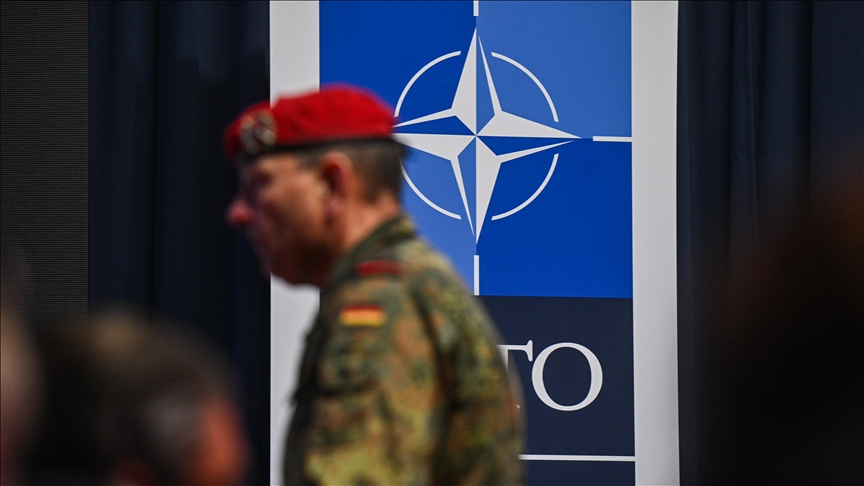 Within the framework of the "Zeitenwende" ("turning point") policy, the German government is implementing an active rearmament program to build the backbone of European defence against the threat from Russia, which, according to German authorities, will not be satisfied with Ukraine alone. This policy involves modernizing the Armed Forces, increasing funding for the defense sector, and a significant revision of Germany's role in the collective security of the EU.
Given that militarization remains a sensitive topic in Germany and that citizens are reluctant to defend their own country in the event of an attack, radical pro-Russian forces are engaging in populism against this backdrop. They offer their own "security alternatives" for the state, which undermine its defense capabilities.
We analyse the discussions of various German political forces regarding the Zeitenwende policy.
On February 27, 2022, Olaf Scholz delivered a speech in parliament titled "Zeitenwende." The Chancellor asserted that Russia is destroying the European security order and called on Germans to protect the "period of happiness" established after German reunification. Thus, the course of Zeitenwende was set, aiming to revise the state's defense strategy, modernize military forces, and shift German public opinion toward a more active position and leadership in the collective defence of Europe.
One of the first significant actions was the approval in June 2022 of a special fund amounting to 100 billion euros, earmarked for defence procurement. Notably, such a step required a two-thirds majority in the Bundestag to bypass the "debt brake"—a constitutionally mandated spending control mechanism that limits the federal structural deficit to 0.35% of GDP. To pass the fund, the coalition secured the support of the largest opposition force at the time—the alliance of the Christian Democratic Union and Christian Social Union (CDU/CSU), which also advocated for increased defense spending.
A defining moment in the implementation of the Zeitenwende course was the change in leadership at the Ministry of Defence amid heavy criticism. Media outlets had accused the previous head of the department of indecisiveness and an inability to modernize the army. "In an environment of new threats and geopolitical shifts, it is now extremely important to make the German Armed Forces capable of deterrence and ready for defence," President Steinmeier stated in a speech preceding the swearing-in of the new minister, Boris Pistorius, in early 2023.
Once in government, Pistorius actively promoted reformist initiatives to improve the armed forces. Publicly acknowledging the bureaucratic burden within the Bundeswehr—which complicated and delayed procurement, development, and research — the minister announced reforms intended to ease this pressure.
Later, the government introduced a National Security Strategy with an emphasis on deterrence, explicitly naming Russia as the "most significant threat to peace and security in the Euro-Atlantic region." Corresponding rhetoric intensified: in October 2023, Pistorius stated that Germany must become the backbone of Europe's collective defence. Since then, defence procurement has been carried out more actively, reaching a record 47 billion euros. This included 55 procurement projects for patrol aircraft, air and missile defence systems, helicopters, and armoured infantry fighting vehicles (IFVs).
In March 2025, parliament passed an amendment exempting state defence spending exceeding 1% of GDP from the "debt brake," paving the way for extensive state investment in the sector. This occurred despite protests from the radical opposition, which had secured a blocking minority by that time (discussed further below). Under the new government, a public course toward creating the strongest army in Europe was declared. This had a practical dimension in the increase of defence spending: in 2025, it reached 2.4% of GDP, and the 2026 budget provides for 2.8% of GDP—108 billion euros — the highest level since the end of the Cold War.
Since 2024, the reform of military service has been a subject of active discussion. The voluntary military service model, in place since 2011, resulted in a personnel deficit within the Bundeswehr: over 20% of positions for rank-and-file personnel and soldiers remained vacant. One manifestation of this problem was a 72% increase in conscientious objector applications in 2025 compared to 2024.
To replenish the Armed Forces, the Minister of Defence proposed a partial restoration of mandatory conscription. This sparked political debate, and the reform was only passed at the end of last year. While the voluntary nature of military service was preserved, mandatory questionnaires for men were introduced to assess fitness for service. After completing these, those who express interest and are deemed fit are offered service, though they still retain the right to refuse.
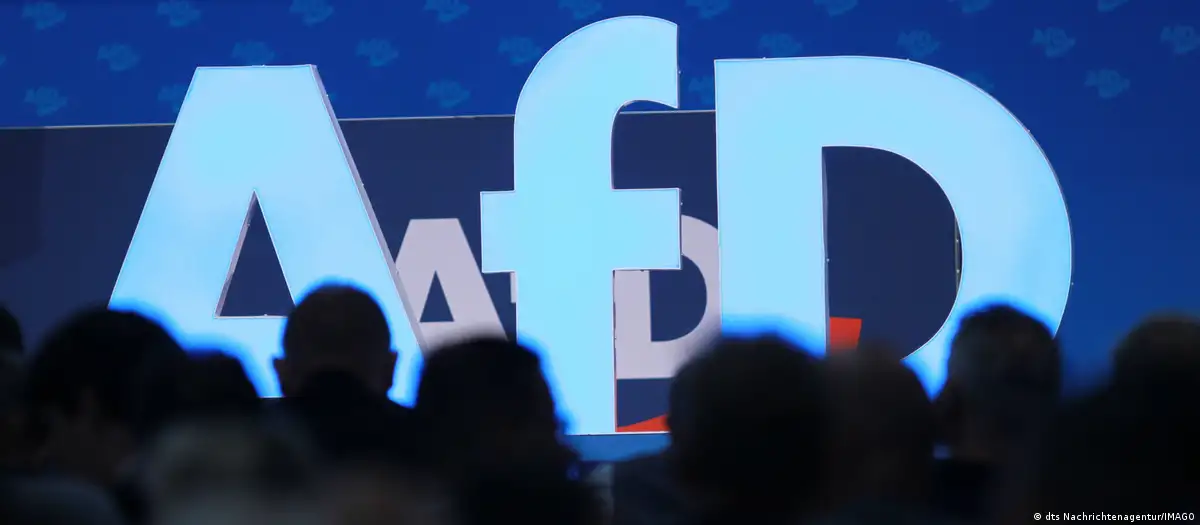
Against this backdrop, foreign policy issues — despite being under federal jurisdiction — began to dominate debates during regional elections in the autumn of 2024 in Saxony, Thuringia, and Brandenburg. As a result, the right-wing radical party "Alternative for Germany" (AfD) reached its historical peak, and the left-wing radical "Sahra Wagenknecht Alliance" (BSW) entered local parliaments. These parties gained enough votes to compete with centrists—the CDU and the Social Democratic Party of Germany (SPD)—for the formation of local governments. This was avoided through the political practice of the "firewall" (Brandmauer), which involves the isolation of extremist parties by traditional forces, including a refusal to negotiate coalition agreements with radicals.
Still, the success of radical forces requires explanation. According to polls, 75% of respondents nationwide consider Russia a threat to peace, whereas in Eastern Germany, only 53% hold this view. This discrepancy points to the "Eastern factor" and its manifestation: institutional distrust inherent in the population of the former German Democratic Republic (GDR).
Due to their distrust of the state’s course, citizens in this region found their own vision in the programs of opposition politicians. Security issues became a leverage point for communities in Eastern Germany, and populist forces took advantage of this, significantly boosting their support. Specifically, the leader of BSW manipulated the situation by framing local elections as a "referendum on war and peace." In reality, their influence on federal foreign policy is limited: federal states only delegate representatives to the Bundestag, which approves or rejects laws only when they affect the powers of the states.
These radical parties also expressed a distinct position on sanctions against Russia, presenting them as harmful to the German economy because they trigger inflation and rising energy prices. In the rhetoric of the AfD and BSW, sanctions were portrayed as a betrayal of the interests and needs of citizens, which helped shape the radicals' anti-militarist stance. "Germany must take into account its own interests," stated AfD co-chairman Tino Chrupalla, criticizing the impact of sanctions.
Such speculation on public fears, combined with criticism of immigration, contributed to the growth of AfD support, resulting in 152 seats in the Bundestag after the February 2025 elections—another historical high for the party (up from 83 seats in 2021). Additionally, 64 seats were won by another anti-militarist force, the left-wing radical "The Left" (Die Linke), despite expectations that it would fail to cross the electoral threshold following the split with BSW.
Radicals openly play on German perceptions of their place in European security to improve their ratings. The shock formed by their own atrocities and the humiliation following World War II became a form of self-censorship for Germans—they did not speak of their own victims en masse, and repentance became a central part of politics. These perceptions still exist in German society, and it is precisely these that Zeitenwende—the "turning point" policy—seeks to counterbalance, changing Germany's role in the collective security of Europe.
Radical opposition parties, though ideologically opposed, have effectively formed an "anti-Zeitenwende" group in the Bundestag. Their numbers are sufficient to block decisions involving constitutional amendments—216 deputies, surpassing the required 210. Despite significant differences in their views, the AfD and Die Linke maintain a certain unity in criticizing the government's defence policy, downplaying and delegitimizing the threat from Russia that the current German government highlights. This undermines the resilience of Germany's official security course in parliament, especially in cases where the government would need to resort to constitutional changes again, such as the debt brake mechanism.
This division of power in parliament also creates general political pressure. Consequently, in March 2025, the CDU/CSU forces, in agreement with the SPD and Alliance 90/The Greens (Bündnis 90/Die Grünen), pushed for the creation of a 500-billion-euro special fund and the exemption of defence spending exceeding 1% of GDP from the debt brake.
This initiative was adopted just one week before the new parliament began its work, at the time when radical forces would have already held a blocking minority. The leader of the AfD at the time compared these actions to election fraud and filed a corresponding lawsuit. This also triggered a public reaction: growing anxiety over the threat of war, coupled with a low public tolerance for military rhetoric, translated into increased support for critics of the government's course—Die Linke and the AfD. Since then, the latter has begun to compete with the CDU/CSU for leadership in public trust. This trend persisted until the end of 2025, despite the AfD being designated as right-wing extremist by the Federal Office for the Protection of the Constitution and despite accusations from Bundestag members that AfD deputies are controlled by the Kremlin.
The unrest surrounding the Bundestag's adoption of the previously mentioned military service law was telling for the political climate. The reform, which involved sending questionnaires to 18-year-old Germans for military service selection starting January 1, 2026, drew criticism from anti-Zeitenwende forces in parliament. The AfD and Die Linke opposed the law, occasionally calling on youth to protest. Pro-left media reported approximately 55,000 protesters participating across the country. Youth support for these parties was a defining factor, reflected in the February 2025 Bundestag elections: Die Linke and the AfD were supported by 25% and 21% of individuals aged 18 to 24, respectively.
Notably, against the backdrop of this discussion, support for the AfD also grew in Western Germany. In the municipal elections in North Rhine-Westphalia in the autumn of 2025—the most populated federal state and a CDU "stronghold"—the party managed to triple its support, reaching 16.5% compared to 2020. This trend will inevitably increase pressure from right-wing radical anti-militarist forces on the government, particularly regarding security policy.
This acute political situation surrounding Germany's defence policy is also significant for Ukraine. Following Donald Trump's inauguration as U.S. President in 2025, the White House began emphasizing a new focus for its defence policy: the protection of the Western Hemisphere. Europe's role in the U.S. vision of its own security is gradually diminishing, as reflected in the National Security Strategy published by the White House in November 2025 and confirmed by the Pentagon's National Defense Strategy from January of this year.
In the context of the ongoing Russian-Ukrainian war, European states are forced to strengthen their own defence capabilities independently. A decisive role in this is played by Europe's most economically and militarily powerful countries, primarily Germany—the world's third-largest economy. Political forces opposing militarization, the modernization of the Armed Forces, and the sanctions policy against Russia undermine Europe's capacity for collective defence, which has direct consequences for Ukraine's security.
Thus, Germany continues its defence transformation within the Zeitenwende framework. Guided by the threat of war in Europe, the state has moved to a proactive stage of shaping defence policy, declaring its intent to make its army the strongest in the region. This is supported by budget decisions, large-scale arms orders, public rhetoric, and reforms aimed at modernizing military service and reducing the bureaucratic burden that hinders the modernization of the Bundeswehr.
Radical and opposition forces have turned the government's systematic adherence to its chosen defence course into an opportunity to increase their own support. The designation of the AfD as extremist, mutual criticism of security policies, and a range of problematic issues create intense domestic political competition that hampers a proactive defence course.
Sociological polls show growing electoral support for radical forces. In this configuration, predominantly youth-led protests serve as a "test run" for the AfD and Die Linke in organizing nationwide rallies. These parties are growing by playing on social anxieties, and their further success will increase opportunities for political pressure and obstruct the implementation of the Zeitenwende policy.
This places government political forces, which must maintain public trust, before a choice: follow electoral motives regarding defence policy and make concessions to the radical opposition—which would inevitably harm national security—or adhere to the current security course.
Thus, the future preservation of the Zeitenwende policy depends on the ability of those in power to compete for the public's support by developing the right formula to describe the changes happening in Germany.
You may be interested