 INTERNATIONAL
INFORMATION AND ANALYTICAL
COMMUNITY


+ Join
Support INTERNATIONAL


Yehor Yarosh, expert in U.S. politics, exclusively for Resurgam
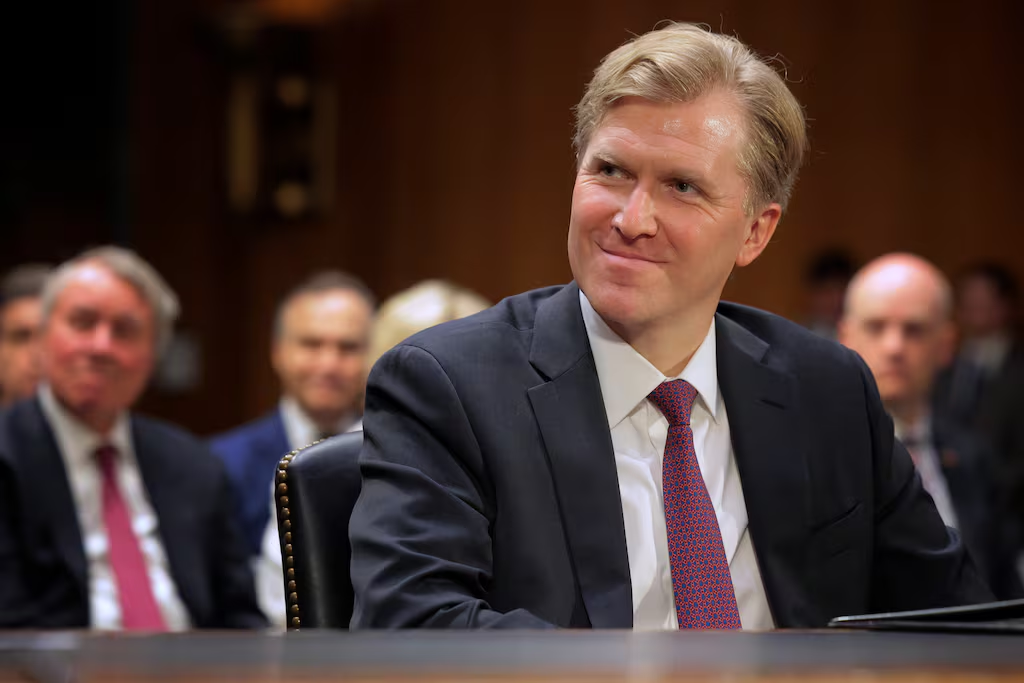 Elbridge Colby. Photo: Getty Images
Elbridge Colby (born 1979) is an experienced national security expert and a representative of a younger generation of conservative intellectuals that challenged the established post-9/11 paradigm of counterterrorism campaigns and endless operations in the Middle East.
In the Trump administration, Colby rose rapidly through the ranks: in 2017–2018, he served as deputy assistant secretary of defense for strategy and force development. In this role, Colby played a leading part in the development of the 2018 National Defense Strategy (NDS), which declared an end to the era of “endless wars” against terrorism and established strategic competition between great powers as the United States’ primary priority.
Elbridge Colby was one of the key figures within the Pentagon advancing the idea that China, rather than counterterrorism or so-called rogue states—regimes that systematically destabilize the international order, finance terrorist organizations, or pursue weapons of mass destruction—constitutes the central challenge to U.S. security.
As reported by Politico, the reorientation of U.S. defense resources toward countering Beijing faced resistance from parts of the military establishment; however, Colby succeeded in embedding this shift into doctrine with the support of the Air Force and Navy.
Colby also served as one of Pentagon representatives during the drafting of the 2017 National Security Strategy, a White House document that for the first time explicitly identified China and Russia as the principal threats to the international order.
Following Donald Trump’s return to office in the spring of 2025 Colby was appointed to one of the most influential positions within the Department of Defense as U.S. under secretary of defense for policy. In practice, he became the central figure in shaping the updated U.S. defense strategy and in setting priorities for Washington’s global military posture.
Colby’s appointment signaled a shift in policy direction: advocates of a hard line toward China and critics of extensive U.S. security commitments in Europe gained greater influence over the formulation of defense strategy.
Notably, Colby’s nomination was supported by leading figures in the MAGA-aligned camp, including Vice President J.D. Vance and influential commentator Charlie Kirk, while parts of the traditional Republican defense hawks, such as Senator Tom Cotton, criticized him for allegedly not taking a sufficiently hard line on Iran and other security issues.
A key aspect of his position may be captured by the formula: “Homeland First + Asia as the decisive external theater”. In this framework, the United States should first focus on defending its own territory and the Western Hemisphere, then concentrate on the Indo-Pacific as the primary external arena of strategic rivalry, and only thereafter address other regions, where the U.S. would maintain a presence but expect allies to assume a substantially greater share of the burden.
This approach is neither classical isolationism nor traditional interventionism, under which the United States simultaneously acts as the primary security guarantor across multiple regional theaters. Colby’s logic rests on the assumption that American power is inherently finite and must therefore be concentrated where the long-term global balance of power is ultimately decided.
Colby also played a leading role in shaping the current National Defense Strategy (NDS), published on 23 January 2026. Rather than a simple update of the 2018 NDS, the 2026 version represents a further radicalization of its core assumptions. If the earlier shift marked a break with the counterterrorism paradigm in favor of great-power competition, the NDS 2026 goes further: it explicitly invokes the idea of a “Trump Corollary to the Monroe Doctrine,” codifying the logic of hemispheric defense as an official strategic foundation. Washington once again treats its own hemisphere and the Arctic as a core security zone that must not fall under the influence of external actors.
For the Indo-Pacific region, the document elevates the concept of “denial-based deterrence”: a shift away from global primacy toward preventing China from rapidly and successfully achieving its objectives in the region. Colby had articulated this concept well before his appointment in his book .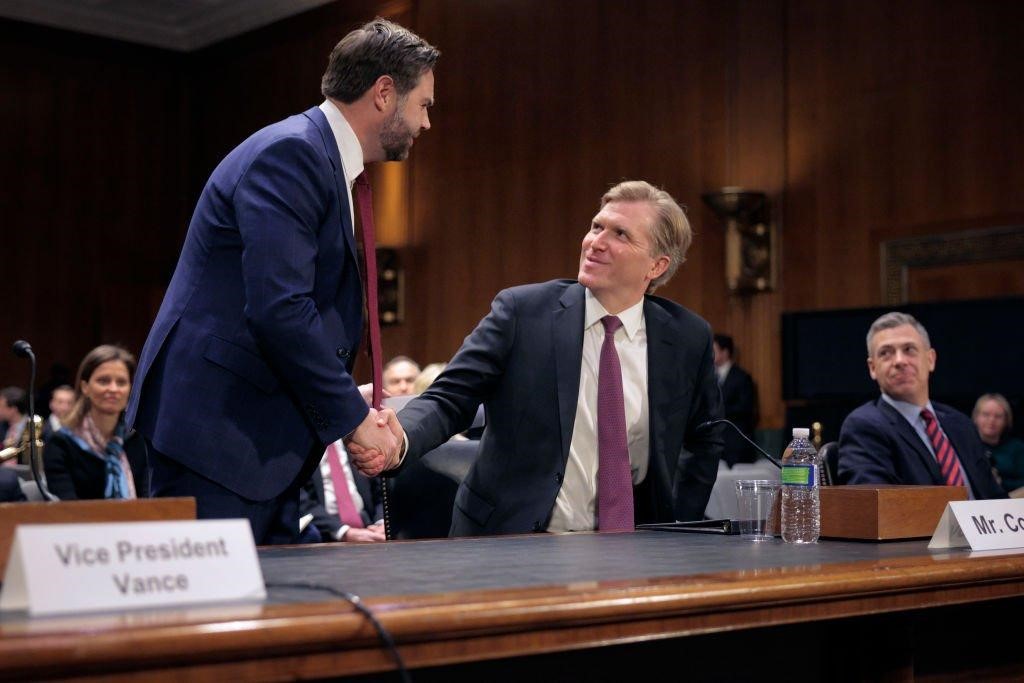 Vice President J.D. Vance and Elbridge Colby. Source: Getty Images
Elbridge Colby has earned a reputation as one of the most consistent critics of what he sees as excessive U.S. involvement in the Russia–Ukraine war. He has also been a vocal opponent of Ukraine’s accession to NATO, arguing that extending U.S. security commitments to Ukraine could further divert resources and strategic attention from the United States’ primary theater of competition—the Indo-Pacific.
At the same time, Russia’s full-scale invasion of Ukraine in 2022 presented Colby and like-minded strategists with a difficult dilemma. Completely disregarding the war in Europe may have resulted in Ukraine’s defeat and a stronger Russia, an outcome that would also run counter to U.S. interests. As a result, his position evolved over time, from near-total skepticism toward providing aid to Ukraine to the view that Kyiv should keep receiving support, albeit in a different way.
This evolution was clearly reflected in Colby’s July 2023 article for TIME, “How We Can Help Ukraine While Genuinely Prioritizing Asia.” In that piece, Colby effectively outlined a conservative framework for supporting Ukraine that, in his view, would not undermine the United States’ primary objective: preparing to deter China.
First, Colby argues that Europe should assume primary responsibility for supporting Ukraine and for the conventional defense of the continent. In this view, the United States is not abandoning either Ukraine or NATO; rather, it seeks to break what it sees as an outdated model of dependence under which European allies have largely relied on the American security umbrella.
A notable example was Colby’s address at the NATO defense ministers’ meeting in Brussels on 12 February 2026. The Guardian described his remarks as a “rare conciliatory note,” as Colby stated that the time had come for the United States and Europe to “move forward together.” This may be interpreted as a qualified endorsement of Europe’s growing willingness to assume greater responsibility.
At the same time, he reaffirmed Washington’s central expectation: European states must translate political commitments into tangible military capabilities, expanded defense-industrial capacity, larger stockpiles, and sustained long-term support for Ukraine. Equally revealing was Colby’s public assessment of Germany’s new military strategy in April 2026. He stated explicitly that “Germany is now assuming a leadership role” and that, after years of military retrenchment, “Berlin is stepping up.”
These remarks illustrate Colby’s broader concept of allied responsibility: higher defense spending, domestic defense production, and concrete long-term support for Ukraine. In other words, America’s allies should become the primary providers of security on their own continent while Washington concentrates its resources on deterring China.
Second, the United States should continue providing military aid to Ukraine, but in a more “focused” manner. Colby argues that the United States possesses substantial stocks of military equipment that are ill-suited to a potential conflict in the Indo-Pacific but may still be of considerable value to Ukraine. In particular, he points to equipment that the Pentagon already intends to retire from service, including A-10 attack aircraft, older variants of the F-16, certain tanks and armored vehicles, artillery shells, and anti-tank missiles.
At the same time, it is important to understand the logic underlying this approach. Much of the equipment in question consists of systems that are already slated for retirement or disposal. Transferring them to Ukraine allows the Pentagon to reduce the costs associated with storage and decommissioning while presenting the move as military assistance. The distinction between “providing equipment that remains essential to U.S. forces” and “transferring equipment that is already being phased out” is significant and should be taken into account when assessing the real value of such aid.
By contrast, Colby explicitly excludes from potential transfers to Ukraine those capabilities that he considers critical to deterring China along the First Island Chain—the geographic arc stretching from Japan to Malaysia that forms a key strategic defensive perimeter around China. These include HIMARS, ATACMS, Patriot, NASAMS, Harpoon, Stinger, and Javelin systems.
After Colby assumed office, the Pentagon suspended deliveries of several critically important weapons systems to Ukraine, citing concerns about dwindling U.S. stockpiles. Neither the State Department nor Congress had been informed in advance. The decision triggered considerable concern among lawmakers, with some members of Congress openly questioning whether the administration had coordinated the move with allies and whether it was consistent with existing legislative commitments.
Trump publicly stated that he had not been aware of the suspension, effectively distancing himself from the decision. Colby, for his part, responded in measured terms, stating that the Pentagon was “carefully reviewing and adapting its approach while maintaining the readiness of U.S. forces.”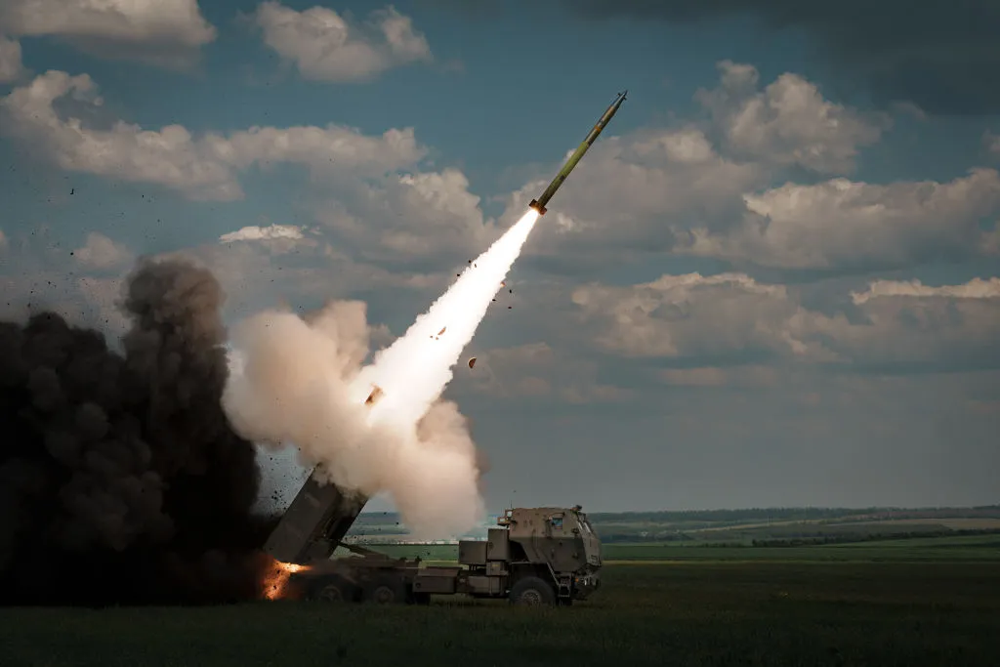 A HIMARS multiple launch rocket system firing near Bakhmut, May 2023. Source: General Staff of the Armed Forces of Ukraine
At the same time, he argues that the primary responsibility for deterring Russia should rest with the Europeans themselves. Accordingly, he has welcomed measures such as the sharp increases in defense spending undertaken by Poland and the Baltic states. By contrast, Colby has been critical of European efforts to expand their military presence beyond their own region.
For example, during meetings with British officials in May 2025, he reportedly expressed dissatisfaction with plans to deploy the aircraft carrier HMS Prince of Wales to the Indo-Pacific, arguing that the United Kingdom should instead focus on the defense of Europe. From the perspective of the strategic logic he advocates, this position is consistent: each actor should concentrate on deterring its own regional competitor rather than pursuing a global role.
At the same time, such an approach tends to overlook the broader strategic interests of key U.S. allies.
In practical policy terms in 2025, Colby’s ideas on Ukraine were reflected in several high-profile decisions. In August 2025, it became known that the Pentagon had quietly prohibited Ukraine from conducting deep strikes inside Russian territory using U.S.-supplied weapons. According to a report by the Wall Street Journal, the Department of Defense introduced a special “review mechanism” for each Ukrainian request to use long-range missiles provided by the United States or its allies to strike targets outside Ukraine.
This procedure was developed by Elbridge Colby in his role as the Pentagon’s policy chief.From the summer of 2025 onward, Washington effectively began blocking attempts by Ukraine to use even its limited stock of ATACMS missiles against targets on Russian territory. Journalists reported about at least one case in which Kyiv was denied authorization for an ATACMS strike under this framework.
The mechanism also extends to British Storm Shadow cruise missiles, given their reliance on U.S. intelligence support. Under the new system, final authorization for each such strike requires the personal approval of Defense Secretary Pete Hegseth.
Another example is Colby’s approach to the question of security guarantees for Ukraine. In August 2025, during a Washington meeting organized by the United States with European allies and president Volodymyr Zelenskyy on a possible peace settlement, Donald Trump unexpectedly stated that the United States “may provide Ukraine with certain security guarantees” after the war.
However, behind closed doors, Elbridge Colby quickly tempered the allies' expectations. According to Politico, at a meeting on 19 August 2025, Colby directly told European counterparts that the U.S. role in any security guarantees for Ukraine would be minimal.
For Ukraine, Colby’s views and policy prescriptions are of a contradictory nature. On the one hand, he does not seek Ukraine’s defeat and even proposes specific frameworks for continuing support, albeit in a limited form. On the other hand, his priorities are clearly not aligned with Ukraine’s interests. Colby is willing to expose Ukraine to significant risks in order to prepare for a potential war with China.
His approach has already contributed to delays in critical weapons deliveries, efforts to pressure Kyiv and its allies into unfavorable compromises, and the establishment of de facto red lines on the use of Western-supplied weapons. Colby’s influence is further amplified by his status as an intellectual reference point for a broader group of American politicians skeptical of aid to Ukraine.
As one of Colby’s allies, Senator Josh Hawley, put it: “nowhere is Colby’s leadership more clearly demonstrated than in the current debates over the choice between aiding Ukraine and deterring China.”
Among the key risks associated with this influence, several stand out as particularly significant.
The first and most immediate risk is a potential reduction and slowdown of U.S. military assistance. As seen in 2025, the administration, following Colby’s recommendations, temporarily suspended certain weapons deliveries, citing U.S. national interests.
If the war drags on, an influential group of “realists” could push for a longer-term freeze in aid to Ukraine if they conclude that resources are critically needed for the Indo-Pacific theater. Signs of fatigue within parts of the American establishment are already visible: in early 2026, the Trump administration did not propose a new major aid package for Ukraine to Congress, relying instead on previously approved funding and the PURL mechanism. This directly reflects Colby’s strategic logic of minimizing U.S. expenditures.
This reflects a broader geopolitical weakening of the U.S. role in Europe, which could create a security vacuum with potentially serious consequences for Ukraine. Colby and his like-minded strategists have openly argued that Washington should prioritize the defense of the American homeland and its immediate surroundings, while European security is treated as a secondary concern. This message has already raised concerns among U.S. allies in Europe.
In the worst-case scenario, if Colby’s approach were fully implemented, the United States may de facto return to a logic of limited engagement in European affairs reminiscent of the pre–Second World War period.
Critics argue that such restraint may have the opposite effect: both Moscow and Beijing may interpret it as a sign of Western weakness. As Kyiv Post columnist Joni Askola wrote, China sees the United States as becoming more isolationist and weaker: “and if the U.S. does not want to defend even Europe—its long-standing ally—then will it defend Taiwan?”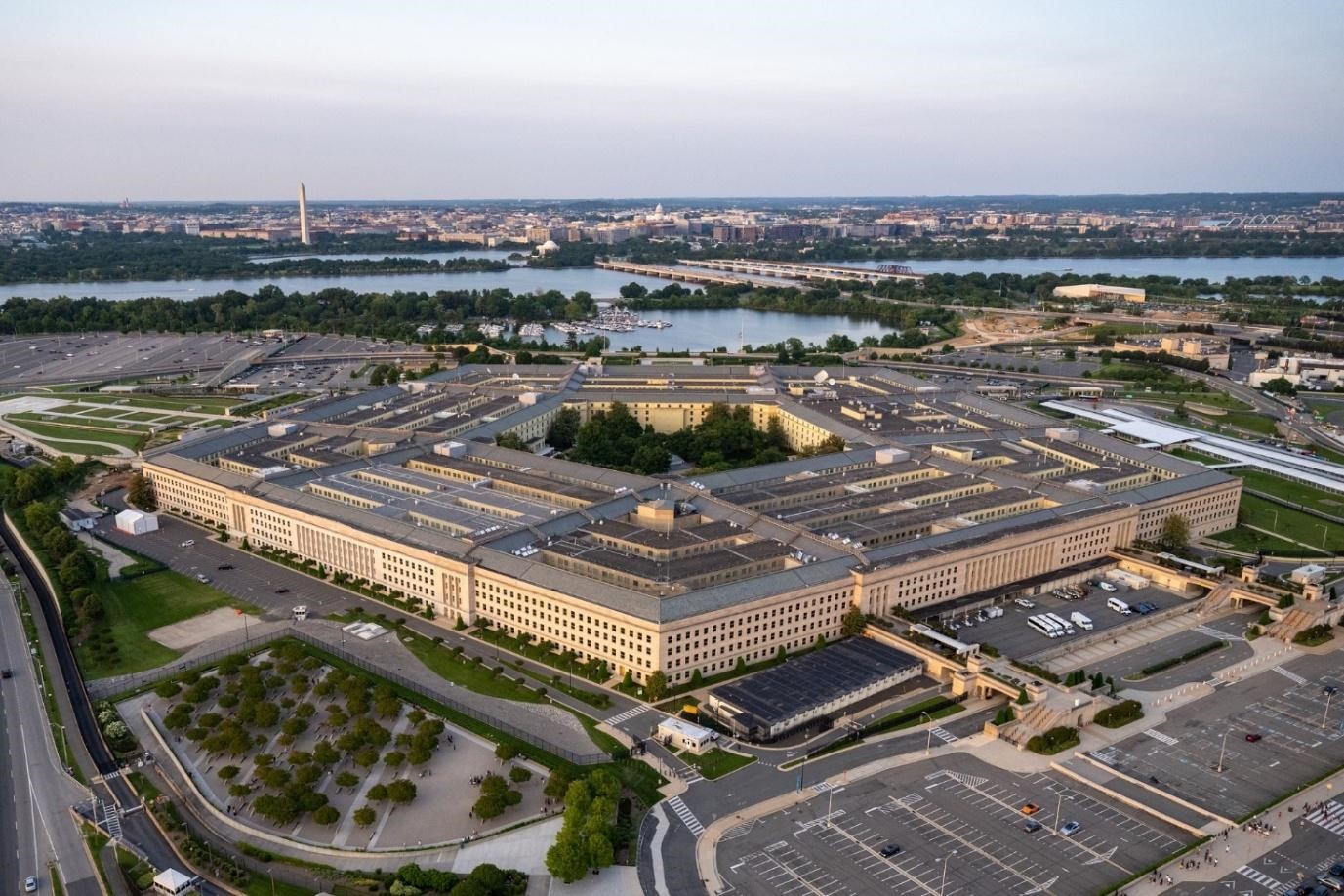 The Pentagon. Source: U.S. Department of Defense
Colby’s influence on U.S. defense policy is already shaping a new strategic framework for Europe, and Ukraine must take this into account. Washington’s shift away from the role of the “sole guarantor” and its demand that part of the security burden be transferred to the EU represents a long-term course. At the same time, it must be acknowledged that Ukraine’s ability to directly influence Colby’s position or alter his strategic priorities is limited. Even Europe, which is actively engaged in these debates, does not always find understanding in Washington.
There is also a concrete precedent. When Ukraine proposed deploying its systems in the Middle East, the initial reaction from Washington was cautious, but the United States ultimately agreed to their deployment. This does not mean that the Trump team responds to rhetoric; rather, it suggests that a tangible demonstration of practical value may produce results, even if not immediately.
Therefore, the task is not to persuade Colby in terms of a “moral obligation” toward Ukraine, but to identify areas of overlap between his strategic logic and Ukraine’s interests.
In this context, Ukraine should position itself not as a recipient of support, but as a partner capable of strengthening U.S. defense capabilities. Ukraine has accumulated unique combat experience in high-intensity warfare against an army that benefits from Chinese technologies and tactical concepts, while also developing an innovative model of warfare technologies—from the large-scale use of drones to electronic warfare systems, fire-direction reconnaissance, and the application of artificial intelligence on the battlefield.
For the United States, which is preparing for a potential confrontation with China, this experience is of clear strategic value. Therefore, Ukraine should offer not only weapons or financial mechanisms, but also partnership-based frameworks for joint research and development (R&D), testing of new weapons systems, and technology transfer schemes that may enhance U.S. military capabilities in its competition with the People’s Republic of China.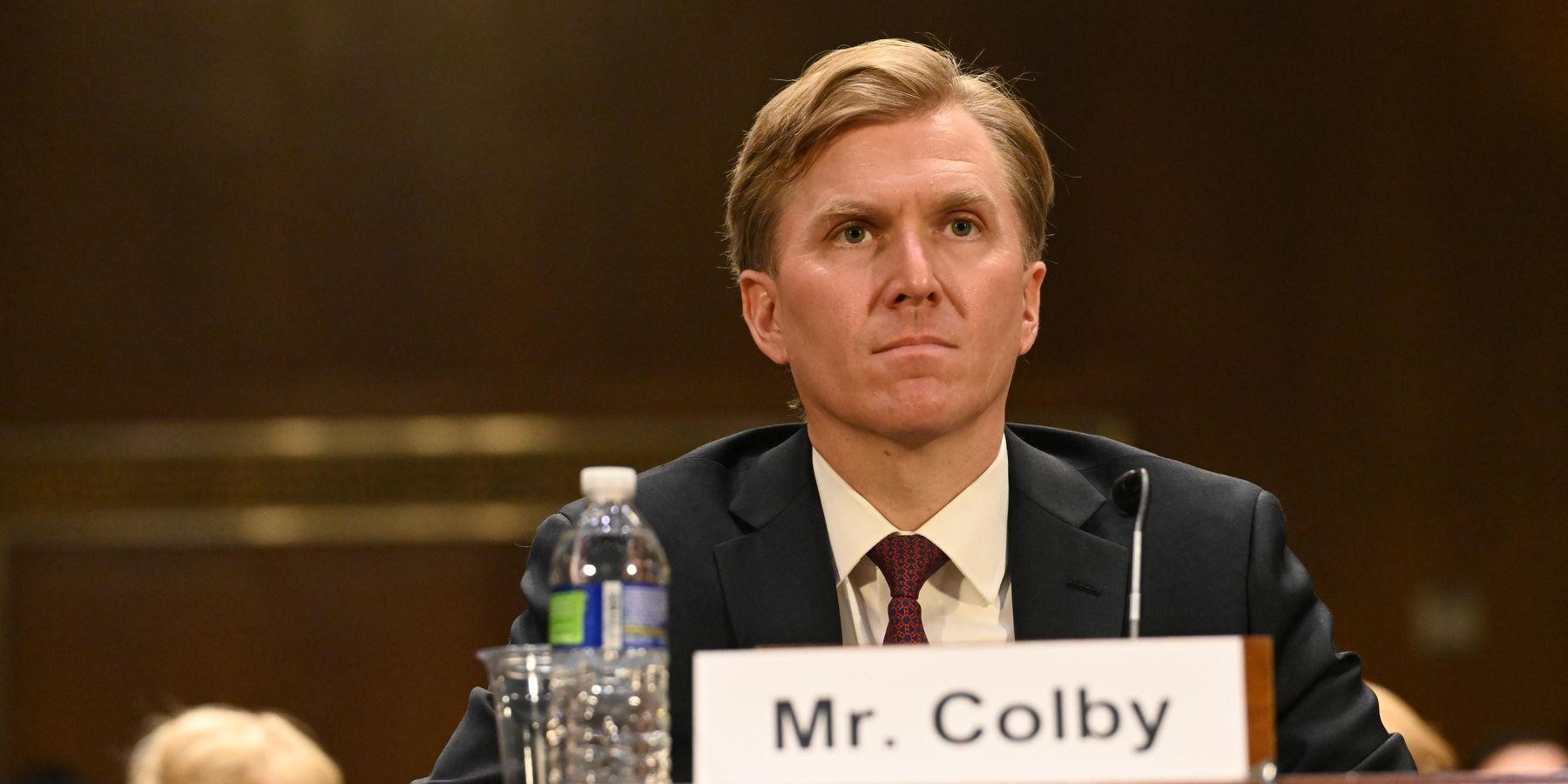 Elbridge Colby speaking during a public event on U.S. geostrategic priorities. Source: Hudson Institute
A Ukrainian victory over Russia would reduce military-technical cooperation between Moscow and Beijing and undermine the prospect of a “dual-front” scenario that China might rely on in a potential conflict with the United States. For Colby, who in The Strategy of Denial emphasized the importance of preventing the formation of a hostile Eurasian bloc, this argument is closely aligned with his own logic and could therefore be particularly persuasive.
At the same time, Ukraine should support the idea of “Europeanization” of aid, but do so in line with its own interests. The goal is to work with allies to shape the concrete policy solutions that Colby is likely to advance, while ensuring that these solutions genuinely reflect Ukraine’s defense needs.If the U.S. approach promotes a model in which “Washington sets the standards and Europe finances the implementation,” then Kyiv must be an active participant in defining those standards, rather than merely an object of external agreements.
Another task for Ukrainian diplomacy is to reinforce the argument that Ukraine’s successful defense does not contradict U.S. interests but is a direct extension of them. Ukraine should demonstrate that, with relatively limited resources, Washington gains a strategic payoff: a weakened Russia, a deterred China, a stronger NATO, and an ally generating experience for future high-intensity warfare.
If Ukraine manages to position itself effectively within this logic, even the most demanding members of the “realist” camp in Washington would see it as, if not a strategic asset, then at least a tactical one—without which U.S. deterrence of China would be weakened.
Ultimately, Ukraine’s success in Washington will depend largely on its ability to operate within the strategic logic currently embodied by Elbridge Colby.
You may be interested