 INTERNATIONAL
INFORMATION AND ANALYTICAL
COMMUNITY


+ Join
Support INTERNATIONAL



Diana Shevchenko, Intern at the Resurgam Analytical Center
 Photo: Getty Images
Against this backdrop, less influential states are increasingly compelled to adapt their foreign policies to the new international environment, particularly by seeking avenues for cooperation with major powers while avoiding the adverse consequences of their global rivalry. One of the most illustrative examples of such balancing is Singapore — a territorially small state with highly developed economic and technological sectors. For decades, Singapore has effectively pursued a balancing strategy in its foreign policy, enabling it to maintain close economic ties with China while simultaneously sustaining strong security relations with the United States.
This approach is known in international relations as a strategy of hedging – a national security or alignment strategy that combines elements of both cooperation and confrontation in relations with another state. However, the current intensification of economic confrontation and technological competition calls into question the long-term viability of this strategy. As controls over technology and investment expand and business becomes increasingly politicised, even traditionally neutral states, including Singapore are coming under growing pressure from major powers.
This article examines Singapore’s hedging policy amid the current intensification of US–China competition, as well as the impact of economic and technological challenges on the country’s ability to maintain a balance between the world’s major centres of power.
The concept of a hedging strategy emerged in international relations theory at the end of the twentieth century. The concept itself is interpreted broadly and occupies a middle ground between two other classical strategies: balancing — countering a more powerful actor — and bandwagoning — aligning with a stronger power. The concept is generally understood through two main approaches: the first focuses on risk reduction and preparation for worst-case scenarios, while the second emphasises the maximisation of benefits under favourable conditions. At its core, a hedging strategy may be defined as a foreign policy approach aimed at managing competing national interests, enabling a state to develop relations with multiple centres of power while reducing the risks associated with dependence on a single partner.
A salient feature of this strategy is that it helps states to avoid choosing sides in periods of geopolitical competition. In this sense, hedging serves as an instrument for preserving strategic flexibility and autonomy, which is particularly important for small and medium-sized states.
This strategy is most commonly employed by countries in the Asia–Pacific region. Singapore,as noted earlier, represents one of the most prominent examples of its implementation. Singapore is a small, open economy that is highly dependent on trade. As a result, the country’s leaders have long understood that its success is closely tied to the development of strategic relationships with both regional states in Southeast Asia and partners beyond the region.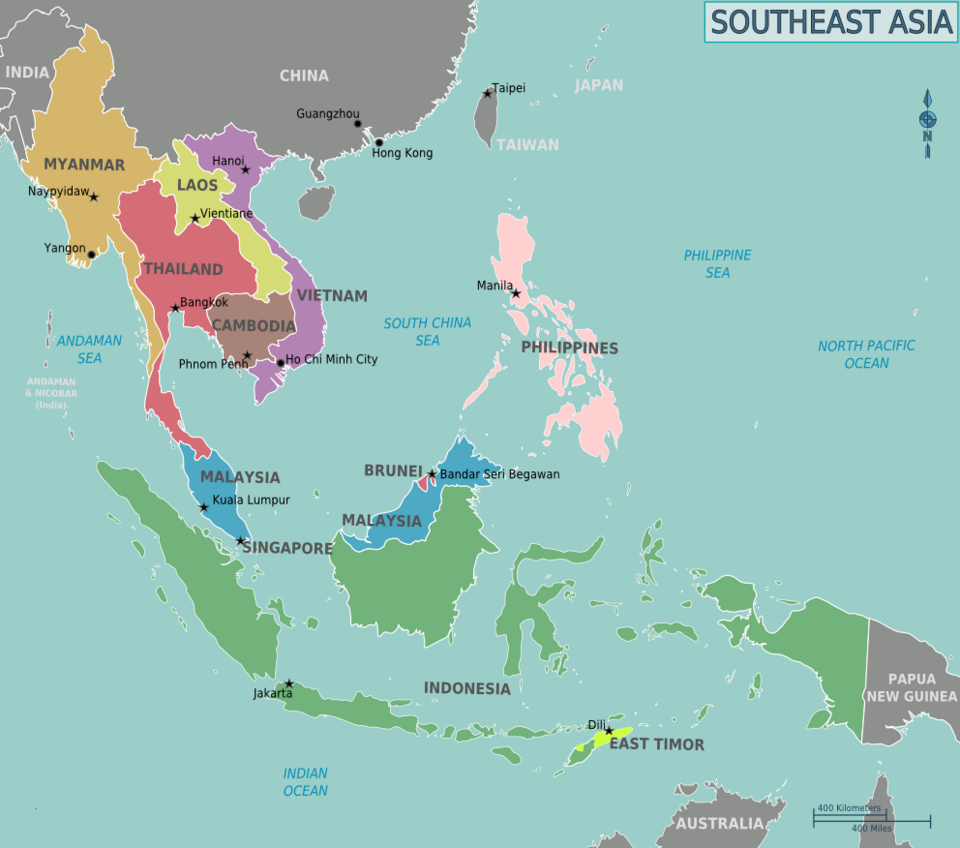 The countries of Southeast Asia. Source
During the Cold War, Singapore adopted a strategy based on close alignment with the United States as a key guarantor of security and regional stability in Southeast Asia. Although the two countries cooperate across various fields, including education and tourism, the most significant strengthening of bilateral relations has taken place in defence and trade. On the one hand, the United States plays an important role for Singapore’s economy in terms of access to markets, investment flows, and advanced technologies. On the other hand, Singapore’s strategic location provides the United States with a platform for power projection in the region. This cooperation has been further reinforced since 1992, following the closure of US military bases in the Philippines. At that point, Singapore assumed the role of hosting the US Navy’s logistics command centre, and in 2001 a naval base that began to host US aircraft carriers. Since 2003, Singapore has participated in the US-led Proliferation Security Initiative (PSI), aimed at countering the proliferation of weapons of mass destruction. In addition, the two countries have engaged in negotiations on a new strategic partnership in the defence and security domain. In the same year, Singapore signed a free trade agreement with the United States.
In 2005, the two countries signed a framework agreement that deepened and broadened bilateral cooperation in areas such as counterterrorism, joint military exercises, and access to defence technologies. For Washington, the agreement became an important instrument for strengthening US military and political presence and projecting influence in the Asia–Pacific region, while for Singapore it served as a means of reinforcing its bilateral partnership with the United States in order to support regional security.
Due to the rapid rise of the People’s Republic of China and its growing role as an influential economic actor, Singapore began to develop closer engagement with the PRC in the 1990s, particularly in the economic, trade, and investment spheres. Following the policy of economic opening initiated by Deng Xiaoping, a senior figure of the Chinese Communist Party during the late 1970s and 1980s–1990s period, Singapore increasingly viewed China as a key partner for the development of mutually beneficial trade and economic relations in Southeast Asia.
As of today, the PRC is Singapore’s largest trading partner. In previous years, Singapore was among the largest foreign investors in China, a trend often attributed in part to cultural affinities between the two countries. Taking into account that the Chinese diaspora constitutes the majority of Singapore’s population, this factor has contributed to a higher degree of trust in bilateral economic relations.
Singapore supports the Regional Comprehensive Economic Partnership (RCEP), a free trade agreement among the member states of the Association of Southeast Asian Nations (ASEAN) together with China. Alongside China, it was also one of the founding members of the Asian Infrastructure Investment Bank (AIIB) and remains an active supporter of China’s Belt and Road Initiative. In addition, in 2008 the country deepened its cooperation with China by signing the Agreement on Defence Exchanges and Security Cooperation.
However, despite close economic ties, relations between the two states remain complex, particularly due to China’s claims over Taiwan and its growing presence in the South China Sea. Singapore has consistently expressed concern over China’s increasing militarisation of the South China Sea. In 2004, Singaporean Prime Minister Lee Hsien Loong even made a private visit to Taiwan, which drew attention to the sensitivities surrounding the issue. Singapore’s leadership has repeatedly emphasised the country’s sovereign right to make independent foreign policy decisions, regardless of Beijing’s position.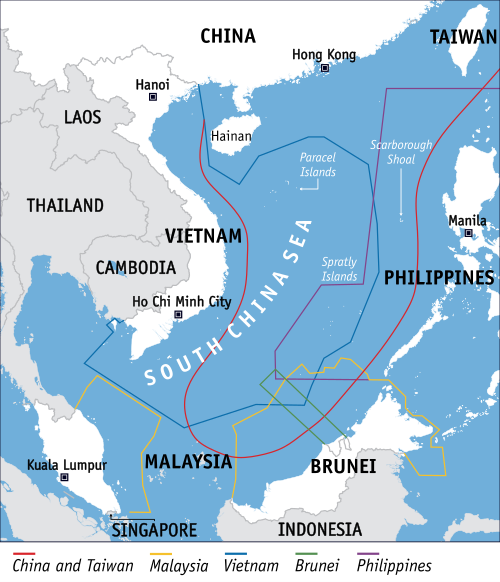 Territorial claims in the South China sea. Source
A hedging strategy is generally most effective under conditions of relative stability in the international system. Intensifying US–China rivalry, however, is leading to the growing politicisation of economic interdependence, thereby imposing constraints on states seeking to maintain a multi-vector foreign policy. It follows that competition between the two global powers has become one of the key challenges for Singapore’s strategic approach.
At the same time, Singapore’s role as a neutral diplomatic platform, where important informal meetings and summits between senior US and Chinese officials take place, requires it to maintain a policy of neutrality and avoid taking sides in the US–China confrontation.
Economic rivalry between the United States and China began in 2018 against the backdrop of China’s rapid rise and the expansion of its technology brands, which generated competition in the US domestic market that was perceived as undesirable by Washington. The administration of Donald Trump repeatedly criticised Chinese authorities for flooding markets with low-cost raw materials, including aluminium and steel. This, in turn, prompted the White House to impose higher tariffs on imports of Chinese goods. The objective of this approach was to curb China’s economic rise and restore a more stable balance of power in the global market.
In response, China imposed higher tariffs on US exports. Contemporary economic competition, however, extends beyond trade disputes, encompassing technological and financial rivalry as well. The combination of US efforts to decouple supply chains and restrict access to critical technologies, alongside Beijing’s assertive maritime claims and economic coercion, increases the risk that smaller states will be compelled to choose sides.
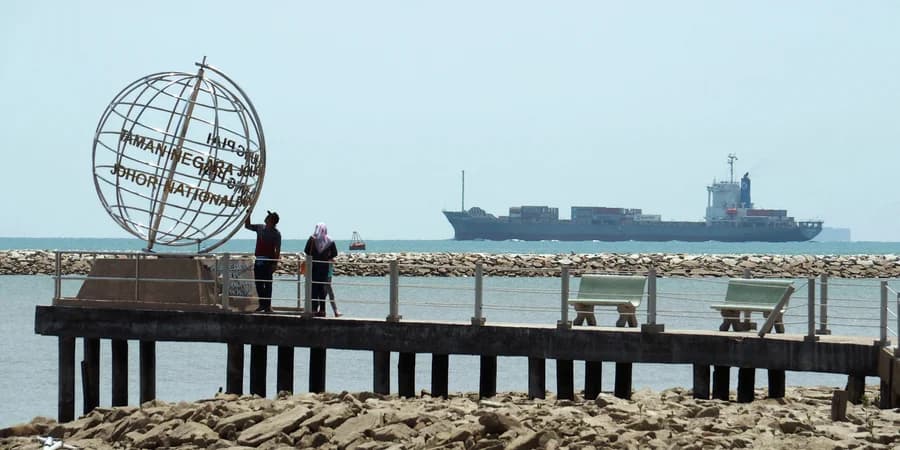
For Singapore, this environment is particularly critical, as its prosperity depends on open sea lanes and the stability of maritime trade routes. As a state balancing between China and the United States, Singapore has relatively limited room for manoeuvre and influence. However, one positive effect of this rivalry has been the potential relocation of investment and manufacturing away from China to other countries in Southeast Asia, including Singapore. Singapore Port. Source
U.S.–Singapore relations continue to be anchored primarily in the security domain. At the 2022 US–ASEAN Summit, Singapore reportedly noted that excessive US concern over China’s rise could contribute to the emergence of a new Cold War. Singapore’s foreign policy objective is to base its approach on the collective interests of Southeast Asia rather than on US strategic priorities. Although Singapore is the United States’ closest security partner in ASEAN, its reluctance to take sides may generate misunderstandings in Washington, potentially affecting bilateral security cooperation.
At the same time, China is Singapore’s largest trading partner and a major source of investment. The country has consistently maintained a cautious and neutral approach to China’s rise, seeking to avoid entanglement in great power rivalry or broader international conflicts. Taking into account that the majority of Singapore’s population is ethnically Chinese, the government’s stance towards the PRC is not always straightforward or uniformly understood within domestic society.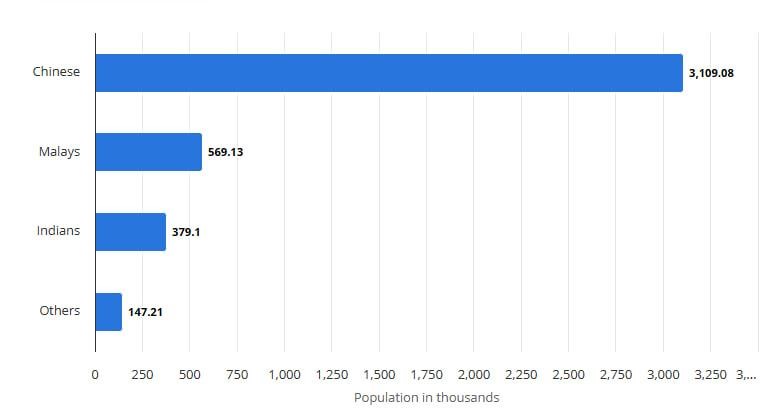 The number of different ethnic groups among Singapore’s resident population in 2025. Source
However, Singapore’s diplomatic dilemmas in the current environment are no longer confined to security and economic domains. A new challenge to its hedging policy has emerged in the form of technological competition. A key dimension of this rivalry is access to the semiconductor market. The United States has increasingly used export controls as an instrument to contain China’s technological development, restricting access to advanced chips and semiconductor manufacturing equipment.
China, in turn, is investing significant resources in building its own industrial base in order to reduce dependence on external supplies. At the same time, competition is unfolding over control of artificial intelligence ecosystems. This includes not only the development of algorithms, but also access to data, investment in start-ups, and the attraction of highly skilled professionals.
Singapore is one of the major technology hubs, attracting a large number of IT companies due to its stable regulatory environment and openness to foreign investment. However, US restrictions that may affect access to advanced technologies, together with China’s recent efforts to tighten control over attempts by Chinese companies to relocate parts of their operations beyond national jurisdiction, create a new challenge for Singapore’s ability to balance relations between the two global powers.
A large number of Chinese companies are seeking new business practices that would help mitigate risks arising from the high level of unpredictability associated with economic and technological competition between the United States and China. In response, some Chinese firms have begun relocating their headquarters, international divisions, and financial structures to Singapore. This practice has been referred to as “Singapore washing” and involves using Singapore as a neutral jurisdiction to reduce the political and economic risks linked to the Chinese origin of business activities.
This strategy is most actively used in the technology and e-commerce sectors. One of the most prominent examples is Shein, which relocated its headquarters to Singapore as early as 2020. This move allowed the company to distance itself from its Chinese origins amid deteriorating US–China relations and increasing Western scrutiny of Chinese digital platforms. A similar model is also used by TikTok, owned by the Chinese company ByteDance. Part of TikTok’s global management and international operations is likewise based in Singapore, which helps the company project an image of a more international platform.
One of the key areas in which “Singapore washing” is applied is the artificial intelligence and digital infrastructure sector. A significant number of companies engaged in AI-related technologies choose Singapore as a platform for their international operations and for attracting foreign capital. Among such companies are Manus AI, the optical equipment manufacturer Terahop, the data centre operator DayOne, and the AI-based chemical synthesis company ChemLex. For such companies, Singapore is attractive due to its stable financial system and access to international markets.
A separate area is the financial sector and venture capital investment. Some Chinese investment funds and technology start-ups use Singapore as a neutral platform for raising international capital and cooperating with Western partners. This allows them to operate in a more stable legal environment and reduce risks associated with US sanctions or scrutiny of Chinese businesses. One example is Yuxiao Fund, a private investment fund founded by Chinese businessman Wu Yuxiao and registered in Singapore.
However, amid the escalation of US–China rivalry, this strategy is beginning to be undermined. First, the United States is paying closer attention to corporate origins, particularly in the artificial intelligence sector. Even if a company is formally registered in Singapore, any substantive links to mainland China may be sufficient grounds for restricting access to financial support. Second, the Chinese government has also begun to respond more actively to attempts by companies to relocate technology and business structures beyond its national jurisdiction.
A notable example is the controversy surrounding Meta and Manus. Manus is a leading developer of agentic artificial intelligence. The company originated from the Chinese start-up Butterfly Effect; however, in 2025 it relocated its core operational structure to Singapore. In December 2025, Meta acquired Manus for USD 3 billion and soon afterwards stated that Manus was severing its ties with mainland China.
However, in response, Chinese regulators decided to review Meta’s acquisition for potential violations of export control and national security regulations, arguing that since Manus was founded by Chinese engineers and still had a Chinese parent company, it should remain under China’s jurisdiction. China stated that preventing foreign companies from acquiring assets deemed critical to national security had become a policy priority.
This example clearly illustrates the extent to which US–China rivalry may affect business. In a broader context, it also confirms that the space for “neutral” economic and technological interactions is gradually narrowing. This, in turn, undermines the effectiveness of the hedging strategy, which has largely relied on the possibility of separating economic activity from political tensions.
In the current context of competition between global powers, the hedging strategy that has long enabled Singapore to effectively balance between the United States and China is facing increasingly significant constraints. While in an era of relative global stability this model allowed for the combination of security cooperation with the United States and active economic engagement with China, the current escalation of rivalry between these two states is substantially altering the rules of the game. The economic conflict between the United States and China is leading to the fragmentation of the global economy, the politicisation of trade and investment flows, and growing uncertainty for open economies.
For Singapore, which is heavily dependent on the stability of international trade, this results in higher systemic risks and a narrowing of its room for manoeuvre in the economic sphere. In addition to this, both US–Singapore and China–Singapore diplomatic dilemmas may further complicate the use of a hedging strategy. On the one hand, maintaining security ties with the United States remains critical for ensuring stability; on the other hand, economic engagement with China is a key driver of Singapore’s economic development. As a result, any strengthening of cooperation with one side potentially creates risks for relations with the other, thereby complicating the implementation of a multi-vector foreign policy.
A final factor undermining the effectiveness of Singapore’s balancing capacity is the contemporary challenge of technological rivalry, which also weakens the so-called “Singapore washing” strategy. The hedging strategy remains viable in today’s environment of persistent competition, but its implementation has become more difficult than in previous years. Singapore continues to seek a balance between the United States and China, yet the space for such manoeuvre is gradually narrowing. In the long term, this may compel the country to reassess its foreign policy priorities and potentially develop a strategy for responding to growing pressure to choose between competing sides.
You may be interested