 INTERNATIONAL
INFORMATION AND ANALYTICAL
COMMUNITY


+ Join
Support INTERNATIONAL



Elizaveta Samsonova, expert in international relations, member of IAPSS, intern at the “Resurgam” Center for the Asia-Pacific track.
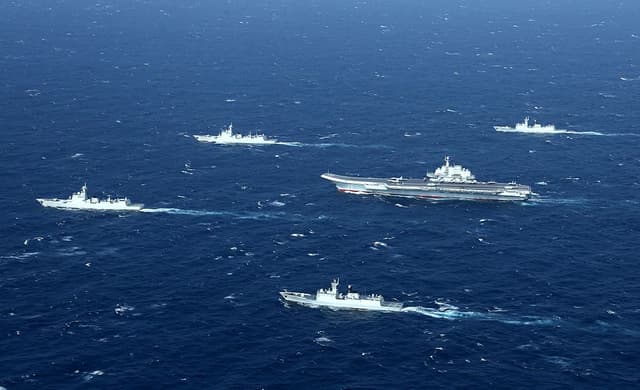
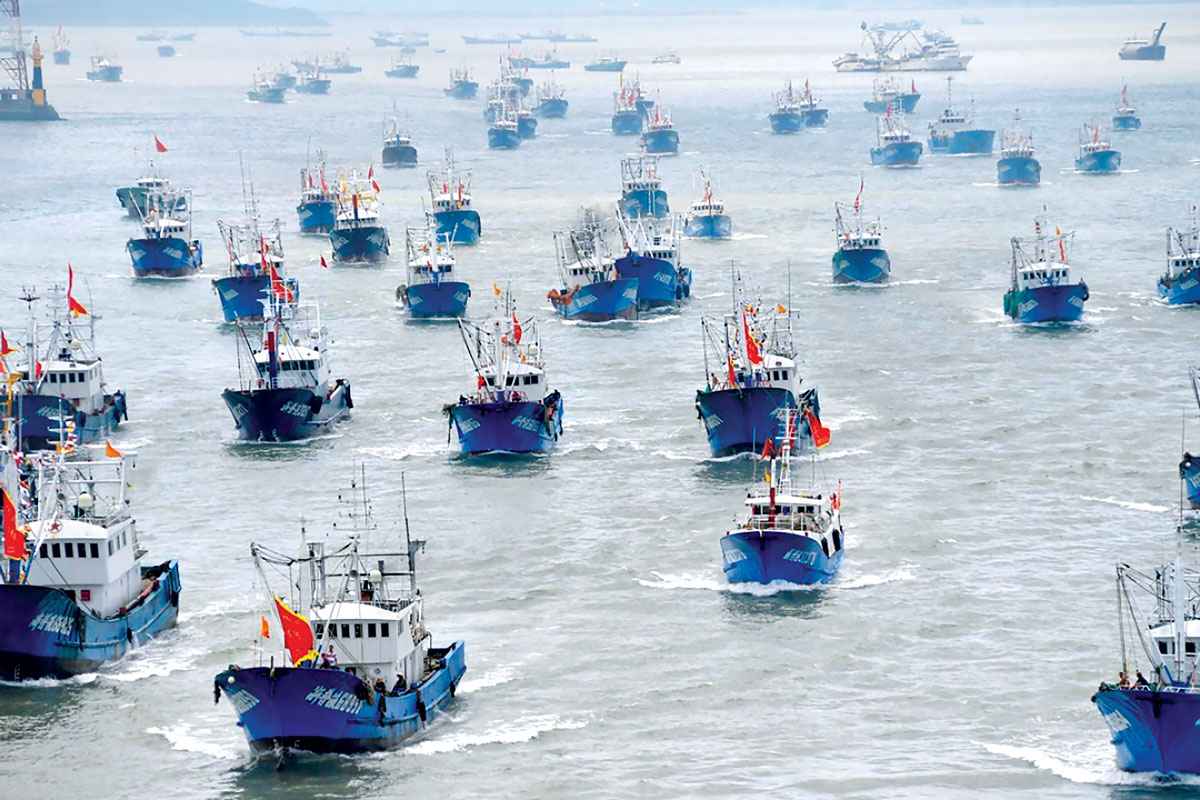 Chinese fishing fleet at sea. Photo by Dr. Ernest Gunasekara-Rockwell
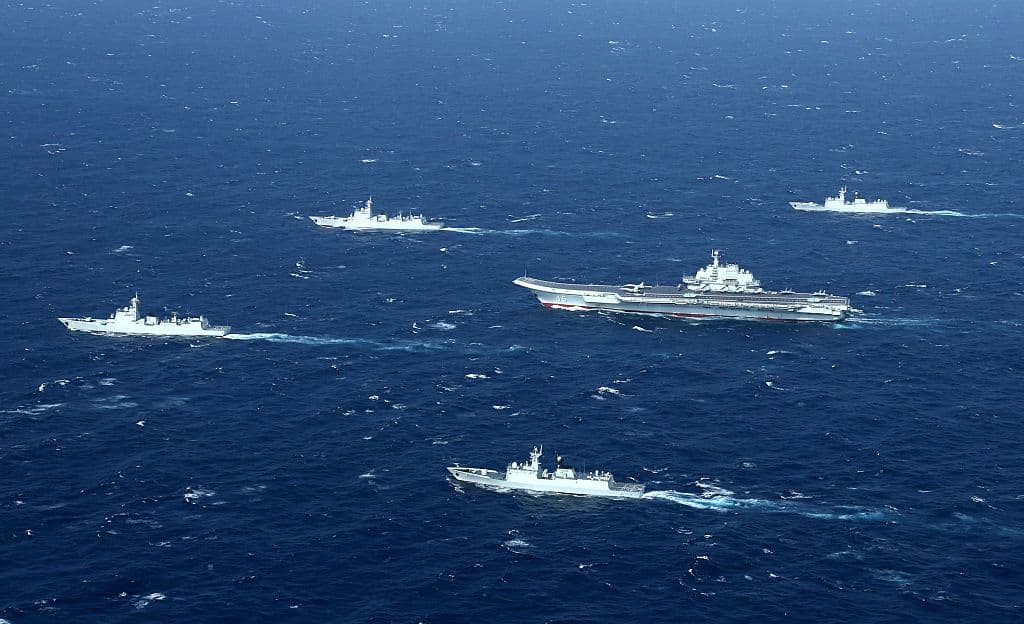
On April 10–11, 2026, satellite imagery revealed a floating barrier at the entrance to the lagoon near Scarborough Shoal, alongside Chinese fishing vessels and a Chinese Coast Guard or naval vessel.This pointed to an attempt to physically restrict access to the lagoon, primarily for Filipino fishermen and vessels. While the December and January formations demonstrated China’s ability to rapidly concentrate a large number of quasi-civilian vessels, the incident near Scarborough Shoal involved the use of a direct access-denial measure. These are no longer isolated maritime incidents, but an emerging pattern reflecting different manifestations of the same pressure mechanism. Research vessels operate at the intersection between scientific research and military intelligence, as the detection or deployment of underwater sensors constitutes a direct security function. The focus is on the underwater environment near Taiwan, Japan, Guam, and the approaches to the Strait of Malacca — precisely the areas where it is critically important for China to understand the operational conditions for its own submarine forces and the potential containment of foreign or unidentified ones.
China operates at sea through a network of different entities that perform distinct but interconnected functions. Within this model, the maritime militia consists of nominally civilian fishing vessels whose crews are coordinated by state structures and receive funding, briefing, and material support to carry out specific tasks in disputed waters: demonstrating presence, conducting surveillance, congesting routes, and indirectly obstructing the movement of other vessels. Unlike a conventional fishing fleet, this is a managed asset that can be rapidly concentrated in a designated area in order to saturate the space numerically, block approaches, create density, and impose a new de facto presence where Beijing seeks to alter the access regime. The Coast Guard adds coercive force to this presence and ensures de facto control over access in disputed areas: it pursues, pushes back, blocks, escorts foreign vessels, or deploys physical barriers. Research and hydrographic vessels collect data on seabed conditions, currents, salinity, temperature, and acoustic environments, thereby laying the informational foundation for deeper control over the maritime domain. It is precisely the combination of these instruments that allows China to exert pressure without conventional military deployment — through the gradual buildup of presence, control, and coercion under civilian cover.
This pattern has long been operational in practice. It may be traced from the seizure of the Paracel Islands in 1974, to the shadowing of the U.S. surveillance vessel USNS Impeccable in 2009, from the standoff at Scarborough Shoal in 2012 — which ended with the effective establishment of Chinese control over the area — to pressure on the Philippine outpost at Second Thomas Shoal in 2023–2024. The sequence is consistently similar and has been described above: China first establishes a dense quasi-civilian presence, then adds a coast guard or other formalized coercive component, and ultimately alters the de facto access regime in the area. As a result, a disputed zone gradually turns into a space where Chinese presence becomes normalized, while the presence of others is increasingly associated with complications and risks.
A separate element of this model involves dual-use research and hydrographic vessels. Following this logic,the voyage of the Shiyan 06 to Colombo in 2023 was a continuation of the same practice. Sri Lanka initially permitted only a port call for resupply, but the vessel subsequently conducted survey activities off the island’s western coast. This involved the use of a scientific research platform to access a sensitive area of the Indian Ocean, collect data, and test the political boundaries of what is considered acceptable. The move also raised concerns in India, which regards this part of the ocean as a key security domain. Sri Lanka’s subsequent one-year moratorium on the entry of foreign research vessels indicated that such missions are no longer perceived as neutral scientific activity.
Beijing systematically implements practices that allow it to alter maritime access regimes without resorting to open warfare. In practical terms, this involves the ability to occupy an area ahead of an adversary, saturate it with its own presence, complicate access for other vessels, and impose a new pattern of movement in the waters before the situation escalates into a conventional military confrontation. This is why the elements of a single system — the maritime militia, the coast guard, and research vessels — are important to Beijing as a means of gradually shifting the balance of power, step by step.
In the Taiwan context, this logic is aimed at making external intervention slower, more costly, and less predictable. Large quasi-civilian formations can restrict routes, complicate maneuvering, overload surveillance systems, and create legal and political ambiguity for Taiwan, the United States, and its allies.
The events of April 2026 illustrated how this logic is already shaping regional security behavior. On April 20, the United States, the Philippines, and partner countries launched the annual “Balikatan” exercises. In 2026, they became the largest in terms of participant numbers and were explicitly oriented toward operations in near-real conditions, including live-fire drills, maritime strikes, and scenarios near Taiwan and in the South China Sea. A few days later, China conducted live-fire exercises in waters east of Luzon — an area that links the Philippine operational theater with the Taiwan direction. At the same time, Taiwan carried out drills on Itu Aba Island, practicing armed inspection of a suspicious vessel. Although these events were not necessarily direct responses to one another, they reflect a broader trend: the region is increasingly interpreting Chinese actions as a recurring mechanism of maritime pressure and is conducting corresponding preparations that take into account the systematic nature of this pressure.
The economic logic behind China’s policy begins with geography. The South China Sea is one of the main arteries of global trade. Around one-third of global shipping passes through it, and for China itself this corridor carries particular weight: most of its maritime trade and a significant share of its energy imports depend on the space between the South China Sea and the Strait of Malacca. The Strait of Malacca accounts for nearly 22% of global maritime trade and about 75% of China’s seaborne crude oil imports. For Beijing, control over this space is a matter of economic resilience.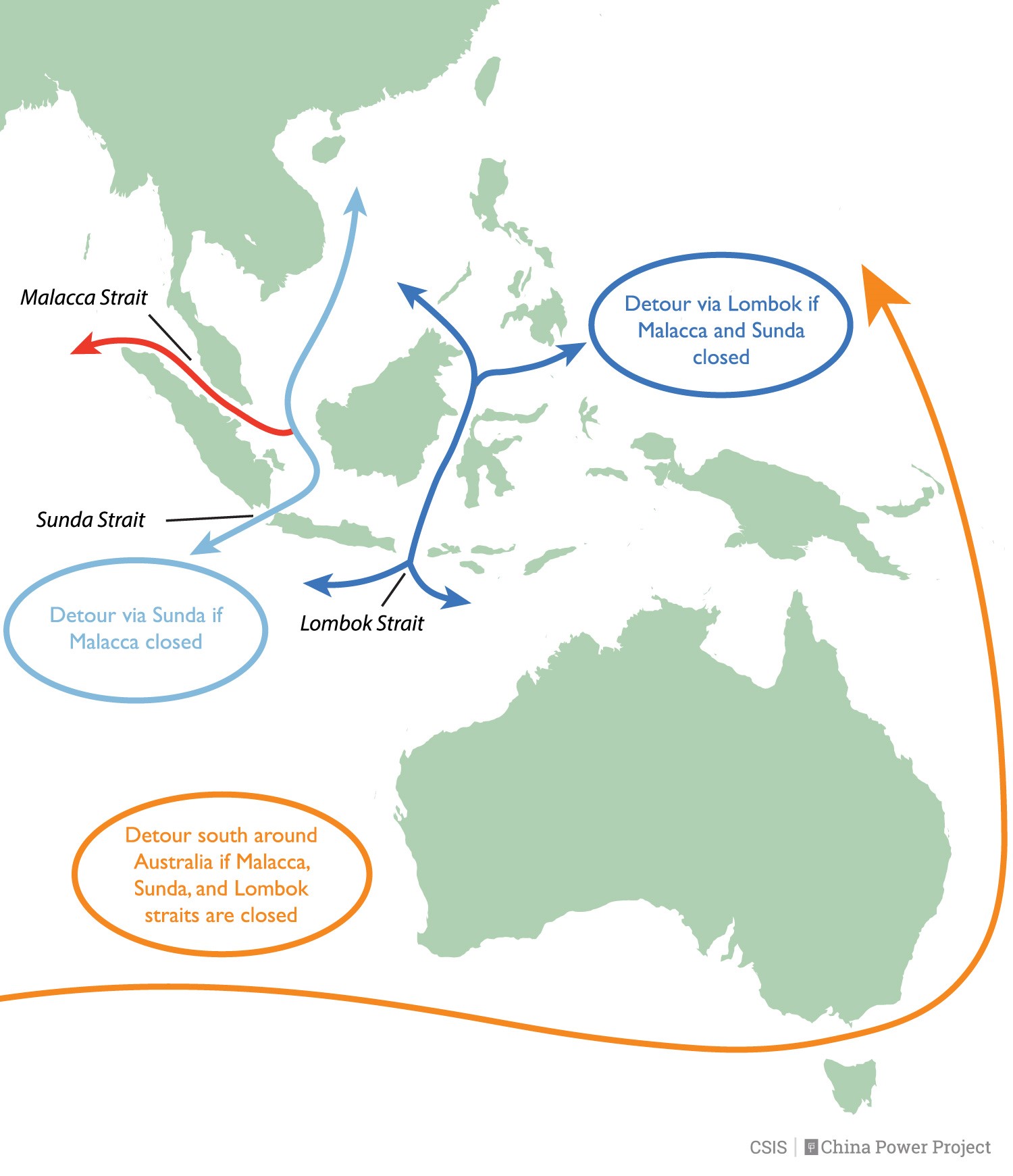 Key maritime routes between the South China Sea and the Strait of Malacca, as well as alternative routes via the Sunda and Lombok Straits. Source:CSIS, China Power Project
The risks stem from the same underlying logic. For China, energy supply lines through the Strait of Malacca remain vulnerable. For the Philippines, Vietnam, Malaysia, and other coastal states, fisheries, access to offshore resources, and the stability of maritime trade are directly exposed. When waters are perceived as a high-risk zone, insurance costs rise, routes become longer, supply schedules are disrupted, and energy imports become more expensive. This places additional pressure on fisheries, local markets, and coastal communities.
Moreover, Beijing already links pressure through maritime control with energy leverage over states that find themselves under allied or military-political pressure. This was illustrated, in particular, by China’s use of the Philippines’ energy vulnerability. Amid energy tensions, the Philippines sought emergency supplies of fuel and fertilizers, as well as opportunities to negotiate oil and gas cooperation with China. In response, Beijing accused the Philippines of hypocrisy for requesting energy assistance while simultaneously conducting large-scale military exercises with the United States and its allies. In doing so, China effectively signaled that cooperation on energy-sensitive issues depends on “appropriate conditions” in bilateral relations.
The legal issue consists of at least three layers: the regime governing marine scientific research, the rights of coastal states in the exclusive economic zone, and the legal ambiguity surrounding quasi-civilian vessels that effectively operate as a state-linked paramilitary instrument. Beijing is not merely exerting pressure in maritime space; it is gradually eroding the rules of the UN Convention on the Law of the Sea that define who may operate there and under what conditions.
The Convention explicitly establishes that in the exclusive economic zone and on the continental shelf, marine scientific research requires the consent of the coastal state, and that the state itself has the right to regulate and control such activities. When a research vessel operates in another country’s exclusive economic zone without transparent consent, without full notification, or outside the declared conditions, it breaches the specific legal regime governing marine scientific research. This is why cases such as Shiyan 06 carry legal significance, not merely political implications.
The problem with the maritime militia is that it is incorporated into a system of “voluntary” civilian defense forces while remaining under state control. International law distinguishes much more clearly between warships, state vessels on non-commercial service, and private civilian ships than it does these hybrid paramilitary formations. This is precisely what China exploits. Such a construct blurs the line between civilian presence and state power. It makes it more difficult for other states to classify incidents, choose a proportionate response, and establish violations in real time.
If such practices become entrenched, law will gradually be reshaped by the fact of presence: those who maintain a persistent presence in an area are the ones who effectively set the rules. For coastal states, this means an erosion of predictability and a rising cost of exercising their own rights. For external actors, it translates into more expensive freedom of navigation and deterrence operations. For the region as a whole, it marks a shift from a rules-based legal regime to one of constant testing of law through force and presence.
Frontline states are those that face China’s maritime pressure on a daily basis in their own or adjacent waters.
The Philippines has shifted from incident management to a more systematic response. Manila publicly documents encounters, escorts fishermen and resupply missions, relies on the 2016 arbitral ruling in Philippines v. China, which rejected the legal basis of China’s claims within the nine-dash line, expands defense coordination with the United States, and uses the “Balikatan” exercises to practice multilateral crisis scenarios in operational terms.
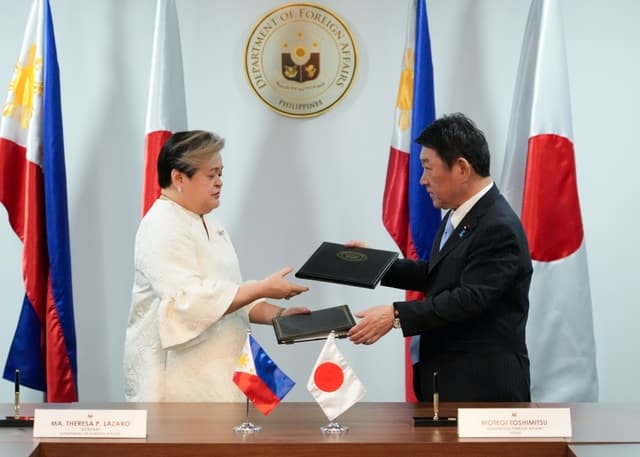
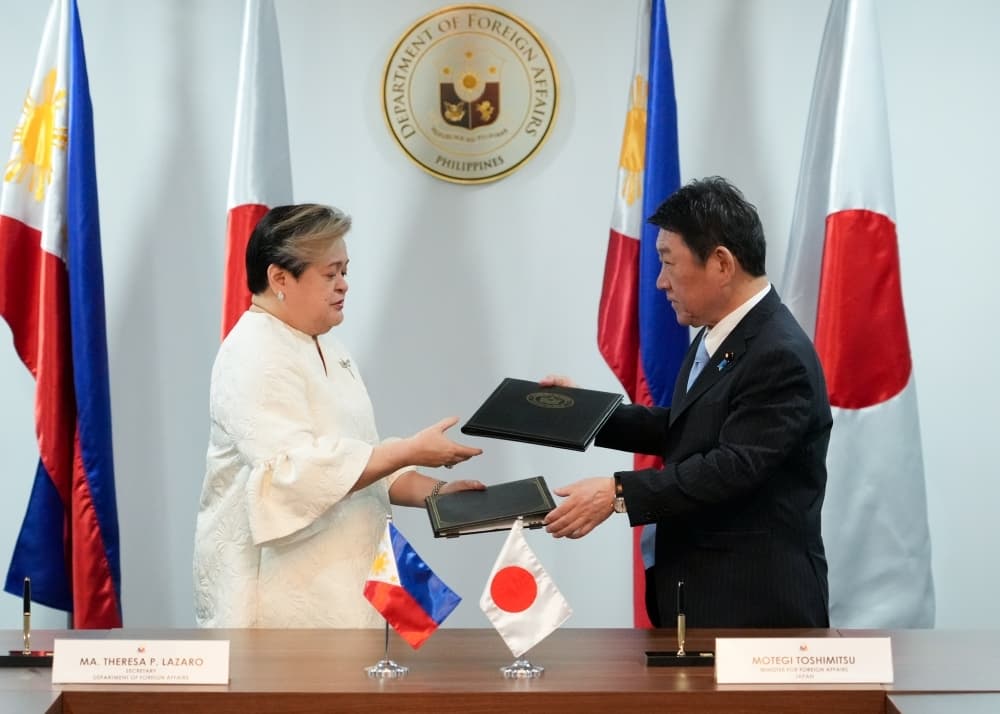
Tokyo has condemned the dangerous and coercive use of coast guard vessels and maritime militia, concluded a reciprocal access agreement with the , and in “Balikatan 2026” participated as a full contributor, including the deployment of its own missile component in northern Luzon. This strongly suggests a shift from diplomatic support toward practical involvement in deterrence.
Taiwan, in turn, is responding by strengthening its coast guard and more visibly integrating its maritime outposts into its security architecture. It has also confirmed a visit to another Taiwanese-held island in the South China Sea.
Vietnam responds more cautiously, but consistently employs diplomatic protests and maritime monitoring when Chinese pressure affects its fishing sector and resource interests.
In the Indo-Pacific dimension, the most notable responses have come from Sri Lanka and India. Following a series of Chinese deployments in January 2024, Colombo suspended access for foreign research vessels, seeking to reduce pressure from India while avoiding a rupture in relations with China. New Delhi has consistently raised security concerns over the visits of Chinese research vessels to Sri Lanka, and in 2024 Indian military officials explicitly referred to patrols and monitoring around the Chinese research vessel Xiang Yang Hong 03 in the Indian Ocean.
For the United States, China’s model has long ceased to be a localized dispute. In 2023, Washington and Manila reinforced in bilateral defense guidelines that an attack on the state vessels, aircraft, or armed forces of either party — including coast guard units — falls under the scope of the Mutual Defense Treaty. The expansion of access to new sites in northern Luzon and Palawan has become a more visible response to China’s tactics and has added an infrastructure dimension to this commitment. In other words, alliance guarantees are now increasingly backed by planning, forward positioning, and joint exercises.
Australia has followed a similar trajectory. In 2024, Canberra repeatedly expressed direct support for the Philippines following Chinese actions near Second Thomas Shoal, highlighted the illegality and dangerous nature of such maneuvers, reaffirmed the binding nature of the 2016 arbitral ruling, and joined “Balikatan 2026.” The latter can be seen as a shift from diplomatic steps toward practical engagement.
The Quadrilateral Security Dialogue (Quad) reflected the same shift in July 2024. Ministers from Australia, India, Japan, and the United States expressed serious concern over the unsafe use of coast guard and maritime militia forces, pledged to strengthen maritime security, and launched a dedicated maritime legal dialogue. This represents an effort to develop shared tools to respond to hybrid maritime coercion.
The European Union and several individual European states have also shifted from general statements to a clearer legal position. In June and July 2024, the European External Action Service declared China’s actions against the Philippines unlawful and dangerous, emphasized the legal force of the arbitral ruling, and called for compliance with the UN Convention on the Law of the Sea. At the same time, France and Canada participated in “Balikatan 2026” as external partners.
This indicates that the issue is no longer perceived as purely regional. It is increasingly viewed as a challenge to the maritime order in the Indo-Pacific.
China is systematically expanding its capacity to control maritime space in crisis situations. This involves altering access regimes to maritime areas, exerting pressure on sea lanes, complicating external intervention, and gradually consolidating its presence in spaces that Beijing considers strategically significant. To this end, China employs a combination of maritime militia, coast guard forces, and research vessels.
This model is no longer confined to the South China Sea. Chinese activity in the East China Sea has demonstrated the ability to deploy quasi-civilian vessels at scale; operations near Luzon have linked this pressure to the Taiwan direction; and activity in the Indian Ocean has shown the use of research vessels to enter strategically sensitive maritime areas. This is further underscored by the broad geography of Chinese research voyages — from Sri Lanka to the approaches to Guam. Historical cases from the Paracel Islands to Second Thomas Shoal indicate that this model produces results. It enables China to gradually reshape the operational environment, increase the cost of response for other actors, and blur the boundary between peacetime, crisis, and coercion.
If such practices become entrenched, the region faces higher logistics costs, increased insurance premiums, pressure on fisheries, greater energy vulnerability, and a persistent risk of incidents. In legal terms, this pattern of repeated coercion undermines the effectiveness of the mechanisms embedded in the UN Convention on the Law of the Sea. In strategic terms, it reflects the preparation of a maritime environment in which China seeks to be the first to alter access regimes and present other states with already established conditions.
The effectiveness of China’s quasi-civilian maritime coercion largely depends on whether it continues to be perceived as a series of isolated incidents rather than as a coherent coercive strategy. This is why the response must be both practical and conceptual: ranging from strengthened maritime monitoring, coast guard capabilities, and crisis procedures to a clearer legal definition of forms of quasi-civilian pressure as instruments of state power. Such measures would narrow China’s room for maneuver and could reduce the effectiveness of its tactics.
You may be interested