 INTERNATIONAL
INFORMATION AND ANALYTICAL
COMMUNITY


+ Join
Support INTERNATIONAL



Elizaveta Samsonova, expert in international relations, member of IAPSS, intern at the “Resurgam” Center for the Asia-Pacific track.
.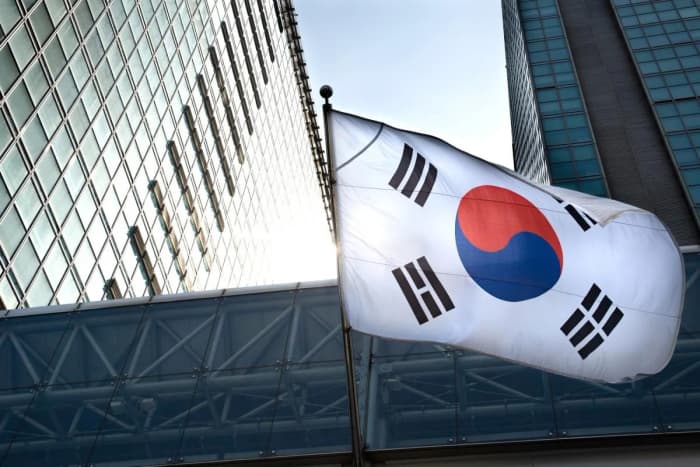 Since 2022, Russia’s war against Ukraine has transcended the boundaries of a regional conflict and has become one of the factors increasingly linking the Euro-Atlantic and Indo-Pacific security theatres. One of the key instruments in this process is the Prioritized Ukraine Requirements List (PURL). Under PURL, NATO and the United States provide Ukraine with priority military equipment, financing deliveries from U.S. stockpiles with contributions from allies and partners. Seoul is currently considering participation in PURL through financial contributions without directly supplying lethal weapons. Thus it seeks to reconcile its alliance commitments to the United States, its image as a “global pivotal state,” and the need to manage heightened regional risks in its relations with Russia, North Korea, and China.
PURL should be understood not as a general support mechanism for Ukraine, but as a targeted procurement coordination instrument. Its operational model may be traced through the first funded package announced by the Netherlands in the beginning of August 2025. That package included U.S. weapons systems and specifically fulfilled urgent air defence needs (notably components of the Patriot system). By the end of 2025, NATO Secretary General Mark Rutte noted that Australia and New Zealand had become the first NATO partners to join PURL, extending the mechanism beyond formal membership. Thus the mechanism was extended beyond formal membership and a precedent for “partner participation” that was directly relevant to ongoing discussions in Seoul was established.
By the end of 2025, NATO reported that allies and partners had committed to funding over $4 billion through PURL, with commitments amounting to approximately $1 billion per month from August 2025 onwards. By February 2026, total pledges exceeded $4.5 billion, while participation expanded to 21 NATO allies plus two partners, indicating both rapid scaling and institutional consolidation. In this context, the inclusion of new partners in PURL is increasingly seen as a political signal of readiness to contribute to the broader system of deterrence against Russia.
The Republic of Korea is not a NATO member but is an Indo-Pacific partner of the Alliance. Formal dialogue between Seoul and NATO began in 2005, when the ROK obtained partner status and started participating in consultations on shared security challenges. In 2012, the Individual Partnership and Cooperation Programme (IPCP) was signed, defining key areas of cooperation, including cybersecurity, counterterrorism, and non-proliferation.
Following the outbreak of Russia’s full-scale war against Ukraine, cooperation between the ROK and NATO has intensified significantly. Seoul is one of NATO’s four Indo-Pacific partners alongside Japan, Australia, and New Zealand). It regularly participates in NATO summits, and since 2022 has systematically joined meetings of NATO foreign ministers. In 2024, it participated for the first time in a meeting of NATO defence ministers, reflecting the gradual deepening of engagement.
A notable dimension of this partnership is cooperation in emerging technologies and cybersecurity. The Republic of Korea participates in NATO initiatives on cyber threat information sharing, including the Malware Information Sharing Platform, and regularly joins the international Locked Shields cyber exercises. In addition, in 2025 Seoul joined the enhanced partnership framework of the NATO Science and Technology Organization (STO), opening opportunities for joint research programmes in artificial intelligence, sensor systems, cybersecurity, and defence technologies. This marked the first time the ROK gained sustained access to NATO’s multilateral science and technology programmes.
However, the most tangible dimension of interaction between the Republic of Korea and NATO member states is defence-industrial cooperation. Since 2022, South Korea’s defence industry has emerged as one of the key external sources for the rapid rearmament of several European NATO allies.
In particular, year 2025 Poland signed a contract to procure 180 South Korean K2 main battle tanks, valued at approximately $6–6.5 billion, including partial production localisation and technology transfer to Polish industry. Earlier, in 2023, Warsaw also contracted for 152 K9 self-propelled howitzers worth around $2.6 billion, including ammunition supply, maintenance, and personnel training.
In July 2024, Romania signed an agreement with Hanwha Aerospace for the delivery of 54 K9 self-propelled howitzers and 36 K10 resupply vehicles, worth approximately $1 billion. The contract also included a comprehensive logistics support package and integration into national artillery structures.
Another example is the 2026 agreement with Norway, which includes the procurement of 16 K239 Chunmoo multiple launch rocket systems along with guided munitions and logistical support. The contract is valued at approximately $922 million, while Norway’s broader long-range fires capability programme is estimated at approximately $2 billion.
Taken together, these contracts indicate that cooperation between the Republic of Korea and NATO countries is gradually evolving into defence-industrial integration. This involves establishing long-term production and logistics chains, including local manufacturing, maintenance, personnel training, and joint technology solutions.
Practical cooperation between the ROK and NATO is also evident in the Ukrainian dimension.
The practical dimension of ROK–NATO cooperation is reflected in initiatives supporting Ukraine. Seoul officially refrains from directly supplying lethal weapons to Ukraine, but NATO acknowledges its contribution to the Comprehensive Assistance Package for Ukraine, particularly in the field of military medicine. At the same time, Seoul deepens consultations with the Alliance on the implications of military cooperation between Moscow and Pyongyang. In July 2024, President Yoon Suk Yeol stated that the Republic of Korea, together with NATO, would enhance information sharing on North Korean weapons used on the battlefield in Ukraine.
Amid deepening military ties between Russia and North Korea, NATO is increasingly engaging Asian partners in consultations and joint initiatives. For Seoul, this represents an opportunity to strengthen its status as a “global pivotal state” by integrating its defence-industrial potential into transatlantic supply chains and intensifying political dialogue with key European allies without formal NATO membership. In a broader strategic sense, the potential participation of the Republic of Korea in PURL is significant not only for supporting Ukraine, but also for the transformation of NATO’s partnership architecture.
For Seoul, PURL is primarily attractive as a mechanism to consolidate the positions already secured by its defence industry in Europe. it entails participation in an additional multilateral procurement and coordination framework linked to Ukraine support.
A second motivation is Seoul’s effort to use defence exports as an instrument of foreign policy. Since at least the mid-2010s—and especially under the Yoon Suk Yeol administration—the ROK government has systematically promoted the concept of “K-Defense,” considering the defence industry as a driver of economic growth, technological advancement, and geopolitical influence. Presidential statements between 2022 and 2024 explicitly linked the expansion of defence exports to the strengthening of the country’s international standing and promised greater state support for the sector. In practice, this involves long-term contracts, localisation, technological cooperation, and the formation of strategic defence partnerships. In this context, participation in PURL would allow Seoul both to demonstrate political support for Western security efforts and to create additional opportunities for integrating Korean defence companies into transatlantic supply chains.
A third dimension of Seoul’s motivation stems from the increasing interconnection of European and Indo-Pacific security. NATO’s 2022 Strategic Concept explicitly recognised that dynamics in the Indo-Pacific may directly affect Euro-Atlantic security. This logic was further reinforced in subsequent statements with Indo-Pacific partners.
South Korean legislation traditionally restricts the export of lethal weapons to active conflict zones, creating a complex political dilemma for the government. PURL is therefore particularly attractive because it allows Seoul to support Ukraine through financial contributions without directly transferring Korean weapons systems. In this sense, PURL may function as a de facto bypass, enabling the government to maintain formal legal constraints while demonstrating solidarity with allies.
At the same time, the Republic of Korea’s position is strongly influenced by the evolving security dynamics of the Russia–North Korea axis. The substantial flow of North Korean ammunition to Russia and the deepening of military-technical ties between Moscow and Pyongyang reinforce Seoul’s perception that the war in Ukraine has direct implications for security on the Korean Peninsula. A source of acute concern arises not only from these transfers and the risk of Russian technology sharing with North Korea, but also from the potential battlefield experience gained by North Korean troops, who might enhance their operational capabilities. For this reason, President Yoon Suk Yeol has repeatedly indicated the possibility of revising the traditional policy restricting lethal arms transfers if violations of international law or Russia–North Korea cooperation reach a critical threshold.
An additional constraining factor is Moscow’s reaction to any expansion of South Korean military support for Ukraine. Russian officials have explicitly framed potential South Korean arms supplies as an unfriendly act and a form of involvement in the conflict, increasing the risk of further deterioration in bilateral relations.
China remains an equally important constraint as the Republic of Korea’s largest trading partner. The experience of the 2016–2017 deployment of the U.S. THAAD missile defence system demonstrated Beijing’s willingness to use economic pressure as a political tool. At that time, China imposed informal trade restrictions and reduced tourist flows to South Korea, resulting in significant economic losses.
For Seoul, this means that participation in PURL offers both political and industrial benefits while simultaneously increasing the risk of negative reactions from two key external actors—China as its primary economic partner and Russia as a security actor capable of escalating tensions around the Korean Peninsula.
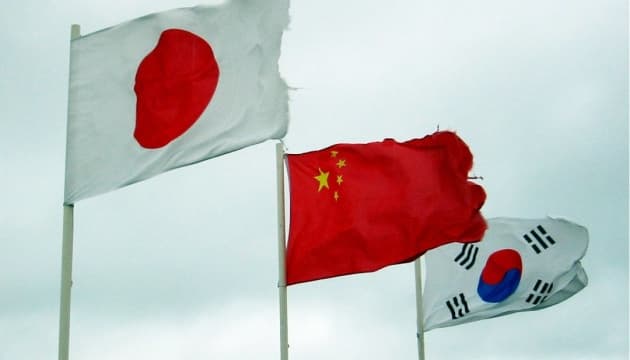
The Japanese factor is also relevant. Japan is actively expanding its role in Ukraine support mechanisms and is considering joining PURL by financing non-lethal equipment.
If Tokyo joins while Seoul refrains, this could create a reputational imbalance within the U.S.–Japan–ROK triangle. Both countries are key U.S. allies in the Indo-Pacific and Seoul’s non-participation may be perceived in Washington as a reluctance to assume a comparable share of responsibility for supporting Ukraine.
In light of current political signals and structural constraints in South Korean foreign policy, three baseline scenarios may be distinguished.
Under this scenario, the Republic of Korea makes a strategic decision to participate regularly in the PURL mechanism, integrating its contribution into the collective system for financing Ukraine’s arms procurement. This would entail Seoul joining the practice of allies’ regular contributions aimed at acquiring priority U.S. weapons systems for the Armed Forces of Ukraine.
Institutionally, ROK participation may take two forms. The first would be a fully transparent model, with South Korea’s contribution reflected in official NATO communiqués. The second, more cautious option would involve financing through trust funds or earmarked instruments, allowing the government to avoid specifying particular weapons systems. Under either scenario, Seoul would not only strengthen its status as a more engaged NATO partner but also gain practical benefits, including closer coordination with European allies, expanded access to joint defense-industrial arrangements, and strengthened positions in the European arms market.
However, it also entails the highest geopolitical costs, including deterioration of relations with Russia, potential reactions from North Korea, and risks of economic pressure from China.
In this scenario, the Republic of Korea refrains from joining PURL and maintains its current model of support for Ukraine without transitioning to NATO-based defence financing. This aligns with Seoul’s cautious policy line, avoids further escalation with Russia and China, and stays within existing political constraints on military assistance.
However, it would limit Seoul’s involvement in emerging NATO mechanisms and constrain opportunities to further entrench its presence in Western defence-industrial structures and generate political disappointment among key allies, particularly the United States and European NATO members.
The most plausible scenario involves limited and partially non-public financial participation in PURL. In practical terms, this may include irregular or relatively modest contributions to fund specific assistance packages for Ukraine—such as ammunition or air defence systems. Public messaging would probably frame such involvement in cautious terms (e.g., “coordination with NATO on support for Ukraine”) without disclosing detailed figures.
Such model allows Seoul to meet several strategic objectives simultaneously: partially satisfying allied expectations, minimising risks of sharp reactions from Russia and China, and preserving domestic political consensus on restrictions related to lethal aid.
“From a strategic perspective, this hybrid scenario most accurately reflects South Korea’s established practice of cautious balancing—deepening coordination with Western partners while avoiding escalatory moves in a sensitive regional environment.”
You may be interested