 INTERNATIONAL
INFORMATION AND ANALYTICAL
COMMUNITY


+ Join
Support INTERNATIONAL



Mykyta Laktionov, intern at the Resurgam Analytical Center
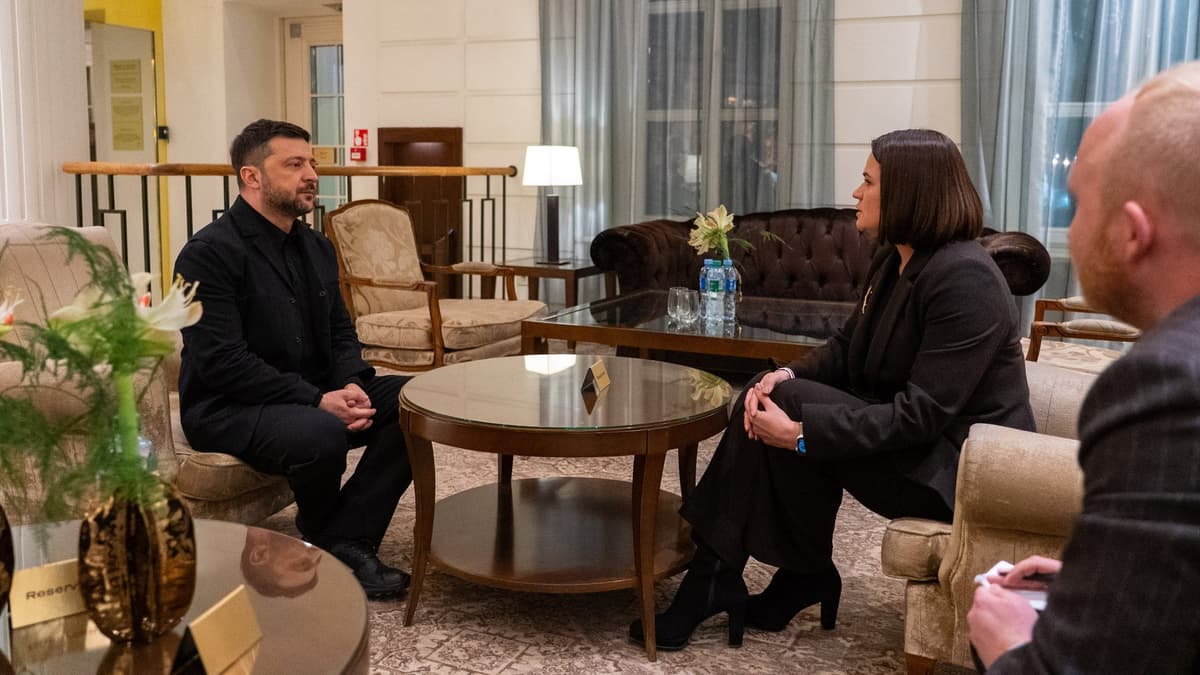
 Photo: Press Service of the President of Ukraine
In reality, most of the disputes that arise between Ukraine and EU member states are typical of any enlargement process: they stem from economic competition, the domestic politics of member states, and the institutional constraints of the Union itself. In this context, it is important to distinguish between media-driven narratives and the actual processes of integration, which are gradually shaping a new architecture of relations between Ukraine and the European Union.
The term itself is not new: it appeared in analytical discourse as early as 2012–2014, used to describe Western frustration with the slow pace of reforms and persistent corruption in Ukraine prior to the Revolution of Dignity. After 2022, however, this narrative was deliberately reactivated by Russian propaganda. According to research, Russian information operations systematically amplified “fatigue” narratives within the European segment of social media. The aim was to sow doubt about the value of supporting Ukraine, fuel discontent over refugees, and pressure the West into pushing Kyiv toward compromises.
Despite its artificial amplification, the term has become entrenched in the EU’s internal political debates. It is actively used by right-wing, far-right, and populist parties to criticise incumbent governments. By appealing to economic challenges—such as inflation, energy costs, and spending on the agricultural sector—politicians construct a false dichotomy: “the welfare of their own citizens versus support for Ukraine.”
At the same time, constructive political actors firmly reject this concept. A notable example is the statement by Member of the European Parliament Seán Kelly: “I would like to see the phrase ‘Ukraine fatigue’ removed from our lexicon.” Thus, “fatigue” is not an objective condition of European institutions; rather, it is a discursive instrument used in the struggle for electoral support.
In media discourse, there is often a misleading perception that EU candidate status was granted to Ukraine merely symbolically, solely as a political gesture or as a reaction to Russia’s military aggression. Such an interpretation overlooks both Ukraine’s own agency and the bureaucratic logic of the European Union. “The idea that candidate status is purely symbolic may be partly driven by the tone of European statements on enlargement, and partly by the unusually rapid pace of the initial application process,” states Dr. Marie-Ève Bélanger, Doctor of Political Science.
Candidate status was the result of an official request by the Ukrainian state. On 28 February 2022, Ukraine formally submitted its application for membership in the European Union. This step became a catalyst for the entire region: recognising the shift in the geopolitical context, the Republic of Moldova and Georgia submitted their own applications on 3 March 2022. Subsequently, on 23 June, the European Council unanimously decided to grant candidate status to Ukraine and Moldova.
Attention is often drawn to the unprecedented speed of this decision. The pace of EU bureaucratic procedures—less than four months from the submission of the application to the granting of candidate status—is indeed striking, as this process typically takes years. By comparison, Croatia waited approximately one year for candidate status, Montenegro nearly two years, Albania five years, and Turkey twelve years.
However, explaining this speed solely by the war is a significant oversimplification that does not fully correspond to reality. The granting of candidate status to Moldova at the same time as Ukraine (despite the fact that Chișinău had submitted its application later and was not facing active hostilities on its territory) clearly demonstrates that the war acted as a catalyst, but not the only cause—what was at play was a broader shift in the European Union’s geopolitical approach.
At the same time, it should be recognised that candidate status per se does not guarantee rapid accession to the European Union. Notably, of the countries listed above, only Croatia has actually joined the EU. The remaining states are still effectively in a waiting room. The most telling example here is Turkey, which has held candidate status since 1999—over a quarter of a century. This clearly demonstrates that obtaining candidate status is merely the beginning of a long process of reforms, rather than a ticket to automatic membership.
The EU decision was based on several factors. First, a critically important element was the existing foundation of the Association Agreement. At the time of their applications, Ukraine and Moldova had already been implementing a substantial part of EU legislation for years under the Deep and Comprehensive Free Trade Area (DCFTA). This meant that, both institutionally and economically, the countries had already demonstrated their capacity and were structurally prepared to move to the level of candidate status.
Second, Brussels recognised the need to firmly anchor these states within the European orbit in geopolitical terms. In the context of global competition, the EU came to understand that the absence of a clear European future for Ukraine would generate long-term instability along its own borders.
Third, Russian aggression compelled the EU to definitively abandon its long-standing policy of keeping Eastern Partnership countries in a so-called “grey zone.” For years, the European Union sought to maintain these states in a “buffer” status—developing cooperation with them while deliberately refraining from offering a membership perspective, in order not to escalate tensions with Moscow. The full-scale war exposed the complete fallacy and risks of this approach, turning European integration into a matter of survival and regional security.
Fourth, an unprecedented political consensus within the EU itself also played a significant role. Thanks to Kyiv’s proactive diplomacy, pressure from European publics, and the leadership of Eastern European states, even traditionally sceptical capitals were persuaded to unblock the enlargement process.
One of the most notable economic episodes in EU–Ukraine relations concerned the export of Ukrainian agricultural products. This situation did not arise as a consequence of Ukraine’s integration into the EU Single Market, but rather from temporary trade and logistical arrangements adopted following the onset of the full-scale war.
In 2022, following Russia’s blockade of Ukraine’s Black Sea ports, the EU suspended tariffs on Ukrainian goods and established the “Solidarity Lanes” logistical mechanism. However, the logistical infrastructure of neighbouring countries proved unprepared for such volumes of transit. A significant share of grain remained on the markets of Poland, Romania, Hungary, and Slovakia, leading to a decline in purchase prices.
In the spring of 2023 and at the beginning of 2024, this triggered large-scale farmers’ protests, particularly in Poland, where border crossing points were blocked. It is important to clearly establish the causal relationship: these protests did not reflect “Ukraine fatigue” or a rejection by Polish society of supporting Kyiv in the war. Rather, they were a response to structural imbalances within the EU Common Agricultural Policy (CAP).
European farmers operate within a strict regulatory framework of the Common Agricultural Policy and the environmental requirements of the European Green Deal, which increases their production costs. During this period, Ukrainian goods entered the EU market under a regime of temporary trade liberalisation and without full implementation of these standards, which made them cheaper for European buyers. In the event of Ukraine’s full membership, these regulatory requirements would also be applied to Ukrainian producers.
Against the backdrop of farmers’ protests, the governments of several EU member states introduced temporary unilateral restrictions on imports of certain Ukrainian agricultural products. These decisions were driven primarily by domestic political pressure and the need to stabilise prices on national markets. At the same time, these disputes concerned the terms of temporary trade liberalisation introduced during the war, rather than the rules governing Ukraine’s full participation in the EU Single Market.
The pace of Ukraine’s integration directly depends on the political will of EU member states, each of which assesses enlargement through the lens of its own domestic political interests. In this context, it is worth examining the positions of several countries that play a particularly prominent role in shaping the enlargement debate, both through their political influence within the EU and their active participation in public discussions on Ukraine’s membership.
Germany, as a key donor of financial and military assistance, has demonstrated a pragmatic approach to enlargement. At the beginning of 2026, Chancellor Friedrich Merz stated that Ukraine’s accession to the EU in 2027 is impossible, emphasising the need for strict compliance with criteria related to the rule of law and human rights. This position reflects Berlin’s reluctance to accelerate institutional changes without adequate preparation.
France officially supports Ukraine, but insists that enlargement is not possible without deep institutional reform of the EU itself, in particular a move towards qualified majority voting. France also fears that Ukraine’s accession would shift the EU’s geopolitical centre of gravity eastwards and create excessive competition for French farmers.
Poland remains one of Kyiv’s strongest security allies, yet in the economic sphere it acts as a firm opponent. Poland actively protects its domestic market from Ukrainian agricultural products and logistics services, which is a logical stance for a state that itself once had to fight hard for quotas during its accession to the EU, including subsidy levels and supply restrictions, in particular in the dairy sector.
The Netherlands: despite concerns over the formation of a government involving the far-right Party for Freedom (PVV), the current cabinet led by Rob Jetten keeps providing consistent support to Ukraine.
Hungary and Slovakia form a hub of internal opposition within the EU. Viktor Orbán’s government has repeatedly blocked negotiation processes (such as in September 2025) by exploiting issues relating to national minorities. Furthermore, in early 2026, Budapest, together with Slovakia (Robert Fico’s government), resorted to outright blackmail, threatening to withhold support for Ukraine’s European integration over disputes regarding the transit of Russian oil via the Druzhba pipeline.
Certain shifts in the political climate are also evident in the Czech Republic, where Andrej Babiš’s ANO party won the election under the slogan ‘Czechia First’. However, this rhetoric does not imply the adoption of an openly anti-Ukrainian stance. Rather, it signifies a shift towards hard-line pragmatism, under which support for further EU enlargement will be strictly contingent upon the protection of Prague’s national economic interests.
Ukraine’s institutional integration into the European Union has moved from the stage of political declarations to that of systematic sectoral adaptation. Whilst public debate continues regarding the formal timeline for accession, Ukraine is already undertaking a large-scale harmonisation of its legislation and market mechanisms with the EU’s internal market.
This process involves a series of very specific practical steps: from the implementation of European customs regulations and environmental standards to harmonisation in the energy and telecommunications sectors. The current phase of relations is characterised by intensive technical work aimed at ensuring the compatibility of the Ukrainian economy with the European acquis communautaire.
A key instrument of this transformation is the €50 billion Ukraine Facility programme for 2024–2027, which functions first and foremost as a strict framework for European integration reforms, and only secondarily as a mechanism for macro-financial support. According to the plan, the disbursement of tranches (specifically €16.4 billion in 2024 and further payments at the end of 2025) is strictly linked to the fulfilment of specific structural indicators.
This includes, in particular, reforming the public finance management system, implementing the National Revenue Strategy, overhauling economic security bodies, reforming customs, anti-corruption measures and the digitalisation of public services. Thus, financial cooperation with the EU acts as a catalyst for the modernisation of Ukrainian state institutions and their alignment with EU standards even before formal membership is achieved.
Amid the partial blockade of traditional Black Sea ports caused by the war, alternative logistics routes—the European ‘Solidarity Lanes’—have become a vital economic lifeline for Ukraine. This mechanism has integrated road, rail and river (Danube) corridors to connect Ukraine with European ports and global markets. According to data from the end of 2025, over 224 million tonnes of Ukrainian agricultural produce were exported via these routes, with the total value of trade estimated at approximately €260 billion.
The high export figures do not contradict the restrictions introduced earlier: the temporary embargoes imposed by five neighbouring EU countries applied to the sale of Ukrainian grain on their domestic markets only, with the aim of protecting local farmers. At the same time, the transit of Ukrainian foodstuffs through the territories of these countries to other EU Member States and third countries kept uninterrupted precisely thanks to the development of the ‘Solidarity Lanes’ infrastructure.
Institutional integration at sectoral level, which has a direct impact on the architecture of future membership is also progressing rapidly. Joining the European power system ENTSO-E has not only stabilised the Ukrainian grid but also enabled full-scale commercial integration. At the end of 2025, Ukraine adopted European rules for long-term electricity auctions, and from 1 January 2026 officially became part of the single European roaming area, which is an unprecedented step for a candidate country.
This list of sectoral achievements is a key argument that debunks the narrative of so-called ‘Ukraine fatigue’. The disputes over quotas, tariffs or logistics, which arise periodically and are mistakenly interpreted as ‘fatigue’, are in fact a natural consequence of the European market adapting to the emergence of a huge competitive player. Practical integration has moved from declarations of solidarity to complex bureaucratic work, which is standard practice in any EU enlargement process.
An analysis of political and economic processes shows that Ukraine’s integration into the European Union has entered a phase of complex bureaucratic work.
The concept of ‘Ukraine fatigue’ does not reflect the institutional reality of the EU. It is a media and political narrative, partly generated by Russian propaganda and partly adapted by European populists for domestic electoral manipulation. The disputes and tensions that do arise are not a sign of ‘fatigue’, but a natural consequence of European economies adapting to the emergence of a huge and competitive player in the European single market.
Having secured candidate status through its own proactivity and fundamental changes in regional security, Ukraine is demonstrating rapid rates of sectoral integration. From the ENTSO-E energy network to the Ukraine Facility programme and digital roaming, Ukraine is already functioning de facto as part of the European economic area. The pace of full accession will depend on the effectiveness of internal reforms in Ukraine and the EU’s ability to reform its own policy-making mechanisms.
You may be interested