 INTERNATIONAL
INFORMATION AND ANALYTICAL
COMMUNITY


+ Join
Support INTERNATIONAL



Danylo Moskalenko, international relations analyst, intern at the “Resurgam” Center for the Asia-Pacific direction
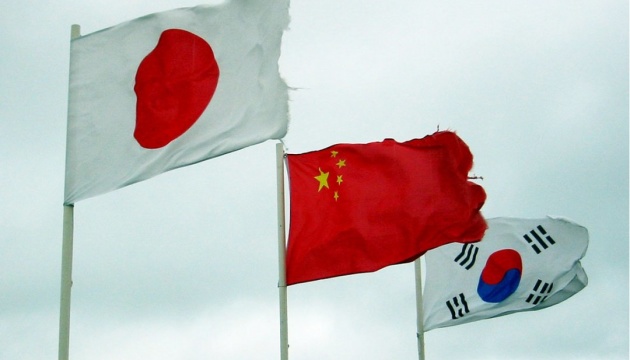 Photo: Getty Images
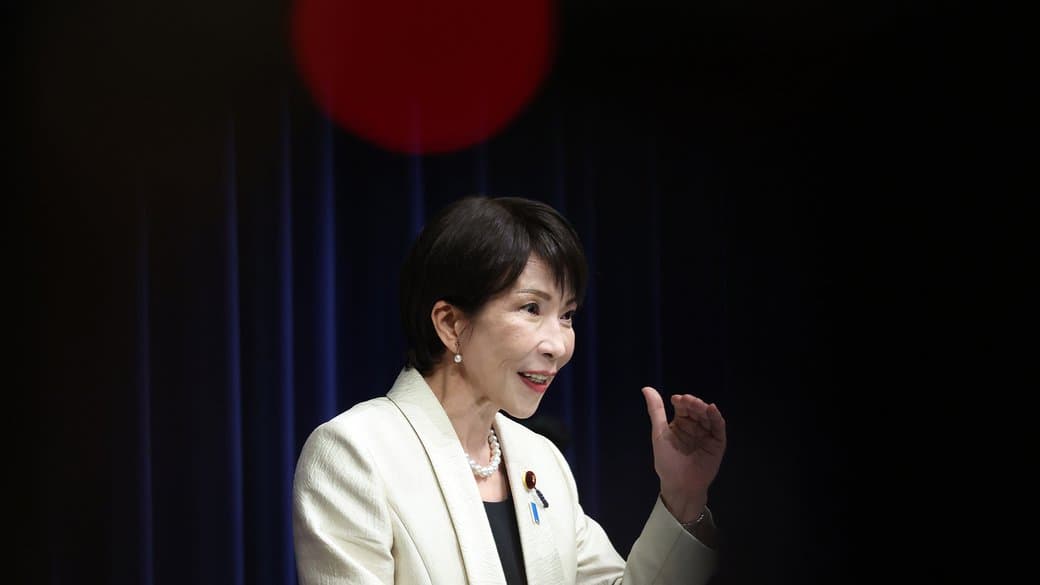
On 7 November 2025, Prime Minister Sanae Takaichi declared that if China used military force against Taiwan, it would create a situation threatening Japan's existence, which would allow the country's military to intervene in accordance with its security legislation. Japan's stake in Taiwan's independence is rooted in the island's strategic position. A significant share of Japan's trade and energy supply passes through Taiwan's waters. An independent Taiwan also constrains the outward movement of Chinese naval forces and enables Japan and its partners to monitor activity across both the East and South China Seas - providing Japan with strategic depth and an additional buffer along its maritime perimeter.
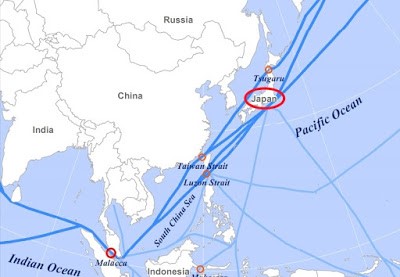 Map of maritime route locations. Source
China escalated swiftly. Chinese diplomatic missions in Japan called on their nationals to avoid travel to the country, and imports of Japanese seafood were suspended. At the UN General Assembly's annual debate on Security Council reform on 18 November 2025, China's Permanent Representative Fu Cong flatly declared that Japan has "absolutely no right" to a permanent Security Council seat.
Japan held its ground. Takaichi did not walk back her statement, though she pledged greater caution in her future comments on Taiwan. At a press conference on 11 November, the Chief Cabinet Secretary framed her remarks as reflecting Tokyo's official position, while reaffirming Japan's commitment to a peaceful resolution and to productive bilateral cooperation. Japan's Defence Minister subsequently announced plans to deploy missiles on Yonaguni - Japan's westernmost island, closest to Taiwan - by 2031. Japan has also begun extracting rare earth minerals from the seabed in an effort to reduce its dependence on China.
The ferocity of Beijing's reaction to what was, in formal terms, a somewhat unusual but substantively unsurprising restatement of Japan's longstanding position gives grounds for suspecting that China may have deliberately exploited the incident for its own strategic ends. Takaichi's words did not, in any meaningful sense, signal a departure from Japan's established stance on Taiwan's status - one that has long combined adherence to the “One China” policy with a clear interest in maintaining stability in the Taiwan Strait.
Straining relations with Japan may have served Beijing as a pretext for justifying further assertive action in the western Pacific: to extend its control over critical sea lanes, intensify pressure on Taiwan, and rehearse the military manoeuvres required for a potential invasion of the island. The dispute has also exposed a degree of misalignment between the positions of Tokyo and Washington. The American administration effectively distanced itself from the episode, neither publicly endorsing nor criticising Takaichi. In March 2026, US intelligence assessed her statements as “a significant shift for Japan's sitting prime minister”.
China's response is also a message to the wider neighbourhood. What is at stake, in essence, is Beijing's pursuit of a revision of the existing regional balance of power in its favour - a project that China has been running for years.
Crises in Sino-Japanese relations follow a recognisable pattern, and they have typically been followed by intensified provocations at sea around Taiwan and the disputed islands of the Pacific.
In 2010, a collision between a Chinese fishing vessel and two Japan Coast Guard ships near the disputed Senkaku Islands set off a deterioration in bilateral relations. Japan's detention of the vessel's captain provoked a sharp response from Beijing, which temporarily restricted exports of rare earth metals to Japan and stepped up maritime law enforcement activity around the islands.
A comparable episode unfolded in 2012 over the Senkaku Islands, when the Japanese government formally purchased three of the islands from a private owner in order to prevent their acquisition by nationalists - specifically by the then-Governor of Tokyo, Shintaro Ishihara, who had proposed raising funds from the public to buy the islands and adopt a more assertive posture toward China. The decision nevertheless drew a fierce reaction from Beijing, which regards the islands as its own territory, referring to them as the Diaoyu Islands.
It triggered mass anti-Japanese protests, diplomatic deterioration, and a marked increase in Chinese patrols in the disputed waters. Chinese Coast Guard vessels began penetrating the territorial waters around the islands with far greater frequency. In December 2012, a Chinese maritime patrol aircraft became the first to enter Japanese airspace over the Senkakus, while PLA Navy vessels made their first transit through Japan's contiguous zone near Yonaguni Island, located just 110 kilometres east of Taiwan.
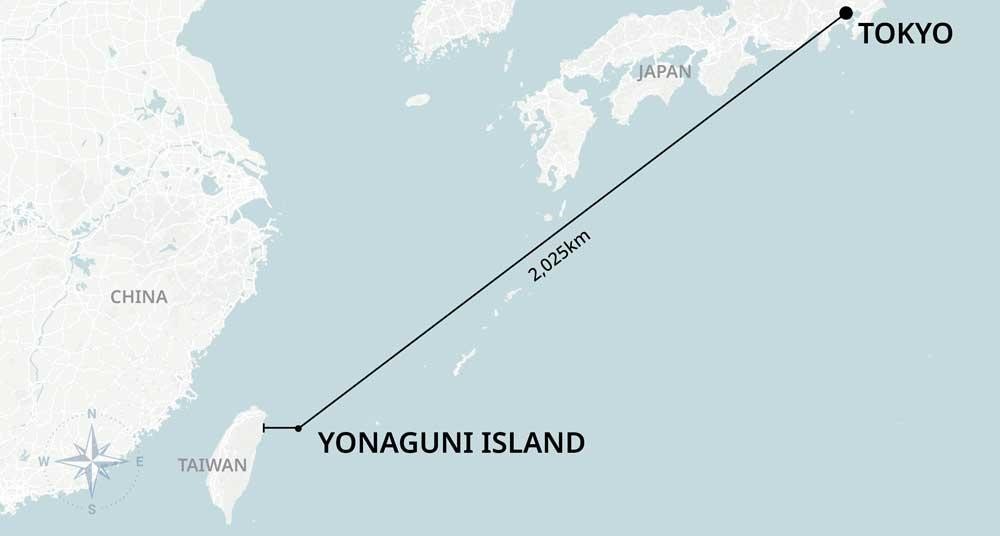 Location of the Yonaguni Islands on the map. Source
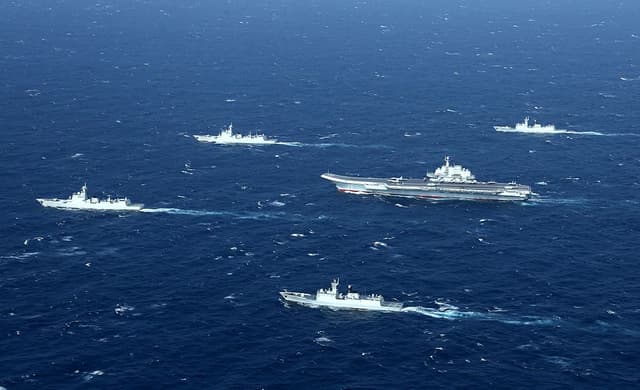
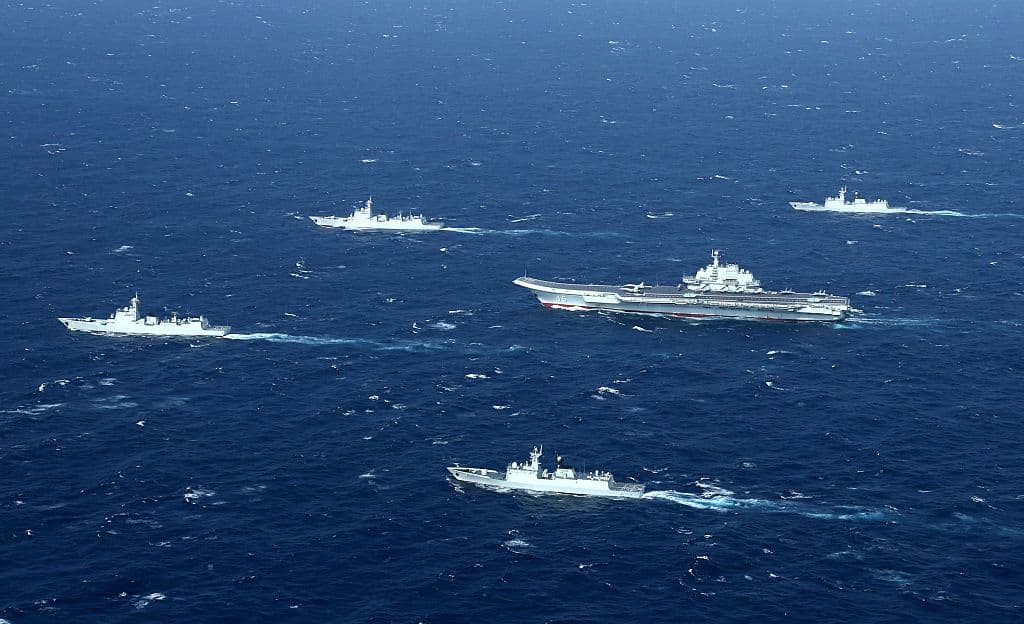
Against the backdrop of these precedents, there are grounds to suggest that the current crisis in bilateral relations may have served as a pretext for China to intensify pressure around Taiwan. On 4 December 2025, China deployed over 100 warships across the seas of East Asia - a scale that exceeds previous comparable operations and can plausibly be read as a response to the diplomatic crisis with Japan. By way of comparison, China deployed approximately 90 naval vessels in late 2024.
On 6 December, Chinese fighter jets carried out a dangerous provocation, locking fire-control radars onto Japanese military aircraft on two separate occasions. Radar lock-on is among the most threatening manoeuvres a military aircraft can execute: it signals a potential attack, forcing the targeted aircraft into evasive action. Such incidents carry a real risk of uncontrolled escalation through miscalculation and the speed at which defence systems respond. China's actions could theoretically have resulted in the loss of equipment or even human casualties. Beijing is signalling a willingness to escalate rather than conciliate.
In December, China conducted large-scale military exercises around Taiwan, carried out in close proximity to the island's shores - some of which extended into the contiguous zone, the maritime belt stretching up to 24 nautical miles (approximately 44 kilometres) from the coast, where a state does not exercise full sovereignty as it does in territorial waters but retains authority over matters of security, customs, and migration. The exercises were designed to simulate a blockade and the interdiction of foreign assistance to the island, and created a palpable sense of intensifying pressure. A coordinated concentration of Chinese fishing vessels in the East China Sea between December 2025 and January 2026 further demonstrated that Beijing, in the event of a conflict, would be prepared to mobilise commercial vessels as well.
Takaichi's statement is, on its own, an insufficient explanation for China's provocations in the waters around Taiwan. Beijing has pursued a sustained, long-term pattern of escalation in the region that cannot be materially altered by the remarks of Japanese politicians. At the same time, there are reasonable grounds for concluding that China seized on the Japanese Prime Minister's imprecise phrasing as a convenient pretext to publicly justify its military manoeuvres, both for a domestic audience and on the international stage, positioning its own actions as a compelled response to what it frames as the threat of Japanese revanchist militarism.
What China's conduct communicates is a demonstrated willingness for coercive scenarios and a campaign of psychological pressure against other regional actors. For the United States, it is a signal that Beijing will not yield on its ambition to incorporate Taiwan and will not be deterred by external support for the island. For Washington's allies and other regional players - the Philippines, Australia, and Southeast Asian states - it is a reminder that publicly supporting Taiwan comes at the cost of deteriorating relations with China. Japan's economic scale affords it a degree of resilience in the face of Chinese restrictions; poorer states in the region cannot afford a comparable confrontation with their largest trading partner and, in many cases, principal source of investment.
The episode has put the Japan-US relationship under its own kind of strain. Japan has been frustrated by the absence of more robust public backing from the Trump administration. While the relationship between Tokyo and Washington remains fundamentally sound, Beijing may seek to exploit this friction to sustain its pressure on Japan and erode the coherence of the Japan-US partnership. The longer the crisis runs, the more conspicuous Washington's muted response becomes.
Shortly after the diplomatic incident, reports emerged that Trump had advised Takaichi not to provoke China. Japan denied the account, but the very appearance of this story in the public domain raises questions about the alignment of American and Japanese positions regarding how to respond to Chinese escalation. It is reasonable to infer that someone sought deliberately to project the impression that Trump is unwilling to back his Asian ally's behaviour. Japan, for its part, rejected the US intelligence assessment that characterised Takaichi's statements on Taiwan as “a significant shift” - a sign of Washington's reluctance to publicly validate the Japanese position.
The dispute will also shape the agenda for Donald Trump and Xi Jinping's meeting in Beijing on 14-15 May. The absence of a clearer American response may reflect the White House's desire not to antagonise Beijing on the eve of the summit and to demonstrate its good faith in pursuit of a US-China trade deal. China is applying pressure on the American administration, and that pressure is working. Some administration officials, fearing the Chinese leader's reaction, have delayed the delivery of a substantial arms package to Taiwan. This ultimately led the Trump administration to suspend the announcement of arms sale agreements with Taiwan worth more than ten billion dollars - a package that had already cleared Congress - so as not to alienate Xi Jinping ahead of the planned presidential visit to Beijing.
Beijing's forceful response to Takaichi's remarks has further underscored, for all to see, that the Taiwan question is non-negotiable for China - and Washington has taken note. There are grounds to expect that in its negotiations with the United States, Beijing will press for concessions on Taiwan's status as a condition for continued dialogue. Whether the Trump administration would be willing to make such concessions in exchange for a broader deal remains an open question - and one that bears directly on Japan's interests.
The normalisation of Sino-Japanese relations is, in all likelihood, a matter of when rather than whether - but the timeline may be protracted. Following the 2012 crisis, the two sides required over two years to re-establish working ties, doing so on the sidelines of the APEC summit in 2014. The current dispute, however, differs from those of 2010 and 2012 in a significant respect: it is driven not by an isolated incident but by China's broader dissatisfaction with the direction of the Takaichi government's defence policy. A thaw may be possible in multilateral settings - notably the APEC summit in China in November 2026, where both sides are expected to be present. Given the current absence of any discernible de-escalatory momentum, however, the prospects for meaningful rapprochement in the near term remain limited.
A tactical divergence between Tokyo and Washington's public postures is also becoming apparent. Japan is behaving with greater assertiveness, while the United States appears reluctant to risk provoking Beijing unnecessarily, seeking to preserve diplomatic room for manoeuvre. There is no basis for characterising this as a US-Japan rupture - a point illustrated by the recent meeting between Trump and Takaichi, which proceeded in a spirit of partnership and cooperation.
Nevertheless, the crisis in Sino-Japanese relations has cast light on a degree of misalignment in the public positions of the United States and Japan regarding how to act in the event of escalation over Taiwan. Divergent stances on provocations around the island risk complicating the coordination of military, political, and economic responses - and, in doing so, diminishing their effectiveness. The US and Japan would be well served by better aligning their public positions on the defence of Taiwan in the event of escalation, so as not to undermine mutual credibility or invite China to test the resilience of the Japan-US alliance.
You may be interested