 INTERNATIONAL
INFORMATION AND ANALYTICAL
COMMUNITY


+ Join
Support INTERNATIONAL



Mitrofanova Viktoriia, intern at the Resurgam Center for the Asia-Pacific direction.
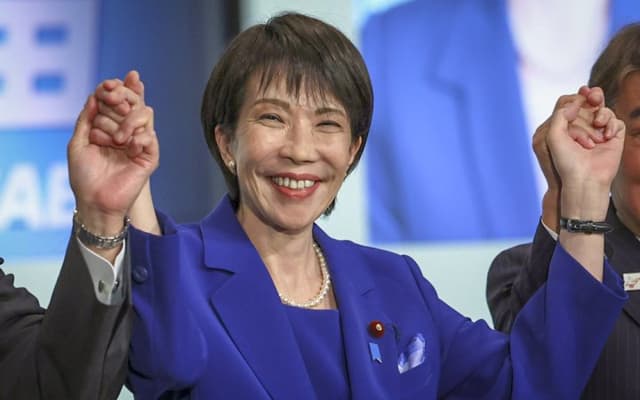
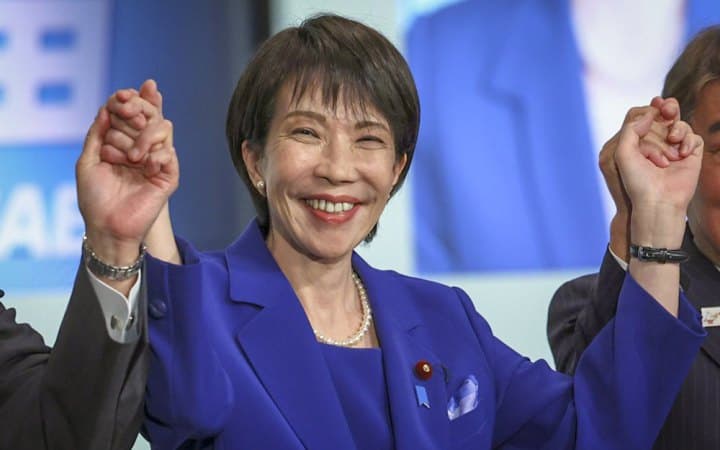
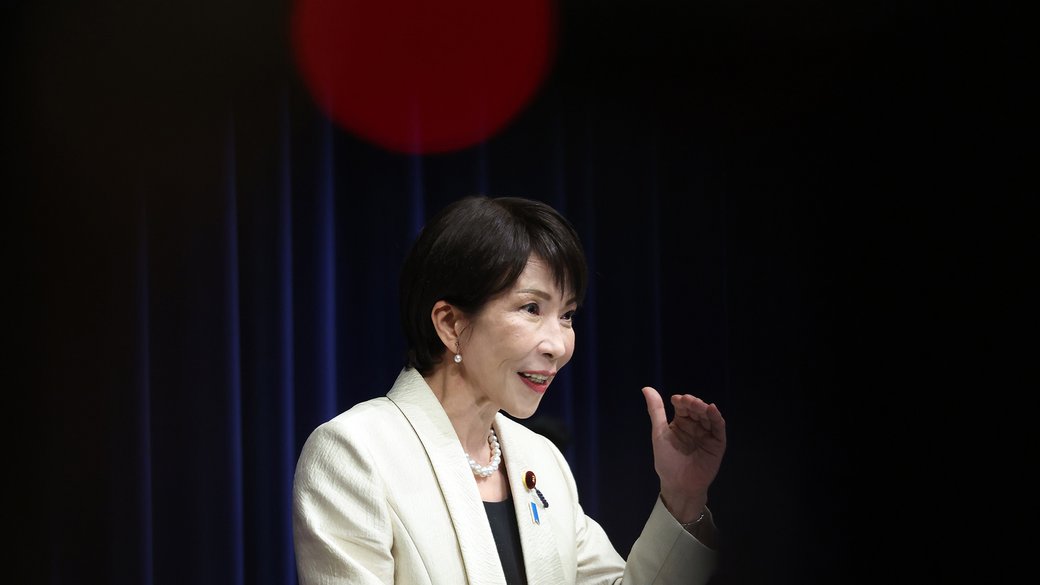 At the beginning of 2026, Japan entered a phase of accelerated transformation in its defence policy. Prime Minister Sanae Takaichi is consistently advancing a course toward expanding the interpretation of post-war security restrictions, developing capabilities to deter hostile nations, and strengthening the state's strategic autonomy.
This approach did not emerge in a vacuum. Its foundations were laid during the premiership of Shinzo Abe, when a review of the interpretation of Article 9 of the Constitution was initiated and the concept of a "proactive contribution to peace" was formed. Simultaneously, under Takaichi’s leadership, this course is gaining clearer political articulation and accelerated practical implementation.
After taking office on 21 October 2025, Japanese Prime Minister Sanae Takaichi announced her intention to review post-war security restrictions. She presented her policy as a response to the changing regional balance of power: citing the increase in China's military activity around Taiwan and in the East China Sea, North Korea's missile tests, and the deepening strategic partnership between Beijing and Moscow. In doing so, Takaichi emphasised the need to bolster Japan’s strategic autonomy. This primarily concerns the ability to provide deterrence and response without comprehensive reliance on the "American security umbrella".
Sanae Takaichi’s central idea lies in the normalisation of force as a tool of foreign policy; this does not imply an abandonment of the constitutional pacifism enshrined in Article 9 of the 1947 Constitution. This article, which forms the basis of Japan’s post-war pacifism, prohibits the waging of war and the maintenance of armed forces.
The Prime Minister’s position is a logical continuation of her political evolution within the Liberal Democratic Party—a force in which a national-conservative approach to security is combined with a pragmatic economic course. Since 2012, while heading the party’s Policy Research Council, Sanae Takaichi participated in shaping an agenda that envisioned a review of defence restrictions and the strengthening of the country's technological and military capabilities. Her career amidst the shifting party configurations of the 1990s contributed to her reputation as a politician capable of adapting to institutional changes—a trait manifested today in her drive to transform the established principles of the post-war security architecture.
A crucial stage in the implementation of these plans was the strengthening of Sanae Takaichi’s political mandate through early elections to the House of Representatives, held on 8 February 2025. The decision to dissolve the lower house allowed the Prime Minister to convert high personal support into the stable parliamentary majority necessary to advance defence initiatives. Such a step minimised the risks of intra-party blocking of reforms and laid the groundwork for the transition from strategic declarations to the implementation of specific legal and institutional mechanisms, work on which began in early 2026.
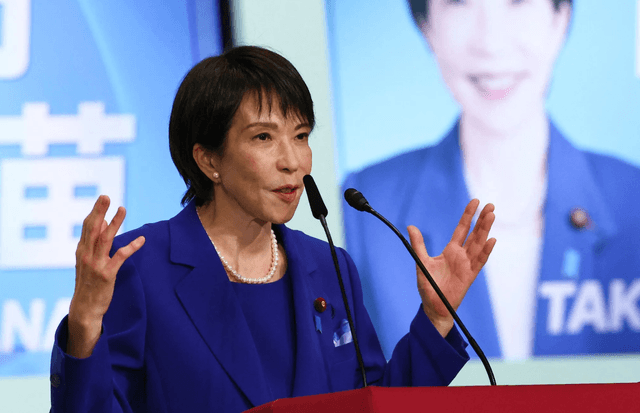
On 20 February this year, the Prime Minister delivered a speech at a plenary session of the House of Representatives, where she outlined an approach that significantly expands the boundaries of the traditional concept of security maintenance. She emphasised that the diplomatic and security sphere is no longer limited strictly to the military dimension but encompasses outer space and the cyber realm. Such a definition of the issue indicates a conceptual shift, where security matters are viewed as a multi-dimensional system.
A key element of her approach was the thesis regarding the necessity to "independently hold the helm" — meaning the determination of a strategic course based on a long-term vision of national interests. In a political sense, this signifies a gradual transition from a model of reactive security, which has historically relied on external guarantees, to a model of proactive strategic planning. Takaichi defines diplomacy and defence as inseparable, highlighting the importance of conducting a parallel build-up of military capability and foreign policy activity.
Of particular importance is the reimagining of the "Free and Open Indo-Pacific" (FOIP) concept, proposed by Shinzo Abe in 2010. While the original version of FOIP emphasised the support of rules and freedom of navigation, the current interpretation envisions a strategic evolution — taking into account the intensification of geopolitical competition and technological rivalry in the fields of artificial intelligence and digital infrastructure.
At the same time, Takaichi is not abandoning allied relations: she clearly defines the US-Japan alliance as the fundamental pillar of foreign security policy. The emphasis on "strengthening autonomy" indicates not a departure from the alliance, but a desire to reformat it into a more symmetrical partnership.
The declared course signifies a structural transformation of the security paradigm — from the post-war model of limited deterrence to a model of comprehensive strategic autonomy, integrated with economic diplomacy and technological policy.
At the beginning of 2026, the Takaichi government announced a series of specific steps to foster defence potential and expand Japan's role in regional security. There are plans to review the 2022 National Security Strategy with the implementation of a "crisis management" approach that integrates security, economics, and industrial policy. According to Takaichi’s plan, the defence budget has been increased to 2% of GDP. Such a step demonstrates the government's intention not only to meet formal benchmarks but also to consolidate strategic autonomy.
Thus, pacifism is not rejected as a value but is transformed into a more active model of defence. In Prime Minister Takaichi’s logic, Japan must be prepared to protect its sovereignty and citizens even in the event of a protracted conflict. In February this year, she stressed the need to create conditions that make it impossible for enemies to find a "window of opportunity". A key element of the defence strategy is becoming the capacity for sustainable and effective self-defence, combining modernised military capabilities with crisis management. Discussions on the future defence architecture, in her words, must be specific and realistic, oriented toward the practical strengthening of national security within a complex regional environment, rather than a mere demonstration of threats to potential adversaries.
Another element of current security discussions is the issue of nuclear policy. Within the government of Prime Minister Sanae Takaichi, statements have been made regarding the possibility of reviewing the "Three Non-Nuclear Principles" proclaimed in 1967, which stipulate the rejection of the production, possession, and placement of nuclear weapons on national territory. Certain government sources publicly acknowledge that, given the deteriorating regional security environment, Japan is compelled to rethink its own approaches to deterrence, while simultaneously emphasising the complexity and political sensitivity of such a step. At the same time, during a plenary session of the House of Representatives on 24 February, the Prime Minister stated that she personally does not support the "nuclear sharing" model with the United States and reaffirmed the government's commitment to the "Three Non-Nuclear Principles".
The transformation of Japan’s defence model gained a new vector on 25 February 2026, when the Liberal Democratic Party's commission approved a revision of arms export rules. Under the direct leadership of Prime Minister Sanae Takaichi, the outdated system described in the three principles of transfer of defence equipment and technology—which allowed the supply of only five narrow categories of non-lethal equipment (rescue, transport, reconnaissance, surveillance, and minesweeping)—was dismantled.
The new course removes past barriers, clearing the way for the export of full-scale combat platforms, such as destroyers and air defence systems. Of particular significance was the decision to allow the sale of weaponry developed jointly with foreign partners to third countries. Although a formal ban on the supply of arms to states at war remains, the National Security Council, under Takaichi’s leadership, has been granted the power to make exceptions if it concerns supporting an ally that has become a victim of aggression.
The practical implementation of this strategy is already observed in the active promotion of Japanese technologies in the Indo-Pacific markets. Specifically, modernised Mogami-class frigates manufactured by Mitsubishi Heavy Industries were selected by Australia as the primary platform for its fleet renewal. In parallel, consultations are ongoing with the Philippines regarding the transfer of second-hand Abukuma-class destroyers intended to bolster Manila’s coastal defence. Beyond naval equipment, the Takaichi government is betting on the export of Type-03 anti-aircraft missiles and Type-12 anti-ship systems, which are capable of creating a reliable deterrence belt in the South China Sea.
This decision carries an economic dimension as well as a geopolitical one. For decades, the Japanese defence-industrial complex relied exclusively on limited domestic orders, leading to high unit costs and technological stagnation. Entering foreign markets is expected to change this dynamic, securing stable orders for giants such as Kawasaki Heavy Industries and Mitsubishi.
In November 2025, Japan transferred PAC-3 missiles for the Patriot system, which were produced in the country under US licence, for the first time. This occurred at the request of the US amidst a shortage of American missiles needed to support Ukraine in countering the Russian invasion. Thus, this step enables Japan to indirectly support Ukraine and other allies in the event of arms shortages and the strengthening of defence capabilities.
Furthermore, Japan continues to cooperate within the framework of an agreement signed with Italy and the United Kingdom for the joint development of a new sixth-generation fighter under the Global Combat Air Programme (GCAP). The initiative was announced in December 2022, and an international treaty was signed in 2023, formally launching a three-year phase of joint development with the aircraft expected to enter service by 2035.
A distinct direction of transformation, which Sanae Takaichi emphasised throughout her election campaign, is the reform of the national intelligence community. The central element of this course is the establishment of the National Intelligence Bureau — a structure designed to become the sole coordinating centre for information collection and analysis. This initiative has already moved from the category of campaign promises into the realm of practical implementation.
According to the Prime Minister’s directive issued to the Chief Cabinet Secretary, Minoru Kihara, the new body is intended to eliminate the fragmentation between the intelligence units of the police, the Ministry of Foreign Affairs, the Ministry of Defence, and the Japan Coast Guard. The reform involves reorganising the current Cabinet Intelligence and Research Office into a full-fledged state service with expanded powers; its head will hold a status equivalent to the Director of the National Security Council and will report directly to the Prime Minister.
Takaichi consistently justifies the need for a "Japanese CIA" by the necessity of protecting national interests. In addition to internal coordination, the strengthening of capabilities in human intelligence (HUMINT) and satellite monitoring is viewed as a necessary prerequisite for Japan's deeper integration into global information-sharing networks — specifically with the "Five Eyes" alliance (comprising the intelligence agencies of Australia, Canada, New Zealand, the USA, and the United Kingdom) and the deepening of international security cooperation.
The security policy of Sanae Takaichi’s government demonstrates a systemic transition toward a more structured and long-term model of strategic planning. This is not a matter of isolated decisions, but a comprehensive restructuring of institutions, instruments, and Japan's foreign policy role amidst intensifying regional competition. The increase in the defence budget, the review of key security documents, the development of the defence industry, and the expansion of international military-technical cooperation form a new quality of state capability.
In summary, a model is emerging in which Japan combines the strengthening of its own defence capabilities with the deepening of allied ties and technological cooperation. This signifies a gradual bolstering of the state’s strategic agency in the Indo-Pacific region and its more active participation in shaping the balance of power in response to long-term security challenges.
Since the beginning of the full-scale invasion, Japan has publicly supported Ukraine and has provided financial and humanitarian assistance ever since. The more active defence policy of Japan, promoted by Prime Minister Sanae Takaichi, creates a new configuration of cooperation for Ukraine—specifically in the defence-industrial and technological spheres. The aforementioned expansion of arms export rules, the increase of the defence budget to 2% of GDP, and the course toward strategic autonomy provide the grounds for a transition from episodic support to a structured security partnership.
It is advisable for Ukraine to initiate the creation of a dedicated format for cooperation with Japan in the field of defence and security at the level of ministries of defence and national security councils. Such a format could involve regular strategic consultations, the exchange of experience in conducting modern high-intensity warfare, and the coordination of positions regarding threats from Russia, which cooperates in the field of military technologies with authoritarian regimes.
Given the reform of the Japanese intelligence community and the creation of a centralised body at the initiative of Sanae Takaichi’s government, Ukraine should focus on forming a systemic intelligence partnership with Tokyo. This involves establishing a regular exchange of strategic assessments regarding the military-technical cooperation of Russia with China and North Korea, coordinating the analysis of sanctions evasion and arms supply logistics chains, and developing professional interaction between analytical and counter-intelligence units. Ukraine already possesses unique experience in countering Russian special services.
In the context of deepening intelligence cooperation, a special role could be played by the Main Intelligence Directorate of the Ministry of Defence of Ukraine (HUR) as a key actor in Ukraine’s military intelligence. It is advisable to initiate direct professional contacts between the HUR and Japan's newly created centralised intelligence body to exchange strategic assessments regarding Russia's military-technical cooperation with countries in the Indo-Pacific region, as well as the transfer of missile and drone technologies.
Ukraine could also take advantage of existing multilateral programmes in Japan, such as the Global Combat Air Programme (GCAP). This is a joint initiative by Japan, the United Kingdom, and Italy aimed at developing a sixth-generation fighter to replace the Eurofighter Typhoon in the UK and Italy and the Mitsubishi F-2 in Japan. Within this framework, Ukraine should propose the creation of separate joint research projects in the fields of UAVs, counter-drone measures, and electronic warfare systems, as well as develop cooperation regarding the military application of artificial intelligence and battlefield data analysis. This is also an opportunity to integrate the Ukrainian experience of a war of attrition into the training and analytical programmes of Japanese defence structures.
Thus, the transformation of Japanese defence policy opens real options for long-term strategic convergence between the two countries, combining security, technology, the defence industry, and political coordination.
You may be interested