 INTERNATIONAL
INFORMATION AND ANALYTICAL
COMMUNITY


+ Join
Support INTERNATIONAL



Danylo Moskalenko, junior Analyst at the Resurgam Center for Asia-Pacific Affairs
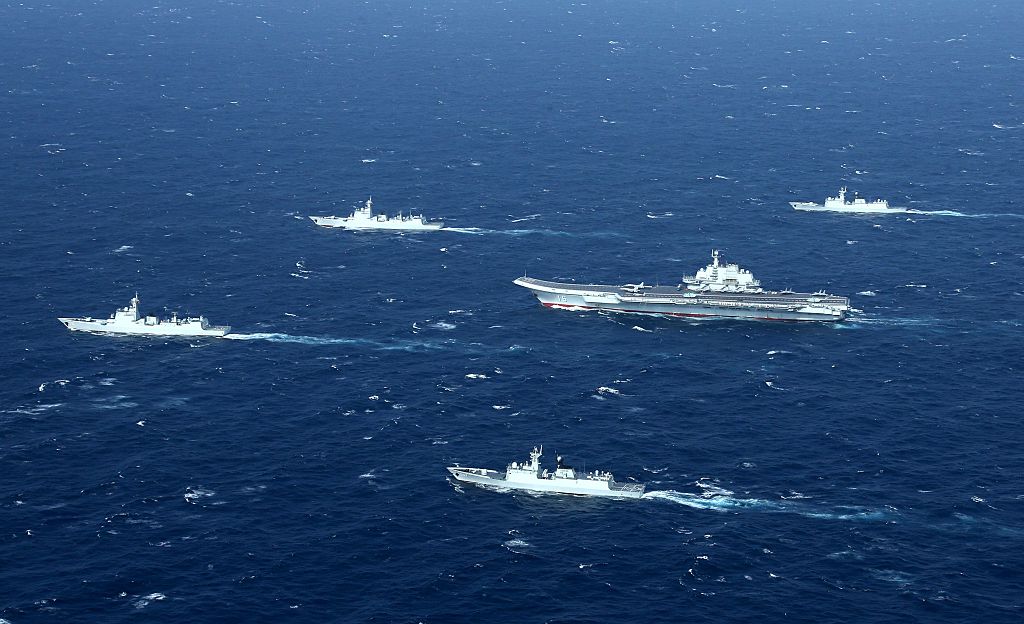 Photo: Getty Images
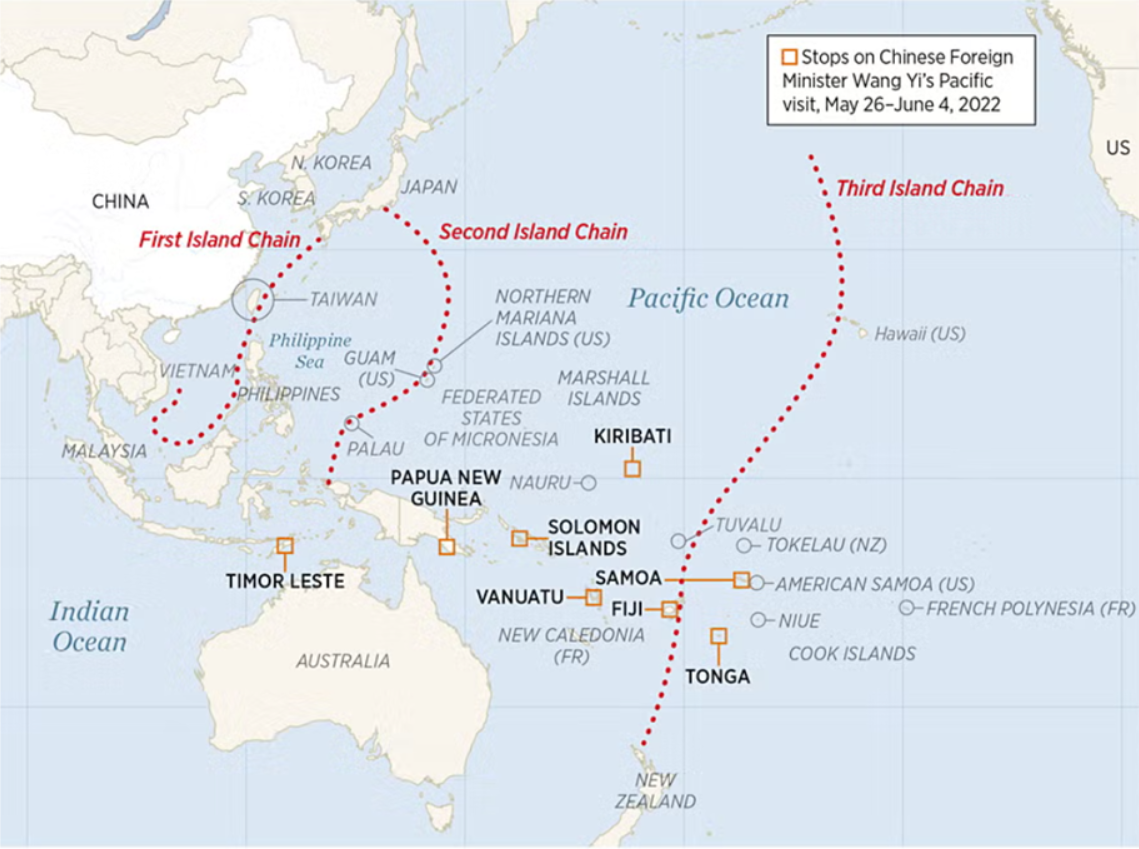
In recent years, China’s strategy toward cooperation with Pacific states has expanded far beyond the confines of purely economic engagement. Taking into account the U.S. concept of “island chains,” which serves as a mechanism for containing China in the region, Beijing recognizes its adverse impact on the development of its maritime capabilities. China regards these island states as an opportunity to project its own power while simultaneously constraining the offensive and defensive capabilities of the West.
China is systematically seeking to challenge the traditional dominance of the United States, Australia, and New Zealand in a strategically vital space that, since World War II, has been regarded as an uncontested sphere of Western influence. By expanding its presence, Beijing aims to displace Western states and complicate their military and diplomatic planning in anticipation of future conflicts. China’s contemporary strategy in the Pacific region is comprehensive, encompassing security, infrastructure, maritime cooperation, diplomatic influence, access to resources, logistical support, and control over maritime space.
Within the framework of its “Blue Dragon” strategy in the Indo-Pacific, China seeks to shift away from the continental orientation of its policy toward establishing dominance in adjacent maritime domains—namely the East China Sea, the South China Sea, and the Indian Ocean. In order to secure its eastern maritime frontiers and isolate the Taiwan Strait, China aims to extend its reach to the second and third island chains, thereby gaining control over critical sea lanes and air corridors. An important aspect of implementing this strategy is the development of strategic cooperation with Pacific island states, including through infrastructure projects, particularly within the framework of the Belt and Road Initiative.
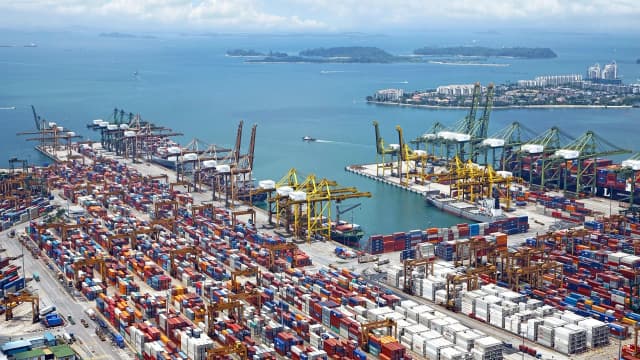
A key tool for achieving these objectives is the construction of dual-use infrastructure. China is actively building and upgrading ports capable of accommodating not only commercial vessels but also military ships. A notable example in this context is the Luganville wharf in Vanuatu, which has the capacity to accommodate not only large cargo ships but also Chinese naval vessels.
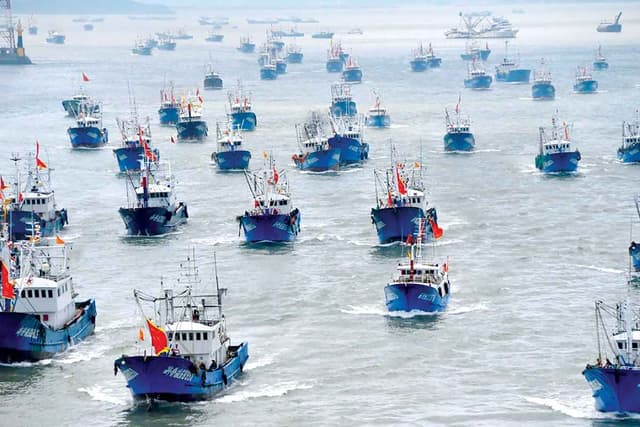
Beijing also employs fishing infrastructure to establish a foothold in strategically important maritime locations. For instance, in 2020, a Chinese company signed an agreement to build a multifunctional fisheries industrial park on Daru Island in Papua New Guinea. The island is located near the Torres Strait, a critical defense chokepoint for Australia that connects the Pacific and Indian Oceans. This facility may serve as a cover for the operations of China’s maritime militia and the use of “gray zone” tactics to assert control over territory.
China is also financing airport modernization projects in Micronesia, Tonga, Samoa, Kiribati, and elsewhere. These modernizations include terminals and telecommunications systems that enhance China’s intelligence and command capabilities, enabling data collection and potentially facilitating coordination between naval and fishing assets.
Simultaneously China develops digital infrastructure. Huawei, a state-owned company receiving substantial subsidies and maintaining close ties with China’s military and security sectors, has implemented numerous projects involving integrated government information systems, undersea cables, and data centers. However, such initiatives often raise concerns and are perceived as instruments of control over digital infrastructure. For example, a Huawei-built data center in Papua New Guinea (2018) suffered from cybersecurity vulnerabilities that led to a government data breach. Company employees have also been accused of links to Chinese intelligence and military bodies. According to China’s National Intelligence Law, Huawei is legally obligated to cooperate with state authorities and provide technical support or data upon request. Furthermore, the mandatory establishment of Communist Party cells within corporations effectively limits the company’s independence and its ability to resist party directives. Although Huawei strongly denies state interference, concerns over its ties to the government and potential espionage risks have compelled several European countries to restrict or ban its equipment in critical 5G networks.
China is also interested in some of the world’s largest deep-sea mineral reserves located on the Pacific seabed. The country operates the world’s largest civilian hydrographic survey fleet, regularly conducting research in international waters. In spring 2025, China Minmetals became the first Chinese company to receive authorization from the International Seabed Authority to conduct deep-sea mining tests in the Pacific. Beijing is also cooperating with Kiribati and the Cook Islands on exploring deep-sea mining opportunities. These efforts form part of China’s broader resource strategy aimed at securing access to critical minerals such as nickel and cobalt, which are essential for the energy transition and technological development.
China is steadily expanding its control over Pacific waters, gaining a strategic advantage in the region. This is occurring simultaneously with the realization of its “Transparent Ocean” strategy, which involves real-time monitoring of the ocean through a five-layered sensor network. While officially intended for civilian research purposes, such expansion carries significant military risks for the United States and its allies. This “invisible network” integrates data from satellites, surface buoys, and underwater systems into a unified command center, enabling rapid targeting. Access to seabed infrastructure and Pacific facilities further reinforces this strategy and strengthens Beijing’s regional position.
What are the main mechanisms through which China advances its interests in the region?
First and foremost, investment. China ranks second in terms of aid provided to Pacific countries (approximately $4.8 billion between 2008 and 2023), after Australia’s $21.1 billion. While the amount of financing is lower than in the 2010s, the focus has shifted from debt-financed infrastructure to more targeted grant-based assistance and public engagement.
The primary mechanism for Chinese investment is the Belt and Road Initiative. Under this framework, Pacific countries receive grants, concessional loans from state banks such as the Export-Import Bank of China, and commercial loans from private Chinese banks. In 2024, Chinese construction contracts in the Pacific region rose by 228% compared to the previous year.
An illustrative example is the agreement signed in summer 2025 between Nauru and a Chinese state-owned company worth $1 billion, aimed at developing renewable energy, environmental systems, and maritime infrastructure. In November of the same year, China and five Pacific Island countries signed a landmark framework agreement to deepen economic cooperation, expand trade, stimulate investment, modernize agriculture, and enhance industrial collaboration. This approach reflects a shift from fragmented aid to institutionalized cooperation.
One of the most significant agreements was concluded between China and the Cook Islands, encompassing cooperation in the fields of economics, infrastructure, climate resilience, cultural exchange, seabed mineral exploration, and grant-based financing. Since the Cook Islands are a self-governing territory in free association with New Zealand, such comprehensive cooperation with China alters the traditional balance of power in the region.
However, such engagement is often accompanied by growing dependency on China through debt obligations. Tonga, for instance, faces significant debt to China, with repayments accounting for approximately 48% of its external debt. These so-called “debt traps” may compel recipient countries to pledge infrastructure assets as collateral. A well-known example is Sri Lanka’s Hambantota Port, leased to China for 99 years in 2017 following debt repayment difficulties.
The most strategically important for Beijing and the most challenging for Western influence in the region is security cooperation between China and Pacific states. The 2022 security pact between China and the Solomon Islands raised alarms in Australia, New Zealand, and the United States due to the potential establishment of a Chinese military base in this state. Although officially focused on maintaining public order, disaster response, and national security assistance, the full text of the agreement has not been disclosed. This is the first known bilateral security agreement between China and a Pacific state that may serve as a precedent for other pacific states. In addition, the countries signed an agreement on police cooperation as part of the transition to a “comprehensive strategic partnership,” which strengthens China’s influence over the domestic affairs of the Solomon Islands.
China’s growing presence is also constraining traditional actors. For example, Vanuatu halted the process of signing a $500 million agreement with Australia to fund projects in climate, economic, and security sectors. Instead, the country plans to conclude a Memorandum of Understanding on police activities, which will formalize China’s police assistance programs in Vanuatu. It has also signaled intentions to expel foreign advisers from government institutions, reinforcing sovereignty while reducing Australian and New Zealand's influence in this country.
China’s expanding economic and security engagement compels Pacific states to increasingly factor Beijing’s position into their domestic and foreign policies, thereby undermining the leadership of Australia and New Zealand in the region.
During the last years China has also made significant gains in diplomatic influence, particularly in isolating Taiwan. In 2019, the Solomon Islands and Kiribati established diplomatic relations with China, followed by Nauru in 2024. This reduced the number of countries recognizing Taiwan from 15 to 12. Currently, only three Pacific states – Tuvalu, Palau, and the Marshall Islands maintain diplomatic relations with Taiwan.
China has far greater economic capabilities than Taiwan, which leads to an increasing number of countries to side with Beijing. Moreover, mainland China’s aid is notable for the absence of prior political conditions and does not require adherence to democratic standards. A striking example of China’s growing diplomatic influence were the 2024 and 2025 Pacific Islands Forums (PIF). At the 2024 PIF summit in Tonga, China and the Solomon Islands attempted to block Taiwan’s participation and successfully pushed for the removal of any reference to Taiwan from the summit communiqué. At the 2025 summit hosted by the Solomon Islands, the country, under pressure from Beijing, blocked the participation of the United States and Taiwan in the forum. China itself was not present, but its primary objective was to exclude Taiwan, which had previously taken part in the gathering.
Nevertheless, despite China’s active engagement in the region, traditional centers of influence such as Australia and the United States keep maintaining their positions, and Pacific Island states remain cautious of excessive Chinese influence.
Fiji’s Prime Minister Sitiveni Rabuka stated that he opposes China establishing a military base in the Pacific region. In September 2025, Australia and Papua New Guinea signed a security agreement committing both countries to defend one another against armed attacks, which drew concern from Beijing. Moreover, amid a reduction in U.S. aid programs, Australia spent three-quarters of its total foreign assistance in 2025, approximately $4 billion on the development of Pacific Island countries, marking the highest level in the past 40 years.
The United States also signed a defense and maritime cooperation agreement with Papua New Guinea in 2023, and in the same year concluded a pact granting U.S. forces “unfettered” access to its bases. In 2020, the U.S. signed a defense and security agreement with Fiji. Additionally, through free trade and defense agreements (COFA) with Palau, the Marshall Islands, and the Federated States of Micronesia which place full responsibility for defense and security with Washington the U.S. maintains a dominant position in the northern Pacific.
The large-scale “Partners in the Blue Pacific” initiative, launched in 2022 by the United States, Australia, Japan, New Zealand, and the United Kingdom, aims to establish a constructive, transparent, and effective development framework for Pacific Island countries and to strengthen their economic and diplomatic engagement. China even perceives this initiative as a tool to contain its influence in the region and accuses it of being anti-China.
At the same time, Pacific Island states continue to pursue sovereign policies and resist comprehensive Chinese influence. During Chinese Foreign Minister Wang Yi’s 2022 tour of eight Pacific nations, the countries rejected Beijing’s proposed regional security pact, which would have significantly altered the political landscape of the Pacific region. Furthermore, following the 2025 Pacific Islands Forum hosted by the Solomon Islands, regional leaders endorsed Taiwan’s right to participate in the forum, despite China’s insistence on excluding Taiwan from the gathering.
In conclusion, while China has not yet established a fully institutionalized network of ties with Pacific Island countries or consolidated its security influence, it is actively expanding its presence in the region, partially displacing traditional regional actors. Beijing heavily invests in dual-use infrastructure, securing a dominant position in seabed mineral exploration and development, and systematically builds economic and security partnerships with regional states. These efforts weaken Western influence in the Pacific region while providing China with the necessary infrastructure and capabilities in the event of a conflict near its shores. Chinese economic capacity, combined with the absence of prior conditions for cooperation such as requirements for democratization and transparency increasingly draws Pacific states closer to Beijing, especially against the backdrop of a declining U.S. presence.
China’s position in the region is further strengthened by the contraction of U.S. USAID programs, which has had a negative impact on humanitarian and climate adaptation initiatives, undermining trust in the United States and pushing regional partners to seek alternative sources of support and China is a prominent option. Beijing is now regarded as a more reliable and consistent partner by Pacific states.
Nevertheless, longstanding influential actors such as the United States and Australia keep maintaining strong positions and actively compete with China for influence. However, their efforts are hampered by a lack of coordination and a coherent, long-term regional strategy. U.S. constraints on NATO’s involvement in overseas operations, combined with a focus primarily on alliance members, further limit its ability to counter Chinese influence. Washington has pressured allies to avoid inviting the four official Indo-Pacific partners of the alliance– Australia, New Zealand, Japan, and South Korea to formal meetings at the NATO summit in Ankara. This retreat from multilateral engagement in the Pacific effectively leaves U.S. partners in the region to face Chinese expansion on their own.
For Ukraine, China’s growing influence in the Pacific is highly undesirable. It strengthens Russia’s largest covert ally, enhances Beijing’s position in opposing the West, and diverts the attention of the United States and potential Ukrainian partners to the region, forcing them to allocate additional resources to contain China “in their own backyard.” China’s strengthening in the Pacific also increases its confidence to initiate armed conflict in the Taiwan Strait. In such a scenario, Chinese capabilities in the region would strain U.S. and allied defense capacities, prolonging the conflict and redirecting almost the entire attention of the international community to a region that is strategically and economically far more significant to the United States than Eastern Europe. This would compel the U.S. to shift its military focus to the Pacific theater, weakening both Europe which still relies on U.S. presence on its territory and Ukraine, which indirectly depends on U.S. military support acquired by European partners. For Russia, the drawing of Western attention to the Pacific is advantageous, as it diminishes the capacity and engagement of Ukraine’s partners, reduces the international focus on the Russia–Ukraine war, and pressures Ukraine’s partners toward a rapid settlement that would conflict with Ukraine’s interests.
You may be interested