 INTERNATIONAL
INFORMATION AND ANALYTICAL
COMMUNITY


+ Join
Support INTERNATIONAL



Maria Hirniak, Junior analyst at the Resurgam think tank, specializing in the Asia-Pacific region.
 Photo: Getty Images
This is the same China - with Xi Jinping at the helm of state and Wang Yi heading the diplomatic apparatus, and yet Beijing's behavioural patterns diverge considerably from one region to the next. If one places four cases within a single analytical framework: the economic coercion campaign against Australia (2020-2024), the militarisation of the artificial islands of the Spratly archipelago in the South China Sea, the balancing act in relations with South Korea around the THAAD deployment, and the infrastructure and investment expansion across Africa under the Belt and Road Initiative — what emerges is a picture that public commentary typically labels as "contradictory" or "incoherent", despite China's demonstrated capacity to manage its relationships.
In reality, this behaviour is consistent. China is pursuing what might be called a "variable strategy" - a systematic combination of cooperation and pressure in which the proportions shift depending on the specific partner, region, and issue. And it is precisely this code that provides the key to understanding how Beijing will act in the decade ahead.
To understand Chinese variability, one must begin with 1991. No alternative centre of power was able to match the anti-Soviet alliance model, and Soviet rhetoric and behaviour made membership in the anti-Soviet bloc a safe bet for any state that valued its independence.
China made the opposite choice. Deng Xiaoping's formula of "taoguang yanghui" - "hide your capabilities, bide your time", was a deliberate operational directive for decades: do not claim global leadership, do not head international coalitions, avoid direct conflict with the United States, defer sensitive issues (Taiwan, maritime disputes), and do not export ideology. The single objective was to allow the country to grow economically to the point where the cost of containing it became prohibitive for the West.
This growth rested on three mechanisms. First, the policy of "reform and opening up" policy (改革开放) from the late 1970s, which transformed the coastal provinces into the world's manufacturing platform through special economic zones and a regime of encouragement for foreign direct investment (FDI) by the mid-1990s China had become the world's second-largest FDI recipient. Second, accession to the WTO in December 2001, which opened the markets of developed countries to Chinese exports and launched a phase of accelerated growth - per capita GDP rose by 49% between 2002 and 2006. Third, state industrial policy in strategic sectors, aimed at building technological capacity through joint ventures conditioned on technology transfer.
By 2010 the model was delivering. The Chinese economy had grown twelvefold, foreign trade eightfold, and the defence budget by more than tenfold. No anti-China coalition had formed; on the contrary, partners from the EU to ASEAN were eager to integrate Beijing into global value chains.
Yet the strategy had a built-in ceiling. Quiet economic expansion proved incompatible with open territorial claims in the South China Sea, the militarisation of Spratly reefs, and intensifying pressure on Taiwan. At a certain point, maintaining a "low profile" became impossible in a purely physical sense: an economy of that scale could no longer move undetected. Grievances began arriving in Beijing from every direction: from the United States over trade imbalances, currency manipulation, and intellectual property violations; from ASEAN states and the Philippines over the artificial islands; from the EU over unequal access to the Chinese market. In 2011, the Obama administration announced the "Pivot to Asia", signalling a strategic reorientation of the United States toward containing China in the Indo-Pacific. It was at precisely this moment when quiet expansion no longer provided cover that Beijing invented its version of adaptability.
Instead of choosing between the two extremes - "hiding" and "assertiveness", China began deploying them simultaneously, aimed at different audiences. Toward one country: a soft tone, economic cooperation, ritual high-level meetings. Toward another: border clashes, infrastructural "encirclement", aggressive diplomacy. The aim is to prevent potential adversaries from perceiving China as equally threatening at the same moment. If Japan, India, Vietnam, the Philippines, and Australia each experience crises with Beijing in turn - each in isolation, while the others are receiving economic benefits - the idea of an "Asian NATO" remains purely theoretical.
The strategy deploys 4 instruments. The first is economic weight. The Belt and Road Initiative, launched in 2013, tied dozens of countries from Southeast Asia to Africa to Chinese capital. The Asian Infrastructure Investment Bank, established in 2015 without American participation but with the membership of most US allies, transformed China into an alternative to the World Bank. The classic version of this instrument, the "debt trap" narrative around Hambantota in Sri Lanka, has been seriously challenged in recent years by the research literature. Scholar Deborah Brautigam has shown that the situation arose more from failures in Sri Lankan political economy than from any deliberate strategy on Beijing's part. Yet debunking the "trap" myth does not mean the mechanism of influence has vanished - it simply operates in a more complex manner. Rather than the sequence of loan-default-asset seizure, Beijing acquires leverage through the systemic dependence of borrowers on the continuation of Chinese financing.
The second instrument is soft power and parallel institutions. BRICS, the SCO, RCEP, and the Global Security Initiative create platforms for China's economic and security engagement from which the United States and its allies are either excluded entirely (BRICS, SCO, GSI) or participate on equal terms as members rather than as rule-setters (RCEP). This is not a direct replacement for Western institutions, but a form of parallel coexistence that gradually erodes their monopoly on norm-setting. That instrument, however, has clearly defined limits as the "17+1" format (China's cooperation with seventeen Central and Eastern European countries, launched in 2012) illustrates plainly. In May 2021 Lithuania withdrew; in August 2022 Latvia and Estonia followed, and the format contracted to "14+1". It survives formally, but has lost the one thing that mattered: the capacity to attract new members and produce shared decisions.
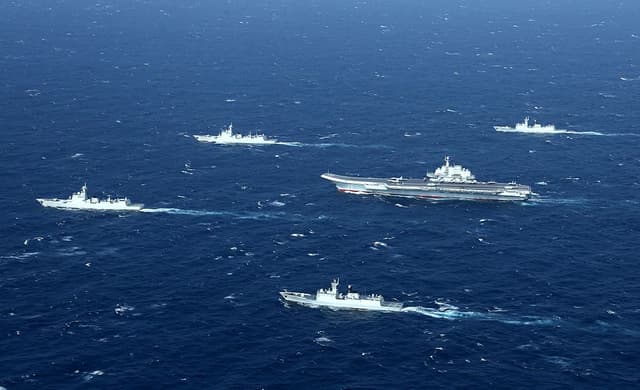
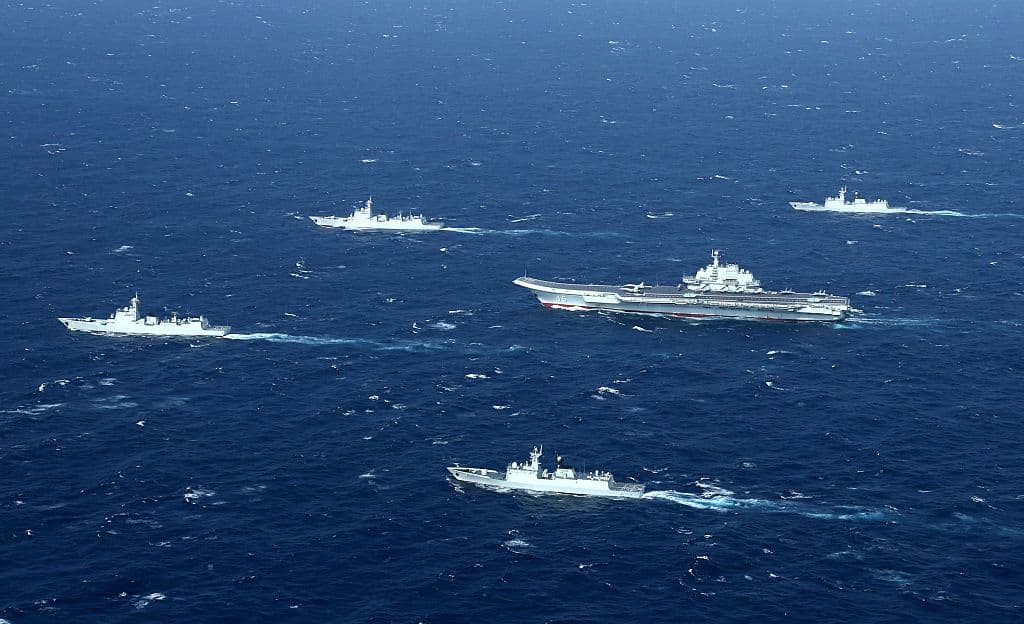
The third instrument is military deterrence. The A2/AD strategy (anti-access/area-denial), which encompasses medium-range missiles, air defence systems, anti-ship weapons, and cyber forces, is not, despite widespread interpretation, directed against the United States in the sense of preparing for direct war. Its design is different: to raise the expected cost of American intervention sufficiently that Washington's decision to intervene in a regional conflict becomes doubtful. And it is already effective enough that Japanese analysts publicly question whether the American military presence in the region guarantees deterrence of China.
The fourth instrument is strategic ambiguity. Unlike the United States, which relies on clear declaratory commitments regarding its alliance obligations (NATO, the Security Treaty with Japan, the Mutual Defence Treaty with South Korea), China systematically avoids publicly codifying its own red lines. The specific conditions that would trigger the use of force over Taiwan are formulated only in general categories in the 2005 Anti-Secession Law; the legal content of the "nine-dash line" in the South China Sea has not been clarified by Beijing even after the 2016 arbitral ruling in Philippines Vs China, which partially rejected those claims.
This strategy serves two functions. First, it complicates adversaries' strategic planning, forcing them to choose between the costly option - preparing for the broadest possible range of Chinese actions, and the risky one - planning for a specific scenario that may prove wrong. Second, it preserves Beijing's operational and diplomatic flexibility while eliminating the risk of a commitment trap, in which a state is compelled to use force solely to confirm an earlier public statement.
All four instruments - economic weight, parallel institutions, A2/AD, and strategic ambiguity, are deployed by Beijing in parallel. The question is one of proportions in specific regional cases. Let us look at those cases.
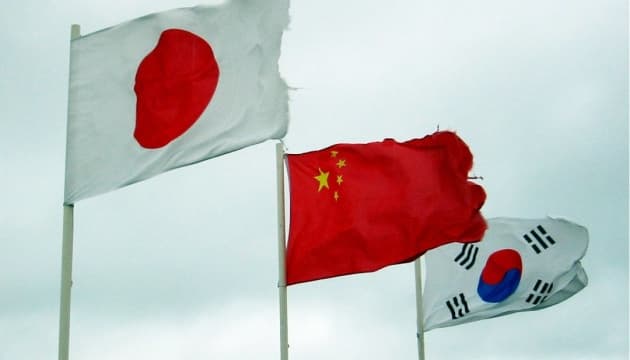
Sino-Japanese relations are an example of the "hot economics, cold politics" model (政冷经热) - deep economic interdependence coexisting with enduring tension on the security and historical tracks. Bilateral trade exceeds 300 billion dollars per year - China is Japan's largest trading partner. Japanese investment and technology played a significant role in China's industrial development. This structural interdependence generates a lobby for de-escalation at moments of political friction.
That does not mean the relationship is peaceful. In its 2022 National Security Strategy, Japan explicitly described China as an "unprecedented strategic challenge" - effectively, its primary threat. The Senkaku Islands, which Japan administers and China regards as historically Chinese, have become a genuine grey-zone arena: Chinese patrol vessels enter the adjacent waters every week; Japanese fighters scramble hundreds of times a year for intercepts.
Yet, and this is the crucial point, there are no physical clashes. Chinese vessels enter the zone but avoid ramming. Chinese aircraft approach Japanese airspace but do not violate it. In December 2022, Tokyo adopted a package of strategic documents providing for an increase in the defence budget to 2% of GDP by 2027 and the acquisition of "counterstrike capabilities" - effectively ending the postwar restraint doctrine that had been in place since 1945. This is the most radical change in Japanese defence policy in eighty years. Beijing's response was marked by rhetoric about "Japanese militarism", yet at the same time, leadership meetings took place, ritual courtesies were exchanged on treaty anniversaries, and intensive diplomatic dialogue continued.
The Line of Actual Control between China and India stretches 3.488 kilometres of mountainous terrain, parts of which have remained disputed since the Sino-Indian War of 1962. In June 2020, as noted, the Galwan Valley in Ladakh produced something that the Senkaku situation with Japan never has: a physical confrontation with real casualties. 20 Indian soldiers died in hand-to-hand fighting; the Chinese side has still not disclosed its losses, though independent estimates put the figure in the dozens. The escalation is part of a systemic pattern applied to India. China's strategic partnership with Pakistan, India's traditional rival, takes the form of the approximately 60-billion-dollar China-Pakistan Economic Corridor, the opening of a Chinese naval base in Djibouti in 2017, and infrastructural activity in Sri Lanka, Bangladesh, Myanmar, and the Maldives. What Indian strategists call the "string of pearls" - a concept that was, in fact, coined not by the Chinese but by Booz Allen Hamilton analysts in 2005 for the Pentagon - forms precisely the geospatial pattern that New Delhi perceives as strategic encirclement.
The paradox is that China's actual military capabilities in South Asia are considerably more modest than in East Asia. RAND Corporation researchers Scobel, Ratner, and Beckley proposed as early as 2014 the concept of the "hollow fortress" to describe this - a reference to the famous episode from ancient Chinese military history in which the strategist Zhuge Liang supposedly deceived an enemy through the display of an empty city. The autonomous regions of Tibet and Xinjiang create internal vulnerability, since Beijing is compelled to station large army and police forces there to maintain control over ethnic minorities and counter separatism. Those troops are occupied domestically, they cannot be redeployed toward the South Asian theatre. And yet the pressure here is real, physical, and lethal. In Japan it is merely rhetorical, without casualties. Why?
The answer lies in 3 structural factors that systematically determine the intensity of Chinese pressure in each bilateral context.
The first is economic asymmetry. Sino-Japanese trade (over 300 billion dollars) is nearly three times larger than Sino-Indian trade (around 130 billion). Economic interdependence generates a powerful domestic constituency within Japan itself - corporations, chambers of commerce, regional governments, that opposes hard confrontation. The same is true in Beijing. This creates a structural restraining factor that it is in neither capital's interest to break. In the Indian case, the economic barrier is considerably lower: India is not a critical market for most key Chinese industries, and vice versa. The cost of tension is therefore lower and, accordingly, the threshold of tolerance for incidents higher.
The second is the adversary's alliance commitments. Japan is bound to the United States by the formal 1960 Security Treaty, whose Article V explicitly provides for mutual defence in the event of an armed attack on territories under Japanese administration. The United States has officially confirmed that this article extends to the Senkaku Islands. This means that any serious incident around the islands automatically draws the United States into potential escalation. India, by contrast, is not an ally of the United States under any legally binding treaty. The Quad, for all its political weight, provides no mutual defence guarantees. The agreements India has concluded with the United States - LEMOA, COMCASA, BECA, ensure interoperability and intelligence sharing but do not oblige Washington to defend New Delhi militarily. This creates a "safer" space for Chinese pressure.
The third is the physical nature of the territorial disputes. The Senkaku Islands are small, uninhabited outcrops at sea. Here, "grey zone" is the natural mode of contestation: coast guard vessels rather than warships, accelerated flights rather than airspace violations, fishing flotillas rather than naval presences. Transparency at sea is limited: it is difficult to establish conclusively who the aggressor is in any given incident. The land-based Line of Actual Control between China and India is a physically defined demarcation line with living soldiers present on both sides. Paradoxically, the very sharpness of this land dispute makes it easier to control in terms of escalation management: China can apply limited pressure to a specific sector, gain a tactical advantage, and then stabilise the situation through diplomacy because a full exchange of blows between two nuclear powers on a mountain pass is equally disadvantageous to both.
To summarise: in the Japanese case, all three variables work against hard pressure - high economic interdependence, a formal alliance with the United States, the maritime character of the dispute. Hence Beijing's cautious approach. In the Indian case, all three variables favour harder pressure - relatively low economic interdependence, no formal alliance with the United States, the land-based character of the LAC. Hence Galwan 2020, active support for Pakistan, and infrastructural pressure through CPEC.
The paradox, then, has an explanation. China behaves more assertively precisely where the risk of direct confrontation with the United States is objectively lower. This has the appearance of rational minimisation of strategic costs.
Yet this strategy is beginning to confront its own structural limits. When the format of US-Japan-India-Australia engagement, the Quad, was reconvened in March 2018, Wang Yi dismissed it contemptuously as "ocean foam that will soon dissipate". 7 years later, the grouping has held its fifth leaders' summit. The format's defining feature is this: it brings together Japan and India - two of Asia's largest states, not bound by any formal alliance to one another. In other words, the Quad is a mechanism that forces China to confront two key regional adversaries simultaneously rather than in sequence - precisely what the variable strategy was designed to prevent.
A further strategic format, the trilateral defence pact among the United States, the United Kingdom, and Australia (AUKUS), announced in September 2021, went further still. For the first time, nuclear submarine technology is being transferred to a non-nuclear state. When Australia, a member of this partnership, began publicly aligning more closely with Washington, Beijing imposed trade sanctions on Canberra: tariffs and informal bans on Australian wine, barley, coal, and lobster. The ban was less a punishment of Australia than a signal to others: this is what happens to those who move to overt balancing. Classic counter-balancing.
But something else showed up in the data: despite the demonstrative punishment, the counter-balancing pressure did not work on Australia. It did not abandon AUKUS. And in August 2023, at Camp David, a historic trilateral summit of the United States, Japan, and South Korea took place, cementing coordination among Washington's three most important Asian allies. The trilateral structure represented something Japan and South Korea, given their historical differences, had never previously undertaken. That is to say, the variable strategy, despite all its economic incentives and ritual diplomacy, was unable to prevent the regional consolidation that China most needed to forestall.
This matters. The whole point of variability was to keep potential adversaries divided through a differentiated approach that gave them no common cause for collective pushback. QUAD, AUKUS, and the trilateral formats indicate that this strategy is no longer working fully: key regional states have begun institutionalising coordination, starting from the assessment that China's cumulative assertiveness outweighs the benefits of bilateral cooperation with it.
Three conclusions follow from the analysis of the variable strategy.
Chinese strategy is neither consistently "peaceful" nor consistently "aggressive" - it is variable by nature, and that variation has explicable structural causes. This is a foundational point for understanding, because "the Chinese threat" in Western discourse is often presented as monolithic. In reality, the intensity of that threat differs across regions and requires differentiated responses. A generic prescription of "containing China" won't hold - Beijing's strategy is itself differentiated, and the answer has to be differentiated in kind.
The variable strategy was effective during the period from roughly 2000 to the 2010s, when China's influence was growing faster than its adversaries' responses were forming. Institutional balancing through the AIIB, BRICS, the SCO, and RCEP created a parallel layer of regional architecture. Economic attractiveness delayed the consolidation of an anti-China front and allowed Beijing to buy time. Today, that time appears to be running out.
The model's effectiveness has limits, and those limits are beginning to manifest now. QUAD, AUKUS, Japan's strategic transformation toward self-defence in 2026, India's reorientation toward partnership with the United States, and trilateral US-Japan-South Korea coordination - all of these developments testify to a gradual consolidation of the regional response. The "hollow fortress" concept remains relevant for South Asia, but East Asia is already moving beyond it. Beijing faces a dilemma: preserve variability in the hope that QUAD and AUKUS remain weakly institutionalised, or shift to a harder line at the risk of accelerating the consolidation of its adversaries.
For Ukraine, this experience is not only about China. It is about how great powers navigate the dilemma of deterrence under conditions of structural rivalry, and why even the most inventive strategies ultimately encounter their limit. Contemporary geopolitics increasingly resists simple friend-or-foe schemas. But at the same time, and the Chinese case demonstrates this, when strategic ambitions exceed the bandwidth of diplomatic manoeuvre, adversaries ultimately consolidate. It is between these two poles that countries which are neither China nor the United States must navigate.
Ukrainian diplomacy in recent years has been addressing a near-symmetrical problem: how to be simultaneously embedded in the Western security system while preserving space for trade and economic relations with China; and how to bind the United States through formal commitments without losing multi-vector flexibility. Observing how Beijing manages analogous dilemmas is a useful lesson, even when the goal of Ukrainian manoeuvre is the opposite. China seeks to weaken the Western order and reduce the certainty of American alliance commitments. Ukraine, by contrast, requires the deepest possible rootedness in Western institutional architecture and legally binding security guarantees. But the instruments with which Beijing manages its relations with different partners can be studied independently of the goals, and it is precisely in this sense that Chinese experience retains its methodological value.
You may be interested