 INTERNATIONAL
INFORMATION AND ANALYTICAL
COMMUNITY


+ Join
Support INTERNATIONAL



Anastasiia Figura, Political analyst specializing in the political dynamics of Central and Eastern European countries, with a focus on Poland.
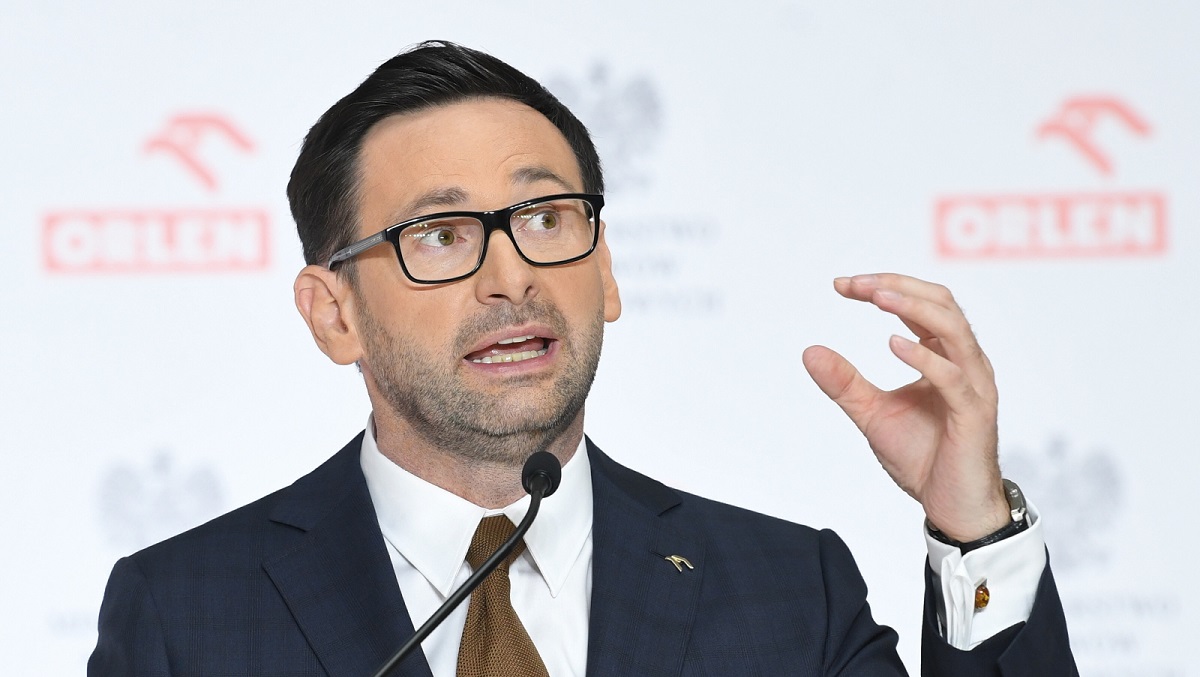 In 2025, the Polish media exploded again with new publications about the former head of the Polish energy giant ORLEN and current Member of the European Parliament from the PiS party, Daniel Obajtek.
Since 2021, Polish and international publications have been reporting new details of investigations ranging from illegal wiretapping of political opponents to alleged links between ORLEN's Swiss subsidiary and the terrorist organisation Hezbollah.
On 12 November 2025, the regional prosecutor's office in Warsaw officially charged Obajtek with causing ORLEN S.A. property damage amounting to PLN 393,600 and abuse of office. According to the investigations, these funds were spent on two contracts with Wojciech Kosinski's detective agency without a tender to monitor Obajtek's political opponents.
Prime Minister Donald Tusk revealed the names of these MPs: Marcin Kierwiński (Minister of the Interior), Jan Grabiec (former head of Tusk's office) and Andrzej Galicki (Member of the European Parliament). All of them are members of the Civic Platform party. According to the prime minister, ORLEN paid over PLN 1 million for these services.
Daniel Obajtek himself appeared at the prosecutor's office on 12 November, where he denied that the funds had been used for personal purposes. At the same time, a group of the MP's supporters gathered in front of the prosecutor's office, carrying banners with slogans such as ‘Wall behind Obajtek’ and ‘Tusk to prison, Obajtek to power’.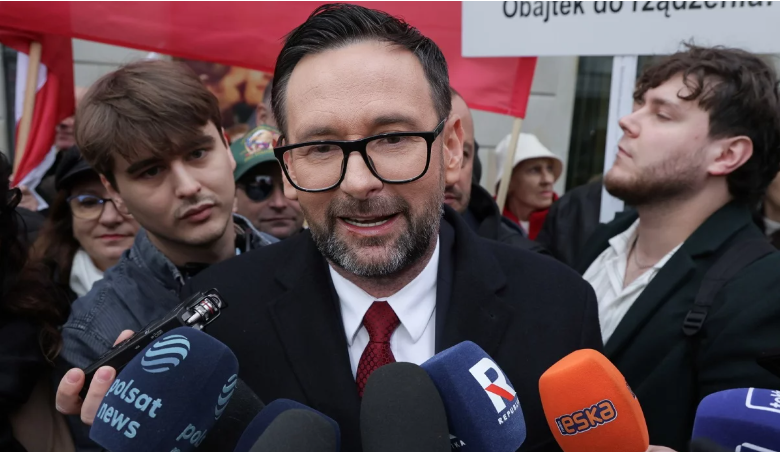 Daniel Obajtek PAP/Paweł Supernak
During the time he was head of oil giant ORLEN, Obajtek had the political protection of the PiS party, which disappeared after Tusk's Civic Platform party won in 2024. The new government immediately launched an investigation into allegations of corruption, putting Obajtek at the top of the list.
But at the same time, he secured himself a seat in the European Parliament, staying in Hungary under the unofficial protection of Orbán. Parliamentary immunity effectively shielded Obajtek from national prosecution.
The Polish prosecutor's office gathered enough information to take decisive action. In December 2024, Prosecutor General Adam Bodnar submitted a request to the European Parliament to waive Obajtek's immunity in order to bring charges against him for the misuse of the energy company's assets. And in July 2025, he submitted a second request for further charges of giving false testimony and violating Polish press freedom laws while he was CEO of Orlen.
In October this year, MPs voted to waive his immunity, paving the way for additional charges and further prosecution. According to preliminary data, Article 18 (1) in conjunction with Article 296 (1) of the Polish Criminal Code, under which Obajtek is currently charged, provides for a punishment of 3 months to 5 years.
It is likely that Tusk's government is ‘exposing’ its opponents on the eve of the upcoming parliamentary elections in order to gain an advantage in the eyes of the people.
It should be noted that this is not the first criminal proceeding against the former head of ORLEN. Since 2013, Obajtek has been involved in several serious criminal cases, including allegations of links to the leader of a criminal group, Maciej K., nicknamed ‘the president’ (full name not disclosed), corruption, fraud and possible concealment of property.
Many of these cases were discontinued or ‘conditionally’ closed without a final verdict, which formally released Obajtek from criminal liability. The key role in this was played by the "Act of 10 June 2016 amending the Code of Criminal Procedure, the Act on the Professions of Doctor and Dentist, and the Act on the Rights of Patients and the Ombudsman for Patients' Rights," adopted during the PiS government, which allowed the prosecutor's office to withdraw the indictment without the consent of the court.
In fact, such changes in the judicial system made it possible to control investigative processes and influence the results of investigations. It was later named “Lex Obajtek” because it was he who saved the former head of ORLEN. These same amendments subsequently raised questions about the impartiality of the rule of law in Poland.
Of course, not all of the scandalous materials, including the wiretapping of Obajtek himself and the ‘Kaczynski tapes’ of 2018, led to the opening of criminal proceedings, although some of the investigations were preserved or resumed. The prosecutor's office explained the closure of the cases by the contradictory nature of the evidence and insufficient evidence, and the courts upheld the decision to close the case. At the same time, Obajtek denied all charges and emphasised the political pressure and lack of transparency of the previous trials. This is likely a strategy to ‘drag out’ the process, which in principle works.
At the same time, on 28 October 2025, a ‘secret reshuffle’ (as it was only mentioned in industry news publications) took place in the company's supervisory board, according to OKO.Press, at the request of the new Minister of State Property, Wojciech Balczun. The state, as the majority shareholder, exercised its right to replace the board members. A group of lawyers who opposed the repressive initiatives of the previous government and defended independent judges were replaced by more politically loyal ones. The authorities explained this as a routine personnel change, similar to the one that took place in the company's supervisory board.
On the same day, ORLEN's general meeting approved the filing of claims for damages, in particular against the former CEO, Daniel Obajtek. The claims relate to expenses for so-called representative purposes, which he used for personal purposes.
In addition, the cases were to be supervised by a previous, impartial team of lawyers, and now there are questions about the transparency of this process, which may reduce the scope of liability.
At the same time, these investigations are leading to other cases. In parallel with the allegations of fraud and terrorism, the ORLEN Group's large-scale deals are being reviewed, in particular the merger with Grupa Lotos S.A, and earlier with Energa Group in April 2020 and PGNiG in November 2022, as part of a ‘new business strategy’.
In July 2020, the European Commission approved the merger between these companies after they agreed to make concessions, including selling 80% of Lotos petrol stations throughout Poland and 30% of shares in the Lotos oil refinery in Gdańsk.
However, this decision was criticised by the team of EU Competition Commissioner Margrethe Vestager herself. The reason for the discussion was the question of the politician's impartiality, as in 2019 she blocked the merger of French and German railway giants.
In April 2025, the Supreme Audit Office (NIK) acknowledged that the merger of Poland's largest fuel company ORLEN and Lotos had no significant economic justification, according to an audit report. NIK President Marian Banas claims that ‘ORLEN included in its presentation the results of the merger, data on future unreliable synergies worth PLN 10 billion (€2.3 billion), but these forecasts were wrong.’ As a result of the merger, ‘the Polish Treasury lost control of approximately 20% of the refined petroleum products market and reduced its control over the country's key energy resources, creating a serious risk to Polish fuel security.’
However, these conclusions differ from those made by NIK in 2024 regarding the undervaluation of the sale of 30% of the Gdańsk-based Lotos oil refinery to the Arab company Saudi Aramco for PLN 1.15 billion, although it was noted that it would cover its costs in just 15 months through margins on product sales.
The report also noted that as a result of the merger, Orlen increased its share of the fuel market in various regions of Central and Eastern Europe. During the monitoring period, they showed that the supply of crude oil and petroleum products was sufficient to meet domestic demand, while the expansion of the logistics infrastructure in the oil sector, including the expansion of the oil terminal in Gdańsk, ensured sustainable supplies to the market and increased diversification of crude oil import sources.
Importantly, Maciej Maciejewski, Director of the Department of Economy, State Treasury and Privatisation at the Supreme Audit Office (NIK), stated at the time that NIK auditors did not have complete documentation when preparing the report because Orlen refused to cooperate. In addition, the very fact that a larger company is taking over a smaller one creates risks of monopolisation of the energy market, which in turn threatens competitiveness and hinders the emergence of new companies.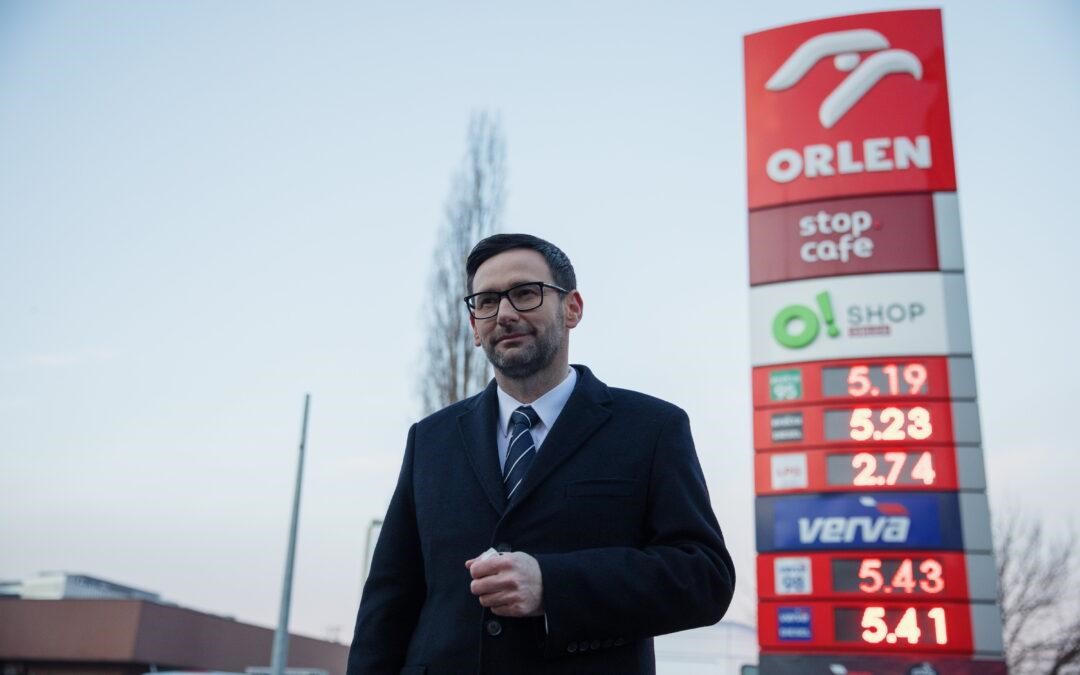 Daniel Obajtek. Notes from Poland
It is unclear what fate awaits the former director of ORLEN. If the prosecutor's office proves Obajtek's guilt in abuse of office and misuse of company funds, then the court may impose a real prison sentence, depending on the amount of damage caused, and additionally, compensation for these funds. This scenario is quite likely, given the precedents involving other European MPs. However, Obajtek may continue to appear in court and deny the charges, dragging out the process.
The second scenario, which is also likely, will depend on 'Obajtek's connections and influence', even though the case has gained public attention. In this case, he will receive a suspended sentence and reimburse the full amount or half of the damages, as agreed with the current management.
The problem is that in order to bring the accused to criminal responsibility, it is necessary to have documents, audio recordings or specific evidence that indisputably prove guilt and do not raise additional questions that could be grounds for appeal and further delay the process. It follows that, on the one hand, the authorities are responding to abuse but not applying harsh sanctions, and on the other hand, this sends a signal to high-ranking officials that it is possible to avoid punishment, but the main thing is to ‘cover your tracks’.
The third scenario, which is also likely, is the termination of criminal proceedings due to political influence or insufficient evidence, but this will again call into question the rule of law in Poland, particularly before the EC. In that case, at the very least, the fact that the investigation is being conducted in a transparent manner and is currently being covered in the media is already a positive step.
In addition, the hype surrounding this case could reduce investor support for the company and, in the long term, further confidence in Poland as a country for investment.
The current policy of the PiS party continues to be nationalistic, focused on ‘traditional values’ and aimed at its core electorate, i.e. older people with socially conservative views in provincial areas. One can recall the presidential elections in the summer of 2025, when Karol Nawrocki, who was supported by PiS and who shares similar values, won thanks to people from villages, where older people predominantly live. Perhaps this will also work in the parliamentary elections.
The reputational risks associated with scandals over artificially lowering fuel prices for political gain could undermine trust among independent and moderate voters, as well as young citizens. In addition, the opening of cases against PiS MPs, in particular Obajtek, is damaging the party's overall image, and Tusk (Civic Platform) will certainly not miss the opportunity to appeal with the evidence gathered.
Two tactics that may work on conservative voters are criticism of migration initiatives and European policies on this issue, which reinforce the narrative of ‘Poland for Poles,’ and scepticism about helping other countries, as citizens feel economic pressure. To this can be added financial support for Ukraine, which is “putting pressure on Poles”, but in fact, Ukrainians increased Poland’s GDP by 2.7% in 2024 alone and contributed more to the economy than was spent on social assistance.
If the PiS party wins the parliamentary elections in 2027, financial and political support is unlikely to change dramatically, but rather the public focus will gradually shift to domestic policy.
You may be interested