 INTERNATIONAL
INFORMATION AND ANALYTICAL
COMMUNITY


+ Join
Support INTERNATIONAL



Anastasiia Krugliak, Student pursuing a Master’s degree in International Governance and Diplomacy at Sciences Po
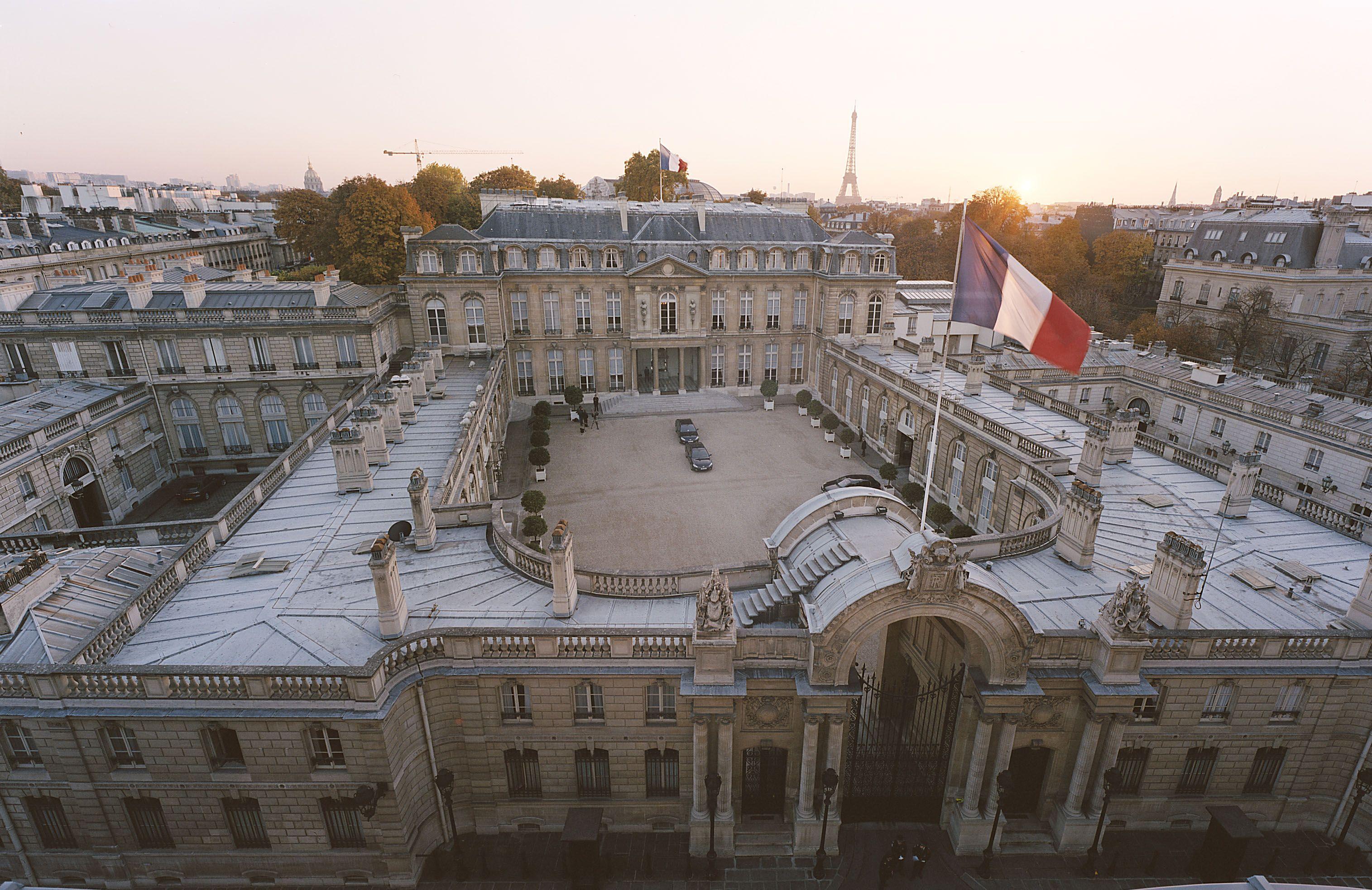
France is entering the 2027 presidential cycle in a state of political fragmentation. President Macron, who cannot run again due to term limits, has seen his authority steadily erode: prime ministers have come and gone, budget processes have hit a wall, and the government had to be replaced after a no-confidence motion in December 2024, when representatives of the far-right National Rally (RN) and the far-left New Popular Front unexpectedly voted together to bring it down. All this is unfolding against a backdrop of rising right-wing populist sentiment, increasingly visible both within the European Union and beyond its borders. In this context, the 2027 presidential election takes on particular importance: not only for France, but also for Ukraine and for the European Union.
The latest poll by Ipsos/BVA, conducted for the newspaper Le Parisien on May 27–28, 2026, offers a snapshot of the current situation. In all eight scenarios tested in the poll, Jordan Bardella of the National Rally (RN) leads the first round, with support ranging from 33.5% to 36%, depending on the other candidates in the race. However, yesterday, 7 July, Marine Le Pen announced that she, rather than Bardella, would be the party’s candidate. She is currently polling between 31% and 32%. Among the centre-right, Édouard Philippe steadily gathers between 13% and 19.5%, while Gabriel Attal gets between 8.5% and 17.5%. On the left, Raphaël Glucksmann holds around 11–14%, and Jean-Luc Mélenchon around 13–13.5%. Still, it is too early to speak of a Le Pen victory. It is worth examining the five most likely electoral scenarios and how each could shape French politics.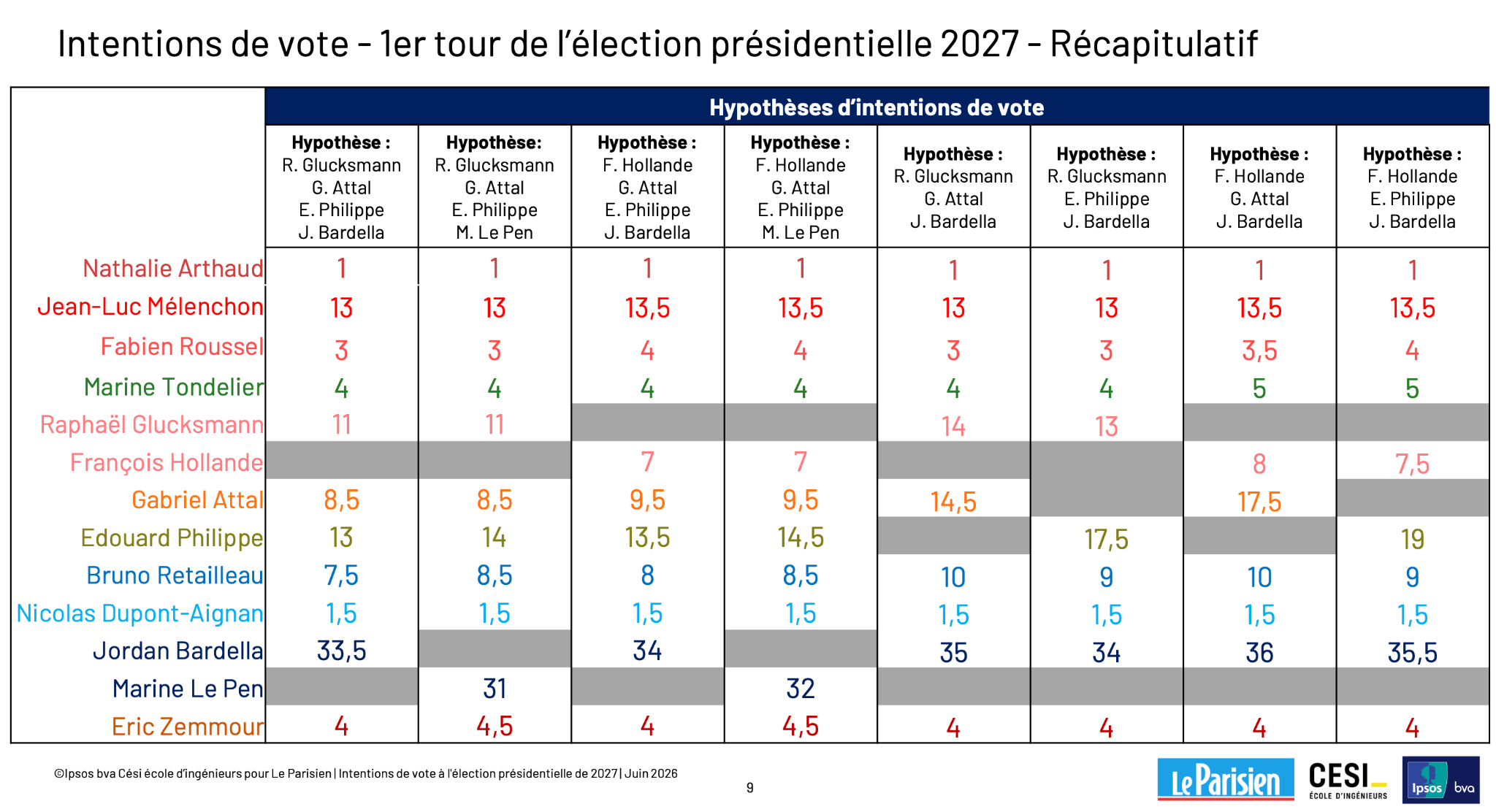 First-round voting intentions — 2027 presidential election — summary. Source
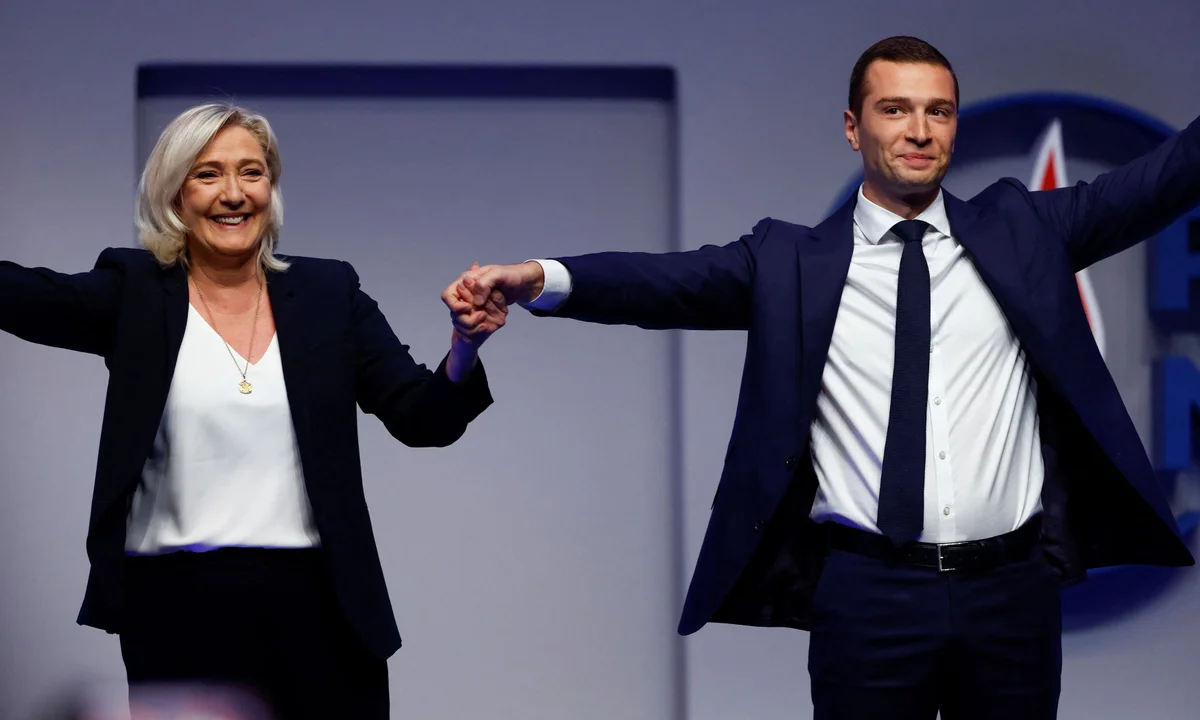 Jordan Bardella, newly elected president of the National Rally party, alongside Marine Le Pen after the announcement of the party congress results in Paris, France. Photo:Christian Hartmann/Reuters. Source
This is why she is now the RN’s candidate, while Jordan Bardella, long seen as the party’s potential presidential candidate, would instead become her prime minister. At 30, Bardella has never worked outside politics, having risen through the party’s ranks since adolescence. He was once in a relationship with Nolwenn Olivier, Marine Le Pen’s niece, which fuelled accusations of favouritism. He is now facing criticism over his relationship with the Italian princess Maria Carolina of Bourbon-Two Sicilies, a liaison that risks undermining the carefully built image of a man from the working class and bringing him closer to an elitist world.
This matters because, unlike Le Pen, daughter of the party’s founder, Jean-Marie Le Pen, Bardella presents himself as a child of working-class neighbourhoods in the Paris suburbs, which strengthens his appeal among RN voters. This base, it should be remembered, is made up largely of working-class voters with lower incomes and education levels, marked by a pronounced sense of economic and cultural anxiety about France’s future. Many of them live in small towns, rural areas, or former industrial regions of what is known as “peripheral France” (territories far from Paris and its economic dynamism, where the decline of public services and a sense of abandonment are especially pronounced). It’s worth stressing that a Le Pen victory would require either the collapse of the “republican front” (the informal coalition of left-wing, centrist, and moderate right-wing forces that traditionally unite in the second round to prevent a far-right victory) or an exceptional political upheaval.
Le Pen’s strengths lie in strong name recognition, a disciplined electorate, and an ability to mobilise protest voters, while her main weaknesses remain a contradictory economic programme and the RN's problematic reputation. Key political influence within the RN team still rests with Marine Le Pen, while MP Jean-Philippe Tanguy is responsible for economic policy; the party's vice president Sébastien Chenu, strategic adviser Philippe Olivier, and Bardella's close associate Alexandre Loubet also play an important role. At the same time, the party is increasingly and actively seeking to build ties with representatives of big business and the state apparatus in order to bolster its own image.
For France, Le Pen victory carries risks that are mainly economic and budgetary. The RN’s programme combines large-scale tax cuts (abolishing income tax for those under 30, reduced VAT on energy and essential goods, wage increases without social contributions) with a promise to bring the deficit below 3% of GDP by 2030, without spelling out, in typical populist fashion, the corresponding spending cuts. The think tank Asterès warns that the deficit could instead reach 6.4% of GDP, and that public debt could exceed 117% of GDP in the medium term. Meanwhile, according to Allianz Research estimates, the announced funding sources (cracking down on fraud, reducing the EU budget contribution) cover only a fraction of the planned spending. Even within the party, this risk is acknowledged: RN economic adviser Matthias Renault has publicly called financial markets’ reaction the programme’s “main problem”. Another internal contradiction lies in trying to reconcile protectionism (a moratorium on EU trade agreements, an “80% French products in school cafeterias” plan) with a simultaneous courting of big business. For instance, in April 2026 the party actively reached out to the business world: on April 20, Bardella held his first official lunch with the leadership of the Medef (France’s leading employers’ organisation), and a few days earlier Le Pen had dined with CAC 40 executives (France’s 40 largest publicly listed companies), including Bernard Arnault (LVMH) and Patrick Pouyanné (TotalEnergies), seeking to “reassure” business leaders. Economists believe this combination of protectionism and pro-market rhetoric is not viable, given that France is one of the leading exporters to the EU, and a slowdown in trade would hit precisely the small and medium-sized French businesses the programme claims to protect.
Regarding the EU, the Bardella–Le Pen programme envisions a fundamental renunciation of France's role as one of the two “engines” of European integration, in favour of a “Europe of nations” model: Bardella does not merely advocate reforming the EU — he calls for the outright abolition of its supranational executive body, the European Commission. In his vision, it would be transformed into a “General Secretariat of the Council”, a purely technical apparatus with no right of legislative initiative or supranational powers. In place of a Union with its own institutions, his plan foresees the creation of an intergovernmental “Alliance of Nations”. In such an Alliance, every decision would require the consensus of sovereign states, and French constitutional law would take precedence over EU law. The practical consequences of this model would be fundamentally destabilising, since it is precisely the European Commission that drives the single market, coordinates sanctions policy, negotiates trade on behalf of the 27 member states, and ensures a level playing field. Replacing it with an intergovernmental format would amount to reverting to a UN-style logic, where any single actor can block a decision.
Le Pen has sought to cut France's contribution to the EU budget (currently the second-largest after Germany's) which would weaken the EU as an institution. Bardella is likely to inherit this stance. He and Le Pen also share one of the strictest visions in Europe on migration policy, advocating a drastic reduction in legal immigration, an end to family reunification programmes, the abolition of birthright citizenship, and a reform of asylum law. On this issue, they have potential allies within the EU: Hungary, Austria, and Italy. It is worth noting an important nuance, however: the RN is not setting a new trend but rather reinforcing an already existing rightward shift in EU migration policy, while also deepening the split between two camps on the far right: those willing to play by the EU's rules more strictly (Meloni), and those who reject the effectiveness of those rules altogether (Le Pen).
French support for Ukraine would likely also become more limited and conditional: Le Pen’s group in the European Parliament has already voted against releasing the EU’s €90 billion loan for Kyiv (February 2026), and she herself publicly refuses any joint EU financing, citing “money France doesn’t have”, while opposing Ukraine’s accession to NATO and the EU. This brings her position close to that of former Hungarian prime minister Viktor Orbán. Moreover, such a voluntary narrowing of France’s leadership ambitions within the EU would likely prompt other regional leaders to fill the resulting vacuum. Germany would then take on a larger share of EU leadership, while the United Kingdom would deepen its bilateral role in coordinating European support for Ukraine. That said, any French president’s room for manoeuvre is constrained by the Constitutional Council, the Senate, and parliamentary arithmetic, so even a Bardella victory would make implementing radical change in the short term a difficult task. The current National Assembly, the most fragmented in the history of the Fifth Republic, represents a nearly insurmountable coalition against any RN government, with the left and centre together strong enough to pass a no-confidence motion. The only way around this arithmetic would be an immediate dissolution of the Assembly after the presidential election, betting on new legislative elections whose outcome would remain unpredictable.
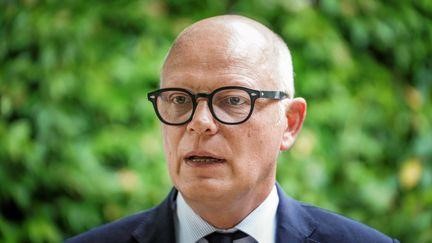 Édouard Philippe at a press conference in Nîmes on June 26, 2024. Photo: Mikael Anisset/ MAXPPP
Philippe’s main assets lie in considerable governing experience, a reputation as a competent manager, and an ability to rally the moderate electorate, while his weakness lies in his association with the unpopular reforms of the Macron era and the difficulty of offering voters a genuinely new political direction. Philippe relies on the Horizons party and on a team of experienced government officials and lawmakers, among whom his longtime political adviser Gilles Boyer and former minister Christophe Béchu play a particular role.
For France, a Philippe presidency would mean the continuation of budgetary discipline, but in a less confrontational form than under Le Pen. His economic programme calls for cutting production taxes and eliminating social contributions on overtime hours. At the same time, he plans to enshrine a “golden rule” limiting the budget deficit in the Constitution and to introduce a funded element into the pension system, not ruling out pushing back the retirement age to 67. Philippe’s programme offers systemic answers such as pension reform, a budgetary “golden rule”, or cuts to production taxes, while French voters are mainly waiting for an answer to a different question: why is money running out by the end of the month (relatively weak purchasing power). This gap between what the candidate proposes and what voters actually care about is one of the main risks of his campaign. Another risk lies in his announced method for implementing the programme: Philippe plans to dissolve the Assembly as soon as he is elected and hold three referendums — on pension reform, the budgetary “golden rule”, and extending the use of government ordinances to health, education, and justice. Some may see this method as an attempt to bypass the parliamentary brakes that previously blocked Macron’s reforms.
On the EU as a whole, Philippe is deeply attached to the “Franco-German tandem”: he speaks fluent German, studied partly in Bonn, and as prime minister publicly defended the 2019 Aachen Treaty against RN accusations of “betraying sovereignty”, while also helping to promote the joint Franco-German €500 billion recovery plan during the pandemic. Philippe describes the Franco-German partnership as a necessary condition for overcoming European crises. This positioning is diametrically opposed to Le Pen’s logic, which favours dividing up projects rather than cooperating on them. Since Philippe favours integration, he proposes, in the defence field, establishing a European preference in arms procurement, stressing the need for a more unified and powerful European army. At the Eurosatory trade show in 2026, he said France needs to produce more ammunition. In doing so, he offers a clear assessment of Europe's security situation: current defence readiness, both industrial and institutional, is not up to the level of the threat.
Philippe wants to overhaul French migration policy and break with what he sees as the current overly passive approach. He wants the state to be able to choose for itself whom to admit and in what numbers: his programme calls for targeted labour immigration based on job-market needs, reformed integration through training and access to housing, faster asylum procedures with a clear distinction between refugees and economic migrants, stricter family reunification rules, faster enforcement of deportation orders, and tighter controls on illegal immigration. He acknowledges that France needs a certain level of immigration for economic reasons but insists it must be better managed. Implementing this programme, however, will run into parliamentary gridlock. Migration legislation is one of the most polarising issues in the French Parliament: the left systematically blocks any tightening of controls, while the RN will only vote for its own, far harsher, version of reform. For Philippe, this means he will have to either dissolve the Assembly and call new elections, or accept painful compromises that would gut the reform of its substance. Macron's experience is telling here: his 2024 immigration law was only passed after the right made changes to it that centrists considered too harsh.
As for Ukraine, it has become a visible element of Philippe’s electoral strategy only fairly recently: in May 2026 he travelled to Kyiv, where he met with Zelenskyy and publicly backed Ukraine's accession to NATO as well as the deployment of European troops after the war ends. Unlike Glucksmann or Attal, who consistently make support for Ukraine a core part of their foreign-policy message, Philippe frames the Ukrainian issue mainly in terms of European security and strengthening NATO. His recent Kyiv trip looks more like a signal of alignment with Macron’s current line than proof that Ukraine is a central theme of his presidential campaign. There is, however, a notable difference: Philippe avoids the “strategic ambiguity” that has become a hallmark of Macron’s approach.
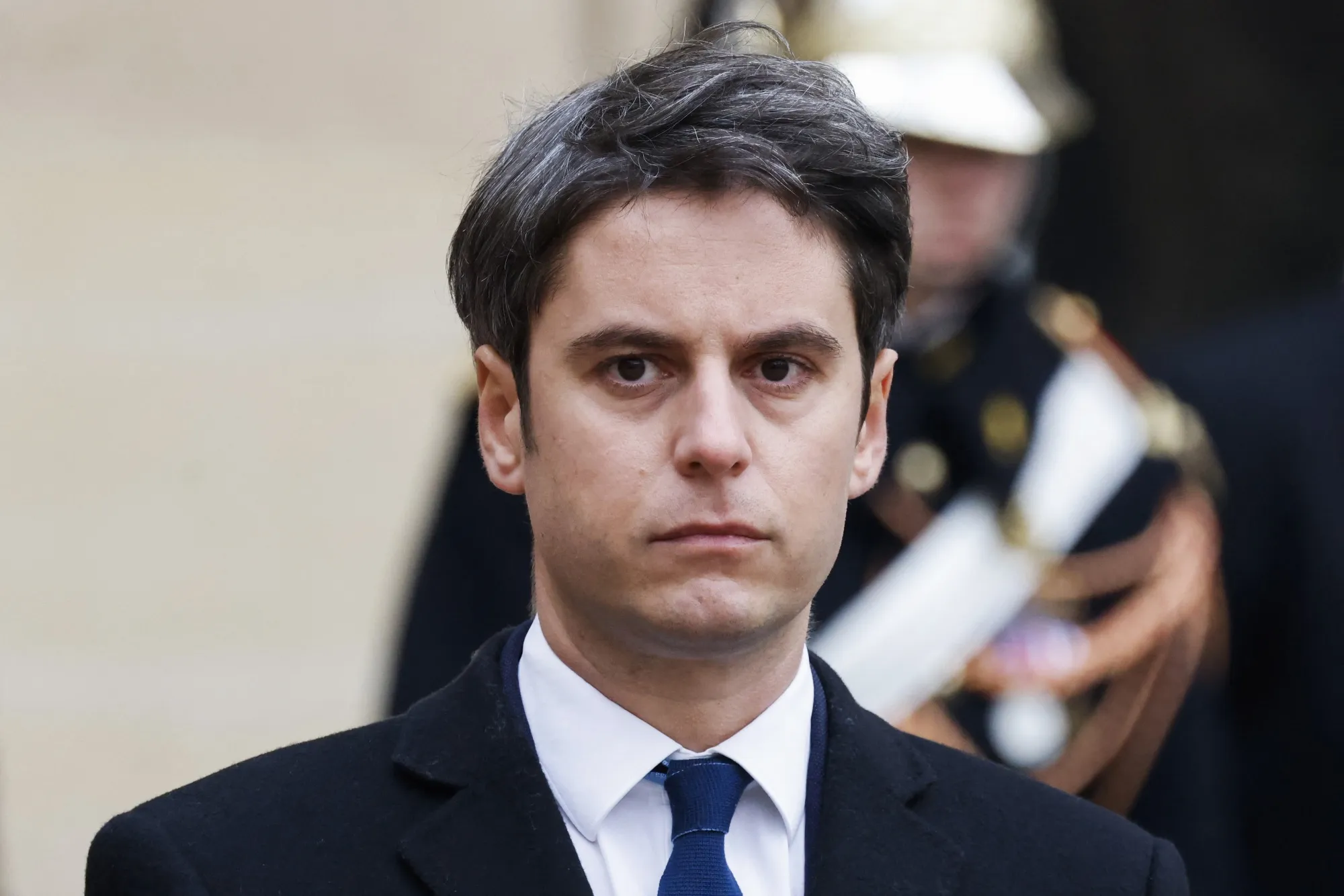 Gabriel Attal after his appointment as Prime Minister of France. Source
Attal’s strengths lie in his youth, strong communication skills, and a clear pro-European stance, while his critics point to relatively limited governing experience and a close tie to the legacy of the Macron presidency. Attal is expected to draw on much of the pool of Macronist-camp officials, particularly figures with government and EU-institution experience: among them his partner, former Foreign Minister Stéphane Séjourné, one of the chief architects of Macron’s European policy direction, as well as European policy experts Pierre-Alexandre Anglade, former Industry Minister Roland Lescure, and former government spokesperson Prisca Thevenot, giving him a solid team on European integration, economic, and state-management issues.
For France, an Attal presidency would represent a more dynamic version of the same reformist line as Philippe’s, but with a sharper focus on structural changes to the labour market and education. His programme remains vague on the budget, which leads ÉlyséeScope to classify his scenario as a continuation of the current government trajectory (PSMT). His programme calls for wage increases based on a “right to gross pay” logic, which would effectively create a thirteenth month’s salary, along with a reform of the labour code and the removal of limits on overtime hours.
Attal is a federalist and an integrationist. At the Eurosatory 2026 trade show, alongside Philippe, he presented his vision for defence policy, stressing the need to boost France’s production capacity and industrial autonomy. Unlike Le Pen, he does not champion the “best athlete” logic and does not propose replacing joint projects with a division of labour. The politician believes EU countries need to “de-Americanise” their defence. Tellingly, among all the candidates examined, Attal is the one who most openly articulates this strategic goal: reducing dependence on American systems and decisions in favour of an autonomous European capability. This sets his position apart from that of Mélenchon, who also opposes NATO but for anti-Atlanticist rather than pro-European reasons, and from that of Philippe, who emphasises increasing production without singling out the United States as a problem.
On Ukraine, Attal is one of the most committed voices in support of Kyiv among French candidates. With family roots in Odesa, Attal chairs the parliamentary friendship group with Ukraine and takes a firmer stance against Russian aggression than most of the French political class. His presidency would likely mean not only maintaining French support for Ukraine but actively promoting it: unlike Philippe, whose pro-Ukrainian position became a visible part of his strategy relatively late, Attal has displayed this commitment more consistently.
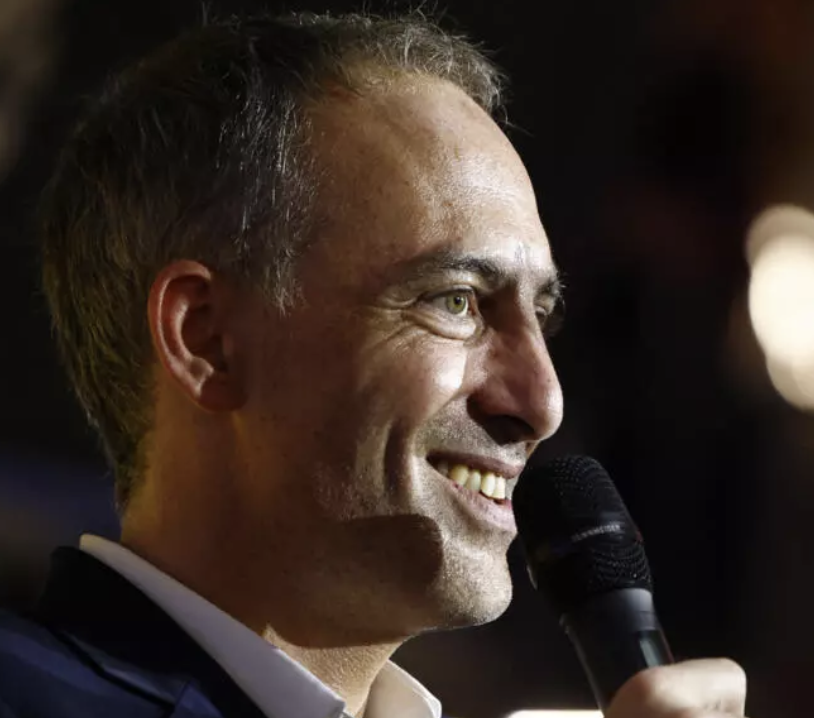 European Parliament member Raphaël Glucksmann speaks after the announcement of European election results. Photo: Sameer Al-Doumy / AFP. Source
A member of the European Parliament belonging to the S&D social-democratic group and co-founder of the Place Publique party, Glucksmann embodies the “reassuring” left-wing politician archetype. His electorate consists mainly of university-educated, urban, internationally minded voters, concentrated in Paris and other major cities. A significant share of his supporters are people concerned about the rise of far-right forces and committed to a pro-European social-democratic development model. According to the Ipsos/BVA poll results, a score of 11–14% points to a stable electoral base for Glucksmann. However, this would likely not be enough to reach the second round without a significant weakening or disappearance of other candidates from the left-wing camp.
Glucksmann’s strengths lie in a consistent pro-European stance, authority on foreign policy, and support for Ukraine, while his main challenge remains a limited electoral base and the difficulty of uniting the whole of the French left. Glucksmann relies on a team of pro-European social democrats from his party, among whom party co-chair Aurore Lalucq and movement co-founder Jo Spiegel play key roles. The First Secretary of the French Socialist Party, Olivier Faure, also remains an important political ally, their collaboration having contributed to the rapprochement between Place Publique and the Socialists following the 2024 European elections. This gives Glucksmann a political foothold within the pro-European left.
A Glucksmann presidency would mean, for France, an attempt to implement a renewed social-democratic programme in an extremely tight budgetary context. His economic platform calls for raising the minimum wage and revising the 2023 pension reform (reversing the increase of the retirement age to 64), funded by higher taxes on large capital and windfall profits. Analysts point to a structural contradiction between his programme’s spending commitments and the need to reduce a deficit that already exceeds 5% of GDP: unlike Philippe, Glucksmann does not put budgetary discipline at the heart of his programme. His advantage, however, lies in a relatively clear social base and a lower vulnerability to accusations of “left-wing populism” than Mélenchon, which opens up considerably broader coalition possibilities.
Glucksmann takes a much softer line on immigration than Philippe or Attal: he opposes tighter controls as the main response to migration, focusing instead on integration and fighting discrimination, while acknowledging that “settling in France is not a universal right”. Glucksmann also wants to resolve the migration debate by organising a “citizens’ convention” bringing together randomly selected citizens, who would be briefed on demographic, economic, and security data before being asked to express their views. This makes his platform the furthest from the RN’s on this issue, but also the most vulnerable in terms of overall electoral perception, given that immigration remains one of the main concerns of French voters.
Glucksmann supports deepening defence cooperation at the EU level, including joint arms procurement and building a unified defence capability. However, his left-wing identity could make it harder to sell higher military spending in France, since left-wing voters are traditionally more hostile to militarising the budget. He also argues that the EU should replace unanimous voting with qualified-majority voting. This position aligns with the vision of the EU's federalist wing, which sees the veto right as one of the main institutional obstacles to turning the Union into a more autonomous geopolitical actor.
For Ukraine, a Glucksmann presidency would be a very favourable scenario. Glucksmann has supported Ukraine consistently and from the very beginning: he was personally present on the Maidan in 2013–2014, has been actively involved in the work of the EU–Ukraine parliamentary association committee, and has publicly called for maximum military and financial support for Kyiv, including an immediate embargo on Russian energy resources. His name is further linked to Ukraine through his ex-wife, Eka Zguladze, who served as Ukraine’s first deputy interior minister.
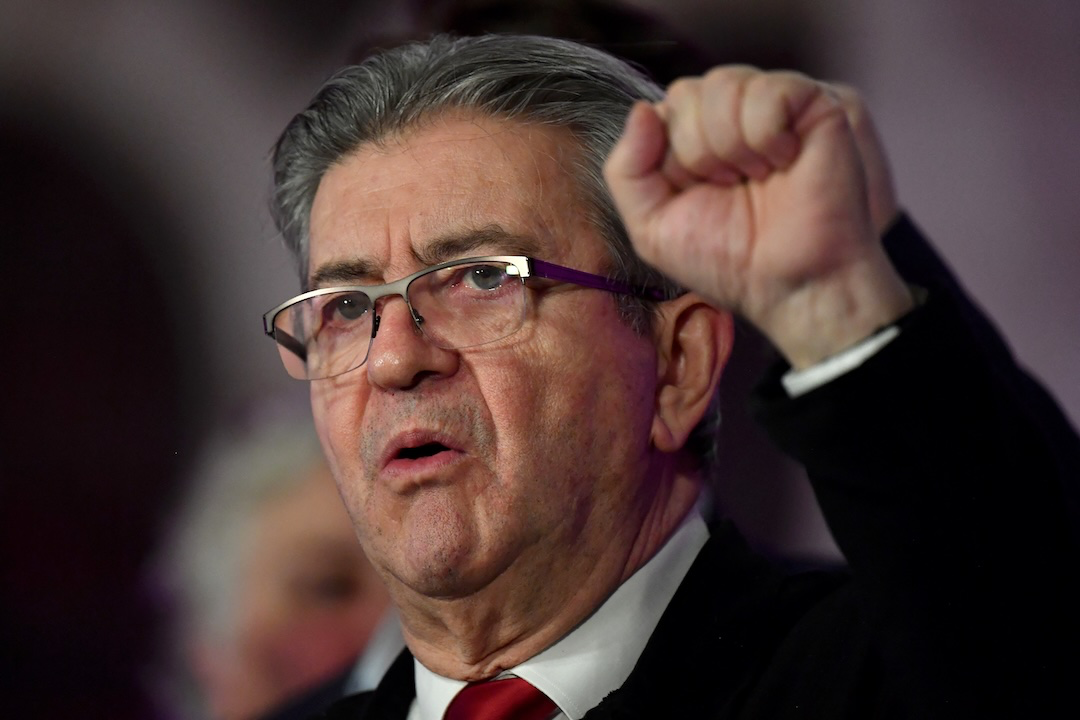 Jean-Luc Mélenchon, leader of the “La France Insoumise” party, at a party rally in Angers on February 5, 2025. Photo: Jean-François Monier / AFP. Source
Mélenchon’s main asset lies in his ability to mobilise a disciplined and loyal electorate, while his radical economic and foreign-policy positions significantly limit his ability to win over centrist voters in a second round. Mélenchon relies on a tight circle of close La France Insoumise associates, among them party coordinator Manuel Bompard, parliamentary group chair Mathilde Panot, MP Éric Coquerel, and National Assembly Vice-President Clémence Guetté. His "authoritarian style" ensures strong internal discipline, while also reinforcing the movement’s reputation as a centralised political force, heavily dependent on Mélenchon himself.
For the country, a Mélenchon presidency would mean the most radical break with the budgetary and economic line of all previous governments. His programme calls for cutting the work week from 35 to 32 hours, lowering the retirement age to 60, large-scale nationalisation of strategic sectors, and a “1-to-20 rule” capping the gap between the lowest and highest salaries within companies. The Institut Montaigne think tank estimated a similar programme in 2022 could increase the deficit by more than €250 billion a year – a level comparable only to pandemic-era spending. The reaction of financial markets and European partners to such a direction would likely be sharp and swift.
Mélenchon takes a position diametrically opposed to that of the RN, and even to those of Philippe and Attal, on immigration: he opposes any restriction on immigration, considers the very notion of “control” xenophobic, and instead proposes a broad programme to regularise undocumented migrants. The “republican front” scenario against the RN would be far less reliable for him than for other left-wing candidates, since part of the centrist electorate refuses to vote for him even to stop Le Pen.
Mélenchon consistently opposes arms deliveries to Ukraine, calling them an escalation risk, and blocks any initiative that might draw France into a more active role. For example, LFI voted against the bilateral Franco-Ukrainian security agreement (March 2024), while even the RN merely abstained. A Mélenchon presidency would therefore mean not only weaker support for Ukraine, but could also see France actively obstructing EU coordination mechanisms in support of Kyiv – a scenario structurally close to Orbán’s Hungarian model, but carrying far greater weight, since a French veto or passive sabotage within the EU Council would have incomparably graver consequences.
Polarisation and fragmentation. French politics is entering this electoral cycle in a state of both polarisation and fragmentation. The left-wing camp remains deeply divided: only part of LFI's supporters would accept Glucksmann’s leadership, while only part of the Socialist Party's supporters would accept Mélenchon’s. The centre is split between Philippe and Attal. This fragmentation could work in the RN’s favour in two ways: first, in the first round, by splitting the governing camp’s votes among several candidates; second, in the second round, by allowing the RN to face a less legitimate opponent.
The judicial factor and structural uncertainty. One of the key sources of uncertainty in the electoral process was the court ruling in Marine Le Pen’s case. The Paris Court of Appeal’s decision regarding her conviction and eligibility to run for office, together with her subsequent decision to run herself rather than nominate Bardella, reshaped the National Rally (RN) camp, which had previously remained uncertain about its presidential candidate.
The “pro-EU vs. anti-Brussels” divide as a new fault line. Some analysts predict the 2027 election could turn into a vote “for or against the EU”: only 9% of French people believe the EU should gain more powers to solve national problems, reflecting a stronger inward-looking trend in France than in neighbouring countries. According to the Eurobarometer (2025), only 30% of French people report a positive opinion of the EU, which is 6 points lower than in spring of the same year, and well below the EU average of 42%. Only 27% of French people trust the EU, compared with 48% on average across the Union, one of the lowest rates among member states. In the broader European context, sovereigntism is a pan-European trend: in Germany, the AfD has become the second-largest political force after the Christian Democratic Union, and in Italy, Meloni’s Fratelli d’Italia is already the most influential party.
Instability as the electoral backdrop. According to a Fondation Jean-Jaurès poll (April 2026), voters are tired of executive powerlessness, demand for change is strong, and the 2027 presidential election promises to be a moment of major mobilisation. Three years of unstable governments, budget deadlocks, and dysfunctional parliamentary majorities create the same backdrop for every candidate: each presents himself as the only answer to the prevailing chaos.
Before drawing conclusions, it’s worth pausing on the limitations of pre-election polls, which have, over recent electoral cycles, repeatedly given an inaccurate picture of the final result. It's easy to mistakenly perceive the current situation as already settled, when it is not. Writing for The Guardian in May 2026, DGAP (German Council on Foreign Relations) research fellow Joseph de Weck warned against the fatalistic assumption that a far-right victory is inevitable, drawing attention to two historical lessons worth keeping in mind. The first is a phenomenon sometimes called the far-right voter’s “reverse shyness”: while it is traditionally assumed that far-right voters may conceal their true preferences, in the French context the opposite tendency is often observed: RN voters readily declare their intentions in polls, but don’t always convert that support into a second-round victory, once the “republican front” kicks in. The real question, as in 2022, 2017, and 2002, is who will make it to the second round and who will manage to rally the votes of anti-RN voters.
The second lesson comes from the 2012 presidential election, when François Hollande, at a comparable stage of the campaign, was seen by the political and media elite as too soft, discredited, and weak, yet he went on to become president. The takeaway isn't that every outsider is bound to win eventually, but that certainty in predictions is one of the most dangerous mistakes in French politics. On the other hand, the March 2026 municipal elections marked an important milestone for Le Pen’s RN, with the party gaining control of more than 60 municipalities for the first time. This could nonetheless create potential risks for its campaign. Much like the British party Reform UK, which, after a resounding success in local elections, faced disappointment from part of its electorate over its local governance, the gap between protest voting and the actual exercise of power could likewise pose a political challenge for the RN.
A poll is only a snapshot of the public mood at a given moment. And since a year in politics is a very long time, only time will tell who will become France’s next president.
As of mid-2026, the front-runner for the first round remains the Rassemblement National’s representative Marine Le Pen. The most decisive factor in 2027 will not be Le Pen’s first-place finish in the first round, but whether or not the moderate left, the centre, and the moderate right manage to put forward a single, solid common candidate capable of stopping her. If they unite, the most likely compromise option appears to be Édouard Philippe, though Gabriel Attal and Raphaël Glucksmann are also being considered among the alternatives. In any case, if one of these three manages to rally the entire anti-RN electorate and reach the second round, the “republican front” will very likely coalesce around him with an unusual degree of unanimity for French politics, and Le Pen’s chances of victory will drop significantly. Conversely, if the current fragmentation persists, Le Pen’s chances of victory will rise sharply.
That said, whoever becomes president, the implementation of campaign platforms will be considerably constrained by the economic and institutional situation. France already has a public deficit exceeding 5% of GDP and is subject to the European Union's excessive deficit procedure, which significantly limits room for large-scale budgetary initiatives. Furthermore, any president will have to contend with parliamentary arithmetic, the government's position, and the requirements of EU budgetary rules. This means it will be noticeably harder to keep costly campaign promises than in previous presidential campaigns.
The 2027 election will determine not only who the next president will be, but also the extent to which France retains its role as one of the main hubs of European integration, of common defence policy development, of support for Ukraine, and of building Europe’s security architecture.
You may be interested