 INTERNATIONAL
INFORMATION AND ANALYTICAL
COMMUNITY


+ Join
Support INTERNATIONAL



Alyona Chudnovets, Junior Analyst at the analytical center “Resurgam” specializing in African countries’ policy.
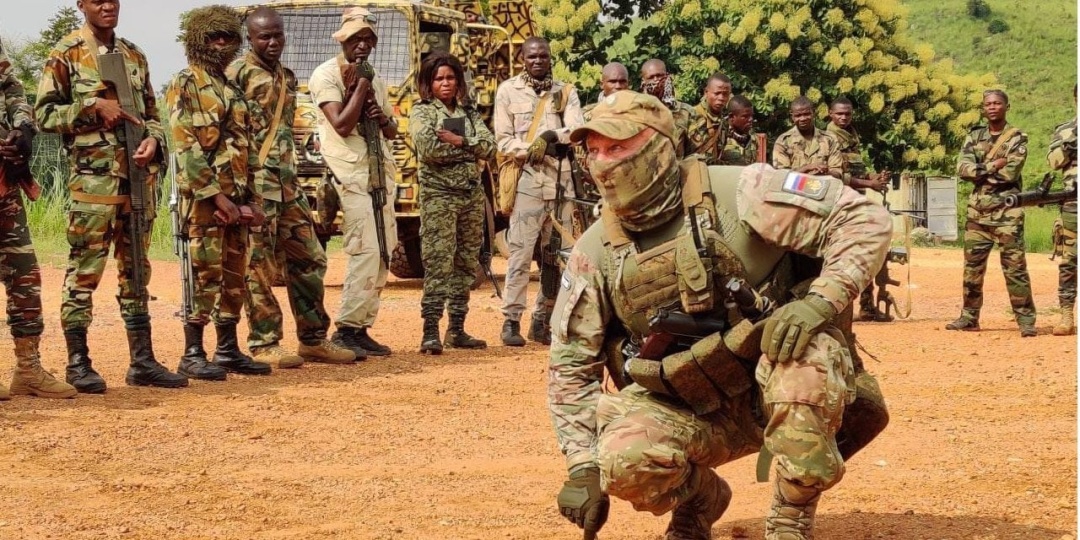 Photo: Military Africa / Facebook
This military reconfiguration is a marker of a broader transformation of the political order in Africa. Russia's hybrid warfare tools have opened up space for large-scale restrictions on democratic procedures on the continent, and the model proposed by Russia — personalistic, asymmetrical, and politically undemanding — has proved attractive to autocracies.
Moreover, the irreversible damage to France's reputation as a ‘colonial country’ negates the Western alternative and allows the Russian Federation to build its own brand as a ‘stronghold against colonialism’ and the Western way of life, thereby strengthening the axis of autocratic regimes that challenge the global security architecture.
The content and functionality of the foreign policy doctrines of France and the Russian Federation regarding Africa determined the nature of their confrontation. At the same time, a radical revision of the French approach, although not a starting point, created favourable conditions for Russia to move from a latent, particularly informational, presence in the region to an open military-political repositioning.
The French vision of the new policy towards Africa was articulated by President Emmanuel Macron at the University of Ouagadougou, Burkina Faso, in 2017. In his speech, he stated that ‘there is no longer a French policy on Africa,’ which was dubbed an ‘equal-to-equal partnership.’ At that time, France's military presence on the continent consisted of about 10,000 troops, stationed mainly in French-speaking West Africa and the Sahel. By 2026, most of the contingent had been withdrawn from their locations, often under pressure from large-scale protests, as was the case in Mali, Burkina Faso, Niger and a number of other countries.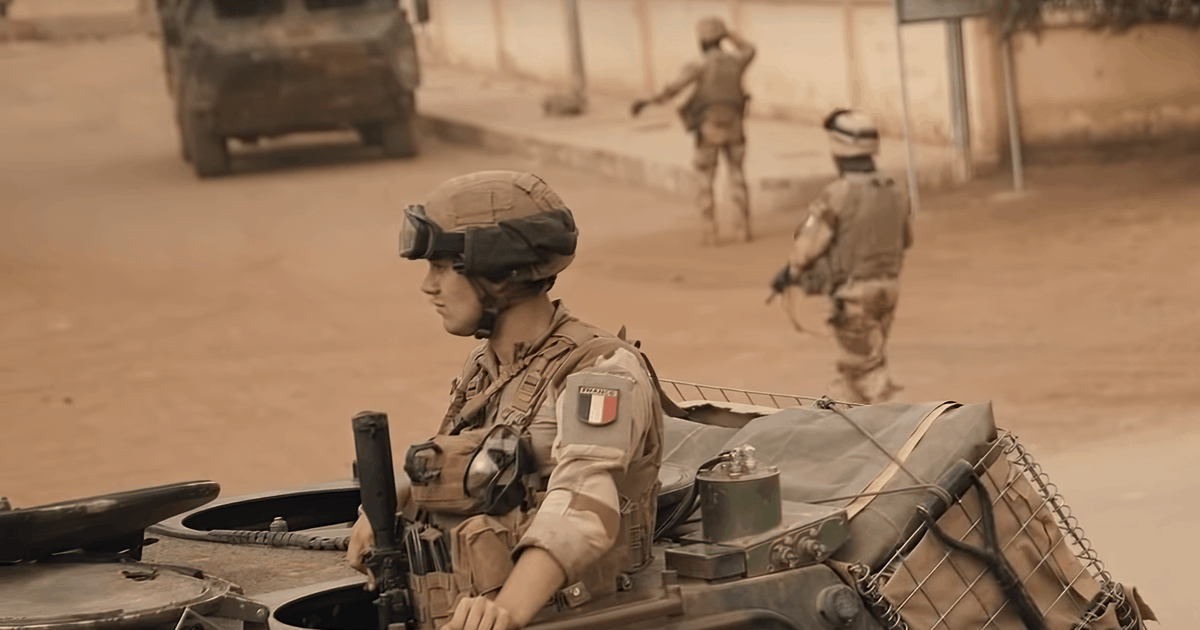 French military in Mali. 2021. Photo from open sources
Nevertheless, the foundations for ‘boots on the ground’ were laid at a deeper, doctrinal level and were reactive in nature to the change in the French central framework. Macron's ‘equal-to-equal partnership’ was the direct opposite of Nicolas Sarkozy's previous ‘Eurafrica’ doctrine and, before that, the neocolonial Françafrique system. Eurafrica is a space of European civilisational guidance, embodied in France, over African countries that do not have established traditions of statehood and political identity. In this logic, colonisation bears no responsibility for the destructive processes in the region. On the contrary, E. Macron made the recognition of the continuity of colonial crimes a central element of France's public policy in Africa, culminating in a video speech in 2021, in which the president effectively acknowledged France's guilt for the ‘hundreds of thousands of victims’ of the 1994 genocide in Rwanda.
Thus, the foreign policy doctrine of Macron's government has brought the colonial past to the centre of the discussion in an unprecedented way. Accordingly, the success of France's strategy in Africa has become critically dependent on how convincingly this new frame will be anchored in the public consciousness of the countries in the region. On the other hand, since 2014, under threat of international isolation, Russia has begun to actively develop its own brand as a ‘stronghold against Western colonialism’ with the aim of developing alternative areas of international presence. In the confrontation between the two frames, Russia's strategy, based on asymmetric methods of influence, has dealt a crushing blow to France's position in French-speaking Africa.
The history of Russian presence on the African continent goes beyond the categories in which geopolitical competition is traditionally conceived. For a correct analysis of these processes, it is necessary to theoretically comprehend the tools that allow acting below the threshold of open war, but at the same time achieving strategic results (sharp power). The most general term applicable to the network of conflicts arising between Russia and France in Africa is hybrid warfare – non-linear, asymmetrical, politically oriented activity without the direct involvement of troops. Developed in 2005, the term only came into widespread use after the annexation of Crimea and the start of the war in the Donetsk and Luhansk regions of Ukraine. In the broader information discourse, the associative chain is also built around operations that took place in the West, such as the sabotage of ammunition depots in Vrbětice in 2014, interference in the American elections in 2016, and the use of chemical weapons in Salisbury in 2018.
The media and official reports from a number of countries have blamed the GRU for all these operations, referring to the structure that has existed since 2010 under the name of the Main Directorate of the General Staff of the Russian Federation, and which, since the start of the war in Ukraine in 2014, has taken on foreign policy functions that were not previously its responsibility. Following the devastating consequences of Anatoly Serdyukov's reforms, the GRU is reviving the old Soviet tradition of artificially fuelling rivalry between the special services by blurring their functional boundaries. In this institutional struggle, Russian foreign intelligence has carved out its own niche, securing for itself the coordination of the Russian Federation's hybrid operations. The tools of private military companies played a key role in this.
The Russian model of hybrid warfare, developed by Valery Gerasimov, primarily affected Ukraine: inspired by the activities of PMCs in the ‘grey zone’ of the Syrian civil war, the Russian Ministry of Defence is forming a new concept for the activities of the Main Directorate of the General Staff of the Russian Armed Forces. In 2013, the leaders of the Slavic Corps PMC, V. Gusev and E. Sidorov, were detained in Lefortovo, while other members of the group began to form their own groups to conduct operations in the newly created L/DNR. As a result of the fighting, Dmitry Utkin's group (call sign ‘Wagner’) proved its effectiveness and received resources for expansion; a number of other formations were liquidated, following the example of Igor ‘Besa’ Bezler's group.
The Wagner group revealed its presence on the African continent in 2017 while attempting to preserve the regime of President Omar al-Bashir, which nevertheless fell less than two years later. The largest operations aimed at sabotaging the French presence in Africa were the responsibility of the Wagner structure, but since December 2023, the disbanded PMC has been replaced by the Russian Ministry of Defence's African Corps. It is headed by Russian Deputy Minister of Defence Yunus-Bek Yevkurov. On most of his visits to the African continent, the colonel general was accompanied by Andrei Averyanov, identified as the commander of Unit 29155 of the Main Directorate of the General Staff of the Russian Federation, responsible for hybrid operations in Europe, including terrorist attacks on warehouses in the Czech Republic and the Novichok poisoning in Salisbury, England.
Described by author Frank Hoffman as a product of the ‘information age,’ hybrid warfare assumes that control over narratives is key among its tools. According to the US Defence Department's Africa Centre, in 2024, 23 transnational disinformation campaigns were recorded on the African continent, 16 of which were of Russian origin. For a long time, Russia has remained the largest source of external disinformation in Africa. The effectiveness of these information campaigns is indirectly confirmed by the dynamics of public opinion: the level of approval of the Russian leadership among the population of African countries has grown steadily since the intensification of Russia's presence on the continent in 2017, reaching 42% in 2021, according to the Gallup Institute for Public Opinion Research.
The Russian Federation's disinformation component in Africa is implemented as part of the ‘Lakhta’ project, created by Yevgeny Prigozhin to ‘counter anti-Russian propaganda’. However, the African dimension of disinformation is not an autonomous phenomenon, but part of the global architecture of Russian information influence. The ‘Lakhta’ project networks were named by the FBI as responsible for interfering in the 2016 US presidential election and for broader campaigns to polarise American society. The foreign ministries of some European Union countries have linked the activities of these structures to the Opération Doppelgänger disinformation campaign aimed at discrediting Ukraine. Moreover, there are concerns about a repeat of the ‘African scenario’ in Latin America, reinforced by new statements from the Argentine Ministry of Defence about the exposure of a spy network incorporated to influence domestic political processes in the country.
In Africa, the dominant frame of Russian information operations against France is structured around two interrelated directions: legitimising the presence of the Wagner PMC and delegitimising France. These narratives have taken various local forms, but in most materials, the appeal to France's colonial past and its prolongation in contemporary neocolonial practices remains unchallenged. At the organisational level it is threefold: the infrastructure of the disinformation component consists of 1)a media network, 2)Russian cultural institutions and 3) diplomatic missions.
Over the past seven years, more than 300 million Africans have registered on social networks. At the same time, African audiences demonstrate some of the highest rates of dependence on social platforms as their main source of news consumption in the world. This growth in digital presence has been exploited by the Russian Federation: campaigns that mimic authentic civic activism are increasingly becoming the main form of disinformation. The narratives begin to spread ‘from the bottom up’ — from bought local influencers, whose messages are immediately picked up by a network of bots, Russian state media, radio, and other communication channels.
Some of the bloggers and experts whose activities are based on anti-French rhetoric have a significant audience, including Franco-Beninese activist Kemi Seba, who has 1.5 million followers on Facebook. Another example is Swiss-Cameroonian journalist Nathalie Yambou, who has over 578,000 subscribers on YouTube and is known as ‘la Dame de Sochi’ (the Lady of Sochi) after her anti-French speech at the Russia-Africa Summit in 2019. Both media figures were also among the participants at the second, much less successful summit in St. Petersburg in 2023, where the attendance of 17 out of 54 African leaders was explained by Dmitry Peskov as being caused by ‘pressure from the United States and France.’
A separate element of the infrastructure is the so-called ‘Russian houses’ operating throughout Africa. In practice, their main role is to shape a narrative adapted to local characteristics and to train African journalists. In addition to using their own channels to spread disinformation, Russian diplomatic missions act as curators of supposedly African civil society organisations, through which protests, burnings of French flags and currency (the CFA franc) are organised, and formal media cooperation agreements are concluded to coordinate narratives, such as between the Egyptian state publication Al-Ahram and the Russian Sputnik Arabic.
At the same time, Russian campaigns targeting France are not limited to the African context. The above-mentioned Doppelgänger (RNN) operation had a particularly destructive impact on the French information space: it falsified the websites of the French Ministry of Foreign Affairs, several other government resources, and four leading national media outlets, including Le Figaro and Le Monde, on which 49 fake articles were published, mainly related to the war in Ukraine. The campaign targeted not only Western audiences, but also countries in the Global South, including Africa. According to Reuters, Russian embassies and cultural institutions were involved in spreading the network's materials. The operation was confirmed by Meta, which in December 2022 linked it to two Russian companies, ASP and Struktura.
It would be wrong to assume that France remained passive in the information war. Its response was based on a similar logic of asymmetric operations, involving bots and loyalty networks. The main narratives were built around criticism of Russia's presence in the region and positive assessments of France's actions, particularly in the field of counterterrorism and development programmes. Reports of the exposure of French disinformation or semi-coordinated information networks targeting African audiences appeared regularly, particularly in 2019 and 2020, when Meta simultaneously blocked both Russian and French competing networks in the CAR and Mali, which contradicted each other.
At this stage, a structural asymmetry between democratic states and authoritarian regimes in the conduct of information operations becomes apparent. For France, such exposures had institutional, reputational and political consequences, while Russian networks demonstrated high adaptability through their ability to quickly rebrand and reconfigure their distribution channels. Meta's policy is not to block disinformation networks if they appear authentic. Coordinated authentic behaviour, which often mimics social movements, falls into a grey area of moderation, where its harmfulness becomes relative and depends on the political position of the platform. The Russian Federation is betting on this gap by hiring more and more real people to create disinformation distribution networks that do not violate the policies of digital platforms but effectively function as disinformation tools.
The Sahel countries have provided a reliable bastion for consolidation and a springboard for further expansion of Russia's presence in Africa. Chronic structural vulnerabilities in the subregion have made it accessible for testing Russia's hybrid warfare doctrine. The social fabric of the Sahel countries is intertwined with wars, years of activity by terrorist groups and transnational criminal gangs, extreme poverty, disease and particular vulnerability to climate change . All this has created a permanent humanitarian disaster, with at least 32.8 million people lacking access to food, drinking water and medicine, and the number of internally displaced persons approaching 6.8 million, according to the UN. The breakdown of the social fabric in the Sahel countries form an environment conducive to the escalation of violence, including by external actors. According to the African Centre, 13 of the 28 African countries where Russia is conducting disinformation campaigns are in conflict, accounting for three-quarters of all African countries in the active phase of conflict.
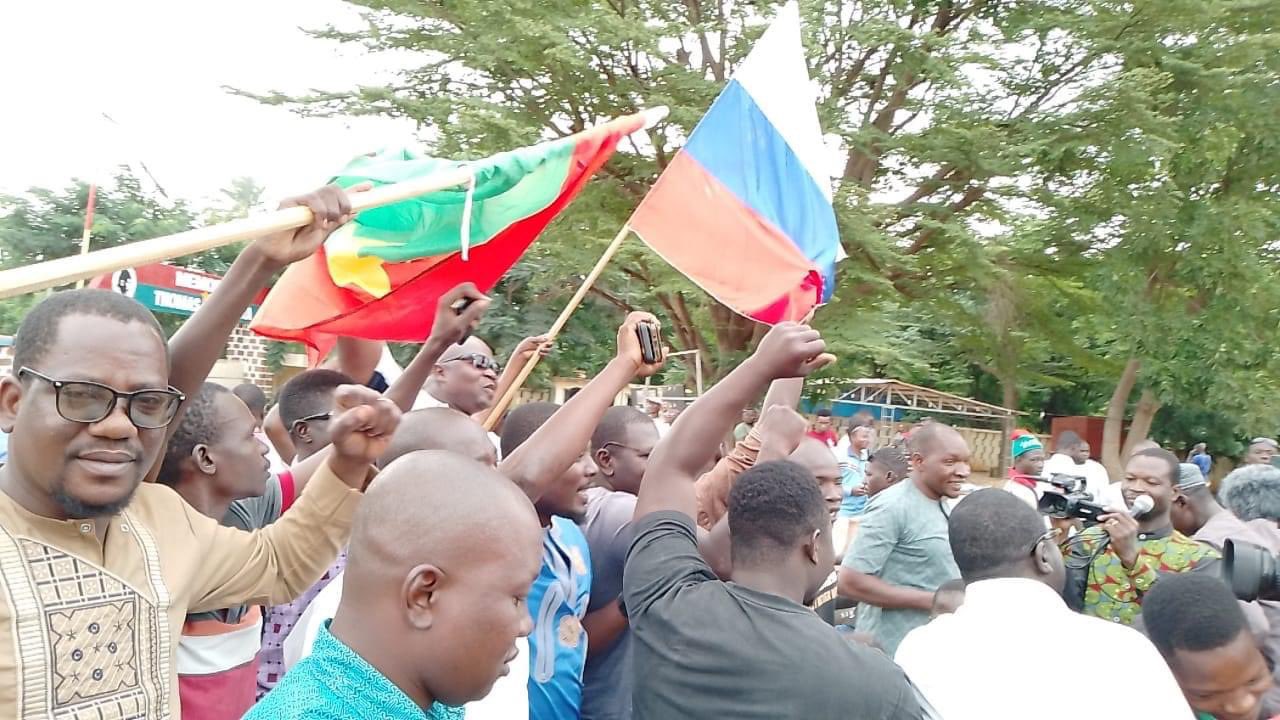 Protesters in Burkina Faso with their country’s flag and the Russian flag. 31.09.2022. Burkina Faso. Photo credits: LSI AFRICA
It should be noted that the pattern described above should not lead to the identification of countries' policies. Russia's approach to Africa is much more specific, as it is clearly anti-democratic in nature. The main categories of Russian activity include disinformation (22 countries), support for unconstitutional claims to power, and interference in elections — all of which are essentially aimed at undermining democracy. Moreover, Russian disinformation is directly aimed at sabotaging development programmes, humanitarian aid and educational projects. To a lesser extent, information attacks have also targeted UN peacekeeping missions deployed in Russia's area of interest: MINUSCA in the CAR, MINUSMA in Mali and MONUSCO in the DR Congo. The accusations concerned cooperation with jihadists, shadow agreements with the French government and the exploitation of natural resources. In this way, the Russian Federation directly reproduces the positions of hybrid warfare theory, with the aim of equating democracy with autocracy.
Russia consistently supports and legitimises constitutional changes that allow for the extension of presidential terms in exchange for the personal loyalty of African leaders. Corresponding information campaigns have been recorded in at least 15 countries, including support for Joseph Kabila in the DR Congo, Denis Sassou-Nguesso in the Republic of Congo, Paul Kagame in Rwanda, Alpha Condé in Guinea and Pierre Nkurunziza in Burundi. Research by the African Centre confirms the correlation between the absence of presidential term limits and vulnerability to Russian disinformation: countries without such restrictions experience an average of three disinformation campaigns, while states with retained limits experience about 1.5 campaigns annually.
Russia has interfered in the electoral process in 18 countries. Documented cases of such influence include: Madagascar (support for Andry Rajoelina in 2018), Zimbabwe (support for Emmerson Mnangagwa in 2018), and Uganda. Ugandan President Yoweri Museveni, re-elected seven times, has used Russian services at least three times – in 2016, 2021 and 2026.
After France was pushed out of a number of African countries, there has been a noticeable trend towards authoritarianism in these countries. The establishment of illegitimate regimes has a deeply destructive effect on domestic political life in African countries, exposing existing institutional problems, and the further escalation of violence leads to the actual dismantling of democratic institutions. In countries with preserved, albeit limited, democratic procedures, France acted as a guarantor of the existence of civil society and independent media – central elements in the stabilisation of fragmented societies. Accordingly, the delegitimisation of democratic institutions is taking place precisely through the discrediting of France's role in Africa. The result is a model of controlled destabilisation, where local crises become opportunities for Russian infiltration. Restricting popular sovereignty results in the loss of sovereignty of the state itself: Russia's presence in a number of African countries is characterised by a combination of control over political life, military presence, the construction of an extensive spy network and control over critical resources in the host countries.
The Russian model of presence is structured around the use of personal loyalty among African leaders. The Central African Republic is the backbone of Russia's presence in Africa, which corresponds to a broader model of providing military support in the fight against threats: President Faustin-Arsène Touadéra came to power with a campaign promise to make the CAR ‘the most peaceful country in the world,’ symbolised by the withdrawal of 2,500 French troops. Instead, the country effectively plunged into civil war, caused by the activities of rebel groups united in the Séléka coalition (CPSK–CPJP–UFDR). In a security vacuum characterised by the virtual absence of capable autonomous institutions, African leaders are seeking alternative forms of external support. In such a situation, Russia gains a competitive advantage, as it provides political protection in addition to direct military assistance.
Operations that were smaller in scale but similar in logic were also carried out in other countries: in Libya during the Second Civil War through cooperation with Khalifa Haftar; in the Democratic Republic of Congo, in cooperation with Félix Tshisekedi against the backdrop of the M23 threat to the eastern outskirts of the state; and in Mozambique, in response to the escalation of violence by the Central African Province (ISIS) under Felipe Nyusi. At the same time, the low effectiveness and complexity of interaction with the societies of these countries determine the limited nature of Russia's presence, even despite the permanent nature of its services.
Within the framework of efforts in this direction, the disinformation component is primarily aimed at discrediting French troops. For example, in 2023, a large-scale campaign was launched around the killing of nine Chinese citizens at a gold mine in Chimbol, CAR, which was controlled by mercenaries from the Wagner Group. The crime was presented as a secret French operation aimed at undermining Russia's military presence in Africa. In general, discrediting the French military is one of the central themes of the Russian agenda, covering accusations of cooperation with jihadist groups, killings and torture of civilians, and conducting ‘punitive raids’ in African villages. At the same time, the purpose of these campaigns has likely shifted from driving French troops out of the region to a tool for managing responsibility – masking their own failures in the ‘war on jihadism’ and diverting attention from the crimes committed by Wagner PMC fighters in their areas of deployment.
In countries where Russia's presence is due to its involvement in armed conflict, the key, though not the only, motive for cooperation is to achieve measurable results in countering threats, such as restraining rebel groups or regaining control over territories. The inability to demonstrate tangible results is a factor limiting cooperation. On the other hand, support for isolated military juntas is a much more reliable, basic strategy for Russia in Africa, in which the Russian military presence ceases to be an instrument for achieving results and instead becomes a pillar of survival for regimes in asymmetrical dependency relationships. This logic is reflected in the experience of countries with the closest interaction with Russia: Mali, where two military coups took place in less than a year, ultimately bringing General Assimi Goita to power; Burkina Faso, with two rapid coups that established the rule of Ibrahim Traoré; and Niger, with the uprising of the presidential guard, which resulted in the regime of Abdourahmane Tchiani.
The series of military coups in Mali, Burkina Faso and Niger share a number of common characteristics, including their chronological proximity, similarity in their course and similarity in their political consequences, which together have been of critical benefit to Russia. Although the local crises under study are rooted in the chronic weakness of state institutions and the broader degradation of security in the subregion, it was the Russian Federation that emerged as the beneficiary of a pre-planned, highly coordinated campaign to prepare a favourable information and political environment for ensuring its own expanded presence in the countries mentioned.
In 2019, Meta announced the exposure of three networks of fake accounts, which meant the removal of about 200 pages that spread disinformation to an audience of 1 million users. Their activities were aimed at influencing political processes in eight countries of the Sahel and West Africa. Analysis of the networks reveals the systematic nature of the disinformation work: the oldest accounts had been publishing content since 2014, but joined the network targeting Mali in 2017, four years before the coup in the country took place. In September of that year, the NGO Groupe des Patriotes du Mali (French for ‘Group of Malian Patriots’) began to spread calls for closer cooperation with the Russian Federation, using all available means, including media activity, the organisation of protests and actions, and the drafting of petitions. Russian Ambassador to Mali Alexei Dulyan took part in one of the Group's events, where he officially accepted the above-mentioned petition on deepening the Russian Federation's presence in Mali with 8 million signatures. The NGO ‘Yerewolo debout sur les remparts’ (French for ‘Standing firm on the bastions’) was established in 2020 to promote the withdrawal of French troops from Mali. The organisations worked closely together, in particular to expand their network by bringing in smaller groups with similar beliefs, and carried out coordinated violent actions, such as attacks on French soldiers and UN peacekeepers. Both groups identify themselves as ‘close to the regime’ of Assimi Goita, who came to power only in 2021.
Following the military coup in Mali and the subsequent rapid withdrawal of French troops, the Russian Federation began to establish a network targeting the wider Sahel region. Reveil des Peuples du Sahel (French for ‘Awakening of the Peoples of the Sahel’), one of the first pages of the exposed network, advocated for revolution in the wider region, which was a noticeable expansion of the narrative and a prelude to the coups in Burkina Faso and Niger. A military coup took place in Burkina Faso in January 2022. Almost two years earlier, in 2019, the page Défendons notre pays le Burkina Faso (Let's defend our country, Burkina Faso) began operating, focusing on the need to bring the Wagner Group into the country. From 2019 to 2021, the number of mentions of the Wagner PMC increased 19-fold, and interaction with posts mentioning the group increased by 6363%. The post with the most interactions belongs to the Mon Magazine account, in which the publication ridicules France for expressing concerns about a potential agreement between the Russian PMC and the leader of the Malian military junta, reflecting broader trends. Against the backdrop of these reports, a coup took place in Niger in July 2023.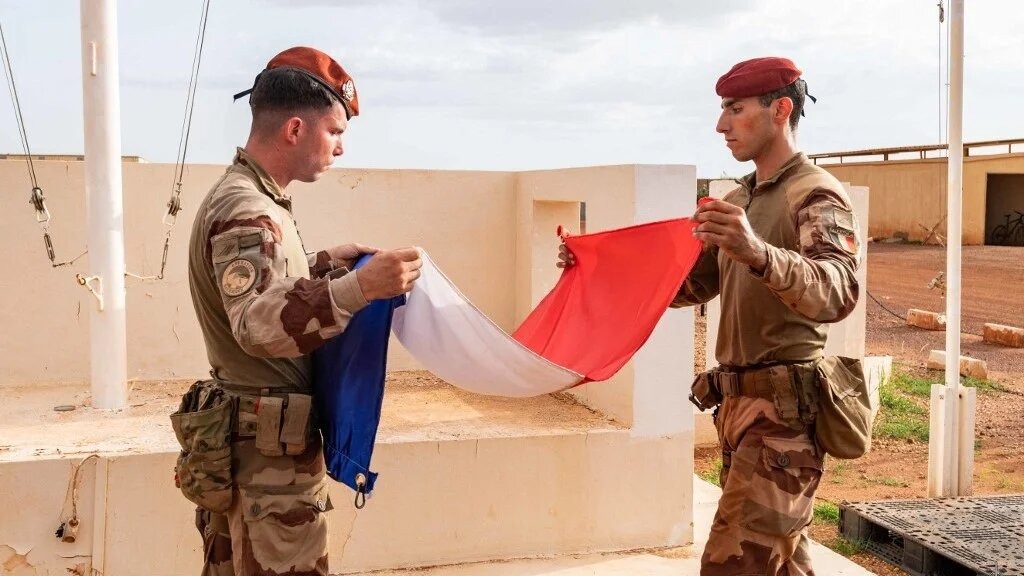 French soldiers fold the French flag at a military facility in Mali, August 2022. Photo credits: AFP
Russia provides other important assistance to isolated African regimes that have come to power as a result of military coups, allowing them to violate the deadlines set by ECOWAS for the return to civilian rule. The Economic Community of West African States is the oldest and one of the most effective regional economic communities (RECs) in Africa, playing a key role in the region's security policy. Russian disinformation aims to deepen the existing rift between the organisation's members and delegitimise the union because of its ‘ties’ to the French government.
The dominant narrative of the Russian Federation is that France controls the decision-making process in ECOWAS. The organisation is accused of selectively imposing sanctions on regimes that came to power as a result of military coups and refused to cooperate with France. Moreover, after the coup in Niger in 2023, the Russian disinformation machine spread information that France was planning an invasion of Niger through ECOWAS. As a result, members of the newly formed Alliance of Sahel States (AES), Mali, Burkina Faso and Niger, announced their withdrawal from ECOWAS.
Information campaigns focusing on French military intervention remain widespread today. Such messages are particularly significant because France is indeed involved in military operations at the invitation of ECOWAS member states, most recently in 2025, after the withdrawal of troops from the sub-region, in Benin, where a military takeover was prevented. Despite the fact that security is central to ECOWAS's activities, since 2017 the organisation has not prevented a single violent seizure of power in the Sahel and West Africa. The list of ‘failures’ includes Burkina Faso, Guinea, Guinea-Bissau, Mali and Niger, which are also united by a multidimensional Russian presence.
Russia therefore aims to eliminate alternative political and security mechanisms in its region of interest and replace them with new ones under its control (AES). This goal is being achieved by opposing France, whose brand as a colonial power Russia is deliberately investing in as part of its hybrid war in Africa. On the other hand, support for democratic procedures, in particular the return to civilian governments, is proving effective even in conditions of Russian dominance and what appears to be a domino effect. Such a strategic limitation of Russian influence could become a system if a competitive functional is developed to counter Russian hybrid operations.
In 2024, the Russian Foreign Ministry welcomed nearly ten foreign ministers, and the Kremlin welcomed three presidents from West Africa, indicating an intensification of the diplomatic dimension of Russia's presence. At the same time, despite the withdrawal of French troops from the region, Russia has not yet managed to gain a foothold in any country on the Atlantic coast of West Africa.
The Sahel, a landlocked region, has become the main platform for Russia's entrenchment on the continent, but such a presence is resource-intensive and requires significant financial, political and military investments. This leads to the further forceful expansion of Russia's influence towards countries with strategic locations.
Russia's key priority remains the war against Ukraine, which limits its ability to invest in Africa. Asymmetric warfare methods allow it to gain influence with an investment of 1% of total direct investment on the continent. The ‘weapons for resources’ strategy has provided Russia with additional financial inflows: according to the World Gold Council, since the start of the full-scale war, Russia has received at least $2.5 billion, which is probably an underestimate given the impossibility of accurately assessing the scale of illegal gold mining in Sudan and Mali. In addition, access to African rare earth metals and strategic raw materials is critical for the production of high-tech weapons. The material dimension also includes the recruitment of more than 1,400 Africans to participate in the war against Ukraine. At the same time, the Russian Federation seeks to convert its presence in the region into political support on the international stage. Africa, with its 54 votes, remains the largest regional bloc in the UN General Assembly, including three non-permanent members of the Security Council, 14 members of ECOSOC and 13 members of the Human Rights Council.
The Russian Federation's move to the southeast is already a well-established mechanism. The countries in Russia's sphere of interest are in close proximity to key Western allies on the continent — Liberia, Ghana, Nigeria and others — which have established democratic traditions and relatively strong state institutions. It is remarkable that even at the height of anti-colonial sentiment in African countries in 2021, the United Kingdom was able to retain its military bases in Kenya as a result of negotiations.
The war in Ukraine is also transforming French policy in Africa. Paris is redirecting resources towards Europe and seeking more cost-effective forms of partnership, cutting back on development and humanitarian aid programmes, in line with the broader logic of the EU. The cancellation of the list of priority partner countries in August 2023, as well as a series of statements about strategic repositioning in 2024–2025, became symptomatic. The concept of ‘"equal-to-equal partnership’ remains central, albeit now with a particular focus on East Africa. According to E. Macron, the 2026 summit in Nairobi should ‘embody a real revolution in our approach.’ East Africa remains an area of high presence for China and the United States, although the partnership with the latter is now being undermined by the publication of the second US National Defence Strategy since Donald Trump's re-election, which significantly reduces the US presence and long-term commitments in the region.
Taking into account the above-mentioned, Russia's hybrid warfare in Africa shows signs of intensification, albeit with fixed changes in format. Despite the established frameworks for disinformation campaigns, stronger democratic institutions, and the adaptation of government policies and regulatory practices of media platforms determine the limited reproductive potential of Russia's strategy outside the Sahel. At the same time, the Russian side is facing difficulties with recruitment, financing, and institutionalisation of its security presence, which became evident during the replacement of the Wagner PMC with the African Corps, which raised questions among African leaders.
However, there is reason to believe that the intensity of the confrontation will not only continue but also increase as the new election cycle in West Africa approaches. Russia has already integrated itself into this process, particularly in Nigeria, where it has redirected more than 40% of Nollywood's active audience to its own network accounts, which criticise the West and encourage revolution in West Africa. Business Day estimates that disinformation and piracy cost Nigerian industries more than $1.5 billion annually. Therefore, in the near future, it is precisely at this point that the effectiveness of Russia's modern hybrid strategy and the limits of democracy's adaptability to it will be tested simultaneously.
You may be interested