 INTERNATIONAL
INFORMATION AND ANALYTICAL
COMMUNITY


+ Join
Support INTERNATIONAL



Daria Honcharenko, Junior Analyst for the Balkan Region at the Resurgam Analytical Center
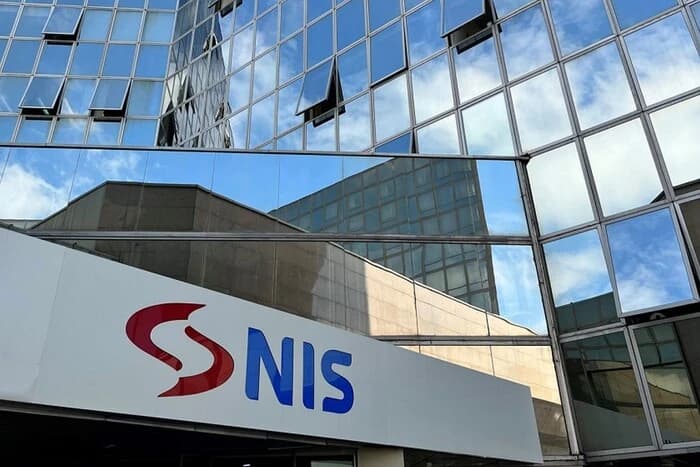 Photo: NIS
The Serbian company Naftna Industrija Srbije (NIS), in which more than 56% of shares are owned by the Russian side, is an example of the Russian Federation's presence that goes far beyond the investment level. It deeply entrenches Moscow's position within Serbia's economic architecture and influences the stability of fuel and energy supplies, employment levels and regional development.
Throughout 2025, the issue of control over the Serbian oil and gas company became one of the key areas of US diplomatic and sanctions pressure on Russia and its assets in the European region. In January 2025, Washington imposed sanctions on NIS, a significant share of which is owned by Russian companies Gazprom and Gazprom Neft. The main demand of the US was the complete withdrawal of Russian capital from Serbia's oil industry.
Despite a series of temporary OFAC licences aimed at maintaining operational stability, the sanctions came into force in autumn 2025. This resulted in the cessation of oil supplies through the JANAF pipeline and the threat of a shutdown of the refinery in Pančevo. Under these conditions, Belgrade was faced with a choice between obtaining special permits from the US and selling Russian assets.
The Serbian economy's dependence on Russia limits Belgrade's foreign policy manoeuvres, preventing it from supporting sanctions against Moscow and closing off opportunities for cooperation with Western partners. This distances the prospects for European integration and poses a threat to the country's economy due to instability and its broad dependence on a single actor – Moscow.
In this context, the sale of NIS shares can be seen not as a successful attempt to squeeze Russian investment out of Belgrade's economy, but as an opportunity for Moscow to transform its influence from direct to indirect, involving a third party loyal to the Kremlin and allowing it to maintain influence in a strategically important region while circumventing sanctions.
The formal basis for the signing of the agreement in 2008 between the Serbian government and the Russian company Gazprom Neft was the need to modernise outdated infrastructure and ensure stability of supply. However, Moscow viewed this agreement more as a political consolidation of its presence and legalisation of its influence through control of a significant share of the company.
The historical context also contributed to the successful signing of the agreement, as after Kosovo declared independence, Serbia was plunged into a domestic political crisis and a deterioration in relations with the West. Russia took advantage of this situation and declared itself an open ally of Belgrade, supporting it at the international level, which allowed it to gain Serbia's trust, which in turn allowed it to secure conditions favourable to Moscow.
According to many experts, the controlling stake in NIS, given its extensive distribution network, ownership of strategically important oil refineries and monopoly position, was sold at a dumping price. Although the company's assets should have attracted a wide range of parties, allowing the company to become the subject of a competitive tender, Serbia ultimately did not receive it.
In addition, the structure of the deal itself was designed to provide room for free interpretation of Russia's conditions for modernisation and development. However, Belgrade made a number of guarantees related to ensuring favourable regulation and limiting further revision of key parameters of the agreement.
The American sanctions policy towards the Russian energy sector is characterised by the US desire to create an environment where Russian capital activities become predictable and less risky. NIS is positioned in this policy rather as a ‘grey area’ because formally the company operates in a third country and is not subject to sanctions. However, the influence exerted by the Russian Federation, using its significant investment presence, is prompting Washington to act decisively.
The imposition of sanctions on the company is gradually complicating the activities of the entire Serbian economic architecture. Reduced access to Western capital will further block a significant number of infrastructure projects and the modernisation process. Since modern oil refineries are heavily dependent on Western technology, the lack of or limited access to it will mean a threat of falling behind and a decline in the competitiveness of the asset for Serbia.
Serbia's economic sector is dependent on one international player – Russia. Therefore, there is a serious threat of secondary sanctions being imposed on Serbia – a tool used by the US to put pressure on third parties, which are often seen by Moscow as an alternative way to circumvent Western sanctions.
Despite the low probability of their implementation, the prospect of them is already a lever of pressure from the US. In addition, the coordination between Washington and the EU on this issue worsens Belgrade's position in the context of European integration, as Brussels is not inclined to continue dialogue with a country whose economy is largely owned by Russian sanctioned assets.
At first glance, the decision to sell 56.16% of shares appears to be Russia's exit from Serbia's oil sector, but in reality, this move may be a calculated strategic manoeuvre by Moscow. The vulnerability of NIS, the central oil company of the EU candidate country, to sanctions creates systemic risks for both Belgrade and the Russian Federation. In this context, the sale of shares is a strategic necessity, as pressure from the West will make it impossible to modernise equipment and infrastructure, restrict access to financial resources and reduce competitiveness.
The agreement to sell the shares is not accompanied by haste or loud statements. Moreover, potential buyers are not being named. This indicates that the process is entirely or partially controlled by Moscow, which in turn is looking for profitable ways to maintain its influence in Serbia by selecting the most advantageous third party. The so-called ‘universal actor’ in this situation, which could potentially become the buyer of the lion's share of assets, is a state that is not under Western sanctions or is prepared to operate in conditions of political risk.
In such a scenario, a formal change of ownership would not mean a change in NIS's strategies. Russia's control would be maintained through long-term agreements, contracts and management decisions. The sale of a controlling stake in NIS risks setting a precedent for other Russian assets that are vulnerable to Western sanctions. Such actions involving a third party could potentially become a tool for maintaining influence in regions or individual sectors while avoiding pressure from the international community.
For Russia, in turn, there is a high risk of choosing the wrong candidate for the role of ‘universal actor,’ as no state is capable of providing Moscow with a full guarantee that all of its instructions will be carried out. This poses a serious threat that the third party will slip out of the Kremlin's control and that NIS will gradually transform to fit the new owner's strategies. Under such conditions, Russia may finally lose its main lever of influence in Serbia.
The most advantageous scenario for Russia could be the sale of assets to loyal representatives from the European Union, in particular Hungary or Slovakia. They are members of the EU and NATO, which at the same time demonstrate political readiness for a ‘pragmatic’ dialogue with Moscow. Such rhetoric gives reason to view a potential agreement involving these countries as a manoeuvre by the Russian Federation aimed at maintaining its influence in the Balkans while avoiding sanctions and direct action against the Serbian energy sector. It is this circle of buyers that can provide Moscow with institutional legitimacy through the membership of Budapest and Bratislava in the EU and NATO, while maintaining control over key logistical and management elements.
The most likely candidates for the purchase of NIS assets among countries outside the transatlantic circle are China or the Persian Gulf countries. These states demonstrate moderate loyalty to Moscow, which, in turn, sees a number of advantages for itself in these candidates, including reducing sanctions pressure on assets, maintaining indirect control over key flows, and avoiding the loss of its dominant position in Serbia. The change of ownership will be used as an argument by Serbia in its dialogue with the West on meeting requirements and removing Russian assets from the oil industry, although in reality this will only be a formal step.
The Chinese side's entry into the oil sector will have a wide range of characteristics. Beijing has sufficient experience of working in an environment of increased sanctions risk. In addition, Serbia is a country with a large presence of Chinese investment. Therefore, Serbia, a country with a sufficient number of successfully implemented joint initiatives in its arsenal, will not find it difficult to build a constructive dialogue with Beijing. Under such conditions, Belgrade risks becoming dependent on the Chinese-Russian symbiosis, within which Moscow can control the circulation of raw materials and the logistics network, while Beijing controls finances and part of the management.
The scenario involving Middle Eastern investors, in particular the purchase of assets by funds or large energy holdings, is potentially viewed in a more neutral light, as players in this region focus on financial returns rather than ideological positioning. In this case, Serbia will be freed from sanctions pressure and gain access to capital without the ideological obstacles often created by the Kremlin. At the same time, it is precisely a representative from the Middle East region who may leave the status quo in NIS unchanged, as they will have no motivation for profound transformations, leaving Russian administrative, financial and logistics networks unchanged.
In the context of the potential purchase of Russian assets, the United States itself could be considered a likely candidate under certain conditions. Washington and Moscow could agree on the purchase of the latter's assets if the United States provides access to minerals or opportunities in another region, blocks a package of sanctions in a specific area, or provides support in decision-making at the intergovernmental level.
Giving up serious leverage in Serbia, a key country in the Balkan region, would be a major geopolitical loss for Russia, which it would try to make up for as much as possible with other advantages. Therefore, the sale of NIS assets to Washington can be interpreted as either a complete weakness of the Kremlin's geopolitical position or as an agreement that has provided it with significant opportunities.
Control over Serbian energy assets allows Moscow to maintain its presence in the Balkan region even under sanctions, using indirect control through long-term contracts, logistics and management networks.
American sanctions increase the risks for direct investments by the Russian Federation, but do not completely eliminate its influence. Formal changes in ownership, as in the case of the potential sale of 56.16% of NIS shares, do not guarantee real transformation. The region functions as a space for adapting sanctions policy, where Russia remains influential without violating international rules.
This sets a precedent for circumventing sanctions, which has indirect consequences for Ukraine. In addition, the potential preservation of Russia's influence undermines the effectiveness of sanctions, reduces the transparency of energy flows and complicates diplomatic support for Kyiv in the Balkans and the EU.
You may be interested