 INTERNATIONAL
INFORMATION AND ANALYTICAL
COMMUNITY


+ Join
Support INTERNATIONAL



Daria Honcharenko, Junior Analyst for the Balkan Region at the Resurgam Analytical Center
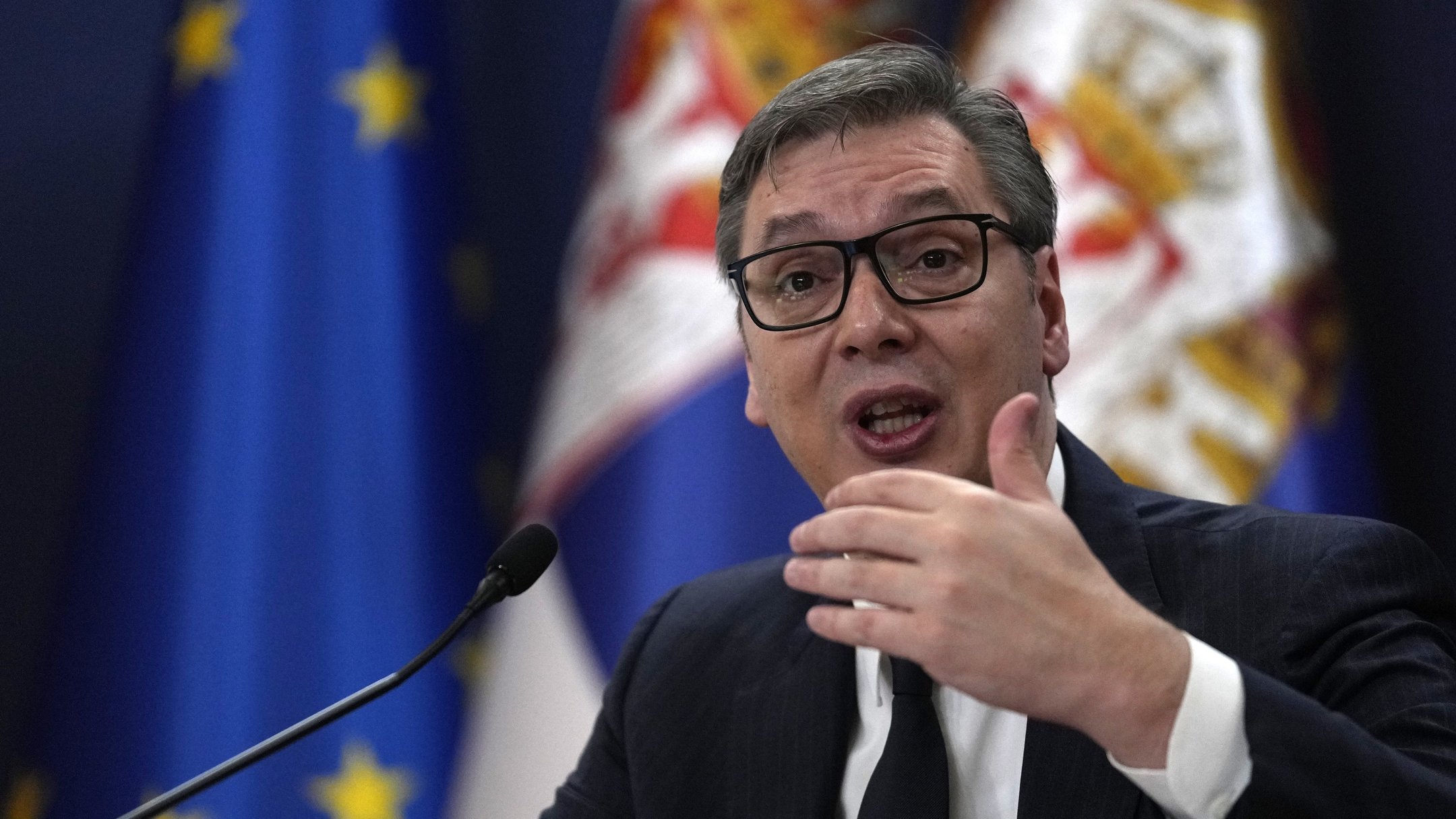 Photo: AP
The parliamentary elections in Serbia, scheduled for the end of 2026, are not the result of a planned democratic cycle, but the result of accumulated pressure on the political system. Formally, this is an early expression of will, but in essence, these elections are an attempt by the authorities to reconfigure legitimacy in a context of tension, growing economic challenges and protest mobilisation.
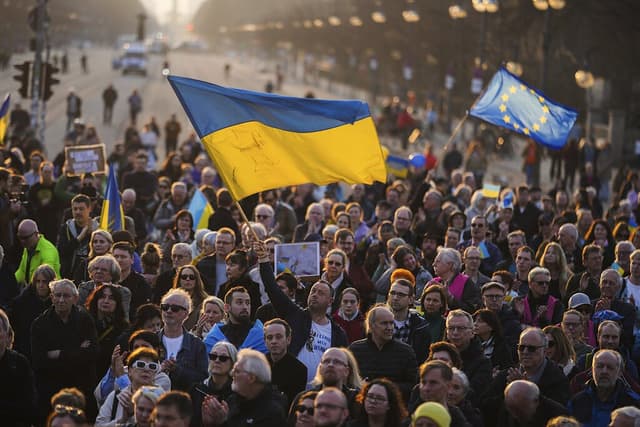
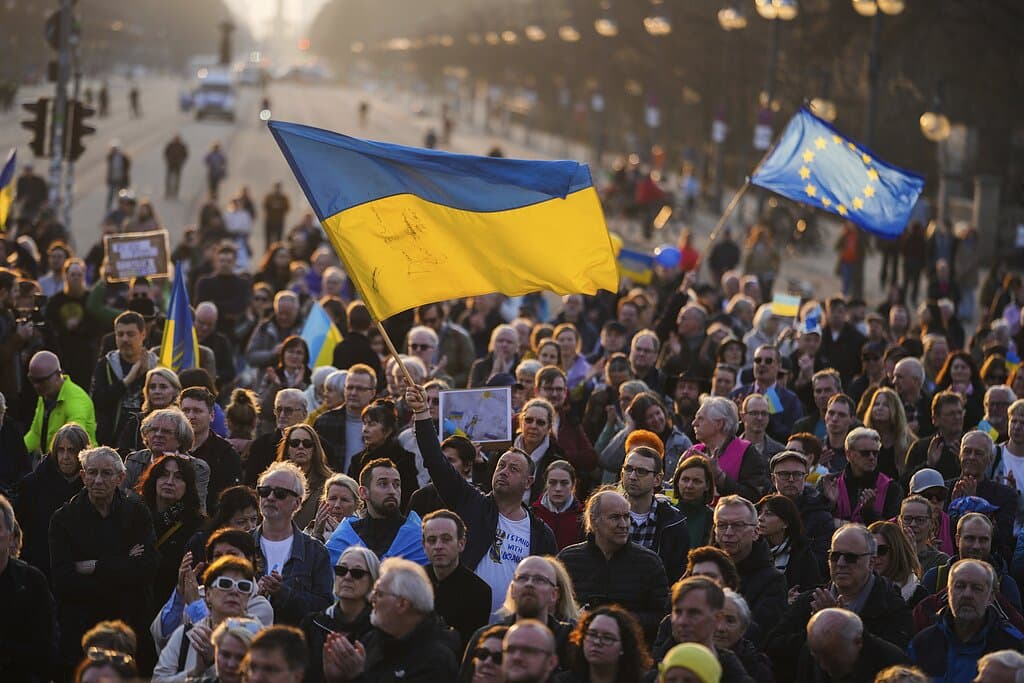
The key catalyst for the electoral process was the mass protests of 2024-2025, which in terms of geography and scale were the largest since the fall of Slobodan Milošević's regime. Despite the lack of a single political centre for the protest movement, the demonstrations showed a renewed public pressure on the authorities. In this context, Aleksandar Vučić's agreement to the demand for early elections was more a tool for stabilisation than a recognition of the authorities' readiness for systemic change.
In parallel with political turbulence, Serbia is facing a number of economic challenges that are increasingly difficult to mitigate with promises of stability. Slow economic growth, energy dependence on Russia, and social inequality are reducing the effectiveness of administrative control and undermining trust in government institutions, which is reflected in the protesters' demands for early elections.
At the same time, the foreign policy dimension of the elections is receiving particular attention in the context of Serbia's strategy of geopolitical balancing between the EU, Russia and China, which turns the electoral process into a test of the viability of the ‘strategic uncertainty’ model in the context of the transformation of the European security architecture.
Belgrade's strategy in the geopolitical context is characterised by ensuring the balance between major centres of power, which is a well-established model for establishing the state in the international arena. For example, in October 2022, the State Secretary of the Serbian Ministry of Foreign Affairs stated that the country's accession to the EU and the harmonisation of relations with it were a foreign policy priority. However, Belgrade systematically fails to implement decisions concerning restrictive measures against Russia and the proliferation and use of chemical weapons. On 20 January 2026, the European External Action Service announced Serbia's failure to comply with four EU decisions related to sanctions against Russia and Belarus.
The historical factor plays one of the main roles in this situation and is often used as a tool to justify the principles of Serbian diplomacy. The experience of Yugoslavia and the Non-Aligned Movement contributed to the establishment of a policy of avoiding bloc commitments. The trauma associated with the NATO bombing in 1999, Kosovo's independence issue, and the lengthy process of European integration have entrenched distrust of the West in the political and social context. Although Serbia is a candidate for EU membership, it seeks to maintain a balance on the international stage by orienting itself towards Russia, which has become entrenched in political discourse as a symbol of historical justice and stable support.
These factors are actively used in Serbian election campaigns as tools to mobilise the electorate. Historical memory is a central lever of influence, which is actively appealed to by pro-Russian and anti-Western political forces. The issue of Kosovo is particularly painful for Serbia, as it is seen by the public as a symbol of the ‘threatening policies of the West’ and, in the run-up to the elections, provides a tool for some political forces to secure the support of a certain percentage of the electorate.
The protest movement has a strong motivational and emotional charge, but a low level of organisation. Due to the lack of a single leader, the protesters' actions are uncoordinated and diverse. Although the protesters demanded fair elections, this does not mean that they will be active voters, as there is a possibility that there will not be enough votes to bring about serious change.
The government's control over television, the media and regional media also contributes to weakening the spread of protests and their subsequent impact in the country. In April 2025, the independent channels N1 and Nova were removed from satellite television, indicating the continued discrimination of the media in order to strengthen the government's control over the information field in Serbia. In a resolution dated 22 October 2025, the European Parliament condemned the political pressure on the Serbian channel N1 and the attacks on journalists highlighting the protests.
Since 2012, the Serbian Progressive Party (SNS) has remained the dominant force in the country's parliament, with support ranging from 40 to 50%, allowing it to shape the country's trajectory virtually unrestrained. The Socialist Party of Serbia (SPS) receives less support from the electorate, with 6-8%, and fragmented opposition movements, which in 2023 merged into the opposition party ‘Serbia Against Violence’, have 20-25% support. A situation where, in the presence of a strong leader, elections do not change the configuration of forces is called a ‘managed democracy.’
In an institutional sense, the SNS's long-term dominance has allowed it to attract the political loyalty and membership of regional elites, which has only strengthened the centralisation of power around a single party. Also, in the 2026 elections, due to the ruling party's administrative resources, there may be attempts to influence the electoral commissions through local representatives.
The probability of maintaining the status quo in the context of the political configuration of forces in the Serbian parliament remains high. If the Serbian Progressive Party is able to consolidate and strengthen its role in the state apparatus, the situation will contribute to the continued weakening of the European integration process, the rejection of sanctions against the Russian Federation, or their partial acceptance under pressure from the international community. The method of balancing between different world centres will remain Serbia's main strategy on the world stage.
A controlled drift towards the EU, in particular due to the growing loyalty of the electorate to opposition parties loyal to the EU, will allow for stronger pro-European rhetoric, yet the likelihood of adhering to a purposeful European integration course is low. This alignment can be expected to result in partial alignment with EU foreign policy and the implementation of a minimum number of reforms prompted by pressure from the European Union.
The growing influence of Russia and China, due to increased support for nationalist and pro-Russian parties such as ‘Jedinstvena Srbija’, ‘Socialist Party of Serbia’ and ‘National Democratic Alternative’, is seen as one of the possible scenarios following the election. The political space formed under such conditions will be characterised by sharp anti-Western rhetoric, the continuation of the blocking of sanctions against Moscow, further tension in relations with the EU on the path to membership, and a practical lack of support for Ukraine in the international arena due to the strengthening of pro-Russian forces in parliament, which will insist on limiting cooperation with Kyiv.
The issue of Ukraine is not a priority in Serbia's foreign policy. Belgrade's strategy is characterised rather by avoiding a clear position on Ukraine as a tool for shaping internal stability, due to the high concentration of pro-Russian sentiments in society and Russia's significant presence in the Serbian economy. Serbia is trying to balance between condemning Russia's war against Ukraine and demonstrating solidarity, but it is not joining the sanctions against Russia and is avoiding the possibility of providing assistance to Kyiv.
The most positive scenario for Ukraine in the Serbian parliamentary elections is one that involves increased support for pro-European forces. Although this does not guarantee an increase in Belgrade's loyalty to Kyiv, there is still a possibility of a rapprochement in relations. The possibility of a strengthening of pro-Russian forces or the preservation of the Serbian status quo would mean either maintaining the previous distance in bilateral relations or reducing any support for Ukraine.
In the medium term, Serbia will remain a ‘grey zone’ between Russia and the West, facilitated by the entrenched tradition of balancing as the dominant model of international relations. In this context, elections are not a driver of change, but rather a continuation of the state's established strategic course, with the likelihood of minor changes in the balance of power.
For the European Union and Ukraine, an important mission is to address Belgrade's long-term dependence on Moscow. Also, solving the problem of ‘managed democracy,’ which has developed as a result of the long-term domination of a single political force, remains a key challenge for Serbia's political development, as this model limits political competition and contributes to the personalisation of power.
You may be interested