 INTERNATIONAL
INFORMATION AND ANALYTICAL
COMMUNITY


+ Join
Support INTERNATIONAL



Daria Honcharenko, Junior Analyst for the Balkan Region at the Resurgam Analytical Center
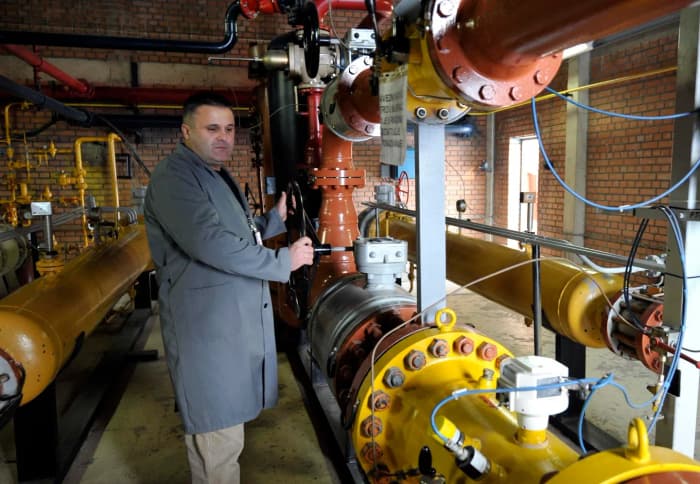 A Bosnian technician employed by the state-owned gas company, Sarajevo Gas, walks through a gas distribution chamber. Photo: ELVIS BARUKCIC/AFP via Getty Images
This situation demonstrates how gas is becoming a weapon of influence. Whoever controls the supply can influence not only the energy stability of the Balkans but also the political independence of the region. Currently, it is not just about a pipeline, but about the country's strategic choice and the balance of power in the Balkans.
In January 2025, the Parliament of Bosnia and Herzegovina officially approved the construction of the "Southern Interconnector," which will connect BiH to the European chain. The American company "AAFS Infrastructure and Energy" is involved in the pipeline's construction. Washington views this gas main as an alternative to "TurkStream."
From this moment, the Balkans have once again become the centre of a major energy game. On one side, Russia seeks to maintain control over gas flows through Serbia and Republika Srpska (an entity within Bosnia and Herzegovina). On the other, the US and the EU actively support gas supplies from alternative sources to reduce the RF's influence in the Balkans. In response to Western actions, Republika Srpska is building the "Eastern Interconnector" together with Serbia, whose energy sector is closely linked to Moscow.
The "Southern Interconnector" is a gas route intended to connect Bosnia and Herzegovina with Croatia's infrastructure. "AAFS Infrastructure and Energy" submitted a letter of intent to develop this pipeline. It is 236 km long, with 162 km located in Bosnia and Herzegovina and 74 km in Croatia. The project is positioned by the United States as a tool to reduce dependence on Russian energy resources and integrate Sarajevo into the European market.
A key feature is the active interest of American private capital, specifically "AAFS Infrastructure and Energy." It is represented by Jesse Binnall, who was a lawyer for the Trump campaign and worked on his legal team, and Joe Flynn, the brother of Michael Flynn (the former US National Security Advisor charged in 2017 for ties to Russia and pardoned by Trump in 2020). This indicates support for political initiatives from business circles loyal to the President and his administration.
Washington has repeatedly emphasized the political weight of the project. Building the interconnector jointly with Bosnia and Herzegovina could promote American gas in the regional market and, simultaneously, strengthen Washington's influence in the Balkans.
The EU, for its part, is also actively implementing sanctions to reduce dependence and strengthen the region's energy security against RF influence. Since Bosnia and Herzegovina is a candidate for EU membership, moving away from Russian gas is an important condition for continuing accession dialogues. Therefore, Brussels' support for the "Southern Interconnector" is politically significant, as it will allow for increased external oversight of internal decisions and limit the ability of local elites to maintain informal energy ties with Russian structures. The result will be a reduction in the space for opaque schemes in Bosnia and Herzegovina.
Under the REPowerEU plan, EU countries are gradually halting Russian gas imports and preparing to limit oil supplies by 2027. This includes monitoring imports, establishing national diversification plans, developing LNG terminals (liquefied natural gas), and applying the Third Energy Package rules (independence of the national regulator, transparent pricing, and enhanced oversight of market competition) for transparency, competition, and third-party access. The implementation of this policy will contribute to the gradual displacement of Moscow from the EU energy market.
In November 2025, the government of Republika Srpska approved the construction of the "Eastern Interconnector" — a connection between Republika Srpska (RS) and Serbia. Formally, the parties presented the initiative as a step toward "energy stability" and "energy diversification." However, the route could create the conditions for maintaining Russian gas logistics in the Balkans. The planned project aims to provide a direct connection for RS to Serbia's transport system. Belgrade has long been integrated into the Russian gas supply chain via "TurkStream." However, the actual source of supply may change depending on agreements between Serbia and the EU, Russia and Turkey, and other alternative suppliers.
Moscow is trying to maintain influence over the Balkan region through long-term gas supply contracts. In Serbia, "Gazprom" provides approximately 80% of gas imports. However, the latest three-year contract for Russian gas supplies to Serbia was temporarily extended only until March 31, 2026. Belgrade is negotiating gas purchases through the European Union's joint mechanism. This indicates Serbia's intention to reduce its dependence on Russian supplies. In the context of building a joint interconnector with Republika Srpska, Moscow risks losing the opportunity to supply its gas even to parts of Bosnia and Herzegovina. For Russia, this would mean a serious weakening of its positions in the Balkans.
Meanwhile, Turkey extended its contracts with the RF for Russian gas supplies via "TurkStream" for only one year instead of the ten years Moscow expected. For the Kremlin, this creates risks regarding future gas supplies through this pipeline. Ankara plans to abandon more than half of its Russian gas, replacing it with its own production from new fields in the Black Sea. Simultaneously with the refusal of a long-term agreement with the RF, the Turkish company BOTAŞ signed a contract with the US in September 2025 for LNG supplies till 2045.
"TurkStream" is currently the only route through which the RF can transport gas to Europe. If Ankara refuses to supply Russian products through its pipeline, the exits to the European market, including the Balkans, will be closed to Russia.
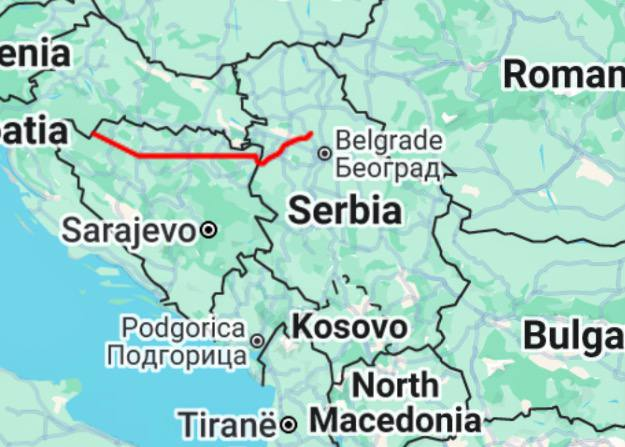 Eastern Interconnector. Source
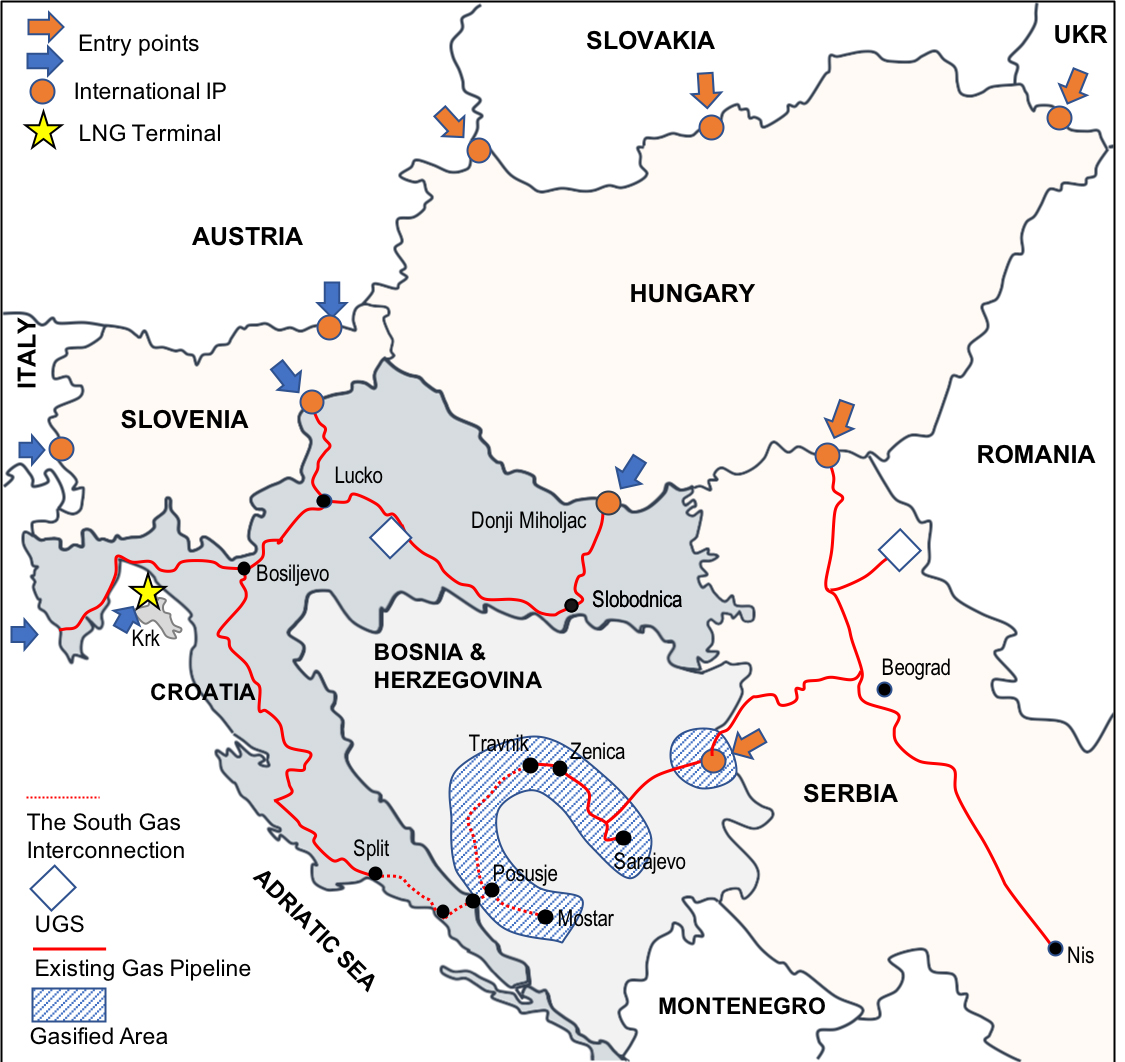 Southern Interconnector. Source
In the Balkan context, every gas pipeline has a geopolitical dimension as well as an engineering one. The architecture of the "Eastern Interconnector," promoted by Serbia and Republika Srpska (RS), is effectively built on a principle of three-level dependence:
Top level: "TurkStream" as the key channel for transporting Russian gas.
Middle level: Serbia’s gas transportation system.
Bottom level: Republika Srpska as the final consumption segment.
If Russia is the source of the gas, dependence can arise through long-term contracts and obligations, infrastructure control, or the dominance of a single supplier in the country's energy balance. This traditionally aligns with Moscow's approach.
Conversely, if Azerbaijani gas or American LNG is transported through Turkey or Croatia, the "Southern Interconnector" will create interdependence between the parties involved in the supply. American LNG serves as a real alternative to Russian gas and, simultaneously, as a tool for strengthening Washington's presence in the region. In 2025, approximately 58% of LNG imports to the EU came from the US. This will contribute to reducing Europe's dependence on Russian supplies.
The initiative to build the "Southern Interconnection" in Bosnia and Herzegovina gains particular weight under President Trump's administration, which combines commercial projects with geopolitical goals.
In negotiations, the American side positions itself not just as a business participant, but as a key factor in increasing Europe's energy security. Specifically, Binnall emphasized that the project has the "potential to strengthen the energy security of Bosnia and Herzegovina and reduce regional dependence on Russian gas." This demonstrates that American investments can serve as an important element of US foreign policy in Europe. In this sense, the "Southern Interconnection" project goes beyond a standard infrastructure deal. For Washington, it is viewed as an opportunity to reshape the energy architecture of the Western Balkans and influence Europe.
Following the reduction in Russian pipeline supplies, the US became the primary source of LNG for Europe: in 2024, American LNG rose from 25 billion cubic meters in 2021 to approximately 59 billion cubic meters. Since 2025, the EU and the UK have been importing record volumes, with the US providing over half of the region's LNG imports. In a short period, the total volume of imported LNG grew by 40% to approximately 75 billion cubic meters in the first half of 2025.
Increasing supplies of American liquefied natural gas to Europe, particularly through projects like the "Southern Interconnection," indeed enhances the region's energy security by allowing for the partial replacement of Russian supplies. However, there is a possibility of forming a new dependence — this time on the US. Analysts at IEEFA estimate that by 2030, Europe could receive 75–80% of its LNG from the United States. While these supplies bolster energy market stability in the short term, such a high share of American LNG makes the EU sensitive to price fluctuations and political decisions from Washington.
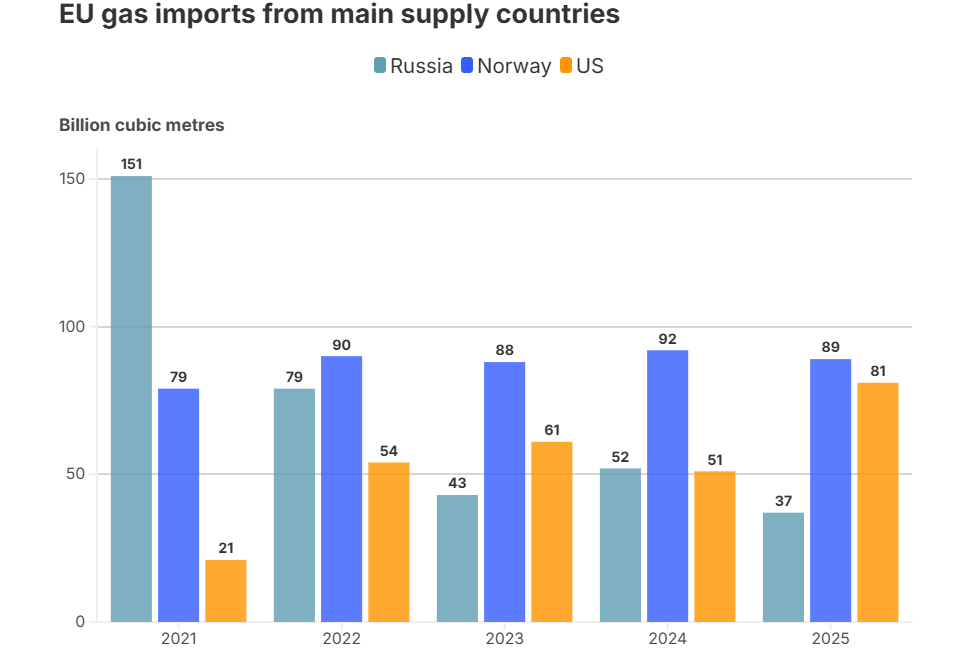 Source: Kpler, IEEFA’s European LNG Tracker and EU Gas Flows Tracker. Note: These imports include pipeline gas and LNG
The "Eastern Interconnector" poses a potential threat to Ukraine if it serves as a conduit for Russian gas via "TurkStream." Such a scenario would allow Russia to maintain its political and economic leverage in this region, strengthening pro-Russian forces in Republika Srpska. This, in turn, could complicate the effectiveness of Ukrainian diplomacy in the Balkans.
At the same time, the "Southern Interconnector" offers significant advantages for Ukraine. By displacing Russian gas from the regional market, it weakens Moscow’s strategic position. This route provides Balkan countries access to alternative European gas sources, reducing the demand for Russian imports and limiting the Kremlin’s ability to use energy as a tool of political pressure.
The construction of the "Eastern Interconnector" between Serbia and Republika Srpska (RS) is more than just an infrastructure project; it is a pivotal element of a regional energy strategy with geopolitical consequences for the Balkans and Europe.
Initiated by Serbia and the RS as part of their mutual gas system integration, the project could link the RS to Russian LNG, provided that Russian supplies through "TurkStream" continue. Simultaneously, U.S. efforts in the Balkans are being realized through the "Southern Interconnection," which offers alternative access to the Croatian pipeline system, promotes supply diversification, and restricts Moscow's influence in Europe.
The Serbia-RS pipeline is indirectly linked to the unified EU energy market. As a member of the Energy Community, Bosnia and Herzegovina must harmonize its gas regulations with EU norms—specifically the Third Energy Package—which requires third-party access, transparent tariffs, and a competitive market. However, the "Eastern Interconnector" creates a parallel infrastructure that could exacerbate internal tensions, especially following the presidential election victory of the pro-Russian candidate, Siniša Karan, in Republika Srpska.
You may be interested