 INTERNATIONAL
INFORMATION AND ANALYTICAL
COMMUNITY


+ Join
Support INTERNATIONAL


Ostap Denysenko, a U.S. politics analyst, exclusively for Resurgam
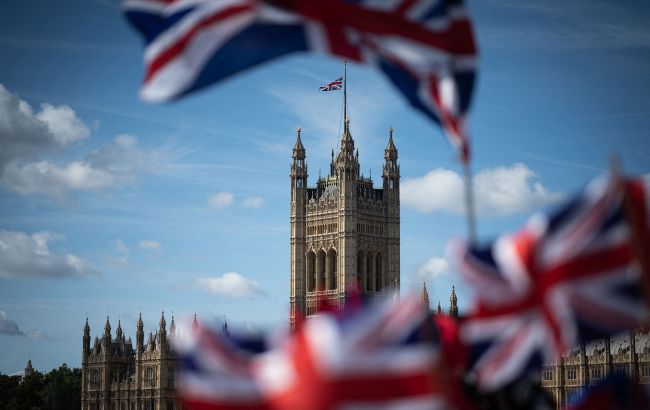 Photo: Getty Images
Local elections are usually seen as a challenge for the leaders of national parties, as they are held every year in different parts of England. Each administrative unit elects its local government at different times, rather than all at once. However, this year’s local elections are exceptional, as not only voters in England will take part, but also residents of Scotland and Wales (voters in Northern Ireland will do so a year later, unless a typical Northern Irish parliamentary crisis occurs). These parliaments were created as a result of the Devolution reforms introduced by the Labour government of Tony Blair in 1997. The Devolution reform was designed to transfer powers from the central government to the nations and regions of the United Kingdom. The devolved parliaments of Wales, Scotland, and Northern Ireland were given authority over areas such as agriculture, education, the environment, healthcare, housing, local government, and certain types of taxation. As a result of this reform, the positions of First Ministers were established to lead the governments of these nations.
This reform is not a form of federalisation, as it might appear at first glance. The parliaments of Northern Ireland, Scotland, and Wales do hold powers, but the House of Commons in London would only require political will to pass legislation abolishing them—something that is not possible in federal states.
The elections to the Welsh and Scottish parliaments may become a triumph for the national parties of these parts of the United Kingdom, marking the first time in history that no UK-wide party would control the legislative bodies of these nations.
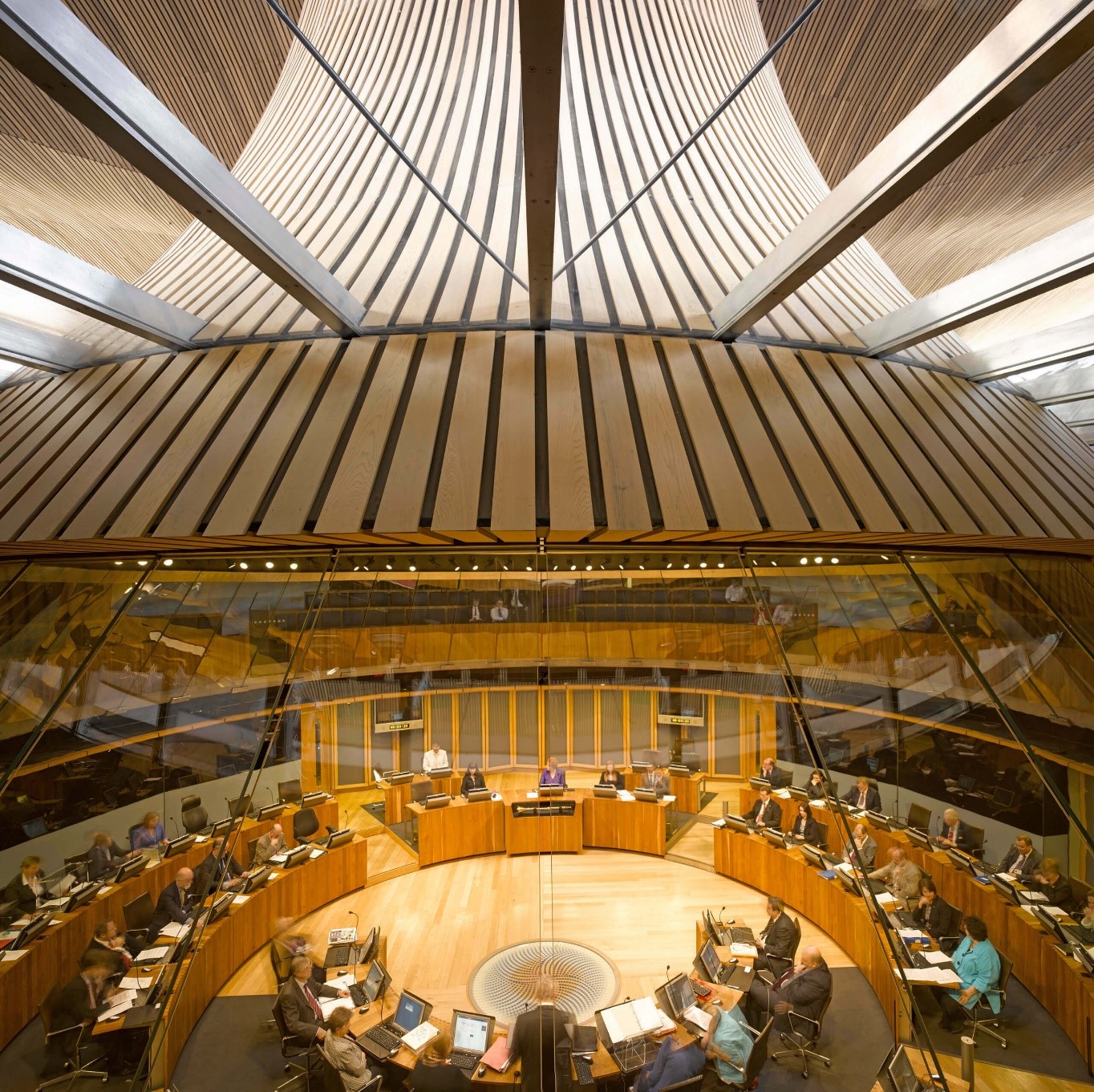 The Debating Chamber of the Welsh Parliament. Source
The electoral system in Wales is unique within the United Kingdom. In 2024, an electoral reform was introduced, increasing the number of Members of the Senedd from 60 to 96. The method of electing members was also changed. Previously, 40 members were elected under a first-past-the-post system, while 20 were elected from party lists. Now, elections will be conducted entirely on the basis of party lists. Wales has been divided into 16 large electoral constituencies. Individuals aged 16 and over are eligible to vote for a single party in their constituency. Based on the results of this election, six Members of the Senedd will be elected in each constituency to represent it. The Westminster first-past-the-post system will be replaced by a system that reflects the share of votes received by each party in each of the 16 constituencies. For example, Scotland and Northern Ireland use mixed electoral systems, whereas members of the House of Commons are elected exclusively under a first-past-the-post system.
Currently, Plaid Cymru and the Welsh branch of Reform UK are competing for the ability to form the government. This has become possible due to a number of factors. The previous First Minister of Wales from Labour, Vaughan Gething, resigned amid a scandal after accepting a 200,000 pounds from a company whose owner had been convicted of environmental offences. He was succeeded by Eluned Morgan, who had previously served as Minister for the Welsh Language. In addition, the decline in the national party’s ratings has also affected its regional branches in Wales and Scotland. It is also worth noting that Wales is an example of the political fragmentation that has spread across the United Kingdom. The two largest parties, Labour and the Conservatives, can no longer expect to finish in first or second place.
According to polls, there is a narrow gap between Plaid Cymru and Reform UK. Plaid Cymru has 28.6% support, while Reform UK stands at 26.4%. The uniqueness of this contest lies in the fact that both parties offer their own form of nationalism. Plaid Cymru is a Welsh nationalist party seeking independence for Wales from the United Kingdom, whereas Reform UK promotes “Britishness” and a general reluctance to challenge London, except on issues such as migration.
A clear example is the attitude toward the Welsh language, the only Celtic language that is still actively used today and one of the central issues for many Welsh people. Reform UK has pledged to cancel plans for the development of the Welsh language, whereas Plaid Cymru has devoted a list of around 1,000 words to outlining how it would support the Welsh language. Reform UK stated that “the Welsh language is central to Wales’s unique identity”, but this impression was somewhat undermined by the fact that two out of the three Welsh words on the manifesto cover were misspelled.
A study by Cardiff University found that Plaid Cymru voters tend to be younger, hold left-wing political views, and identify as Welsh, while supporters of Reform UK are older and identify as “British.”
It is highly probable that no party will win enough seats to govern alone. As a result, they will have to form a coalition. Naturally, Plaid Cymru may form a coalition with Labour, while Reform UK may do so with the Conservatives.
The result of the Senedd elections may serve as a warning signal for the leading parties in the United Kingdom. In case of a Plaid Cymru victory, the parliaments of Wales, Scotland, and Northern Ireland would be controlled by parties seeking separation from the United Kingdom. They would be able to cooperate in order to bring that moment closer. If Reform UK wins, it would mark the greatest victory for Nigel Farage, consolidating his ambitions to become Prime Minister of the United Kingdom after the next House of Commons elections.
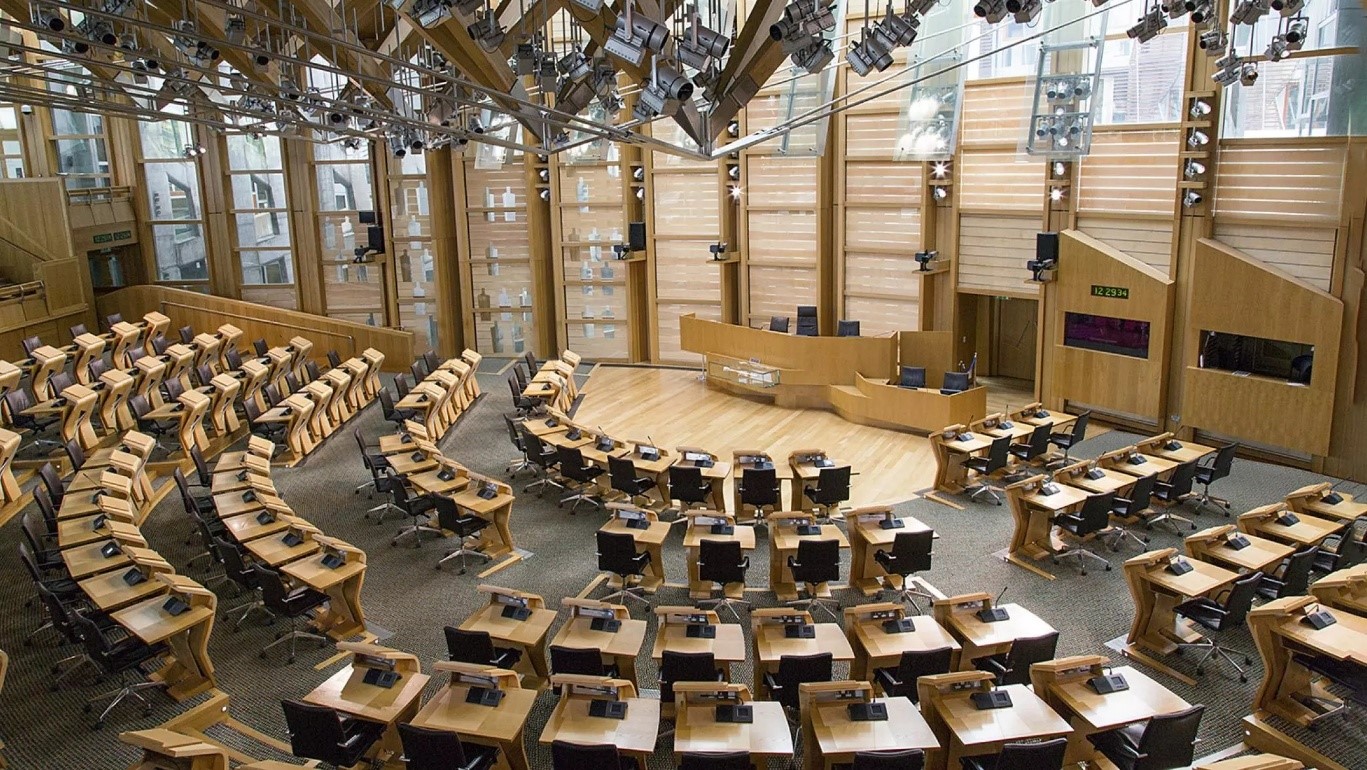 The Debating Chamber of the Scottish Parliament. Source
After its victory in the 2021 elections, the SNP was engulfed in a series of scandals that weakened the party’s support. First, long-serving leader Nicola Sturgeon resigned in 2023 followed by investigations into her and her husband over the party’s finances.
Nicola Sturgeon later spent seven days in custody.
Her successor, Humza Yousaf, also faced problems. His tenure was marked by turbulence and ended in just one year. It is worth noting that this occurred in a similarly turbulent manner. Yousaf publicly and, in a way that was seen as humiliating for his partners, ended the power-sharing agreement with the Scottish Greens, after which the Scottish Conservatives announced that they would table a motion of no confidence in Yousaf. The entire opposition, including the Greens, declared its intention to vote in favour. The arithmetic was on the opposition’s side.
After this, John Swinney took over, having previously led the SNP from 2000 to 2004. He began steering the party out of the crisis.The situation within the Labour Party also worked in his favour.
From May to September 2024, the Scottish branch of the Labour Party was a genuine contender for first place in the polls. Scottish voters predominantly support left-wing parties, and from 1999 to 2007 Scotland was governed by Labour. the House of Commons elections, Labour took 36 of the 57 seats allocated to Scotland from the SNP, making hopes of regaining control of Scotland entirely realistic.
However, the unpopularity of Prime Minister Keir Starmer dealt a significant blow to Scottish Labour. It even reached the point where their leader, Anas Sarwar, called on Starmer to resign. Starmer remained in office, while Labour’s polling ratings in Scotland fell to a level that no longer allows them to secure first place.
The SNP places the question of Scottish independence at the centre of its party programme and therefore insists on the need to win 65 seats—the minimum required for a majority—in order to send a signal to Westminster about Scots’ desire to hold another independence referendum.
In this respect, they have gained an unexpected ally — the Scottish branch of Reform UK. “Reform UK has split the pro-union vote,” noted political science professor John Curtice, who specialises in electoral behaviour. “The rise in Reform UK’s popularity has opened the path for John Swinney’s party to further dominance in Holyrood.”
In the polls, the SNP is clearly dominant, with 35.4% support. Labour and Reform UK are competing for second place, with 18% and 17.4% respectively. However, it is difficult to predict the distribution of seats in the Parliament based on polling figures only due to Scotland’s electoral system. Members of the Scottish Parliament are elected using the Additional Member System. Under this system, voters receive two ballots: one for constituency elections and one for regional elections.
The Parliament consists of 129 Members: 73 constituency Members and 56 regional Members (with 7 regional Members elected to represent each of the 8 electoral regions). The results are then calculated using a formula that takes into account the number of constituency seats won and the regional list vote. The Additional Member System does not always produce a fully proportional outcome, as parties may secure a higher share of seats in the Parliament than their share of the vote.
outright majority. As a result, the SNP has relied on the votes of the Green Party when selecting the First Minister, as the Greens also support independence. Labour, on the other hand, hopes to persuade voters to elect anti-SNP MSPs, thereby making Anas Sarwar the First Minister of Scotland. The only problem is that this would likely require support from Reform UK, and the question of any arrangement with that party has become a sensitive issue for Scottish Labour, as potential cooperation with the far right could undermine Labour’s support ahead of the elections.
A convincing victory for the SNP would give Scottish nationalists the opportunity to demand a second referendum on independence. John Swinney has not yet set out the method by which he intends to achieve such a vote, but has mentioned the possibility of cooperation with Sinn Féin (Northern Ireland) and Plaid Cymru (Wales). For Reform UK, a good result would consolidate its status as a nationwide party. A Labour defeat in Scotland could also bring the question of Keir Starmer’s resignation back onto the agenda.
The elections in Wales will probably to become a demonstration of the decline in Labour Party popularity. According to polling data, Plaid Cymru and Reform UK are competing for the right to govern, with fundamentally opposing views on Wales’s future. Plaid Cymru leans towards Welsh independence, while Reform UK does not seek confrontation with Westminster, except on issues of migration.
In Scotland, weak polling for the UK-wide party has dashed hopes of returning to power. The Scottish National Party is expected to retain first place and further strengthen its rhetoric on achieving independence from the United Kingdom. Labour is set to compete with Reform UK for second place.
If Plaid Cymru wins in Wales, it would mark the first time that the Celtic nations are governed by parties seeking separation from the United Kingdom.
According to the latest polls, the biggest winner of these elections would be Nigel Farage, as his party would consolidate its presence and strengthen its position in politics across the United Kingdom. In addition, he may expect strong results in local elections across England.
You may be interested