 INTERNATIONAL
INFORMATION AND ANALYTICAL
COMMUNITY


+ Join
Support INTERNATIONAL


Mykyta Nosik, an intern at the think tank Resurgam
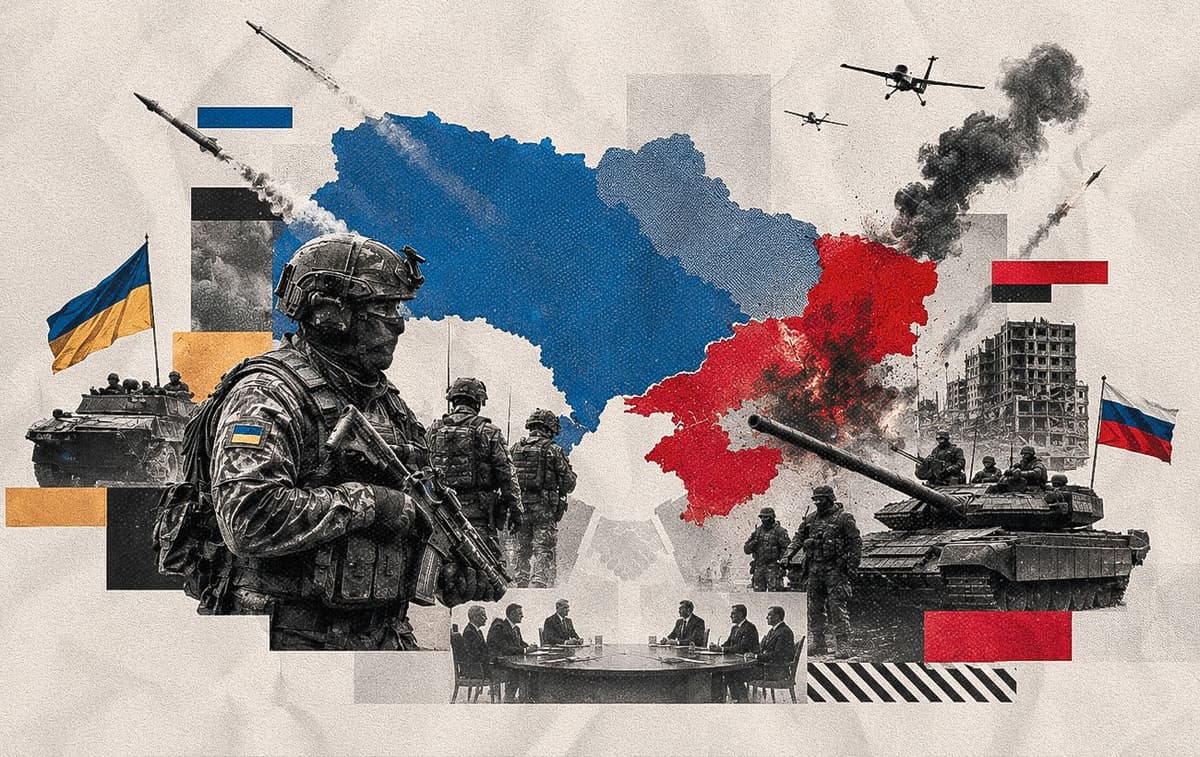
 Collage: УНІАН; Photo: president.gov.ua, ua.depositphotos.com
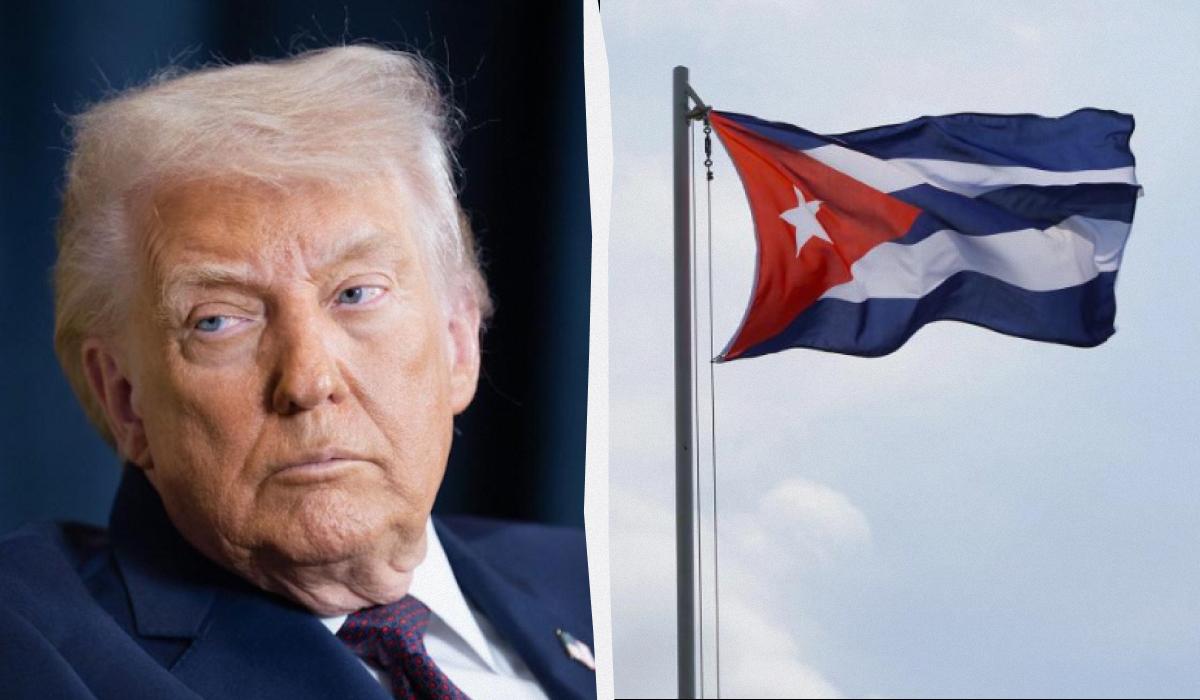
In this context, the Republic of Cuba appears not only as a separate problem case, but also as a stronghold of states hostile to the US. Tough pressure on Cuba, including an economic blockade, sanctions and threats, demonstrates Washington's determination to “reformat the hemisphere”.
The US views Cuba as a potential threat due to its cooperation with China, Iran and transnational terrorist networks, applying economic pressure that sets a precedent for other states in the region and has indirect consequences for Ukraine, particularly in the areas of security and global geopolitical dynamics.
The Cuban issue has become one of the key elements in the implementation of the American security strategy. On 30 January 2026, Donald Trump signed a decree declaring a state of emergency in connection with the actions of the Cuban government, which pose a threat to national security and foreign policy of the United States. The document states that Havana supports hostile states such as Russia and China, as well as terrorist organisations, including Hamas and Hezbollah.
According to the decree, Cuba hosts foreign military facilities on its territory, including the largest radio-electronic intelligence centre outside Russia, and is deepening its security cooperation with China.
In addition, Trump highlighted systematic human rights violations, persecution of political opponents and restrictions on freedom of speech and the press in Cuba.
The Trump administration also announced its readiness to impose additional tariffs on third countries that directly or indirectly supply oil to Cuba. Although the specific parameters of the tariffs have not been determined, the mechanism itself has become a tool for expanding economic pressure beyond the bilateral relations between the United States and Cuba. These measures are mainly directed against Mexico, which in recent years has supplied Cuba with tens of thousands of barrels of oil per day.
A key factor in Cuba's weakening has been the loss of support from Venezuela. After the arrest of Nicolas Maduro, the United States achieved a reorientation of Venezuelan oil flows. Throughout 2025, Venezuela supplied Cuba with an average of about 27,000 barrels of oil per day, covering about half of the country's energy deficit. According to the BBC, experts estimate that around 35,000 barrels of oil exports from Venezuela per day were halted in December due to the US naval blockade of Caracas.
On 11 January 2026, Donald Trump announced that Cuba would no longer receive oil or financial resources from Venezuela, calling on Havana to ‘make a deal before it's too late.’ He also stressed that Venezuela's security is now being provided by the United States.
According to the US Central Intelligence Agency, the loss of Venezuelan oil and other aid threatens Cuba with economic collapse and a deepening humanitarian crisis, as agriculture and tourism are already suffering from frequent power cuts, trade sanctions and other problems, and the country's communist regime, which has been in power since Fidel Castro's 1959 revolution, is finding it increasingly difficult to govern.
In addition to energy pressure, the Trump administration has tightened sanctions against Cuba. On 21 January 2026, the US president reversed the Biden administration's decision to remove Cuba from the list of state sponsors of terrorism. Formally, Biden's decision was part of an agreement to release more than 500 political prisoners, but the new administration viewed it as a concession that was not in the national interest of the United States.
Washington is also considering scenarios for internal pressure on Havana and is looking for potential insiders within the regime. Maduro's capture is seen as a model for action and, at the same time, an implicit warning to Cuba. Although no direct military threats have been made, the rhetoric of Trump and his associates sends a clear signal of their readiness to take radical steps.
The US policy towards Cuba has not only regional but also direct security implications for Ukraine. According to the US State Department, between 1,000 and 5,000 Cuban mercenaries are fighting on the side of the Russian Federation against Ukraine. The document notes that after North Korea, Cuba is the largest supplier of foreign military contingents to support Russian aggression.
However, according to estimates by Ukrainian officials, the number of Cubans in the Russian army could reach 25,000 in the near future, making them the largest foreign contingent on the battlefield, surpassing even the presence of troops from North Korea. Such involvement is beneficial to Russia for several reasons, including preserving its own manpower, minimising internal social risks, and maintaining political stability within the country.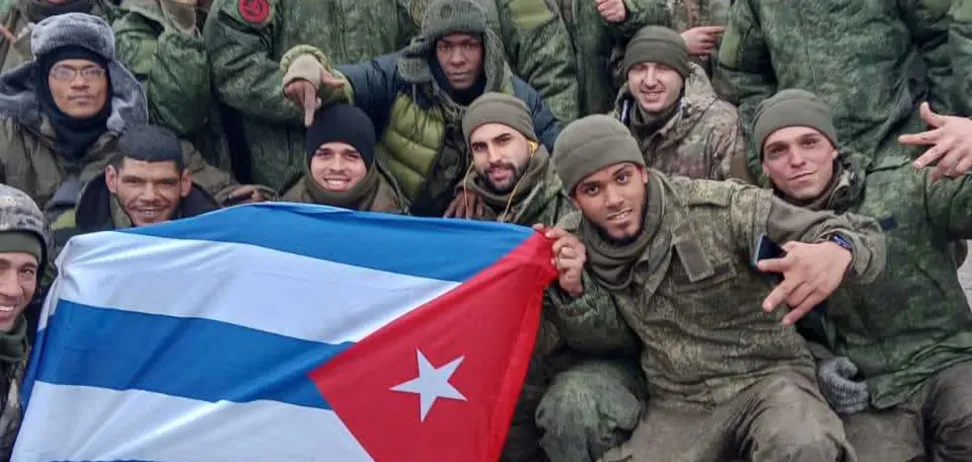 Cuban mercenaries in the Russian army. Source: Wall Street Journal
For many Cubans, the appeal of participating in Russia's war against Ukraine lies primarily in the financial benefits. The Russian side promises payments of around $2,000 per month, which significantly exceeds incomes in their homeland. According to estimates by Christina Lopez-Gottardi, an associate professor at the Miller Center at the University of Virginia, the average salary in Cuba is about $20, and the country itself is experiencing a deep economic and energy crisis, which makes such offers virtually unavoidable for many Cubans.
At the same time, it is reported that thousands of people have already signed contracts to participate in combat operations on the front lines, while some recruits claim that they were misled by being offered jobs at civilian facilities, particularly in construction, but were later sent directly to the combat zone.
Andriy Yusov, a representative of the Main Intelligence Directorate of the Ministry of Defence of Ukraine, speaking to members of the US Congress on 19 September 2025, emphasised that the recruitment of foreigners, including Cubans, is a deliberate strategy of the Kremlin. According to him, the death of foreign mercenaries does not create significant social or political pressure for Russia: there are no obligations regarding social payments, there are no relatives inside the country who could publicly express dissatisfaction with the war, and the number of dead Russian citizens is formally decreasing.
On the other hand, increased pressure from the US on Cuba, combined with economic sanctions, political isolation and signals of readiness for tougher action, could potentially influence the domestic political situation in the country and the behaviour of the Cuban government. In the context of a deep economic and energy crisis, the vulnerability of the regime in Havana is growing significantly, limiting its ability to continue active cooperation with the Russian Federation in the military sphere.
The first scenario assumes that, under increased political and economic pressure from the United States, the Cuban government will engage in negotiations with Donald Trump's administration and agree to a partial or gradual change in its foreign policy. Under this scenario, Havana may commit to limiting or ending cooperation with Russia, China, North Korea and Iran, which Washington considers strategic enemies, especially if cooperation with Russia begins to be seen by the Cuban leadership as a factor posing additional risks to the regime's survival.
Such an agreement between Havana and Washington would also potentially include a reduction in the military and intelligence presence of these countries on Cuban territory. For Cuba, this option could be seen as a way to reduce sanctions pressure and stabilise the domestic economic situation.
For Ukraine, however, such a development would mean a partial reduction in the external human resources that Russia uses to make up for its own losses, or a complete end to their participation in war.
The second scenario envisages a more severe development of events along the Venezuelan model, with the forced removal of Cuba's current political leadership, in particular President Miguel Díaz-Canel. However, this option seems less likely. The events in Caracas in early January sent a serious signal to the regional elites. The Cuban leadership will probably try to avoid a scenario involving forceful intervention or personal risks similar to the fate of Nicolás Maduro. In addition, the direct use of force against Cuba carries significant political and international risks for the United States, which limits Washington's willingness to pursue this option.
Given the current balance of power, the internal vulnerability of the Cuban economy and the political leadership's desire to maintain control over the situation, the first scenario seems more likely. It is the negotiation format, with Havana gradually distancing itself from its strategic partners in Moscow and Beijing, that seems the most pragmatic path for both sides and at the same time creates the conditions for reducing security risks, in particular for Ukraine.
You may be interested