


 INTERNATIONAL
INFORMATION AND ANALYTICAL
COMMUNITY


+ Join
Support INTERNATIONAL


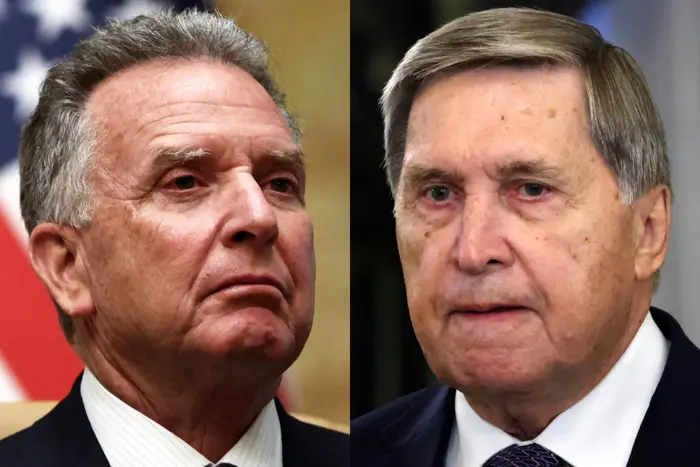
On 25 November 2025, Bloomberg published transcripts of two telephone conversations: between Trump's special envoy Steve Witkoff and Putin's adviser Yuri Ushakov, and between Ushakov and the head of the Russian Direct Investment Fund, Kirill Dmitriev.
In the conversation between Witkoff and Ushakov, which took place back in October, the first advised Putin on how to communicate with Trump. He recommended that Putin congratulate the US president on reaching a ceasefire agreement between Israel and Hamas, and express his respect for Trump as a ‘man of peace.’ Witkoff also suggested organising a telephone conversation between the two presidents before Trump's meeting with Volodymyr Zelensky.
Two days later, on 16 October, Trump and Putin did indeed hold a telephone conversation. According to the Kremlin, Putin began the conversation by congratulating Trump on the situation in Gaza. The next day, 17 October, Trump and Zelensky had a tense meeting.
In a second conversation that took place on 29 October, Ushakov and Dmitriev discussed how tough Moscow should be in presenting its demands in the peace plan. Dmitriev suggested ‘informally transmitting’ Russia’s proposals so that the American side could use them as a basis for its own plan.
In other words, the leak reveals that the 28-point ‘Trump plan’ is actually Russian proposals that were delivered via Witkoff.
Trump predictably began defending Witkoff, calling his actions ‘standard negotiations’. He explained to reporters that Witkoff ‘is doing exactly what a negotiator does’. Trump is justifying Witkoff because he cannot admit that he was wrong. It is still too early to tell whether Witkoff-gate has irritated him greatly in terms of publicity or whether he has been made aware of the risks. But everyone is a bargaining chip for Trump if it harms Trump – no matter if it is Elon Musk or Majorie Taylor Greene.
In Russia, Yuri Ushakov did not deny the authenticity of the recordings, but said that the leak was intended to ‘undermine efforts to improve Russian-American relations’. He suggested that WhatsApp conversations could have been intercepted. Dmitriev, in turn, called the publication fake, adding that ‘the closer they are to peace, the more desperate those who want war are'.
There are several points that cast doubt on the randomness of this leak. Everything indicates that it was done deliberately and at exactly the right time.
1. Maximum sensitivity of the moment. The leak occurred just as attention was focused on the active phase of peace negotiations. On 23 November, consultations took place in Geneva between the American and Ukrainian delegations. The leak created the impression of external influence on American diplomacy just as Trump was trying to position himself as the initiator of a ‘peace breakthrough.’
2. Delegitimisation of Witkoff’s upcoming trip. The publication came after reports that Witkoff would visit Moscow again. The leak effectively calls into question any agreements he may reach during this trip.
3. Political risks ahead of the 2026 midterm elections. Midterm elections to Congress are approaching in the US, and this scandal could seriously damage the Republicans. History shows that scandals involving Russian ties have a serious impact on electoral prospects. For example, the 2017 Flynn case, discussed below, led to lengthy investigations that lasted throughout Trump's first term and caused political damage to his party.
The situation with Witkoff draws parallels with the scandal surrounding Michael Flynn. He was national security adviser in Trump's first administration. Flynn did not last long, as he was forced to resign 24 days after his appointment.
It turned out that he had misled Vice President Mike Pence and other senior officials about his conversations with Russian Ambassador Sergey Kislyak. The Justice Department said at the time that Flynn could be vulnerable to blackmail by Moscow.
As in the case of Witkoff, the key issue was questionable contacts with the Kremlin and possible violations of national security protocols. Both cases raised questions about Russia's influence on American foreign policy.
Bloomberg did not disclose its sources, so we can only speculate as to who might benefit from this.
Possible explanations include:
1. The competition between influential groups in Moscow. There has long been competition in the Kremlin between Lavrov's ‘diplomatic wing’ and Dmitriev's ‘financial and technological group.’ The leak could have been an attempt by one of these groups to discredit the other.
2. Internal political competition in the US. The Trump administration consists of several competing fractions: from hardline ‘hawks’ to supporters of isolationism. The purpose of the leak may be to weaken the position of Trump or Witkoff by showing them to be overly dependent on the Kremlin.
3. European intelligence services. It is important for EU countries, especially in Eastern Europe, to prevent a backroom deal between the United States and Russia behind Ukraine's back. The leak could have been a way to disrupt non-transparent negotiations and force Washington to act in closer coordination with its allies.
4. Ukrainian intelligence. Ukraine has an obvious interest in blocking any peace plan imposed by the Kremlin. The publication was able to highlight the toxicity of Trump's plan and demonstrate Russian influence on Witkoff, which is entirely beneficial to Ukraine.
This leak creates several opportunities for Ukraine and its allies. First, they can try to remove Witkoff from the negotiating track as a discredited person. The most acceptable outcome would be a repeat of the Michael Flynn story, with Witkoff's subsequent resignation and complete removal from the negotiating process.
Trump does not admit his own guilt in appointing Witkoff or the fact that Witkoff is discredited, just as he did not admit it in Flynn's case. But at the end of the year, Witkoff's term as special representative expires, and it is very important that his term will not be extended. In other words, quietly, without admitting guilt or making accusations, it is important that Trump will be ‘advised’ not to extend Witkoff's term.
It is also worth trying to use this scandal to challenge any agreements reached by Witkoff with the Kremlin. It is important to remember that Russia will continue to try to influence the negotiation process through unofficial contacts, including Witkoff. Therefore, the Kremlin will try to save him and keep him in Trump's sphere of influence. Based on this logic, Ukraine and its allies should prevent this from happening.