 INTERNATIONAL
INFORMATION AND ANALYTICAL
COMMUNITY


+ Join
Support INTERNATIONAL



Kateryna Vodzinska, expert at the Resurgam think tank on Southeast Asia and China
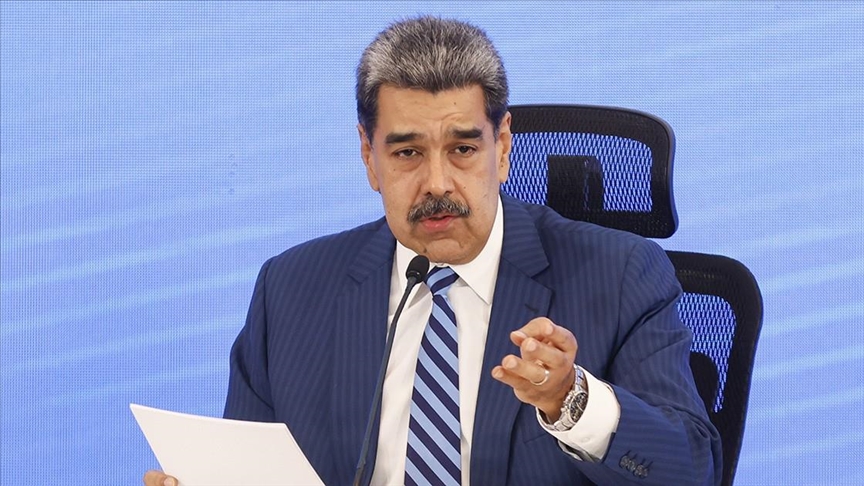 President of Venezuela Nicolás Maduro. Photo: Anadolu Ajansı
The Venezuelan regime of Nicolás Maduro relies on security forces, control over oil revenues, and a narrow circle of loyal elites. Democratic legitimacy has been pushed into the background, and the main criterion for the viability of the system is the ability to ensure minimal social stability and timely financing of the security apparatus.
Sanctions imposed by the United States and a number of Western countries against PDVSA (Venezuela's state oil company) and related structures have sharply narrowed Caracas's ability to work with traditional energy and financial partners. In these conditions, Maduro is forced to rely on a circle of partners who themselves have experience of living under sanctions or are willing to work on the edge of the regime of restrictions. There is a demand for three types of external support.
Firstly, the economic dimension, which includes loans and prepayments for oil, investments in fields and refineries, access to equipment, as well as complex schemes to circumvent restrictions through grey trading networks, cargo mixing and ship re-registration.
Secondly, the security and technological dimension, which includes surveillance systems, digital control tools, unmanned platforms, training for security forces and the transfer of experience in suppressing protests.
Thirdly, the political and diplomatic dimension, which requires votes and support in international organisations, public criticism of sanctions and the legitimisation of Maduro as the legitimate leader of Venezuela. China and Iran fit organically into this framework as key external patrons.
For China, Venezuela is both a resource asset and an element of its broader presence in Latin America. Since the early 2000s, Beijing has provided Caracas with loans tied to oil supplies, which ensured Chinese state banks a return on their investments and Chinese companies access to resources at a discount. After Maduro's visit to China in 2023, the parties announced the strengthening of relations to a comprehensive strategic partnership and a series of agreements in energy and infrastructure. However, most analysts interpret these agreements as a consolidation of Caracas' existing dependence on Chinese resources rather than the start of a new large-scale credit cycle.
China's interests in Venezuela can be broadly divided into three areas. The first is to maintain control over oil and gas assets and maximise the return on previously issued loans through long-term supplies of raw materials. The second is to demonstrate the ability to work with governments that are in conflict with the United States and to strengthen China's influence in Latin America as an alternative centre of power. The third is to minimise risks for Chinese banks and companies in the context of secondary sanctions and general tensions in relations with Washington.
To better understand what Beijing's priority is in Venezuela – economic interests or demonstrating an alternative centre of power in Latin America – we asked Mykyta Simonov, a political scientist and expert on the geopolitical development of China, for his comments:
"It can be assumed that for the PRC, these issues are equally important and complementary. Over the past decade, Venezuela has become a major exporter of petroleum products, which are the main source of income and a "lifebuoy" for the current regime of Nicolás Maduro, while for China, it is a matter of increasing the level of industrialisation, at a minimum to confirm its status as the world's second largest economy, and at most to gain a new and unprecedented leadership position in the context of the long-standing dominance of the United States."
Mykyta Simonov believes that under any US administration, the US seeks to prevent the rise of China, which wants to change the geopolitical balance of power.
"The formation of an alternative centre of power in this region is a more obvious and global goal for the PRC, for which the use of Venezuela is, more likely, a tool within its geopolitical and geo-economic development rather than an independent element of political and economic relations."
The set of support tools from Beijing includes debt restructuring, payment postponements, new credit lines for oil supplies, participation of Chinese companies in the modernisation of depositories, refineries and port infrastructure, as well as the supply of critical equipment for the energy sector. At the diplomatic level, China has already blocked or weakened initiatives to put pressure on Maduro in the UN Security Council, while criticising unilateral sanctions against Venezuelan oil in its official statements.
At the same time, China is acting with extreme caution. The risk of secondary sanctions from the US and Europe is forcing Chinese banks and companies to carefully evaluate transactions related to Venezuela, especially given the parallel pressure for cooperation with the Russian Federation in the energy sector and the field of dual-use technologies. China's growing role in Venezuela's oil and gas sector may also conflict with the interests of Russian companies seeking to maintain their market positions.
Regarding the limits and risks of Chinese support for Venezuela and other sanctioned regimes, Mykyta Simonov adds:
"Relations such as those between China and Venezuela, in my opinion, are based on the cinematic but relevant principle of “strictly business”. A loose interpretation of this could be: minimising political responsibility and maximising economic benefits, in particular through cooperation that allows both sides to circumvent restrictions.
For example, for Somaliland, its infrastructure facility and trade hub that has caught China's eye — the port of Berbera — there is a cooperation scheme in place whereby direct and official contact with the unrecognised state is problematic, but there is the possibility of mediation by the United Arab Emirates, one of Somaliland's main partners, acting through companies such as Dubai Port World. The Emirates play an equally important role in cooperation with Iran, which is subject to sanctions.
Thanks to the mediation of the UAE, China and Iran avoid direct economic relations and, accordingly, the sanctions policy of Western countries. Therefore, it is important to emphasise that, given its global goals, China does not hesitate to use alternative ways to intensify its presence without violating either its own political principles or the norms of international law."
Against the backdrop of domestic economic problems and its focus on Taiwan, Beijing is not interested in spending excessive resources to rescue an economically weak and reputationally toxic partner. Hence the model of controlled patronage, where China helps just enough to protect its own assets and influence, but does not become the main saviour of Maduro's regime.
Iran views Venezuela from the perspective of a country that itself has been living under harsh energy and financial sanctions for decades. Cooperation with Caracas gives Tehran a partner with similar experience and a field for developing joint schemes to circumvent restrictions. Since 2020, Iran has been supplying Venezuela with petrol, condensate and petroleum products, helping to alleviate fuel crises and keep refineries running. The agreement involves exchanging Venezuelan heavy oil for Iranian condensate, which is used for diluting extra-heavy crude.
The energy bloc is complemented by military-technical cooperation and technology transfer. Since the early 2000s, Iran has been helping Venezuela develop its own unmanned platforms based on Iranian models, and open sources report the supply of components and the possible creation of joint production facilities for drones. At the same time, there is an exchange of experience in the organisation of internal control, digital surveillance and the work of law enforcement agencies, which strengthens the Maduro regime's ability to maintain power not only through economic but also through forceful methods.
The financial dimension of cooperation is implemented through intermediary banks, offshore structures, informal payment channels and, probably, the use of cryptocurrencies for payments for oil and services. Some of these schemes have already been the subject of court trials in the US, involving the confiscation of Iranian oil shipments destined for Venezuela. In the information and political dimension, Tehran and Caracas systematically coordinate their rhetoric against unilateral sanctions and promote the narrative of the need for alternative economic and political platforms that allegedly protect the global South from Western pressure.
Despite this, Iran's capabilities remain limited. The country's economy is operating under heavy sanctions pressure, which affects not only oil exports but also transport and financial infrastructure. Tehran is forced to distribute resources between several regional theatres in Lebanon, Syria, Yemen and Iraq and cannot afford to provide unlimited funding for the distant Venezuelan direction. The risk of new sanctions packages for the export of drones, missile components and repressive technologies is an additional deterrent, especially against the backdrop of cooperation with the Russian Federation in the war against Ukraine.
China, Iran, and Venezuela, together with Russia, form a segment of the international system that consistently opposes unilateral sanctions and, in one way or another, softens Moscow's political isolation.
For Ukraine, the main risk lies in the fact that Venezuela is gradually becoming an important hub for sanctions evasion, where oil flows, financial transactions and military-technical components can intersect with the participation of China and Iran. This directly affects the Russian Federation's ability to continue the war, despite formal restrictions on access to Western energy and technology markets. Analytical platforms that monitor energy sanctions note that circumvention schemes involving sanctioned regimes complicate the task of Western regulators to control Russian oil prices and block the Kremlin's revenues.
At the same time, the cautious behaviour of China, which is trying to combine support for Russia with maintaining its image as a responsible global power, leaves room for targeted dialogue between Kyiv and Beijing and with Latin American governments that cooperate with China but do not want to be associated with the most toxic regimes.
In the basic scenario, China gradually expands economic cooperation with Caracas within the existing framework, avoiding high-profile political gestures and a sharp increase in financial risks. There may be an increase in technical assistance in the energy sector and targeted investments, but without new large loan packages.
Iran maintains its current level of participation in the energy, military-technical and financial blocs, using already established oil swap and fuel supply schemes. For Ukraine, this means a further, but relatively slow, complication of the sanctions landscape without any sharp breaks, requiring consistent work on secondary sanctions and control of the grey sector.
The triggers for maintaining this scenario are the absence of sharp crises in China and Iran's relations with the West, a stable internal situation in Venezuela without large-scale uncontrolled protests, and the maintenance of the current level of US attention to other regional challenges.
However, we should not rule out the possibility of the following scenario: Beijing and Tehran take several major steps in Maduro's favour against the backdrop of further deterioration in relations with Washington.
For China, this could mean new investment packages in energy and infrastructure, expansion of credit lines for oil supplies, and more overt diplomatic support in multilateral formats.
For Iran, this could mean increased fuel supplies, the deployment of certain types of weapons on Venezuelan territory, and the complication of financial schemes, making them less transparent to regulators.
You may be interested