 INTERNATIONAL
INFORMATION AND ANALYTICAL
COMMUNITY


+ Join
Support INTERNATIONAL



Maria Hirniak, Junior analyst at the Resurgam think tank, specializing in the Asia-Pacific region.
 Photo: piqsels.com
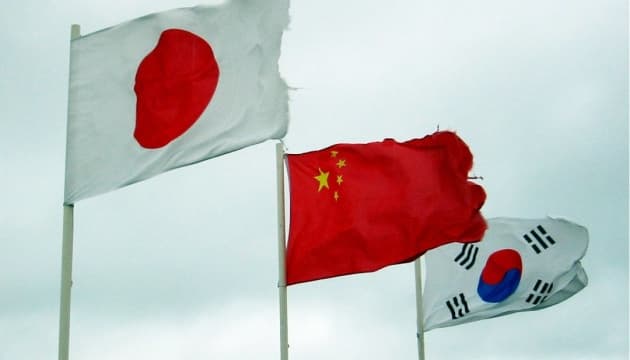
Beijing immediately responded with a wave of harsh rhetoric and demonstrations of force. China condemned Takaichi's words as a ‘dangerous provocation,’ demanded that Tokyo withdraw the statement, and even advised its citizens to refrain from travelling to Japan due to an alleged threat to their safety. In response, Tokyo insists that its policy on Taiwan has not changed and calls on Beijing to be considerate.
Meanwhile, Taiwan thanked Japan for its support and condemned the PRC's reaction as hegemonic. The situation has created a new hotbed of tension in East Asia, where Taiwan finds itself at the epicentre of a fierce confrontation between two powerful states. This confrontation is not only of regional but also of global significance, as it could affect the stability of the international security system, including Ukraine's interests.
Prime Minister Sanae Takaichi's approach to the Chinese threat is based on strengthening the policy of deterrence. She effectively warned Beijing that a forceful scenario against Taiwan could automatically drag Japan into the conflict. Responding to questions from the opposition in parliament, Takaichi gave an example: if China attempts to establish control over Taiwan by force, using military ships and weapons, this will be regarded as a direct threat to Japan's existence. Such actions by Beijing, she said, could create a situation in which Tokyo would be legally obliged to use force in self-defence, even if Japan were not directly attacked.
This legal concept, known as a ‘survival-threatening situation,’ was introduced in 2015 when parliament expanded the Self-Defence Forces' authority to collectively defend allies. However, until now, no Japanese leader has openly linked it to Taiwan, maintaining a cautious silence on this hypothetical scenario. Takaichi broke this taboo by making an unprecedentedly direct hint: a Chinese attack on democratic Taiwan, located only ~110 km from the Japanese island of Yonaguni, would be considered an existential threat to Japan.
Specifying her position, the prime minister explained that Chinese attempts to blockade Taiwan or attacks on American ships coming to Taipei's aid could be grounds for a military response. In fact, this is a scenario in which China, having launched an aggression against Taiwan, simultaneously strikes US forces in the region (the US Air Force base in Okinawa, the US 7th Fleet in Yokosuka, etc.) to restrain any possible American intervention.
In this case, Japan would consider itself indirectly attacked and would use the right of collective self-defence to support its ally. It is important that Takaichi used the legal term ‘survival-threatening situation’ — this emphasises the seriousness of the intention, as such a status opens the way to the legitimate use of military force even without direct aggression against Japan itself.
Takaichi's statement became a kind of test of the new government's resolve. Within Japan, her move caused controversy. Some accused the prime minister of ‘carelessness,’ saying that such an explicit link between Taiwan's security and Japan's national security violates wise ambiguity and could provoke Beijing. Even the defence minister in her government cautiously noted that such decisions should be made collectively on the basis of all the data, rather than as the prime minister's personal opinion. Takaichi explained that she was describing the ‘worst-case scenario’ purely as her own assessment in response to a hypothetical question. Ultimately, under pressure from critics, she assured that she would avoid making further comments of this kind in parliament so as not to exacerbate the situation.
However, the message was clear: Japan will no longer stand by silently and watch China's potential aggression against Taiwan. From now on, Tokyo's strategy - direct preventive communication with Beijing about its readiness to respond, supported by the increase of its own forces and allied commitments.
Official Beijing reacted extremely hostile to Japan's new position. The Chinese authorities launched a diplomatic and informational counteroffensive, trying to force Tokyo to change its rhetoric. The Chinese Foreign Ministry accused Sanae Takaichi of making ‘false and dangerous statements that infringe on China's territorial integrity and promote military intervention,’ repeating the mantra that Taiwan is an internal matter for China. Chinese representative Lin Jian issued an ultimatum demanding that Japan ‘stop provocations, not cross red lines, and not go down the wrong path.’ At the same time, diplomats at another level were also involved: the Consul General of the PRC in Osaka literally threatened on social media to ‘cut off the dirty neck that sticks out,’ referring to Japan.
The diplomatic war was also gaining momentum. For the first time in two years, China summoned the Japanese ambassador, expressing its ‘strong protest’ against Takaichi’s statements. In response, the Japanese Foreign Ministry also summoned the Chinese ambassador and handed him a note of protest against the Chinese consul’s undiplomatic remarks. Beijing publicly expressed outrage that Tokyo's position violated the spirit of the 1972 Joint Communiqué (when Japan recognised the PRC government as the sole legitimate government of China and ‘understands and respects’ Beijing's position on Taiwan). Although the Japanese government assured that it adheres to the agreements of the 1970s and seeks a peaceful resolution to the Taiwan issue, the Chinese side insisted on an official retraction of Takaichi's words. Since the Japanese prime minister has no intention of doing so, the conflict has reached an impasse, and Beijing has decided to raise the stakes.
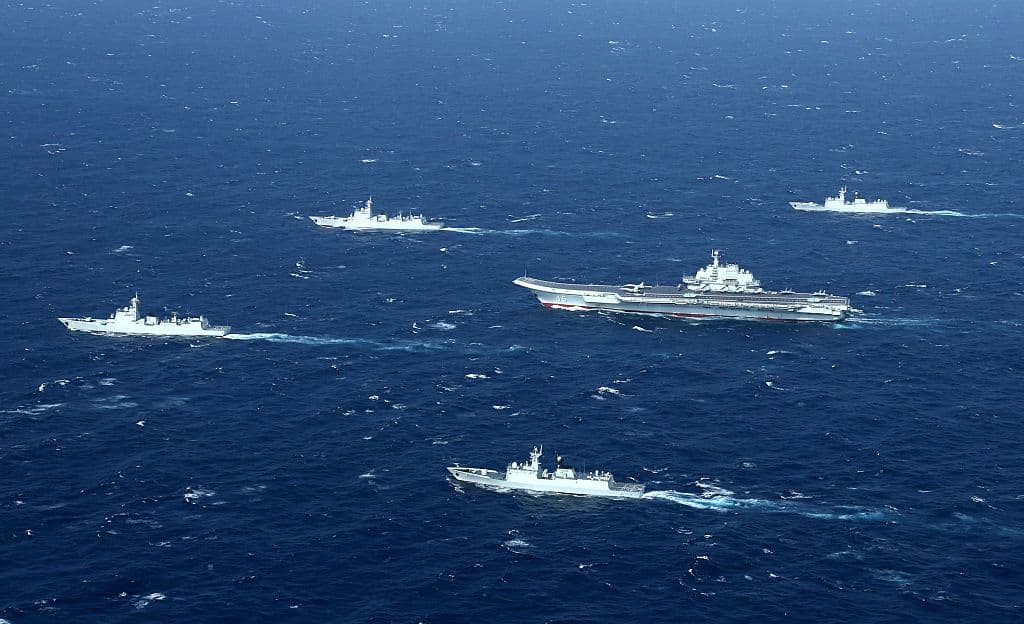
China added a show of force in the region to its political pressure. Immediately after the scandal broke, Beijing announced live-fire exercises in the Yellow Sea near the Chinese coast, apparently as a signal of its readiness for decisive action. A few days later, Chinese coast guard patrol ships entered the territorial waters of the disputed Senkaku (Diaoyu) Islands in the East China Sea. These uninhabited islands are controlled by Japan, but China disputes their ownership, and incidents there have been occurring for a long time – however, their recent intensification is directly linked to the Taiwan dispute. The Chinese side has stated that the ‘patrols to ensure rights’ around the islands are legitimate on its ‘sovereign’ territory.
At the same time, Chinese drones were spotted near the Japanese border. In particular, on 16 November, Japan raised fighter jets for interception after a Chinese drone flew between Taiwan and Yonaguni Island (the westernmost point of Japan). The Taiwanese defence ministry also reported the appearance of up to three Chinese military drones flying in the area between Taiwan and the Japanese islands in the northeast, approaching Yonaguni. Although such flights have occurred before, their deliberate execution at this particular time emphasises that Beijing wants to remind Tokyo of the vulnerability of its remote territories.
The PRC has also used economic leverage. The Chinese Ministry of Culture and Tourism has issued a warning to Chinese citizens to refrain from travelling to Japan, citing the ‘unstable situation’ and the alleged rise of anti-Chinese sentiment. Several major Chinese airlines have announced that they will refund tickets to Japan free of charge or allow passengers to change their destination. Such measures do not directly prohibit travel, but they create an atmosphere of fear and could significantly impact the Japanese tourism industry.
Economists point out that during the previous crisis in relations (over the same Senkaku Islands in 2012), the flow of Chinese tourists to Japan fell by 25%, costing the country about half a percent of its annual economic growth. Now the situation may repeat itself or even worsen, given the greater dependence of some sectors of the Japanese economy on the Chinese market. Moreover, Beijing has begun to target education, with the Chinese authorities recommending that their students ‘think carefully’ about studying in Japan due to the allegedly dangerous situation.
Sanae Takaichi's strict rhetoric is backed up by real changes in Japan's defence policy. Even before she came to power, Tokyo had decided to significantly strengthen its military capabilities in response to the growing threat from China and North Korea. In 2022-2023, the previous government approved an updated National Security Strategy, which explicitly named China as an ‘unprecedented strategic challenge’ for Japan, and also decided to double the defence budget to 2% of GDP over five years. This is a revolutionary step for a country that has adhered to its unspoken limit of 1% of GDP for defence for decades.
One of the key elements of the strategy to restrain China is to strengthen the defence of Japan's southwestern islands, located near Taiwan. These are the Nansei Islands (Okinawa and smaller islands), in particular the islands of Yonaguni, Miyako, Ishigaki, etc. In recent years, Japan has significantly strengthened its military presence there. In 2016, a new Self-Defence Forces base with a radar station for monitoring the situation was opened on Yonaguni, deploying electronic warfare and surveillance units.
In 2023-2024, Patriot PAC-3 air defence missile batteries were deployed on the neighbouring islands of Ishigaki and Miyako. Now there are plans to deploy new units with long-range missiles on Yonaguni, and a small local airfield and port are being expanded to accommodate larger military ships and aircraft.
In fact, this tiny island community (less than 1,500 inhabitants) is turning into an outpost in case of a Taiwan crisis, despite local disputes over the militarisation of the island. As journalists aptly put it, the former exotic paradise for divers and tourists has become a ‘military stronghold’ on the front line of a potential conflict. This clearly illustrates the shift in Japan's defence doctrine, with priority now given to the south-western direction, whereas previously the focus was on northern threats (Russia) and, in general, on defending the main islands.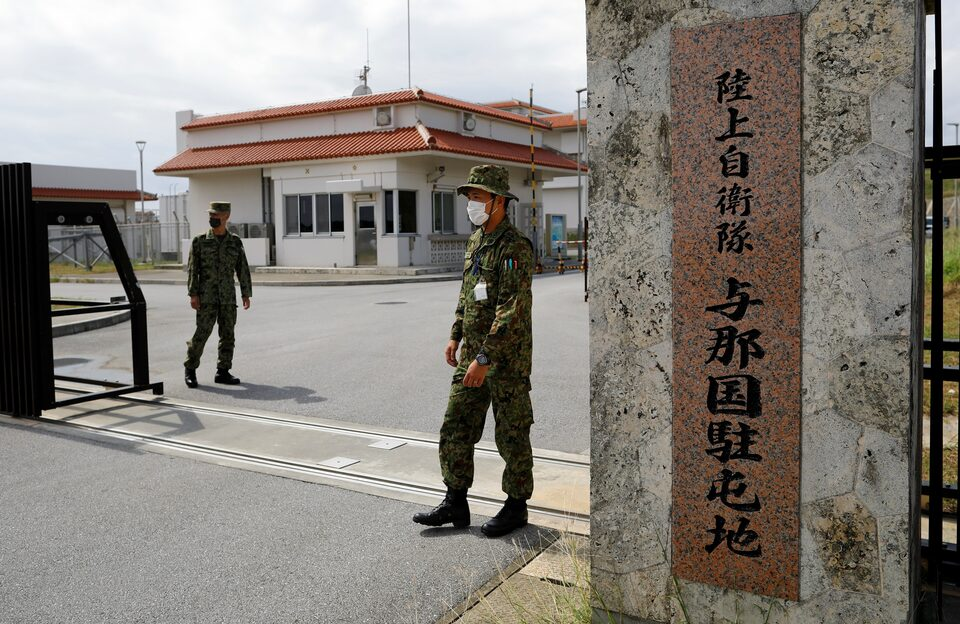 Soldiers of the Japan Ground Self-Defense Force stand at the entrance gate of their base on Japan's westernmost inhabited island of Yonaguni, Okinawa Prefecture, on 26 October 2021. Source: Reuters
Japanese forces are actively training for possible scenarios around Taiwan, in close coordination with the United States. In October 2025, the Nansei Islands hosted large-scale joint exercises called Resolute Dragon with the participation of the US Marine Corps, where the transfer of American missile units to small islands was practised to deter the PLA Navy (People's Liberation Army Navy). The US is deploying the latest radar systems on these islands and plans to equip them with anti-ship missiles integrated into a common network with Japanese forces.
Thus, a single line of defence is being formed, the ‘first island chain’ – from Japan through Taiwan to the Philippines – designed to keep the Chinese navy and air force as close to the mainland as possible. Tokyo realises that without Japanese territory and infrastructure, effective defence of Taiwan by the United States would be extremely difficult. Bases in Japan (especially in Okinawa and Kyushu) are indispensable for the deployment and supply of American forces in the event of a protracted conflict over Taiwan.
Therefore, the Japanese command is preparing to act as a united front with the United States: as one analyst noted, ‘no conflict over Taiwan can be local — it will immediately become Japanese-American-Chinese.’ With this in mind, over the past year, Japan and the US have revised their operational plans for a ‘Taiwan contingency,’ established a bilateral coordination group, and conducted a series of command post exercises to clearly define roles in the theatre of operations (The Pentagon expects the Japanese to take on flank protection and logistical support for operations around Taiwan, as well as the defence of Japanese territory itself from possible Chinese strikes).
The current muscle-flexing around Taiwan demonstrates how dangerous it is to balance on the brink of conflict between two Asian giants. On the one hand, Japan's clear position is intended to deter Chinese ambitions – Beijing now understands that an attack on Taiwan would almost certainly lead to war with Japan (and therefore with the US), i.e. it would turn into a wider regional conflict. This raises the stakes for the PRC and may force its leadership to think twice before using force.
Western analysts believe that Takaichi ‘did everyone a favour by curbing Chinese arrogance,’ as her sincerity reinforces the status quo. Taiwan's position also supports this logic: the island's official authorities openly welcomed Takaichi's statements, calling them a strong signal of support against the PRC's aggressive assaults. It is also beneficial for Washington that Tokyo shares the burden of deterrence: American officials have unofficially encouraged Japan to take a less ambiguous position on Taiwan, and now it seems that this has happened. Thus, the alliance of democracies in the Indo-Pacific region is consolidating, sending a signal to Beijing about its unity.
On the other hand, the risks of escalation have also increased. The Chinese side is already conducting dangerous manoeuvres – drone flights, the entry of armed coast guard ships into disputed waters – which are not technically acts of war, but could easily lead to an incident. For example, an accidental collision between a Chinese vessel and a Japanese coast guard patrol near Senkaku, or a drone crash over the disputed area, could provoke a local crisis. Both sides are now highly sensitive: the Chinese military has been ordered to respond harshly to ‘provocations,’ while the Japanese Self-Defence Forces have been instructed to maintain a defensive posture and prevent violations of sovereignty. This creates a situation where a mistake by a pilot or ship captain could have disproportionate consequences.
The diplomatic channel for reducing tensions seems to be working poorly – no high-level meeting is currently planned (the Chinese side refused to hold talks between Prime Minister Takaichi and Premier Li Qiang of the State Council of the People's Republic of China at the G20 summit). Although both sides assure that the channels of communication are ‘open,’ in reality they are exchanging demands rather than compromises. This means that tensions could continue for months or even years until someone takes a step towards compromise or, in the worst case, until the crisis erupts into a more serious incident.
The economic consequences of the confrontation are also cause for concern. The vulnerability of the relationship was demonstrated by the market reaction: in Tokyo, shares in tourism and retail companies began to fall amid news of a possible decline in Chinese tourism (some retail chains lost more than 10% of their value in a single day). Japanese businesses have been hit twice: on the one hand, there is the fear of sanctions or informal boycotts by China (as was the case in 2010 and 2012), and on the other, their own government is increasingly restricting technological cooperation with China for national security reasons.
If the confrontation drags on, Japanese companies will have to accelerate the ‘diversification’ of their production and supply chains, reducing their dependence on Chinese factories and markets. On the one hand, this is in line with the trend of ‘economic decoupling,’ but on the other, it could hit the regional economy as a whole. With the world still recovering from the pandemic and the impact of full-scale war in Ukraine, a major conflict or protracted cold war in East Asia could trigger a global recession or financial turmoil.
The military dynamics are also dangerous. Under Xi Jinping's leadership, China is rapidly modernising its army and makes no secret of the fact that it is preparing for a forceful scenario regarding Taiwan by 2027 (according to the US, the Chinese military has received such an order). Although many experts consider this date to be more of a domestic political signal than a fixed deadline, the window of opportunity for the peaceful reunification of Taiwan is narrowing from Beijing's point of view. Taiwan is increasingly integrating into the global coalition of democracies, arming itself with Western weapons, and, after the Ukrainian experience, strengthening its own defence and will to resist. China may conclude that hesitation only complicates military action. For its part, Japan's firm stance, while restraining China, may in the long run accelerate Beijing's decision to act before the US-Japanese military potential becomes too strong. In any case, Japan's role is now clearly defined: it is no longer a mere spectator in the Taiwan issue, but a key player whose actions and position will determine how the situation develops.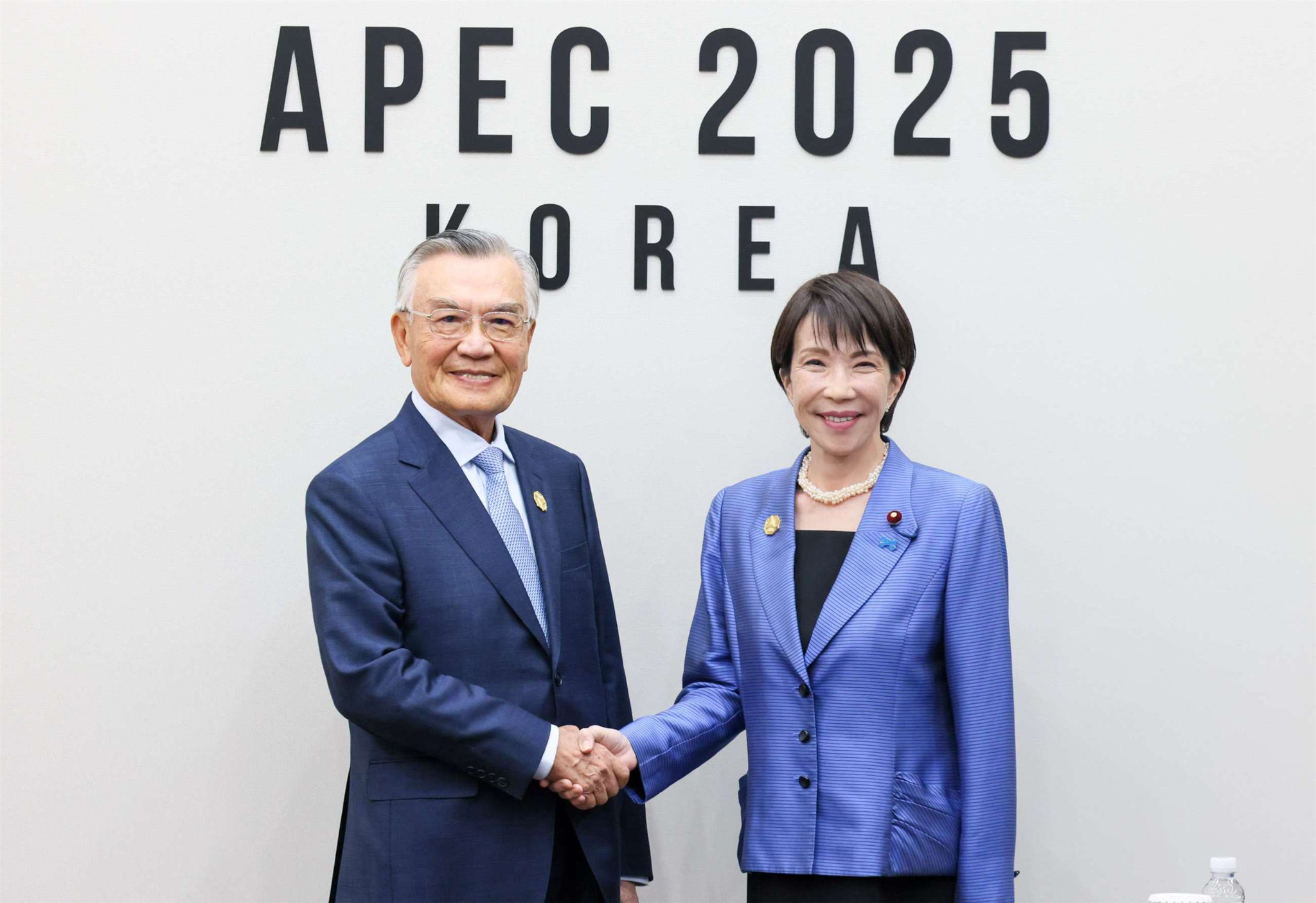 Meeting between Sanae Takaichi and Taiwanese Presidential Advisor Lin Xin-yi at the Asia-Pacific Economic Cooperation, 2025. Source: RTI
The situation in East Asia poses potential threats to Ukraine. The most obvious risk - is the redirection of attention and resources of the US and its allies in the event of an escalation around Taiwan. For example, the US may increase supplies of modern weapons to Taiwan and Japan, while there will be less free capacity for Ukraine. Already, a significant number of US Navy and Air Force assets are tied to the Pacific Ocean because of the Chinese factor – these are equipment and budgets that could strengthen the deterrence of Russia in Europe, but are forced to be held against China. If the situation escalates, the Ukrainian front may become less of a priority in the eyes of the Western public: the media will focus more on the confrontation between the two economic giants (China and Japan/the US), and the war with Russia will take a back seat, making it more difficult for Ukraine to keep the issue in the headlines and motivate its partners.
Another threat is the strengthening of cooperation between Moscow and Beijing in response to pressure from their common enemies. If China feels a growing military threat from the US and Japan, it may be more inclined to openly side with Russia in its confrontation with the West. This could theoretically lead to greater military assistance to Moscow. For example, in order to weaken its Western competitors, Beijing may begin to secretly supply Russia with ammunition or technology, hoping that this will tie up more NATO forces in Europe and distract them from Asia.
In addition, any large-scale crisis in Asia will hit the global economy and, consequently, indirectly affect Ukraine. For example, if military action or a blockade disrupts shipping in the South China Sea or the Taiwan Strait, global supply chains will suffer, from microchips to oil. This could trigger a new round of inflation, a decline in production, and shortages of goods. For Ukraine, whose economy is already weakened by war, a new global shock would mean fewer export opportunities, less investment, and poorer financial support. The Ukrainian budget already depends on international aid, which is provided largely thanks to a relatively stable global economy. A global crisis caused by conflict in Asia could force donors to rethink their priorities. China is also a huge market and source of finance for many countries – if the West enters into confrontation with it, some states may stand aside or pressure Ukraine and Russia to end their war more quickly in order to free up resources to combat a greater threat.
However, there are also opportunities opening up for Ukraine in the context of the Chinese-Japanese confrontation. First of all, Ukraine can count on further strengthening its relations with Japan as a strategic partner. In the face of threats from China, Tokyo is actively seeking allies and like-minded partners around the world. Ukraine, which is resisting Russian aggression – China's ‘Asian friend’ – is viewed with great sympathy and respect in Japan. Kyiv can use this to expand bilateral cooperation – for example, by inviting Japanese investment in reconstruction, agreeing on the participation of Japanese specialists in strengthening Ukrainian cybersecurity or countering disinformation (Japan has expertise in these areas and is also threatened by cyberattacks and propaganda from China).
Military-technical cooperation could be particularly promising. Japan has had very strict restrictions on arms exports, but is now gradually easing them – first allowing the transfer of defence equipment (e.g. vehicles, drones), and from 2024 planning to allow the export of lethal defence weapons to allies. Ukraine could become one of the first recipients of Japanese defence technologies if Tokyo decides that this will not only help Kyiv but also weaken the Russian military machine, which is distracting the West from Asia. For example, Japanese kamikaze drones or electronic warfare systems could be useful on the front lines, and at the same time, testing them against Russian targets would give Japan valuable experience (after all, the Russian army uses a lot of tech that could potentially be used by China too). Of course, there are diplomatic nuances here – the direct transfer of weapons to Ukraine may still be perceived by Beijing as Japan crossing a ‘red line’, but if the threat from China continues to grow, the Japanese may disregard China's dissatisfaction.
From a geopolitical point of view, the situation surrounding Japan and China opens up space for Ukraine to pursue multi-vector diplomacy. Kyiv can continue to balance its relations with Beijing, exploiting its fear of Ukraine's overt rapprochement with the anti-Chinese coalition. Beijing is currently interested in preventing a complete victory for the US and its allies, both in Ukraine and in a potential Taiwan conflict. This may encourage China to at least maintain a certain neutrality towards Ukraine (at a minimum, not supplying weapons to Russia). Ukraine can emphasise to China that it is grateful for some peace initiatives and humanitarian aid, stressing that it does not take sides in the Taiwan issue. Such cautious neutrality allows Ukraine to avoid becoming a political target for the PRC. At the same time, Ukraine can have close relations with Japan ‘behind the scenes’ without overly publicising their anti-Chinese dimension. For example, cooperation in the field of cybersecurity or armaments can be publicly positioned as general, not directed against third countries.
Ultimately, it should be remembered that the strategic goals of aggressive regimes are interrelated. China's success or failure in Taiwan will affect Russia's plans for Ukraine, and vice versa. Therefore, Ukraine has an objective interest in the success of the containment strategy in Asia. Japan's firm position, supported by its allies, is in fact a continuation of the global battle for the supremacy of international law, of which Ukraine's fight is a part. Ukrainian diplomacy has already expressed its support for Japan in its territorial disputes with the Russian Federation (the Kuril Islands), so why not support Japan's right to defend itself in the event of aggression by the PRC? Especially when Japan is effectively standing up for a weaker neighbour (Taiwan) in the face of a stronger one. This is very similar to our situation. Of course, Ukraine will not have to intervene directly, but the moral and political dimension is important.
You may be interested