 INTERNATIONAL
INFORMATION AND ANALYTICAL
COMMUNITY


+ Join
Support INTERNATIONAL



Danylo Vovchenko, political observer of the Indo-Pacific region, exclusively for Resurgam
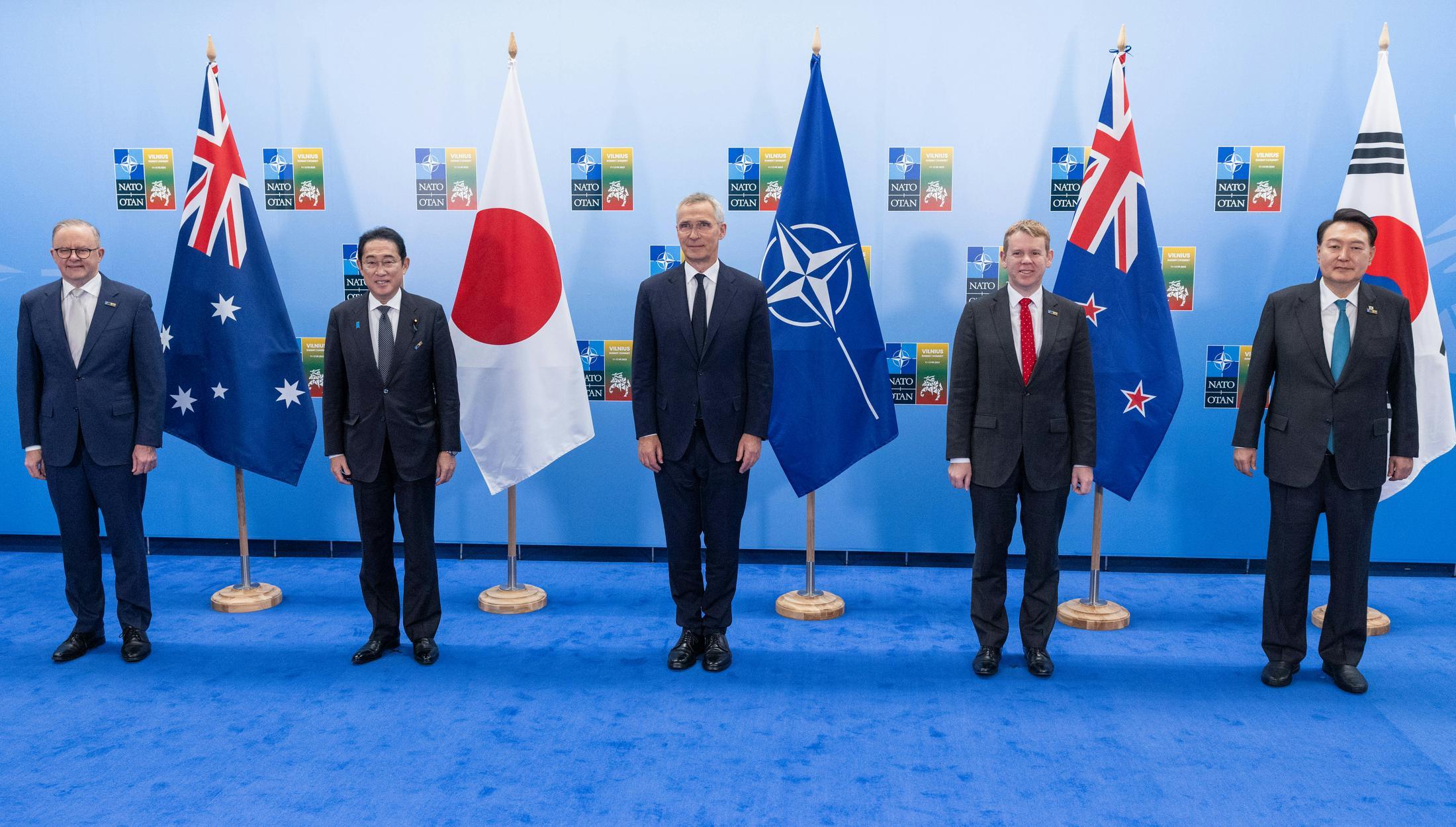 Official photo of NATO Secretary General Jens Stoltenberg with leaders of NATO partner countries from the Indo-Pacific region at the Vilnius Summit on 12 July 2023. From left to right: Australian Prime Minister Anthony Albanese, Japanese Prime Minister Fumio Kishida, NATO Secretary General Jens Stoltenberg, New Zealand Prime Minister Christopher Hipkins, President of the Republic of Korea Suk Yeol Yoon. Source: NATO
An attempt to implement this project was made in 1954, when SEATO (South-East Asia Treaty Organization was founded. However, this initiative failed to achieve the scale and structure of NATO due to disagreements among the members of the organisation. That is why the issue of security in the Asia-Pacific region remained relevant for several decades.
In the current context, against the backdrop of growing threats from China and other autocracies, the issue of engaging key US partners outside NATO in the Asia-Pacific region has taken on new significance. Strengthened economic, military and political cooperation based on exclusive agreements has made it possible to renew purely informal agreements, which were reinforced by a symbolic but important gesture – inviting representatives of Australia, New Zealand, South Korea and Japan to the 2022 NATO summit in Madrid.
The revival of the project to build a clear security architecture in the Pacific region took place with the direct assistance of the administration of Joe Biden, the 46th President of the United States, who emphasised the importance of deepening cooperation between NATO and the IP4 (Indo-Pacific Four) countries.
This aspect is very important, especially given the change in the foreign policy course of the United States with the arrival of Donald Trump to power.
Ukraine has a clear interest in establishing a stable and reliable security architecture in the Asia-Pacific region, given the potential for long-term cooperation with countries in this region, in particular Australia and New Zealand, which provide political, military and humanitarian assistance in the fight against Russia.
The idea of creating a ‘Pacific NATO’ has deep roots, but it is Australia and New Zealand – as members of the Commonwealth of Nations (an association of independent states that were part of the British Empire) – that have consistently played a decisive role in shaping the security architecture in the region. They were the first countries outside the Euro-Atlantic area to seek the expansion of a collective security system modelled on NATO.
In 1951, the first ANZUS (Australia-New Zealand-United States) security treaty was signed, providing for mutual assistance in the event of an attack on one of the member states in the Pacific Ocean, thus becoming the Pacific echo of the transatlantic collective security system. The ANZUS pact was concluded by analogy with NATO in Europe, but differed significantly in its organisational structure and the scope of mutual obligations in the event of assistance during an armed attack (which were more limited for ANZUS itself).
In 1955, the Southeast Asia Treaty Organisation (SEATO) was established as a result of the signing of the Manila Treaty. It included eight states: the United States, Great Britain, France, Australia, New Zealand, Pakistan, Thailand and the Philippines. Formally, the organisation was supposed to be the Asian equivalent of NATO, but from the beginning, it differed from it in SEATO's lack of institutional structure, integrated military command, and coordinated defence strategy.
The main objectives of SEATO were:
to restrain the spread of communist regimes in Southeast Asia;
to ensure collective defence in the event of external aggression;
to support political stability and economic development in the region;
preserving the strategic positions of Western countries, in particular the security of sea routes and the geopolitical influence of the United States and its allies.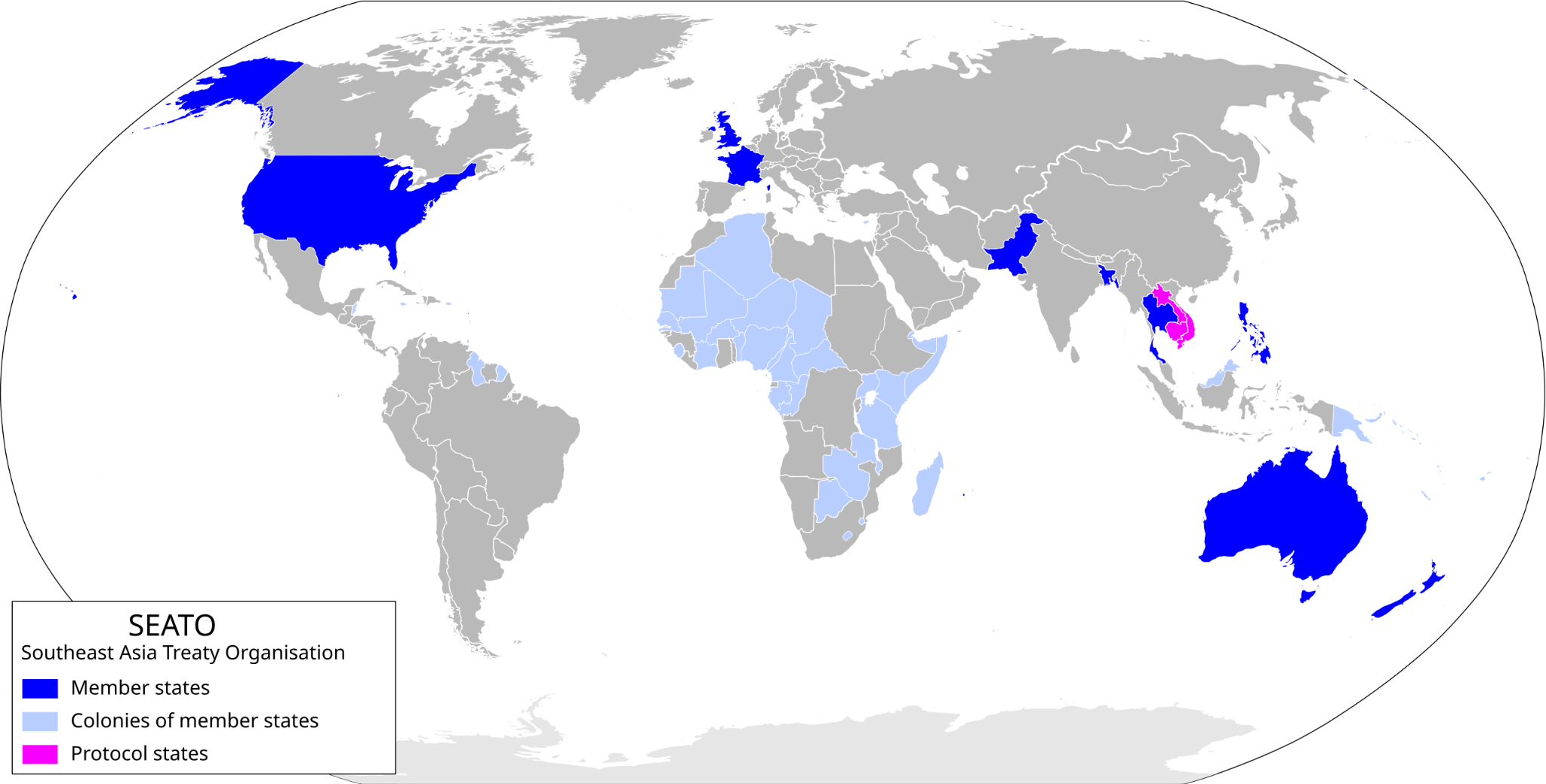
At the same time, numerous contradictions emerged in the functioning of SEATO, which eventually undermined its viability. Firstly, the members of the organisation had varying levels of interest in joint action: the United States viewed SEATO as a tool in the fight against communism (especially in Vietnam), while France and Great Britain remained relatively passive. Secondly, the absence of a unified military mechanism and real collective security guarantees made the organisation ineffective. Thirdly, many countries in the region (Indonesia, Myanmar, Malaysia, Singapore) did not join the pact, which called into question its representativeness. Finally, the US's loss in the Vietnam War ultimately undermined confidence in SEATO's ability to fulfil its objectives.
As a result of these factors, the organisation was officially terminated in 1977. At the same time, it should be noted that the same common interests – ensuring regional security, countering external influences and protecting strategic communications – remain relevant today, despite significant geopolitical changes over the past half-century.
Australia and New Zealand had a distinctive feature when compared to other countries in the Asia-Pacific region. This was their active position not only at the regional level, but also within the Commonwealth of Nations itself, which allowed them to maintain close military, political and cultural ties with their former metropolis - Great Britain. This similarity gave them a specific ‘double face’: on the one hand, they were oriented towards the United States as a strategic partner in security and trade, and on the other hand, they were historically and politically integrated into the Commonwealth system.
Yet, the shared historical and political space did not prevent the crisis of the 1980s within the ANZUS security agreement, during which New Zealand changed its nuclear policy, thereby ending its security cooperation with the United States. This refers to a series of legislative acts adopted in 1984-1987 that prohibited ships carrying nuclear weapons or powered by nuclear power plants from entering New Zealand ports. This position was part of a broader strategy to declare New Zealand a ‘nuclear-free zone,’ which directly contradicted the position of the United States, which traditionally did not disclose whether its military ships carried nuclear weapons. This led to a freeze in military cooperation between Wellington and Washington within the ANZUS framework.
Australia, in turn, continued its active cooperation with the United Kingdom and the United States, which developed further in the future. However, after these events, the project of a military-political alliance in the Pacific region dropped off the agenda for many decades, due to both the absence of real threats and the end of the Cold War.
A new push to expand cooperation only came during President Joe Biden's administration. In 2021, the AUKUS agreement was signed, linking Australia, the UK and the US. This was the clearest example of the renewal of the Anglo-Saxon strategic partnership against the backdrop of growing threats in the region.
AUKUS has a number of key objectives:
the transfer of military technology and the development of defence-industrial cooperation between the three countries;
assistance to Australia in creating its own fleet of nuclear submarines, which significantly changes the balance of power in the Indo-Pacific region;
development of joint capabilities in cybersecurity, artificial intelligence, quantum technologies and underwater systems;
deepening military integration between the US, Britain and Australia to ensure freedom of navigation and restrain China's growing military presence.
Thus, AUKUS has become not only a defence alliance, but also an instrument of long-term strategic rethinking of the role of Anglo-Saxon states in ensuring security in the Indo-Pacific region.
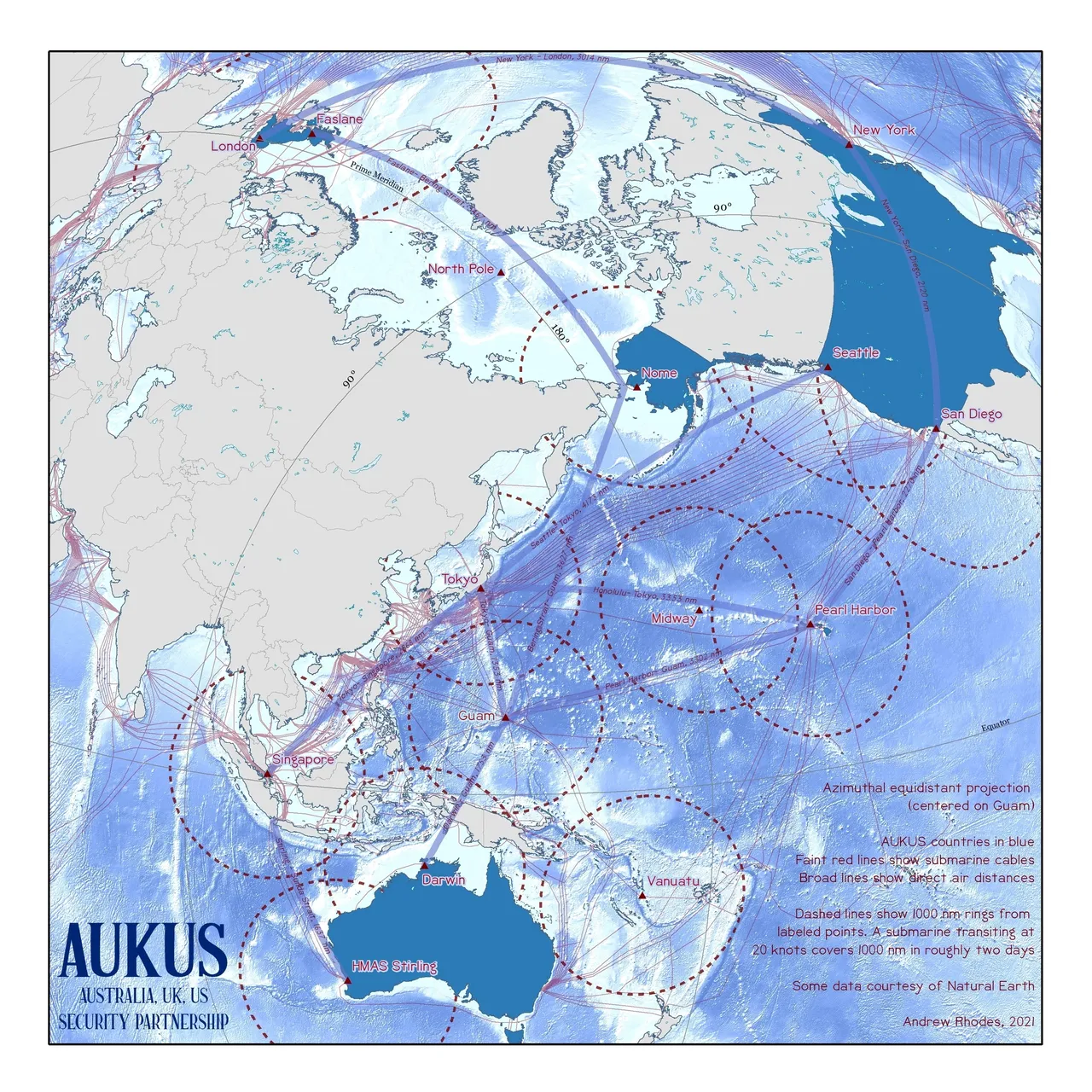 AUKUS MAP. THINKING IN SPACE
For many years, New Zealand distanced itself from these issues, but in recent years, the country has begun to show a certain willingness to act in the direction of strengthening regional security. New Zealand's direct participation in NATO summits from 2022 to 2024 demonstrates this determination.
Thus, the historical contribution of Australia and New Zealand to the formation of the regional security architecture cannot be separated from their membership in the Commonwealth of Nations and their close ties with the United Kingdom. These countries have become a bridge between Europe and the Asia-Pacific region, laying the foundation for the current discussion about a ‘Pacific NATO.’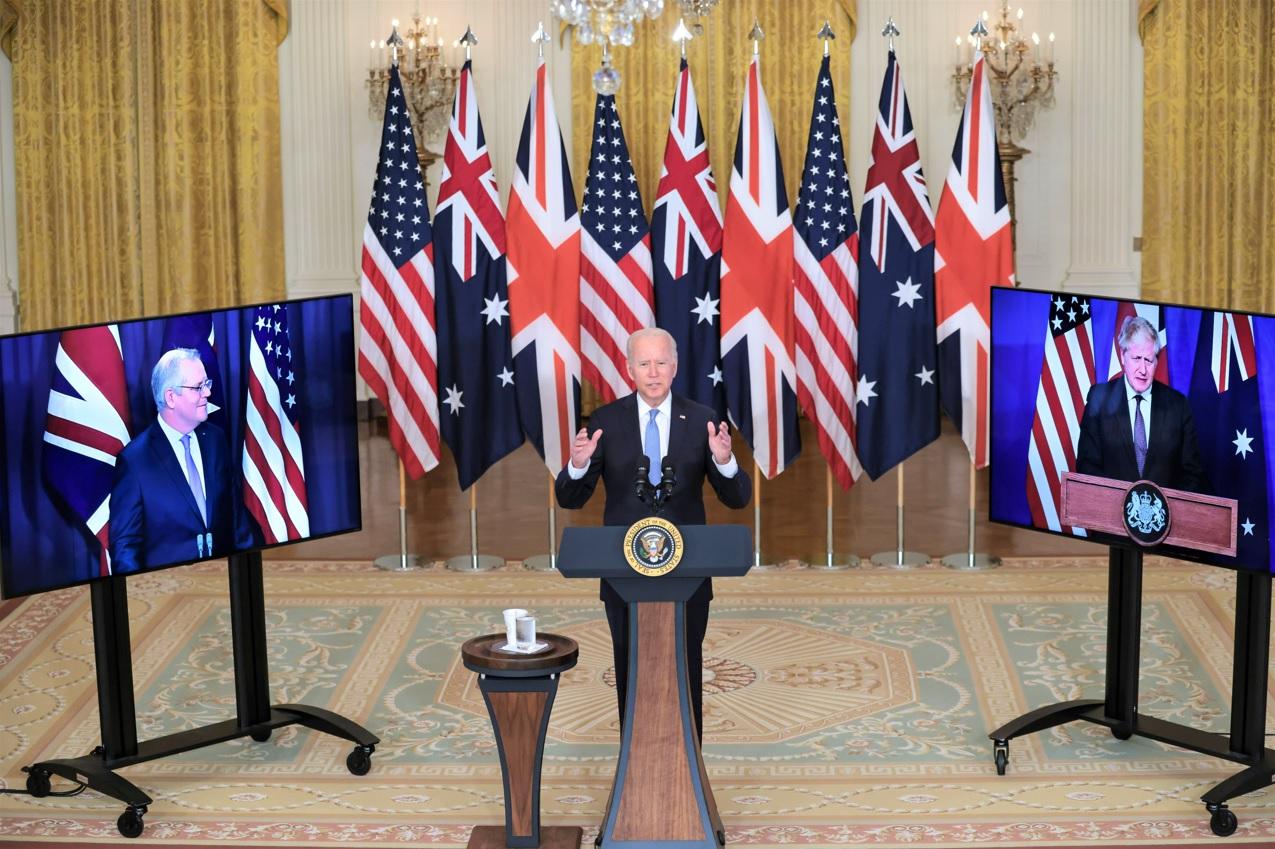 US President Joseph Biden announces a new national security initiative, AUKUS, at the White House alongside British Prime Minister Boris Johnson and Australian Prime Minister Scott Morrison on 15 September 2021. Photo: BJ Warnick/Newscom/Alamy
At the present stage, the discussion about a ‘Pacific NATO’ is taking on new meaning. There is no formal alliance in the region similar to the transatlantic one. Instead, there is a network of security formats in which Australia and New Zealand play a leading role.
The immediate factor driving the consolidation of countries in the Pacific region is the growing threat from China, whose foreign policy is becoming increasingly aggressive. Although the new US administration under Donald Trump has set itself the goal of countering China, it is failing to act effectively with regard to key partners in the region, including Australia and New Zealand. While Biden's administration focused on restoring allied relations and a multilateral approach, in June 2025, Donald Trump's new administration, led by adviser Colby, declared a policy of strengthening the priority of restraining China and reorienting US resources towards the Indo-Pacific theatre. This means that Washington continues to view the region as the main arena for geopolitical rivalry, yet emphasises a more pragmatic distribution of allied commitments and pressure on partners to take a greater share of security costs.
After involving the leading democratic countries of the Asia-Pacific region in discussions at the North Atlantic Alliance level, 2025 was marked by the absence of their delegations at the regular NATO summit in The Hague. Although the US is not abandoning the same security formats with each individual country, the new administration is no longer promoting the creation of a more organised and formal security platform, which calls into question its creation in the near future.
The reasons for this lie in the internal contradictions of American policy. On the one hand, Washington has recognised the Indo-Pacific region as the main theatre of geopolitical confrontation and has declared the containment of China a priority. On the other hand, the administration's caution in promoting new international mechanisms is explained by its desire to shift most of the costs to its allies and avoid excessive commitments.
First, allies of the United States perceive this position as a sign of inconsistency, which undermines confidence in American leadership.
Second, the absence of a unified format calls into question the effectiveness of a collective response to challenges, creating a fragmented system of bilateral agreements.
Third, it gives China room for diplomatic manoeuvring: Beijing can work with each country separately, exploiting differences between partners and offering economic incentives.
Thus, despite its officially declared interest in restraining China, the current US course appears to be a foolish policy, as it does not lead to the creation of a unified institutional security mechanism, but rather deepens fragmentation and reduces their willingness to act together.
Is there any alternative? This is where the peculiarity of Australia and New Zealand, which remain members of the Commonwealth of Nations structures, becomes evident – in particular, the Five Eyes alliance (an intelligence alliance of five English-speaking countries: the United States, Great Britain, Canada, Australia and New Zealand). Five Eyes had been formed in the mid-20th century as a mechanism for intelligence sharing and technical cooperation in the field of electronic surveillance, long before discussions about the possible creation of a ‘Pacific NATO’ began.
However, Five Eyes is primarily an intelligence alliance, not a military-political bloc. Therefore, it is incorrect to consider it a full-fledged alternative to a formal defence alliance: it provides coordination of information gathering and analysis, but does not provide for joint command or collective military action. The claim that it is possible to ‘control the entire Asia-Pacific region’ with this structure alone is an exaggeration – Five Eyes allows to improve situational awareness and jointly counter threats, but it cannot replace an institutional alliance such as NATO.
In addition, theoretically, the role of the United States in Five Eyes could be revised: there have already been precedents when tensions arose in relations (for example, in 2013 after Edward Snowden's leaks and discussions about unequal access to intelligence data among partners). Although it is practically impossible for the US to leave the alliance, Washington is capable of changing the level of information exchange or restricting access for individual partners, which has been the subject of discussion on numerous occasions.
An alternative under the banner of the Commonwealth of Nations cannot cover the entire region, not only because of the limitations of Five Eyes as an intelligence alliance, but also because of the need to involve other leading countries in the Indo-Pacific region. In addition, the different strategic views of the countries in the region are a significant problem. While Australia and New Zealand are closely oriented towards cooperation with Western allies, Japan, as an economic giant, and the Republic of Korea, as a military power, have their own defence strategies related to direct regional threats. At the same time, they are united by a common understanding of the dangers posed by the so-called ‘axis of autocrats’, before known as ‘axis of evil’ - China, Russia, North Korea and Iran.
The prospect of uniting the countries of the Indo-Asian space seems both likely and unlikely, as there is one serious factor that could either play in favour of creating a ‘Pacific NATO’ or slow down the process for decades: Washington's passivity.
As the need to maintain stability in the region becomes more pressing with each passing year, there is an opportunity to involve Europe as an arbitrator in establishing a formalised alliance between the democratic countries of the Indo-Asian region. Australia and New Zealand, which have closer political, historical and economic ties with Europe, could play a key role in this process.
However, the question arises: is Europe really capable of acting as an arbitrator, given that the effectiveness of its own collective security system and geopolitical influence are often called into question? On the one hand, the European Union and NATO are interested in preserving freedom of navigation, protecting trade routes and accessing markets in the Indo-Pacific region. In addition, European states are increasingly aware that stability in this area directly affects their economic security. On the other hand, limited military capabilities and internal differences between member states call into question Europe's ability to act as a true guarantor or mediator.
Thus, Europe's interests lie more in protecting economic and trade corridors than in being prepared to take on a leadership role in creating a new regional alliance. This means that its participation is likely to be supportive rather than decisive in shaping the security architecture in the Indo-Pacific region.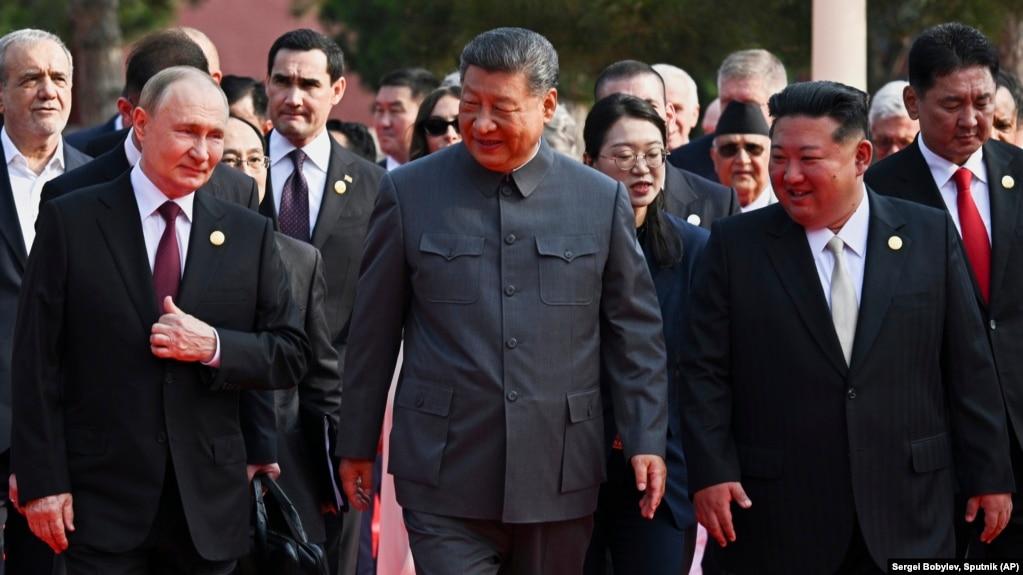 The ‘axis of autocrats’: Vladimir Putin, Xi Jinping and Kim Jong-un arrive at a military parade in Beijing on 3 September 2025
In the context of the Russian-Ukrainian war, Ukraine is increasingly integrating into the Western security system, which unites it with countries in the Indo-Asian region that are following a similar path. Although Ukraine's full membership in NATO remains only a prospect, it is important for Kyiv to establish ties with Alliance partners outside Europe. In this context, Australia and New Zealand – as active members of the Commonwealth of Nations and key participants in Indo-Pacific formats – are becoming valuable allies.
First, Australia is already one of the largest donors of financial and military aid to Ukraine among non-European countries, with a total amount of approximately AUD 1.5 billion (Australian dollars), or USD 990 million (US dollars), from 2022 to 2025. Canberra has provided significant assistance to Ukraine in the form of active deliveries of a wide range of weapons, from armoured vehicles to ammunition and artillery. These decisive actions underline Australia's willingness to act not only regionally, but also globally alongside leading countries in Europe and North America.
Secondly, cooperation with New Zealand, which has traditionally been more cautious in military terms, opens up opportunities for Ukraine in the areas of cyber defence, information security and combating disinformation. New Zealand has also not stood aside in terms of material assistance to Ukraine, allocating more than NZD 152 million (New Zealand dollars), or USD 89 million (US dollars), since the start of Russia's full-scale aggression. Wellington's targeted actions within IP4, together with Canberra, and its consistent strategy of supporting Ukraine strengthen collective coordination and cooperation between democratic countries in the region.
Thirdly, the network of agreements in which both countries are integrated (AUKUS, Five Eyes and the partnership with NATO) could become an important channel for technological and intelligence cooperation. For Ukraine, this opens a direct path to obtaining the latest solutions in the field of artificial intelligence, unmanned systems and surveillance.
Finally, the involvement of Australia and New Zealand in the global security debate emphasises that support for Ukraine against Russian aggression is no longer purely a European issue. Such cooperation, the desire to pool military resources and the involvement of technological capabilities are important indicators of the democratic world's readiness to jointly resist aggression. For Kyiv, all this could provide greater scope for diplomatic manoeuvring and open up new opportunities within the framework of new international security formats.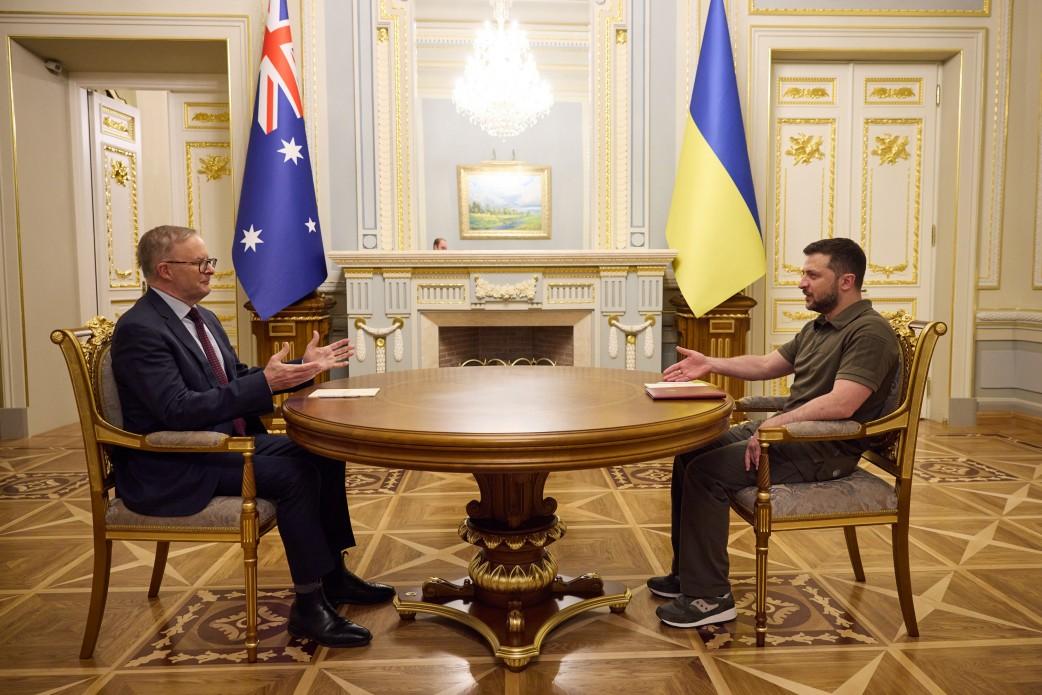 Meeting between Ukrainian President Volodymyr Zelensky and Australian Prime Minister Anthony Albanese in Kyiv, 3 July 2022
Firstly, as of September 2025, there is no such thing as a “Pacific NATO” in the full sense of the term. Instead, there is a network of separate security formats with almost all of NATO’s strategic partners in the Indo-Asian region. However, given the current situation and growing threats from China, everything can change in a matter of years or even months. It all depends on the willingness of the countries in the region to confront existential threats and on the position, support and involvement of the United States and other NATO countries.
Secondly, Australia and New Zealand, despite their relatively small populations, limited military resources and internal problems, are a leading bridge between Europe and the Indo-Pacific region, which could be a significant factor in the context of creating a new security system in the Pacific. In particular, their ties with the United Kingdom through the Commonwealth enable them to play a key role as integrators between the Euro-Atlantic and possible Indo-Pacific security architectures.
Thirdly, Russia's invasion of Ukraine has undoubtedly been a catalyst for renewed discussions about possible alternative methods of defence against aggressive authoritarian regimes. The direct and decisive support of Australia and New Zealand has been not only a symbolic gesture, but also a practical one. The fact that Australia and New Zealand have begun to actively assist Ukraine already tells us that they understand the geopolitical consequences of this war, which is taking place thousands of kilometres from the Pacific Ocean.
In addition, the issue of aid to Ukraine has become a unifying factor not only for European countries, but also for democratic countries in the Indo-Pacific region, which is also important in the context of the possible creation of an alternative security architecture in the Pacific region.
We are seeing with our own eyes how, against the backdrop of growing threats in the world, the post-war global security architecture is disintegrating and creating a vacuum that needs to be filled with something else. This is forcing non-aligned countries to look for alternatives, which could be regional alliances with clearly defined institutions, a unified strategy and the determination to respond to threats. In this context, NATO as a Euro-Atlantic security system can serve as a model that can be used as a basis for creating a new organisation in any region, including the Indo-Pacific.
At the same time, it is important to emphasise the importance of reorganising and optimising the possible formats of such NATO-like organisations, because we can already see how this organisation is simply suffering from bureaucratic subtleties that create serious problems for the implementation of collective defence. Objectively, a Pacific NATO is needed, but not as a bureaucratic machine that will hinder itself, but as a serious force, a counterweight to the ‘axis of autocrats’ and a guarantor of security in the region. However, what form this ‘alliance’ will take and when it will be created remains an open question.
You may be interested