 INTERNATIONAL
INFORMATION AND ANALYTICAL
COMMUNITY


+ Join
Support INTERNATIONAL



Yulian Bardas, political Scientist, Junior Analyst for European Affairs at the Resurgam Analytical Center
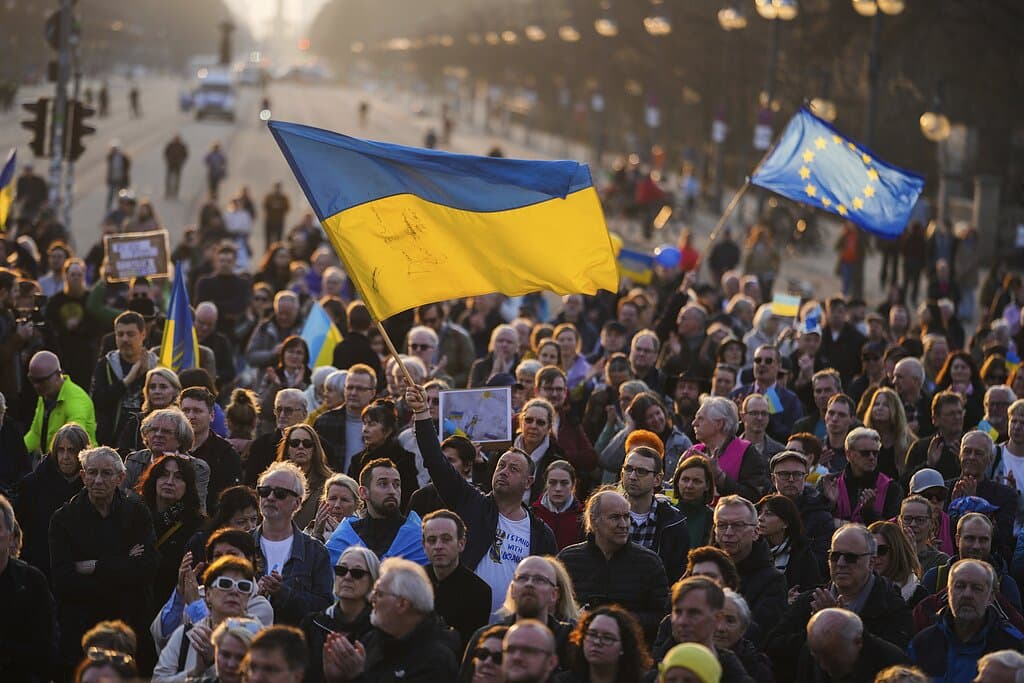
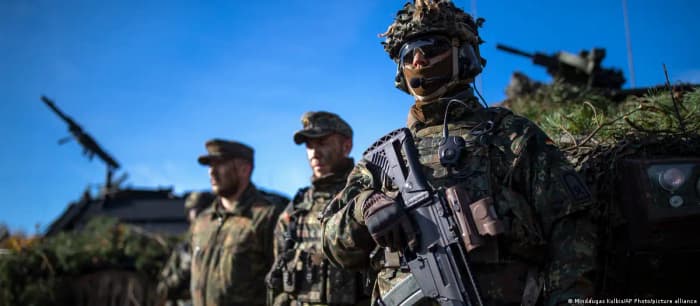 Photo: Mindaugas Kulbis/AP Photo/picture alliance
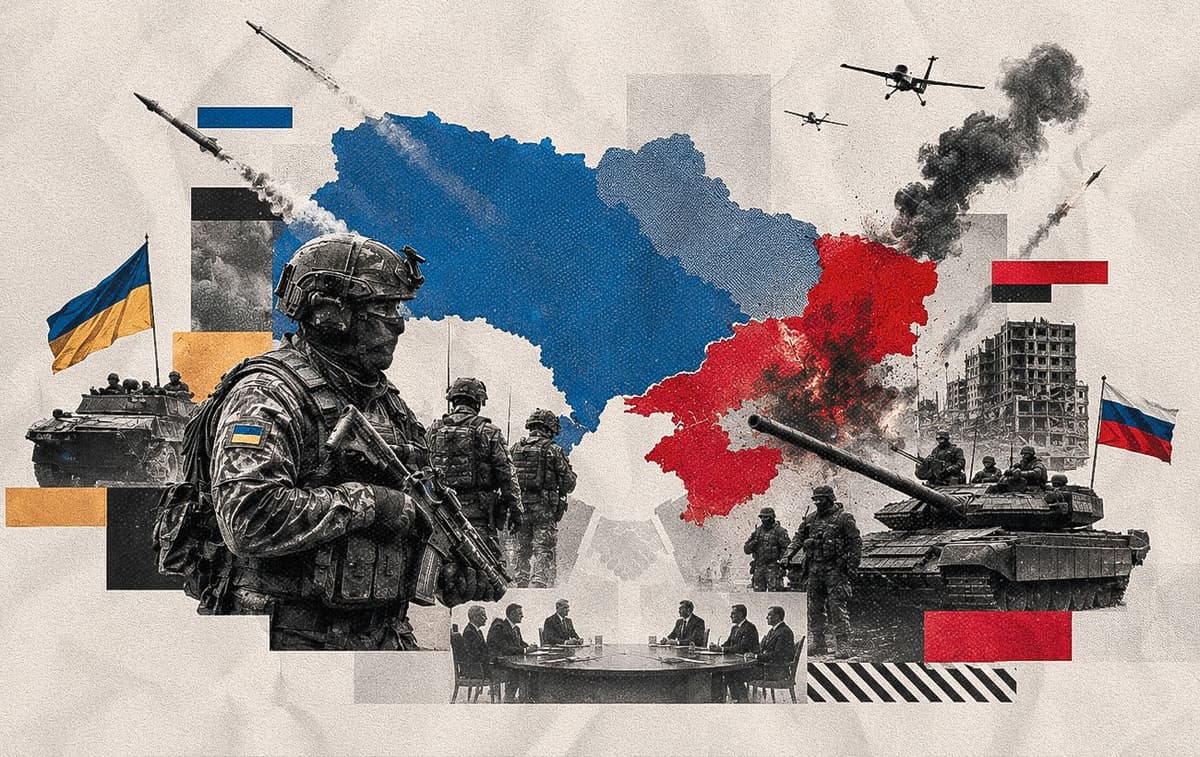
The discussion of the possibility of sending foreign troops to Ukraine became especially acute and went public at the end of February 2024. Then russia attracted... 10 thousand North Korean soldiers into the war against Ukraine. In response, Volodymyr Zelensky discussed with Macron the possibility of the presence of partner troops in the country.
A key point was the statement of French President Emmanuel Macron, who said that "nothing should be excluded in this matter in the future." This caused a wide discussion among NATO and EU countries. Macron's main idea is to send peacekeeping troops not from NATO or EU structures, but from the Coalition of the Willing. This idea makes it easier to deploy troops for the members of the organization: the format allows only those states that have the political will and resources to participate directly. But even in the Coalition of the Willing, not all countries are ready for such steps for various reasons: from fear of a potential escalation of the war to internal political resistance to positional forces.
The main development of the plan is carried out by Great Britain and France, but other states are also ready to join the formation of a post-war foreign contingent. Among such states, Sweden was mentioned, which does not exclude the possibility of sending its soldiers to preserve peace, as well as Turkey, which is considering the option of participation, provided that they are involved in all stages of consultations and preparation. Turkey has the second largest army in NATO after the United States, so its participation could significantly strengthen the contingent.
Among the states that oppose the sending of ground troops are the United States, Germany and Poland. Donald Trump's policy is based on the doctrine that Europe should take care of its own security, so in the future we can expect a reduction in the US military presence even in the NATO countries themselves. Poland is primarily concerned about its own land border with Russia and Belarus, so it is not ready to send its troops to Ukraine, but can become a key logistical hub of support. Merz clearly stated that any deployment of international forces is possible only after an official truce is reached. Without the consent of both sides, including Russia, such a step is considered premature and dangerous. Instead, the German government considers it more expedient to strengthen NATO's eastern flank with its own troops. In particular, there are already about 5 thousand German troops in Lithuania.
At the beginning of 2025, at the forum in Davos, Zelensky said that the minimum number of foreign contingent should be 200 000 people, otherwise it is "nothing" against Russia's army of one and a half million. At the time, the plan was based on the assumption that these troops would be spread out along the entire front line. It later became clear that European states simply did not have the capacity to make it reak, given their limited reserves. Mobilising such a large number of people would effectively have meant using up all available resources of France and Great Britain, the total number of armies of which is about 350 thousand troops.
Understanding the real state of affairs, the Ukrainian leadership came to the conclusion that any presence of a foreign contingent is better than its complete absence. Therefore, the format of the agreement began to be revised towards a significant reduction in the number of personnel.
Ukraine, France, and the United Kingdom signed a declaration of intent to deploy a multinational force in Ukraine on January 6, 2026. It is important to understand that this involves deploying troops in «rear» cities such as Kyiv and Odesa, rather than directly on the front line. Their number is unlikely to exceed 10-15 thousand people. Joint exercises of 600 paratroopers of Great Britain and France have recently ended, and they are ready for operational deployment in Ukraine.
For the scale of this war, this figure is not of great military importance, but in the political landscape it is an important step for the formation of a peace agreement and the involvement of European players in the post-war period.
One of Russia's key goals in the negotiation process remains the exclusion of Ukraine and Europe from active discussion, focusing all agreements exclusively on the level of "Moscow - Washington". The Kremlin seeks to implement the concept of "Yalta 2.0", where the fate of sovereign states is decided by the great powers behind closed doors, which allows the Russian Federation to ignore the interests of Kyiv and European capitals. In this regard, the Trump administration is helping them to some extent. The same Trump administration, which does not want to wage a joint political struggle with Europe against the Russian Federation.
For the United States and Russia, it is more profitable to hold negotiations in a trilateral format together with Ukraine, without the involvement of Europe, and only than – to add Europe to the process. Therefore, the exclusion of Europe from the negotiation process is beneficial for the United States and the Russian Federation. But Europe also wants to participate in it, and therefore it must take measures that will not allow it to be ignored. Thus, the United States and Russia will not be able to agree on the distribution of spheres of influence over Ukraine if there is a European contingent there.
Thus, the United Kingdom and France do not allow themselves to be excluded from the decision-making process on the security regime after the war. So, now we are talking about a tool for consolidating European subjectivity in the new system of regional security.
For Ukraine, security guarantees are one of the key points of the peace treaty, and it is extremely important not to repeat the mistake of the Budapest Memorandum with its declarative mechanisms for Ukraine. The shift from declarative intentions to concrete commitments, underpinned by the ‘human factor’, strengthens the security architecture, making it more predictable and reliable in deterring the enemy. After all, any new conflict, should it arise, will no longer be viewed merely as an attack on Ukraine, but also, as an attack on the military of European states, which significantly increases the political cost of escalation. It can also be considered an informal appearance of "NATO military bases" without Ukraine's official membership. This makes it possible to circumvent one of the main demands of Russia, which opposes Ukraine in NATO, as well as to alleviate the concerns of some members of the Alliance about Ukraine's accession. It is also important to demonstrate Europe’s strength to the US and Russia: European states are showing that they are prepared to take responsibility for the continent’s security. Greater involvement of European states in shaping a new security architecture will demonstrate to Moscow that Europe is ready to move from being a resource partner for Ukraine to becoming a direct security guarantor. The presence of multinational forces in Ukraine also de facto accelerates Ukraine's integration into the single European defence space.
For Russia, the deployment of foreign troops on the territory of Ukraine is unacceptable. For the Kremlin, the deployment of peacekeeping forces will de facto be equated with the creation of NATO bases. It is the proximity of the Alliance's infrastructure to its borders that Russia has defined for decades as an unacceptable risk to its national security and used it as the main pretext for launching a full-scale invasion.
The inability to justify the huge cost of the war with a result that actually strengthens the influence of the West near the borders of the Russian Federation will lead to an inevitable increase in internal tension. This will undermine confidence in the military-political leadership among the most radicalized segments of Russian society and power elites, for whom the presence of Western troops is a symbol of geopolitical defeat. In addition, the presence of foreign troops will act as a "political fuse". This creates a situation in which any new aggression will automatically draw European states into the conflict from the first minutes. The risk of a direct clash with the military of NATO countries raises the price of war for Russia. For Russia, this is a principled position to prevent a peacekeeping contingent from entering Ukraine, which it probably does not want to give up. After all, the actual legalization of the foreign military presence on Ukrainian soil will deprive the Kremlin of the opportunity to declare the achievement of the key goals of the "special military operation".
The intention of European states to deploy a limited military contingent on the territory of Ukraine is a decisive step for the stabilization of the region. This not only strengthens the defence potential, but also creates a mechanism of direct security guarantees based on the physical presence of allies. However, the factor of sending troops to Ukraine after the end of the war is already playing a greater role in the formation of the final peace agreement.
This creates space for a real diplomatic compromise: Ukraine, if it definitely has the consent of its partners in principle to deploy the contingent, can offer its "dismantling" or postponement in exchange for the complete lifting of Russian territorial ultimatums. In fact, Kyiv converts the guaranteed presence of European troops into Moscow's refusal to encroach on the uncontrolled areas of Donbas. Such an exchange allows Kyiv to preserve its existing territorial integrity without ceding sovereignty, and at the same time satisfies the Kremlin's interest in the absence of Western military bases in Ukraine. It is important that the countries participating in the Coalition of the Willing remain consistent in their actions and are able to attract wider support among other European states.
You may be interested