 INTERNATIONAL
INFORMATION AND ANALYTICAL
COMMUNITY


+ Join
Support INTERNATIONAL



Daria Honcharenko, Junior Analyst for the Balkan Region at the Resurgam Analytical Center
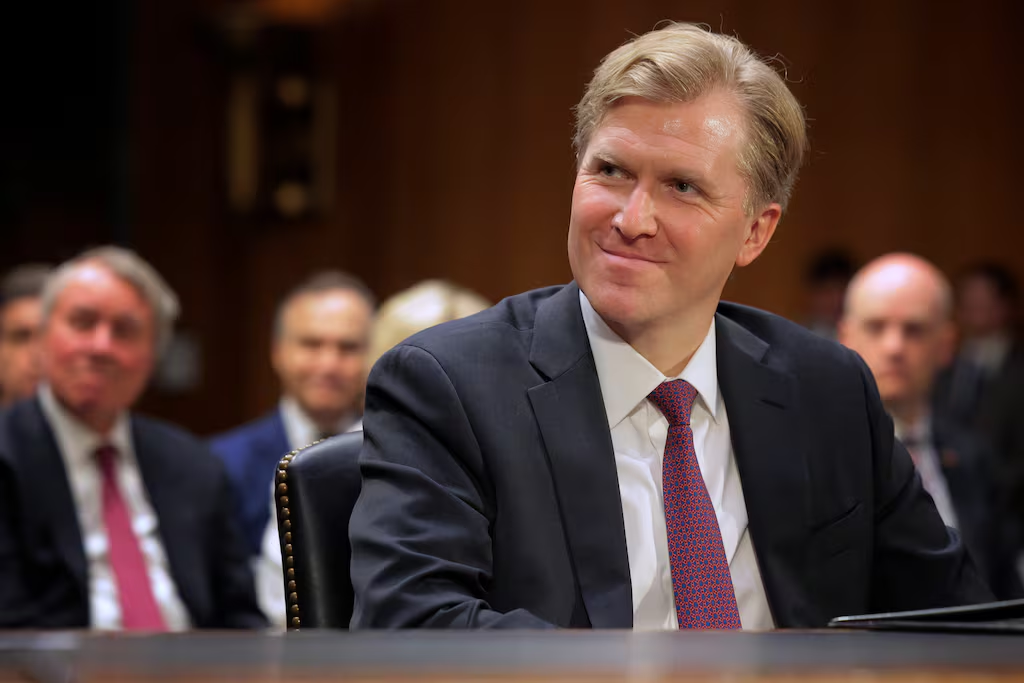
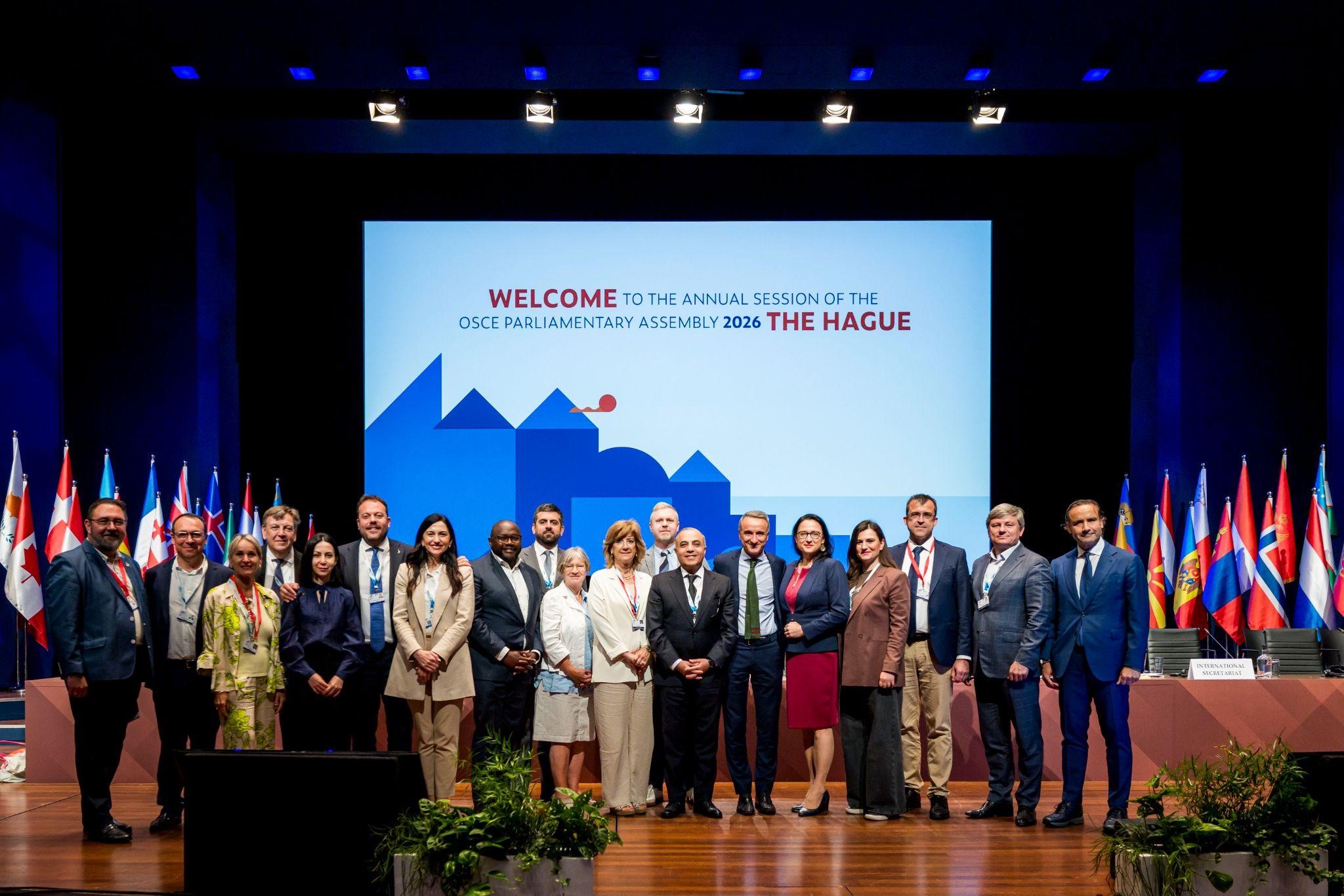 The Bureau of the OSCE Parliamentary Assembly at the closing of the 33rd Annual Session in The Hague, July 8, 2026. Source
At the same time, the debate over the venue itself is not the key issue. Rather, it reflects a broader trend linked to growing doubts in Washington and Brussels about the effectiveness of the longstanding policy of engagement with Belgrade. Since the beginning of Russia’s full-scale war against Ukraine, Serbia’s foreign policy has increasingly been assessed through the lens of European security. Its cooperation with Russia and China, refusal to join EU sanctions, as well as its policies toward Kosovo and support for the leadership of Republika Srpska in Bosnia and Herzegovina, have become factors shaping Western partners’ attitudes toward Belgrade.
Serbia seeks to make the most of the competition among the West, Russia, and China, gaining political, economic, and security benefits from each side. However, this policy is increasingly causing concern in the West.
For a long time, the West was ready to accept Serbia’s policies because Belgrade remained an important partner in maintaining stability in the Western Balkans, addressing the Kosovo issue, and preserving European influence in the region. The EU expected that the prospect of membership would gradually bring Serbia closer to European policies, so Washington and Brussels did not demand a complete break in its ties with Russia and China.
After 2022, the Balkans ceased to be a secondary focus of U.S. policy. Amid Russia’s war against Ukraine, any potential source of instability in Europe is viewed as a possible tool for Moscow to exert pressure on NATO. That is why the United States is paying increasingly close attention to Serbia’s foreign policy.
On July 24, a bipartisan group of U.S. lawmakers led by Republican Joe Wilson introduced a joint resolution urging for the 2027 annual session of the OSCE Parliamentary Assembly to be held not in Belgrade but in Charleston, South Carolina. The resolution was backed by 40 cosponsors from both the Republican and Democratic parties.
The resolution is formally about the venue of an international event. In practice, however, it shows that Washington is debating a possible shift in U.S. policy toward Serbia. Some lawmakers advocate a tougher approach, citing Belgrade’s continued close economic and political ties with Russia, particularly in the energy sector, as well as Serbia’s refusal to join Western sanctions. Others in Congress, by contrast, stress the need to continue engaging with Serbia as a candidate for EU membership in order to keep the country on a European path.
The intensification of U.S. criticism of Serbia is linked to the growing difficulty of viewing Belgrade as a Western partner. This is particularly evident in data showing that Serbia has the lowest level of alignment between its foreign policy and that of the European Union among the Western Balkan countries. In 2024, the figure stood at just 47%, while the other candidate countries in the region recorded 100%.
In practice, Serbia maintains close economic and energy ties with Russia. Notably, around 56% of the shares in Serbia’s oil company NIS remain under the control of Gazprom Neft and Gazprom. Moreover, Belgrade remains one of the few European partners of Moscow that has not joined any of the EU’s sanctions packages.
The problem is not simply that Belgrade maintains relations with Moscow. More importantly, these ties allow Russia to retain political and economic leverage over an EU candidate country and maintain its presence in the Western Balkans.
In parallel, Belgrade is expanding its cooperation with China, particularly in the defense sector. Serbia is procuring Chinese HQ-22 surface-to-air missile systems and CH-92 unmanned aerial vehicles. It is also worth noting that they were delivered by Chinese Air Force military transport aircraft through the airspace of NATO member states.
For Beijing, Serbia is not merely a market for Chinese products. It gives China an opportunity to deepen its economic and political presence in a region that the EU considers part of its own strategic space. For Belgrade, Chinese investment, infrastructure projects, and defense cooperation provide an alternative to Western partners, thereby expanding its room for maneuver in relations with Brussels.
Against this backdrop, it is worth noting that two distinct security alignments are gradually taking shape in the Balkans. The first is represented by the defense alliance between Croatia, Albania, and Kosovo, while Serbia is deepening military cooperation with Hungary while simultaneously developing security ties with China and Russia.
Washington and Brussels see this as a risk of growing regional confrontation. This is particularly acute against the backdrop of unresolved relations with Kosovo and Belgrade’s support for the leadership of Republika Srpska in Bosnia and Herzegovina, which is intensifying its separatist rhetoric.
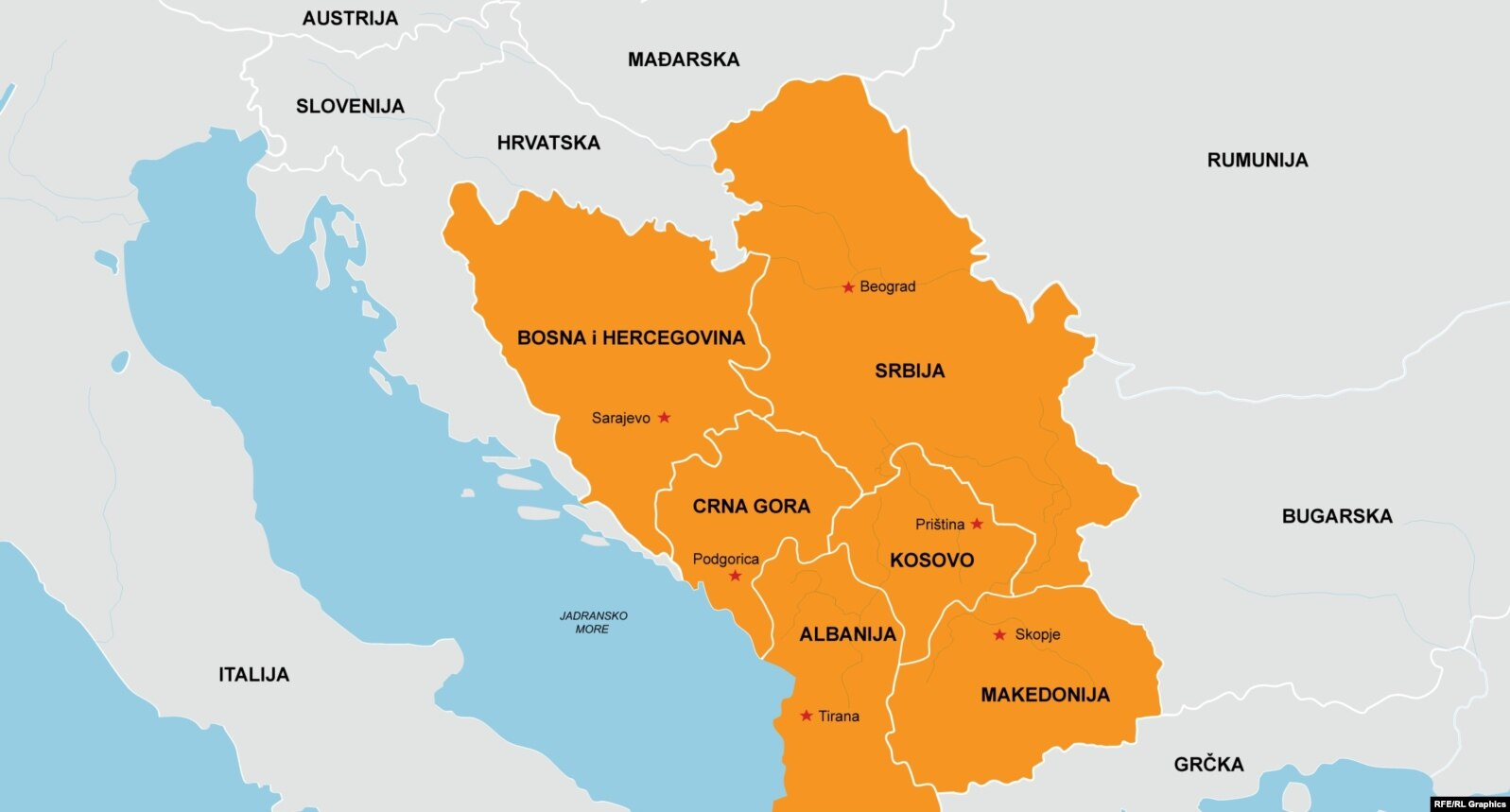 Map of the Western Balkans. Source
Despite growing criticism, neither the United States nor the European Union has an interest in Serbia’s international isolation. The country’s geographic position, its influence on the security situation in the Western Balkans, and its status as the region’s largest state make Belgrade a potentially important element of the European security architecture.
Washington uses targeted sanctions against politicians and businesspeople considered to be involved in corruption or regional destabilization. For example, former Serbian interior minister Aleksandar Vulin has been included in U.S. sanctions packages over allegations of abuse of power and transnational organized crime. The United States is also strengthening military cooperation with its NATO allies in the region, including cooperation with the Albania-Croatia-Kosovo bloc. Energy projects such as the “Southern Interconnector” are aimed at reducing Russia’s influence over the region’s energy sector.
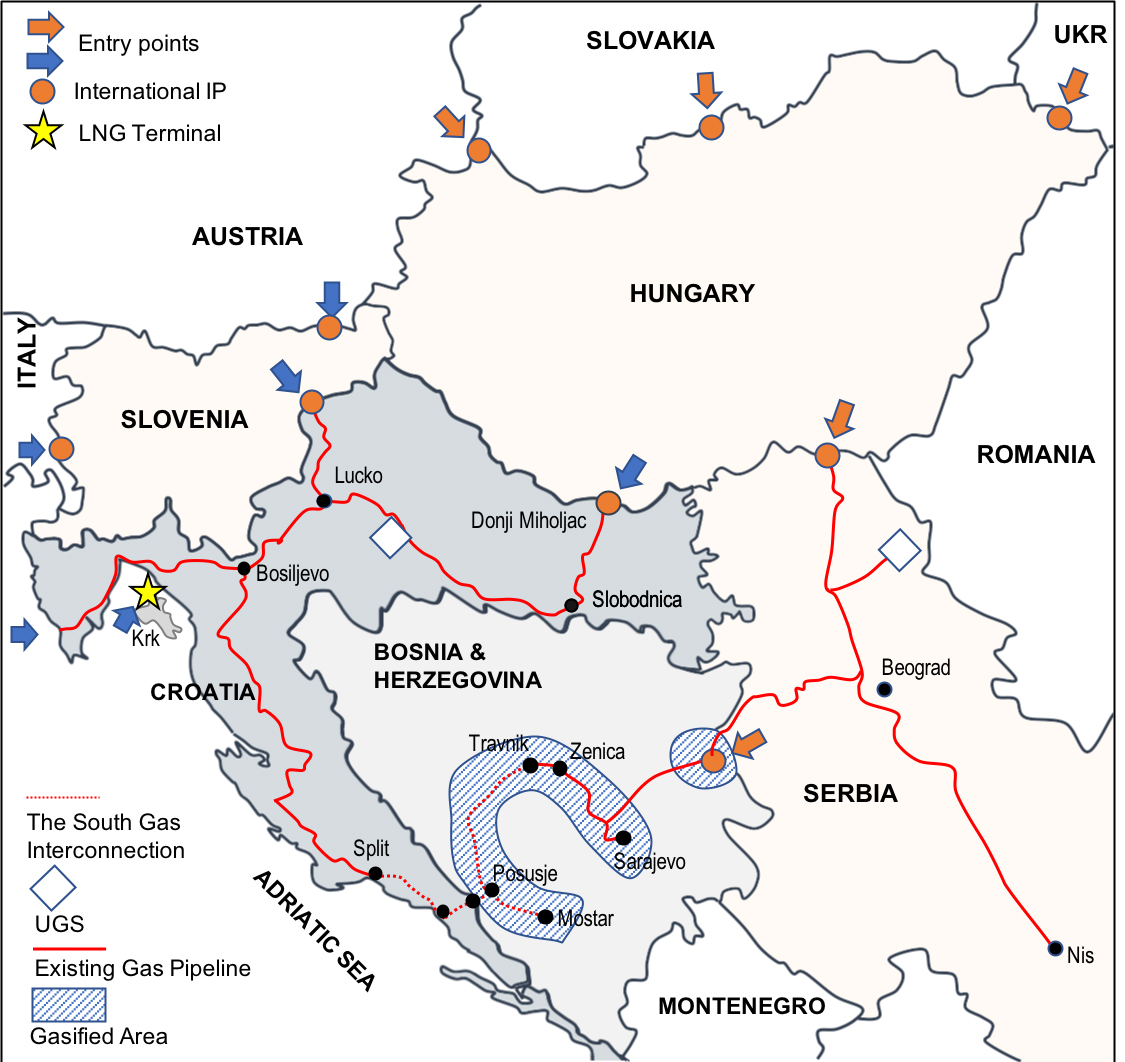 Southern Interconnector. Source
For Brussels, the main challenge is that Serbia remains both a candidate country and a state that is increasingly pursuing a foreign policy at odds with the EU’s strategic interests. Therefore, Brussels is making it increasingly clear that further integration will depend not on the technical harmonization of legislation, but on genuine alignment of foreign policy and fulfillment of political commitments.
At the same time, excessive pressure on Belgrade could have the opposite effect. For the United States and the EU, the strategic objective remains to prevent Serbia’s isolation while gradually limiting Russian and Chinese influence. That is why, alongside political pressure, the West maintains economic, security, and diplomatic engagement, leaving Serbia with incentives to move closer to European institutions.
Despite maintaining close political and energy ties with Russia, Serbia also remains an important supplier of ammunition to Western markets. Since 2022, Serbian ammunition worth approximately €800 million has been delivered to Ukraine through third countries. This creates a paradoxical situation in which Serbia remains one of Moscow’s closest security partners in Europe, while its defense industry indirectly contributes to strengthening Ukraine’s defense capabilities.
An additional irritant is the intensification of Serbia’s relations with Iran, including diplomatic contacts and negotiations on expanding trade and economic cooperation. Against the backdrop of its already developed ties with Russia and China, this is fueling doubts in Washington about Belgrade’s willingness to consistently align its foreign policy more closely with the West.
This policy allows Serbia to obtain resources from different partners without making a final choice in favor of any one of them. At the same time, Serbia’s dependence on these partners is not equal. Economically, Belgrade is far more dependent on the EU, as the European market, trade, investment, and the prospect of EU membership form the foundation of its economic ties. The West is also interested in maintaining relations with Serbia because of its role in the stability of the Western Balkans, the Kosovo issue, and regional security. It is precisely this mutual interdependence that has long allowed Belgrade to pursue a balancing policy.
In this context, the initiative to move the OSCE Parliamentary Assembly session is primarily a political signal. It demonstrates growing dissatisfaction in Washington with Belgrade’s foreign policy and an increasingly limited willingness to accept it going forward.
Moving the OSCE Parliamentary Assembly session could become the first public signal of a shift toward a tougher U.S. policy toward Belgrade. If the resolution receives support, it would indicate that the United States is increasingly viewing Serbia’s policies as a matter of European security, rather than merely regional politics.
For Serbia, a possible relocation of the event would primarily have reputational consequences. Losing the right to host one of the OSCE’s key events would demonstrate declining trust among some Western partners and call into question Belgrade’s status as a neutral venue for international dialogue.
The further course of events will depend to a large extent on Belgrade’s foreign policy. If the United States and the EU increase sanctions, diplomatic, and economic pressure while maintaining the prospect of European integration, Serbia may be compelled to gradually adjust its policies.
At the same time, the motives of Washington and Brussels are not fully aligned. For the United States, the main objective is to contain Russian and Chinese influence in the Balkans. For the EU, it is important that Serbia, as a candidate for membership, align its foreign policy with that of the European Union. Therefore, the United States may apply targeted pressure, while Brussels has greater leverage through membership conditions, funding, and European programs. At the same time, Western policy may be more effective if it simultaneously offers Serbia alternatives to Russian energy resources and Chinese investment.
For Belgrade, a shift in the West’s approach will mean that balancing between different partners will become more difficult. If the EU more closely links economic benefits and the prospect of membership to foreign policy alignment, it will be harder for Serbia to move closer to the EU while maintaining close relations with Russia and China.
At the same time, excessive pressure could push Belgrade to rely even more heavily on Moscow and Beijing. Thus, the future of Serbia’s policy will increasingly depend on whether the country can continue to reap the benefits of cooperation with different partners without damaging its relations with the West.
For the Kremlin, Serbia is not merely a partner but also a key foothold for advancing its interests in the region, supporting pro-Russian political forces, and promoting an alternative agenda on sanctions, Kosovo, and EU policy. Therefore, increased Western scrutiny of Serbia’s policies means a gradual narrowing of Russia’s ability to use the Balkans as an instrument of political and security influence.
A potential alignment of Serbia’s foreign policy with the West would limit Russia’s ability to exploit tensions surrounding Kosovo and its support for the leadership of Republika Srpska to destabilize the region. This would reduce the risk of a new source of instability emerging that could divert NATO and EU diplomatic, military, and financial resources away from supporting Ukraine.
Increased pressure on Serbia could also affect the effectiveness of sanctions policy. If Belgrade gradually aligns its foreign policy with that of the EU, Russia would lose one of the few European partners through which it has maintained political, economic, and diplomatic channels in the region.
The shift in the West’s approach to Serbia is linked less to its multi-vector policy itself than to the changing circumstances. Before 2022, the United States and the EU were ready to accept this approach because their main priorities were to preserve stability in the Western Balkans and prevent Serbia from drifting away from the European sphere. After the start of Russia’s full-scale war against Ukraine, the situation changed. Russia’s presence in Serbia began to be viewed not merely as a regional factor but also as a security concern for Europe.
At the same time, the West has no interest in isolating Belgrade. Serbia remains important to the stability of the Western Balkans and is economically far more dependent on the EU than on Russia or China. Therefore, the West is gradually increasing pressure on Belgrade, seeking to make the continuation of its multi-vector policy less advantageous for Serbia.
The initiative to move the OSCE Parliamentary Assembly session is, in this context, merely one symptom of this shift and indicates the West’s readiness to use stronger political signals in its relations with Belgrade.
You may be interested