 INTERNATIONAL
INFORMATION AND ANALYTICAL
COMMUNITY


+ Join
Support INTERNATIONAL



Mariia Kudasiuk, analyst, Kyiv-based Institute of American Studies
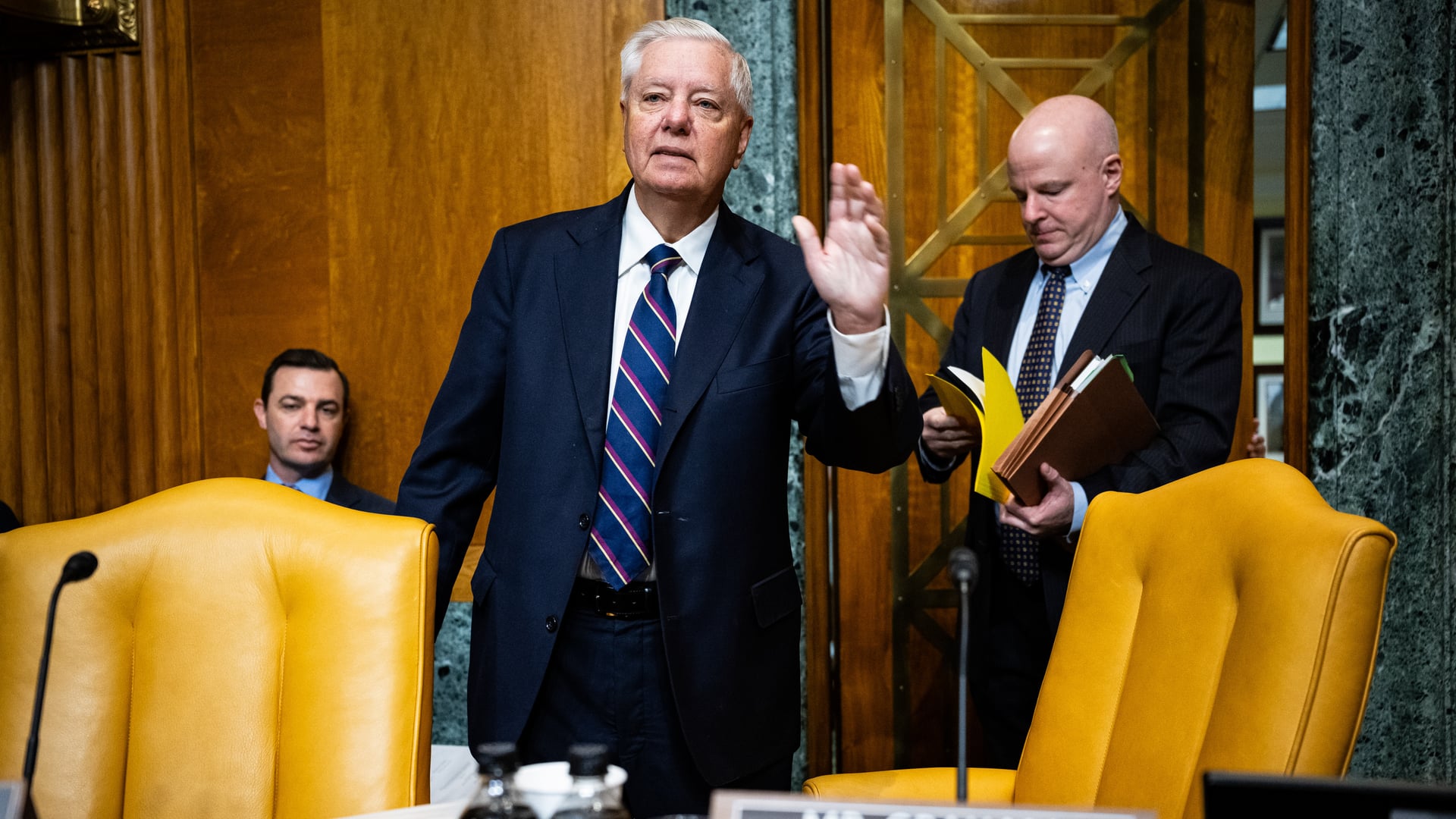 Republican Senator Lindsey Graham. Photo: Getty Images
His absence therefore raises two questions for Ukraine. The first is institutional: whether the sanctions legislation Graham spent more than a year promoting can survive the House and produce meaningful constraints on Russia. The second is political: whether Ukraine can reconstruct within the Republican Party the informal network that allowed Graham to translate Kyiv’s priorities into arguments acceptable to the Trump administration.
Graham served four years with the U.S. military in Germany before the Berlin Wall fell, described himself as a “Ronald Reagan Republican,” and consistently defended an internationalist conception of U.S. power. Yet ideological continuity alone does not explain his influence. Political scientists Christopher Cooper of Western Carolina University and Gibbs Knotts of Coastal Carolina University argue that Graham’s defining political skill was his ability to recognize changes inside the Republican electorate and reposition himself accordingly. From the “Republican Revolution” of 1994, which marked the party’s shift toward a more ideologically rigid conservatism, through the rise of the “Tea Party Movement” – a populist reaction to Barack Obama’s policies, whose supporters, invoking the Boston Tea Party of 1773, positioned themselves as modern-day rebels against excessive taxation, government spending, and the expansion of federal power – and up to the ultimate dominance of Trumpism, Graham remained influential largely because he knew how to operate within the new party reality even when it differed substantially from the traditional Republican internationalism with which he had historically associated himself..
That adaptability was particularly important for Ukraine after Trump’s return to the White House. Following the contentious February 2025 Oval Office meeting between Trump and Zelenskyy, Graham suggested that the Ukrainian president might need to resign. Within weeks, however, he was again advocating stronger military pressure on Moscow, including Tomahawk missiles, and promoting secondary sanctions against countries purchasing Russian energy.
For Kyiv, this inconsistency had a practical advantage. Graham could operate inside Trump’s political framework rather than outside it. As traditional Republican arguments about alliances and long-term security commitments lost influence within parts of the party, he increasingly presented support for Ukraine in terms that resonated with the administration: leverage over Vladimir Putin, commercial opportunities for U.S. industry, access to critical minerals and the military value of Ukrainian battlefield innovation.
This made Graham a political intermediary capable of translating between Kyiv and a Republican administration whose strategic assumptions differed substantially from those that had shaped U.S. support earlier in the war.
Graham introduced sanctions legislation with Democratic Senator Richard Blumenthal in April 2025. The proposal attracted 81 cosponsors but remained stalled for more than a year after Senate Majority Leader John Thune deferred action at the White House’s request.
The legislation that ultimately advanced to the Senate on August 7, 2026, differed substantially from Graham’s initial proposal. The earlier version threatened tariffs against more than 60 countries purchasing Russian energy. The revised framework concentrates its secondary tariff provisions on five states — China, India, Slovakia, Hungary and Azerbaijan — and permits tariffs of up to 100%. Countries importing less than 15% of their natural gas from Russia and demonstrating that they are reducing that dependence would be exempt, limiting the exposure of Washington’s European allies.
The change reflects a broader constraint on congressional sanctions policy: legislators seeking greater pressure on Russia must avoid measures that impose significant costs on allied governments or disrupt the administration’s trade agenda. The resulting bill is narrower geographically and gives the executive branch considerable room to determine how aggressively its provisions are implemented.
At the same time, parts of the revised legislation are more restrictive toward Moscow. Earlier versions conditioned additional sanctions on Russia abandoning peace negotiations. The current bill makes several measures mandatory and codifies sanctions that previously rested on executive authority. A future president seeking to lift those restrictions would have to notify Congress and certify that Russia had ended its aggression and entered into a peace agreement accepted by Kyiv.
Graham’s final public remarks on the legislation came in Kyiv on July 10 after a visit to Ukrainian drone manufacturer SkyFall. He described Ukrainian drone technology as among the world’s most advanced and argued that Washington should pursue industrial cooperation with Kyiv. His broader argument linked defense cooperation to coercive diplomacy: negotiations with Moscow required greater Western leverage rather than an expectation that negotiations themselves would alter Russian behavior.
On July 28, during memorial proceedings for Graham, the Senate voted 86 to advance the legislation procedurally. The timing gave the vote symbolic significance, although the breakthrough also depended on a political compromise: senators merged the Russia package with a separate measure extending sanctions against Iran for another five years.
The combined Lindsey O. Graham Sanctioning Russia and Iran Act of 2026 targets senior Russian officials, oligarchs and their relatives, financial institutions, foreign companies assisting Russia’s war effort and vessels associated with Russia’s shadow fleet. It authorizes tariffs of up to 500% on Russian goods and an additional 100% tariff on major purchasers of Russian energy. A compromise amendment limits the expanded tariff authority to five years, and substantial implementation authority remains in presidential hands. Its passage would therefore strengthen the legal architecture of U.S. sanctions against Russia without automatically producing the level of economic pressure implied by its headline tariff rates.
The Senate vote does not resolve the legislation’s future. The House remains on summer recess until August 31, and House Foreign Affairs Committee Chairman Emeritus Mike McCaul, recently returned from Kyiv, has said he intends to introduce companion legislation.
Senate passage appears comparatively likely given the bill’s broad bipartisan support and the political significance attached to Graham’s name. The House presents a more complicated coalition problem. Some Democrats are concerned about expanding unilateral presidential tariff authority. Parts of the Republican conference, meanwhile, remain skeptical of policies perceived as expanding U.S. commitments related to Ukraine.
Consequently, the debate is unlikely to divide Congress along a simple pro-Ukraine versus anti-Ukraine line. Support for sanctions intersects with disputes over executive authority, tariffs, congressional control of foreign economic policy and the extent of future U.S. involvement in Ukraine.
There is also a question of effectiveness. Maia Nikoladze, deputy director of the Atlantic Council’s Economic Statecraft Initiative, has argued that India’s earlier reduction in purchases of Russian oil resulted primarily from sanctions targeting specific Russian energy companies rather than tariff threats. If that assessment is correct, direct financial restrictions may generate more immediate pressure than broad secondary tariff authority. The bill’s treatment of refined petroleum products creates an additional vulnerability because countries purchasing Russian-origin products through intermediaries may remain outside the principal enforcement mechanism.
Foreign Policy’s Keith Johnson has identified another limitation: many of the bill’s most consequential provisions give the president authority to impose measures rather than requiring their automatic application. National-security waivers further expand executive discretion. Congress could therefore enact a tougher statutory framework without guaranteeing a correspondingly tougher sanctions policy.
A White House prioritizing negotiations, trade relations with major energy importers or flexibility in relations with Moscow could use the legislation selectively. The bill should therefore be understood as an expansion of the administration’s coercive options rather than a predetermined escalation of U.S. sanctions.
A deeper issue concerns the marginal effectiveness of sanctions after more than four years of war. Russia has adapted its trade routes, financial infrastructure and energy exports to successive rounds of Western restrictions. Nikoladze consequently argues that another conventional sanctions package is unlikely by itself to impose decisive damage on Russia’s banking or energy sectors. Ukrainian attacks on refineries, storage facilities and logistics infrastructure have in some cases created more immediate disruption to Russian energy revenues than additional legal restrictions adopted in Western capitals.
This does not make the congressional legislation irrelevant. Its most durable effect may be institutional rather than immediate. Moving sanctions from executive orders into federal statute raises the political and procedural cost of removing them and can facilitate closer coordination against Russia’s shadow fleet.
Such coordination has become increasingly important as the European Union has expanded its own sanctions architecture through twenty-one packages since the beginning of the full-scale war. The effectiveness of U.S. measures will depend less on the nominal maximum tariff available to the president than on enforcement against financial intermediaries, shipping networks and energy companies, combined with coordination among U.S. and European regulators.
For Kyiv, the more consequential effect of Graham’s death may ultimately lie outside the sanctions bill. Ukraine has lost a Republican senator who had direct access to Trump and was simultaneously prepared to maintain close relationships with Zelenskyy and Ukrainian officials. Charles Lichfield, deputy director of the Atlantic Council’s GeoEconomics Center, summarized the problem by noting that Ukraine had lost an advocate who had “the president’s ear.”
Personal access is difficult to institutionalize. Graham could raise Ukrainian priorities directly with Trump and frame them according to the president’s political and economic preferences, a role that became increasingly important as congressional support for Ukraine ceased to guarantee corresponding support from the Republican executive branch.
Matthew Murray, who teaches at Georgetown and Columbia after a career at the Commerce Department, credits Graham with helping move Trump toward a more Kyiv-friendly position. He points to the U.S.-Ukraine critical minerals agreement and progress toward licensing production of Patriot interceptors as developments that could become “self-sustaining and self-executing.”
Those initiatives provide Ukraine with a more durable basis for bilateral cooperation because they connect U.S. support to industrial, technological and commercial interests rather than relying exclusively on congressional appropriations. Yet future decisions on weapons, sanctions enforcement, technology transfers and defense production will still require advocates capable of influencing both Congress and the administration.
The timing compounds the problem. Former Senate Republican leader Mitch McConnell, another prominent supporter of Ukraine, will leave the Senate after deciding not to seek reelection in the 2026 midterms. The departure of two senior Republicans reduces the number of legislators who combine seniority, foreign-policy experience and influence inside the GOP.
Kyiv will therefore need to diversify its Republican relationships across the Senate, House, administration and defense-industrial sector, particularly among politicians whose support for Ukraine can be articulated through the current party’s emphasis on burden-sharing, American industrial capacity and strategic competition with China and Russia.
South Carolina Governor Henry McMaster appointed Graham’s sister, Darline Graham Nordone, on July 14 to serve the remainder of his Senate term. Her appointment has created an additional political question, although there is little basis for assuming continuity with her brother’s foreign-policy positions.
Nordone is a disability-rights advocate and most recently served as commissioner of a South Carolina state agency for blind residents. According to reporting by The New York Times’ Emily Davies, Trump initially favored Congressman Russell Fry for the appointment. McMaster subsequently proposed Nordone, and after an Oval Office meeting Trump endorsed her both for the interim appointment and for a full Senate term.
Nordone finished first in the August 11 Republican primary with 32.6% of the vote, followed by House Freedom Caucus member Ralph Norman with slightly more than 24%. They will compete in an August 25 runoff, whose winner will face Democratic nominee Annie Andrews in November.
Trump’s endorsement gives Nordone an advantage in a Republican primary, but it does not establish how she would approach Ukraine or her brother’s sanctions legislation. Former state senator Katrina Shealy has argued that Nordone should not automatically be expected to defer to Trump. "Lindsey and Trump weren't always friends — they disagreed," Shealy said. "I see Darline that way too." Nordone sat for an interview with Fox News host Sean Hannity days after her appointment and she has yet to stake out a public position on her brother's sanctions bill or on Ukraine policy.
Her immediate importance to Kyiv should consequently not be overstated. Even if Nordone adopts positions similar to her brother’s, she would enter the Senate without his committee experience, foreign-policy network or long-standing relationship with Trump. Political succession can preserve a Senate seat; it cannot reproduce influence accumulated over three decades.
The immediate congressional consequences of Graham’s death are paradoxical. His absence has increased the symbolic momentum behind the sanctions legislation that bears his name, helping a proposal stalled for more than a year advance with overwhelming Senate support. Yet the revised bill contains substantial executive discretion, uncertain secondary-sanctions mechanisms and no new military assistance. Its practical effect will depend heavily on implementation by the Trump administration.
The longer-term challenge for Ukraine is coalition management. Graham’s value came from an unusual combination of support for Kyiv, credibility among Republican foreign-policy legislators and access to Trump. No obvious successor currently combines all three.
Ukraine’s position in Washington is consequently entering a more decentralized phase. The critical task will be to convert relationships that previously depended on several senior Republican advocates into a broader network connecting Congress, the White House, defense manufacturers and officials responsible for sanctions and trade policy. The minerals agreement, prospective Patriot production and cooperation in drone technology can help create constituencies with material interests in continued U.S.-Ukraine cooperation.
Graham’s final sanctions initiative could become part of that institutional legacy if Congress turns temporary executive restrictions into law and strengthens enforcement against Russia’s financial and energy networks. Its significance, however, should not be measured by the maximum tariffs written into the legislation or by the size of the Senate vote. The more important tests are whether the House preserves its strongest provisions, whether the administration uses the authorities Congress provides, and whether Kyiv can rebuild the Republican political network that Graham helped hold together.
You may be interested