 INTERNATIONAL
INFORMATION AND ANALYTICAL
COMMUNITY


+ Join
Support INTERNATIONAL



Dmytro Ananiev, staff Analyst at the “Resurgam” Center for Western and Central European Policy
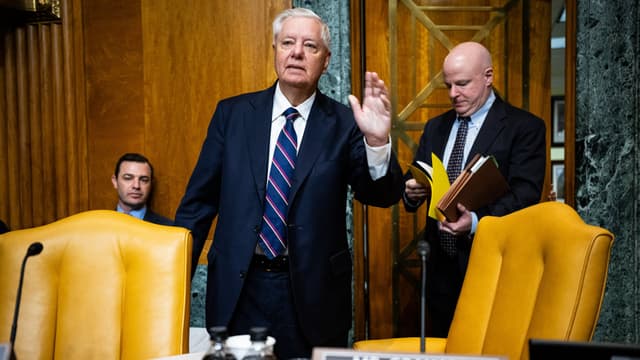
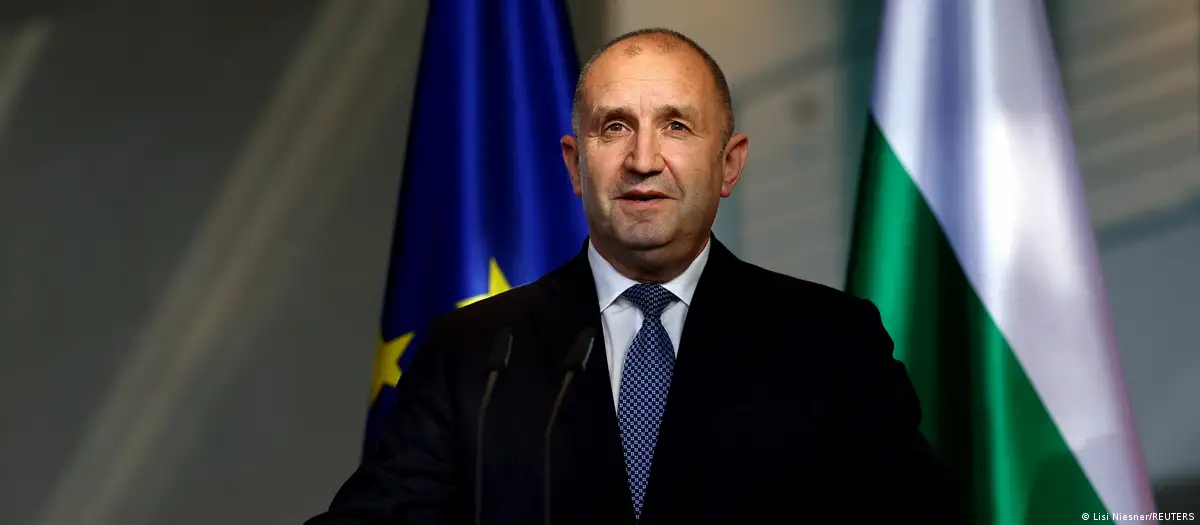 Prime Minister Rumen Radev Source
On 10 June, the Bulgarian Prime Minister Rumen Radev stated that the government was halting the provision of weapons to Ukraine from the stocks of the Bulgarian army. He explained this by saying that Bulgaria had “already given enough”, was suffering socio-economic losses from the war, and that peace, in his view, cannot be achieved by military means.
We examine why this decision was made and what its consequences are.
The current Prime Minister of Bulgaria, Rumen Radev, is the former president (2017–2026) and former commander of the Bulgarian Air Force.
Radev is often described as a politician with a pro-Russian, or at least Moscow-friendly, position. He has repeatedly criticised the transfer of weapons to Ukraine, opposed the concept of “peace through strength”, and promoted the thesis that the war should be ended through negotiations with Russia. “I would be glad if Europe finally agreed to start negotiations with Russia; and not just start them — Europe should take the lead in these negotiations,” the Prime Minister told journalists in Paris in May 2026. Therefore, the decision to halt weapons transfers to Ukraine is a continuation of Radev’s political course aimed at limiting military support for Ukraine and focusing on negotiations with Russia.
Radev’s statement was supported by Bulgarian Defence Minister Dimitar Stoyanov. The official said that since 8 May, Ukraine had not submitted any requests to the Ministry of Defence regarding weapons. In a report on the Ministry’s priorities, Stoyanov stated that Bulgaria does not plan to provide any more weapons to the Ukrainian army. “We have already made it clear that the war in Ukraine will not be resolved on the battlefield. We are witnessing a war of attrition, and no matter how many weapons are accumulated, the only result is the loss of human lives. It is time to sit down at the negotiating table. It is time to seek a just peace, defined by both sides. Of course, the role of the European Union is extremely important,” Stoyanov said.
An even tougher position was taken by the Vazrazhdane party — a far-right nationalist force led by Kostadin Kostadinov, which is often associated with pro-Russian rhetoric, Euroscepticism, and criticism of Bulgaria’s membership in NATO. Unlike the government line of Radev and Stoyanov, which formally concerns primarily the stocks of the Bulgarian army, Vazrazhdane proposes a much broader restriction: to ban not only the direct sale of weapons to Ukraine, but also their re-export through third countries. This is quite critical, because it was precisely through industrial contracts, intermediaries, and re-export that Bulgaria could previously remain an important source of ammunition for Ukraine even when direct supplies were in question. Therefore, Vazrazhdane’s initiative is more dangerous for Ukraine.
At the same time, part of the Bulgarian opposition questions the government’s argument that the halt in supplies is linked to the poor level of provision of Bulgaria’s own army. “The reality is that a very small part of the ammunition that Bulgaria sends to Ukraine comes from Bulgarian army warehouses — around 2%. The rest comes from Bulgarian industry, from factories,” explained Ivaylo Mirchev, an MP from Democratic Bulgaria. According to him, supplies from warehouses are compensated through the European Peace Facility (EPF; an EU financial instrument), while the products of Bulgarian industry are paid for by the Ukrainian side. Moreover, the Bulgarian opposition accuses him of playing to the domestic audience and the pro-Russian electorate: “Bulgaria’s current decisions are more likely to correspond to the wishes of Vladimir Putin,” Mirchev noted.
On 30 March this year, Volodymyr Zelenskyy and the then Prime Minister of Bulgaria, Andrey Gyurov, signed a ten-year security agreement in Kyiv. The document provides for the consolidation of military assistance to Ukraine, the development of defence-industrial cooperation, the joint production of drones and ammunition, as well as joint action in the Black Sea region.
It is difficult to assess the exact scale of assistance to Ukraine, since part of the information remains classified, while a significant share of supplies was previously carried out not through direct interstate deliveries, but through Bulgaria’s defence industry, intermediaries, and third countries. It is known that since the beginning of the full-scale war, Bulgaria has provided Ukraine with 13 aid packages, which included ammunition, armoured vehicles, self-propelled artillery, and air defence systems. In addition, Bulgarian manufacturers supplied weapons through European intermediaries. In 2022, Sofia approved export deals worth more than 1 billion leva, approximately EUR 511.3 million, a significant share of which was directed to Poland as one of the main logistics hubs for assistance to Ukraine.
During his presidency, Radev criticised the transfer of weapons to Ukraine and clashed with previous governments that supported military assistance to Kyiv. However, the president in Bulgaria has limited power, so his position previously functioned more as a form of political restraint or criticism of the government’s pro-Ukrainian course, rather than defining its overall direction. After Radev took over the government, this line shifted into the realm of official policy, with an emphasis on negotiations with Russia and the gradual restriction of support for Ukraine.
Formally, the cooperation agreement between Ukraine and Bulgaria will remain in force, but Radev’s position shows that its practical implementation will depend on domestic politics within Bulgaria itself. Bulgaria’s importance for Ukraine lies in its production of Soviet-standard weapons and ammunition, which are still used by the Ukrainian army.
For Ukraine, this means that the risk lies more in the possible slowdown of defence cooperation projects, in particular weapons production and the supply of Soviet-standard ammunition, which remains necessary for the Ukrainian army.
Radev’s decision to halt the supply of weapons from stocks became a continuation of his political line. Officially, Radev’s position is justified by the state of the Bulgarian army’s stocks, but de facto it corresponds to the politician’s pro-Russian position, aimed at shifting the focus to negotiations with Russia and stopping weapons supplies to Ukraine. He criticised military assistance to Kyiv even during his presidency. The post of prime minister gave him more opportunities to turn this line into government policy.
For now, the government’s decision concerns the reserves of the Bulgarian army, so it is too early to speak of critical changes for Ukraine. However, if, under pressure from pro-Russian forces, Sofia begins to restrict broader supply channels, the consequences could be much more serious. In that case, Ukraine would risk losing not only individual batches of weapons, but also part of the infrastructure of defence cooperation.
You may be interested