 INTERNATIONAL
INFORMATION AND ANALYTICAL
COMMUNITY


+ Join
Support INTERNATIONAL


Yehor Yarosh, expert in U.S. politics, exclusively for Resurgam
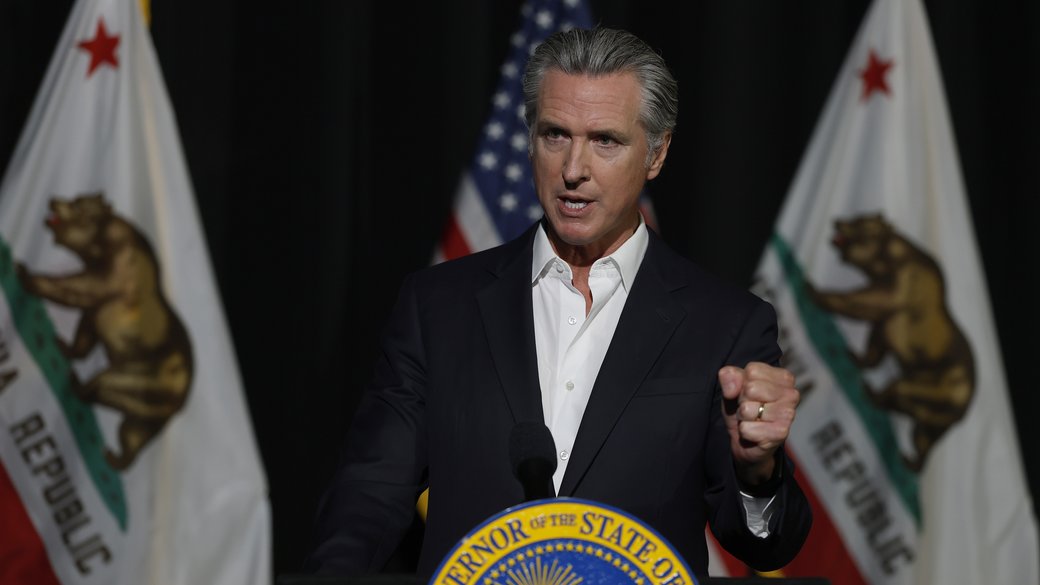 California Governor Gavin Newsom speaks to reporters after participating in an informal conversation at the California Economic Summit in Stockton, October 22, 2025. Photo: Getty Images/Justin Sullivan
Gavin Newsom will not be able to run for a third term, as California’s constitution limits governors to two terms in office. It is worth noting that California’s primary election system operates under a “top two” system, in which the two candidates receiving the most votes advance to the general election regardless of their party affiliation. According to the official results, Democrat Xavier Becerra received 28 percent of the vote, Republican Steve Hilton 24.6 percent, and Democrat Tom Steyer 22.8 percent. Thus, on November 3, California will choose between Becerra and Hilton, while the long-anticipated scenario of a final between two Democrats did not materialize.
Xavier Becerra is a typical candidate of California’s political establishment, although for much of the primary campaign he did not appear to be the clear frontrunner. He represented Los Angeles in Congress for more than two decades, served as California’s attorney general, and headed the U.S. Department of Health and Human Services under Joe Biden. Becerra therefore built his campaign around his 35 years of experience in public service.
Becerra’s political advantage rests on a combination of years of experience, support from the Democratic establishment, and his positioning as one of California’s leading defenders against Donald Trump’s administration. On his campaign website, fighting Trump is listed alongside affordable healthcare, housing, lowering the cost of living, and disaster preparedness. Becerra emphasizes that, as attorney general, he filed 122 lawsuits against the first Trump administration, allowing him to offer Republicans not just rhetoric but concrete legal experience. After the primary, he received the backing of Newsom and other leading Democrats. This turned Becerra’s campaign into a party-wide effort to maintain control of the largest Democratic state.
Becerra may be described as a continuation of Newsom’s socioeconomic agenda, although he himself promises to address its most visible failures. The candidate plans to accelerate the construction of housing across price ranges by streamlining permitting procedures and reducing fees, with an initial focus on unlocking nearly 40,000 already-approved affordable housing units that lack funding. He also promises to curb increases in utility rates, expand health insurance coverage, and introduce public accounting of the costs and outcomes of programs addressing homelessness. At the same time, this continuity is his main vulnerability: voters may see Becerra as yet another representative of the political system that has governed the state for decades but has failed to make housing, electricity, or insurance more affordable.
Steve Hilton offers the opposite image: a political outsider who wants to upend the established order in the state. He was born in the United Kingdom, worked as an adviser to Conservative Prime Minister David Cameron, moved to California in 2012, and later became a host on Fox News. Hilton has never held elected office, which allows him to criticize California’s political establishment while also raising questions about his ability to manage a vast administrative system. His platform may be described as a combination of tax cuts, energy deregulation, increased housing construction, and restrictions on social programs for undocumented immigrants.
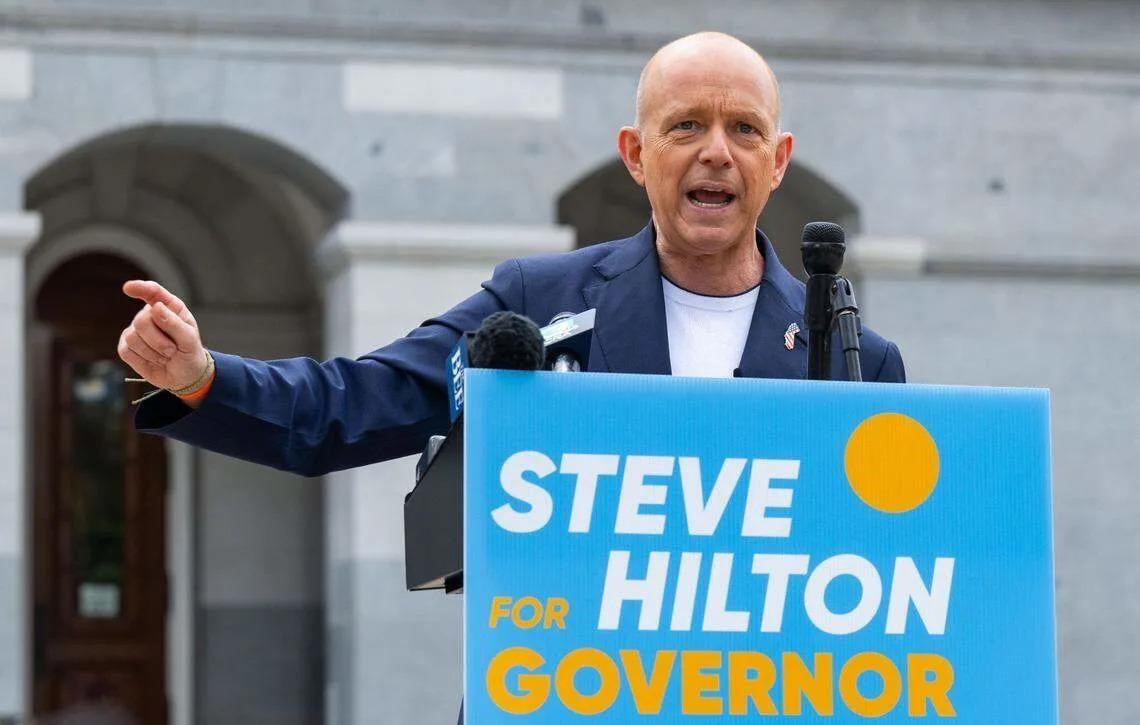 Steve Hilton, the Republican candidate for governor of California. Source
Hilton’s main political contradiction is his dependence on Donald Trump in a state where Trump remains deeply unpopular. The president endorsed Hilton before the primary, helping consolidate the Republican electorate and effectively giving him an advantage over another strong Republican, Chad Bianco. Hilton is now trying to convince Californians that they may dislike Trump but still vote for a Republican governor because of their dissatisfaction with the situation in the state. This will be an extremely difficult task.
The Democrats’ structural advantage in California remains enormous. A July poll shows that approximately 45 percent of registered voters identify as Democrats, 25 percent as Republicans, while another 27 percent are not affiliated with either of the two major parties. The last Republican victory in a gubernatorial election was Arnold Schwarzenegger’s reelection in 2006, after which Republicans have not won a single statewide elected office. For a Republican, this will be a difficult election, and even nearly three months of potential advertising and voter mobilization appear clearly insufficient.
The strongest argument in support of this is an already conducted poll of likely participants in the November election. According to a July PPIC poll, Becerra leads Hilton 61 percent to 36 percent, with an advantage across all major regions, age groups, racial groups, and socioeconomic groups. 93 percent of Democrats intend to vote for Becerra, compared with 90 percent of Republicans for Hilton, but among independent voters, the Democrat leads 60 percent to 34 percent. This means that it is not enough for Hilton to mobilize the Republican base: he needs to radically shift the preferences of voters who are not affiliated with either party.
In addition to the race for governor, the California election may become another nationwide referendum on opposition to President Donald Trump’s policies. For a significant portion of the Democratic electorate, the vote will be not only a choice between Becerra and Hilton, but also an opportunity to demonstrate their views on the incumbent president’s policies and the candidate he endorsed. A similar scenario was seen in the spring of 2025 in the Wisconsin Supreme Court election, where the campaign effectively became a contest between Trump’s supporters and opponents. Despite the president’s personal endorsement of Republican candidate Brad Schimel and Elon Musk’s substantial campaign spending, the victory went to the candidate backed by Democrats. This election may be described as the first electoral signal of voters’ attitudes toward Trump’s policies during his second presidential term.
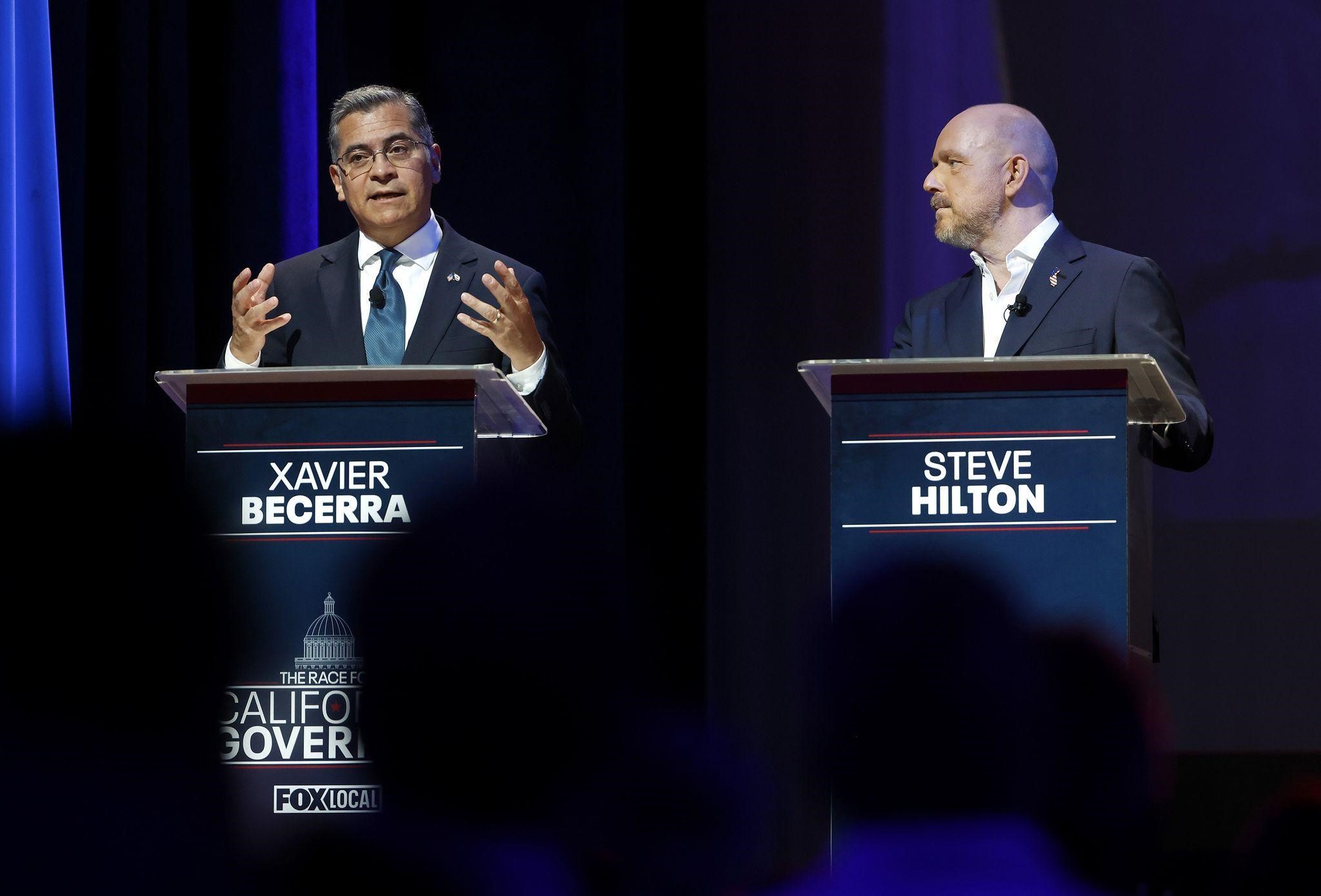 Steve Hilton and Xavier Becerra, candidates for governor of California, during a debate on April 28, 2026. Source
Newsom himself does not intend to leave national politics after his gubernatorial term ends, and this is hardly a secret anymore. In October 2025, he acknowledged that he would seriously consider a presidential run after the 2026 midterm elections. There has been no formal announcement yet, but there is little political need for one, as an early launch would create legal and financial constraints and distract from the remainder of his tenure as governor. Instead, Newsom is acting as an unofficial candidate, testing which messages resonate, building a donor network, and getting to know voters in the early primary states.
His main political proposition is the image of a Democrat who is not afraid to answer Trump in his own language. Newsom has clashed with the White House over immigration raids, the use of the National Guard, climate policy, and the redrawing of congressional districts, often adopting an aggressive social media style. The fight over a new map of House districts was particularly important: its approval in 2025 boosted his standing within the Democratic Party, as it gave Democrats the opportunity to gain up to five additional seats in the House of Representatives while allowing Newsom to demonstrate a tangible result in his confrontation with Trump. The victory strengthened his reputation as one of the party’s most active opponents of Republicans, helped generate 1.2 million contributions, and expanded his donor network beyond California.
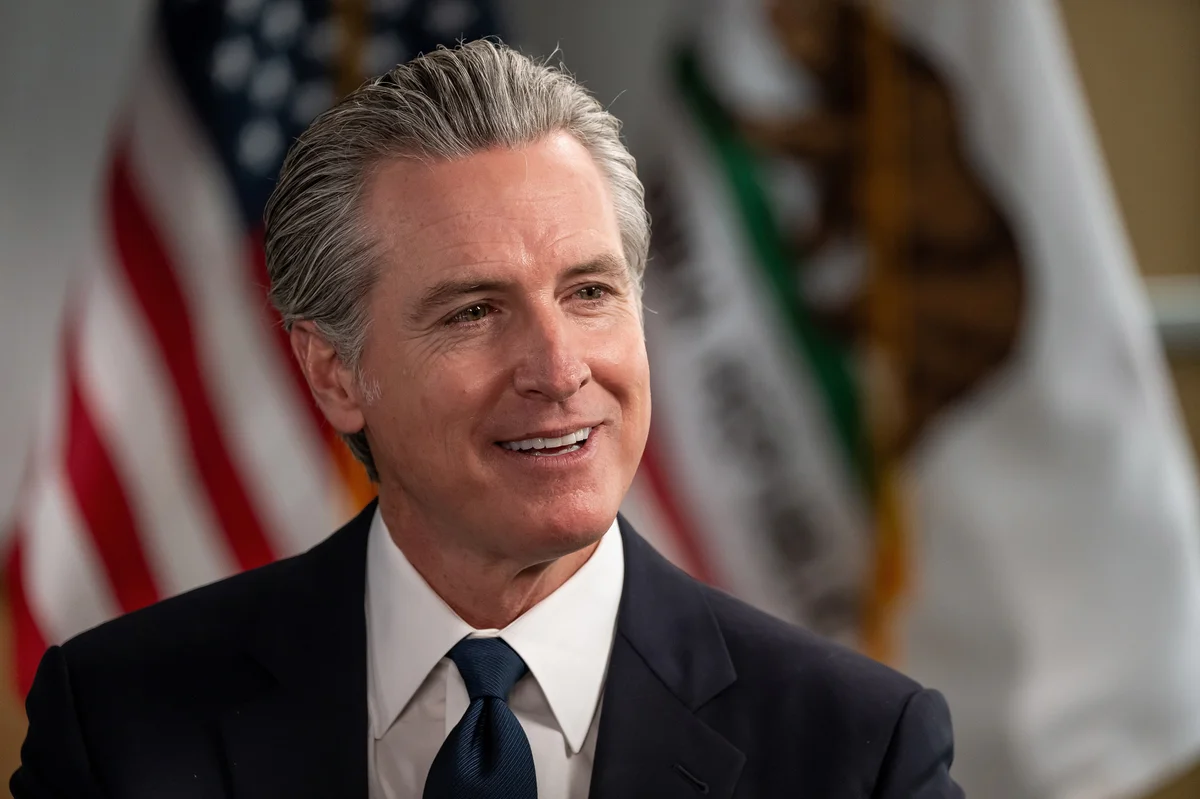 Gavin Newsom, governor of California. Source
Newsom’s preparations have another dimension as well. As early as the summer of 2025, he made a two-day trip through small towns in South Carolina, met with African American religious leaders, and helped to raise $160,000 for the local Democratic Party organization. In July 2026, the party committee recommended keeping South Carolina as the first state in the 2028 Democratic primary calendar, although the decision still needs to be formally approved by the Democratic National Committee. Thus, South Carolina will very likely be one of the first tests of Newsom’s presidential ambitions, as his performance in the state could shape perceptions of his candidacy at the very start of the primary race.
According to national polling, Newsom is already among the leading potential candidates, but he does not have a guaranteed lead. In a July poll, Pete Buttigieg, former U.S. secretary of transportation, received 19 percent among Democratic voters, Newsom 17 percent, Jon Ossoff, senator from Georgia, and Alexandria Ocasio-Cortez, a congresswoman, each received 13 percent, while Kamala Harris, the former Democratic presidential candidate, received 8 percent. For a campaign that has not formally begun, second place is a strong result and indicates that the governor has high name recognition.
His main assets are the governorship of California, an extensive donor network, and constant access to a national audience. Newsom governs the largest Democratic state and can point to experience managing an economy on a global scale. Another asset is the support of influential figures in Hollywood and the entertainment industry. During the 2021 gubernatorial recall campaign, Netflix co-founder Reed Hastings donated $3 million, while Newsom’s 2022 campaign received financial support from prominent directors, producers, and executives of major film and media companies. This network provides access to large donations and additional media attention. In a party that has yet to settle on a single leader following its 2024 defeat, Newsom offers a clear profile: a media-savvy governor willing to confront Republicans in their own combative style and take the political fight into “red” states. It is precisely this combination of executive experience, the ability to raise substantial funds, and an aggressive political strategy that makes him one of the best-prepared potential candidates.
However, California is not only his greatest political asset but also his greatest political liability. Republicans will inevitably make the state’s problems central issues in the national campaign. Newsom will have to explain why the world’s fourth-largest economy generates enormous revenues while at the same time compelling some members of the middle class to leave the state or spend a disproportionately large share of their income on housing.
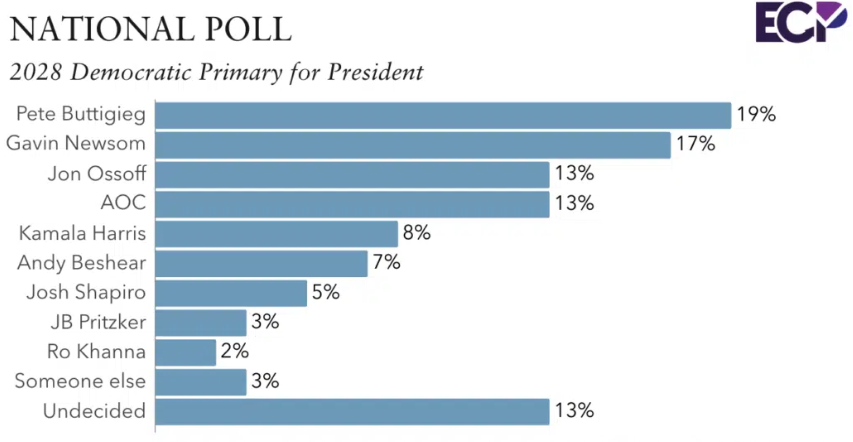 Ranking of potential Democratic presidential nominees in the 2028 U.S. presidential election, according to the Emerson College Polling national poll (July 2026). Source
He will also have to compete with Buttigieg for moderate and highly educated voters, with Ossoff for voters seeking generational change, and with Ocasio-Cortez for the progressive electorate. It is therefore more accurate to describe Newsom not as the leading favorite for 2028, but as one of three or four top-tier candidates who has the strongest “starting infrastructure.”
Newsom’s political views combine economic populism, technological optimism, and cultural pragmatism, with each of these elements reflected in its own slogans and policy proposals. Economic populism was most clearly evident during his 2018 campaign, which Newsom ran under the slogan “Courage for a Change.” At the time, he promised guaranteed healthcare for all, a “Marshall Plan” for affordable housing, support for children “from birth through college,” and the mobilization of every available resource to combat child poverty. Behind these slogans were specific goals: to ensure the construction of 3.5 million new housing units by 2025, transition to a single-payer healthcare system, introduce universal preschool education, provide two free years of education at community colleges, and create 500,000 apprenticeship positions by 2029. Importantly, none of these promises was fully fulfilled, although there has evidently been some progress toward addressing these issues.
At the national level, this rhetoric has been supplemented by a new tax agenda: Newsom proposes a minimum federal tax for individuals with net worths exceeding $100 million, restoring corporate taxation to the level in effect before 2017, raising taxes on large inheritances, and closing the “buy, borrow, die” loophole, which allows the wealthiest Americans to live off loans secured by their assets without generating taxable income. At the same time, he insists on a federal mechanism and opposes a separate California tax on billionaires, arguing that at the state level, wealthy individuals can avoid such a tax simply by changing their state of residence.
When it comes to technology and innovation, Newsom does not support attempts to halt the technological revolution, as Democrats in Congress such as Bernie Sanders have advocated, nor does he favor restricting the development of U.S. AI companies or imposing a blanket moratorium on data center construction. On the contrary, in his view, the United States should maintain its technological leadership and stay ahead of China in artificial intelligence, energy, and digital infrastructure. However, he has floated the idea of creating a public investment fund that would hold stakes in AI companies and allow Americans to share in the wealth they create. In effect, he is proposing partial public ownership of the largest AI companies.
On cultural issues, Newsom’s pragmatism lies in trying to separate the defense of basic civil rights from positions associated with the left wing that are not supported by a majority of Americans. In the first episode of his podcast with conservative political commentator Charlie Kirk, he called the participation of transgender girls and women in women’s sports “deeply unfair,” distanced himself from the practice of displaying pronouns, and called the campaign to defund the police “insanity.” These statements reflect public sentiment: in February 2025, 66% of American adults supported requiring transgender athletes to compete on teams corresponding to the sex they were assigned at birth, while 56% supported protecting transgender people from discrimination. It is along this line that Newsom is trying to define his position, agreeing with some conservative criticism on narrow issues that are electorally disadvantageous for Democrats, while not abandoning support for LGBTQ+ people more broadly. In particular, in 2024 he signed AB 1955, which prohibited school districts from requiring employees to disclose information about a student’s sexual orientation or gender identity without the student’s consent. Thus, this is not a complete ideological shift to the right, but an attempt to deprive Republicans of their strongest culture-war issues while preserving the liberal core of his politics. At the same time, such selectivity creates a risk for Newsom of appearing not pragmatic but rather like a politician who changes his positions in response to polling.
Newsom has also articulated a broad position on Ukraine. His stance clearly condemns Russian aggression and supports sanctions, humanitarian aid, military cooperation, and the involvement of American businesses in reconstruction, but it provides little detail on the scale of future U.S. federal military assistance or the terms of a peace agreement. This is understandable for a governor who has no formal authority over foreign policy. If he officially enters the race, which should not be expected in 2026, he will have to set out his vision of how he would reconcile support for Ukraine with the growing demand among Americans to reduce foreign spending.
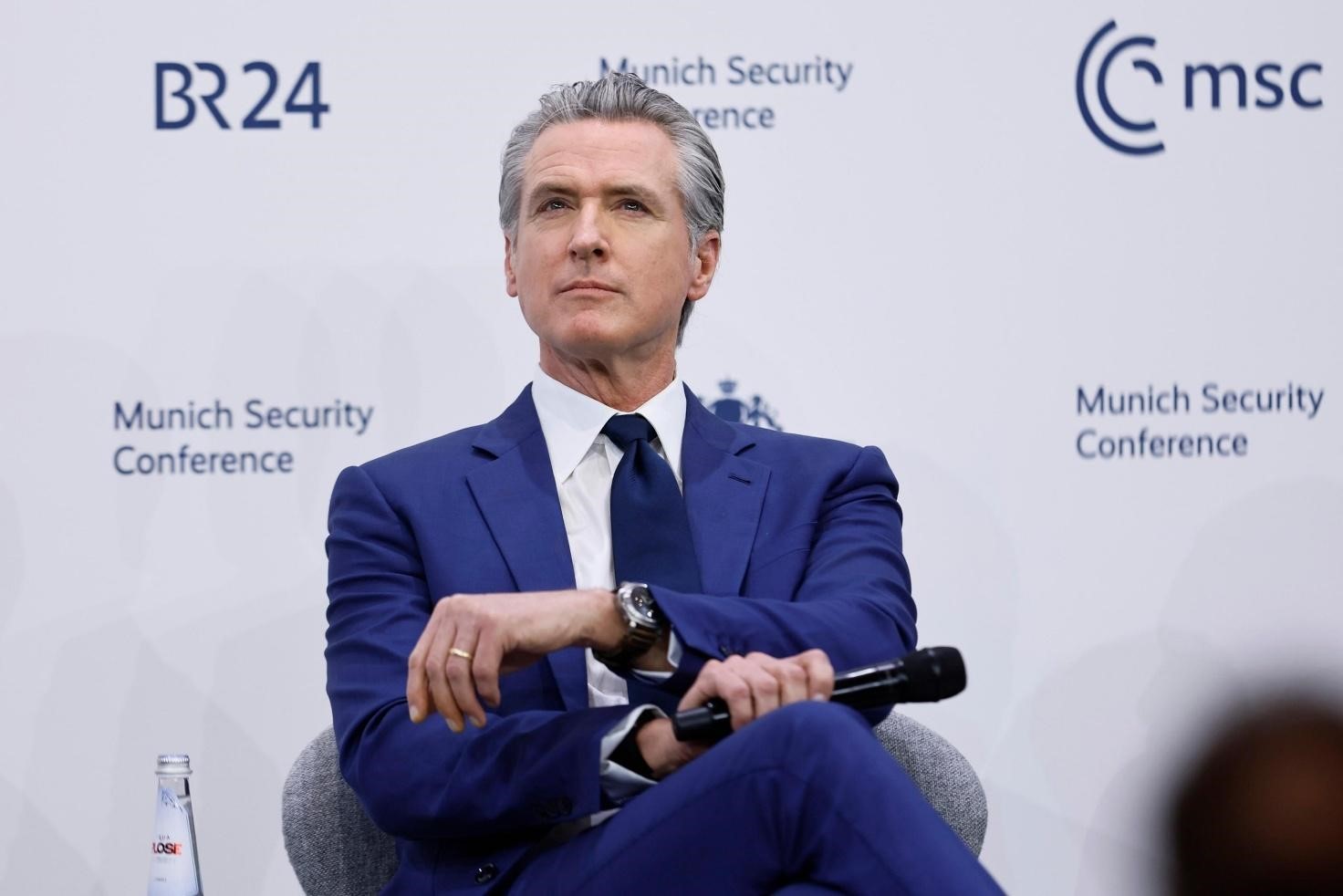 Gavin Newsom at the Munich Security Conference, Munich, Germany, February 13, 2026. Source
Authority over foreign and national security policy rests with the president, Congress, and the federal government, so the direct influence of California’s governor over U.S. policy toward the war is limited. However, the state can engage through government contracts and investment funds, programs for refugees, universities, and technology companies. Thus, the election result will determine whether the regional infrastructure for cooperation with Ukraine established under Newsom will remain in place.
Its foundation is Ukraine’s partnership with the California National Guard, established in 1993 as part of a U.S. Department of Defense program. California service members helped Ukrainian units transition to NATO standards and develop the sergeant corps. Following the full-scale invasion, the National Guard established the Ukraine Fusion Cell within 24 hours to coordinate Ukraine’s requests for equipment and other assistance. Under Newsom, the military partnership was supplemented by sanctions and humanitarian measures. In March 2022, the governor ordered a review of state contracts, instructed state agencies to end cooperation with sanctioned companies, and called on the state’s pension funds to limit Russia-related investments. Support for Ukraine became an area of work for several California state agencies.
An economic dimension is also gradually taking shape. In May 2024, California lawmakers established a sister-state relationship with Lviv Oblast, and in February 2026, representatives of the state and the Lviv Regional Military Administration signed a memorandum of cooperation in healthcare, energy, agriculture, defense development, infrastructure, education, and digital technologies in the presence of Newsom.
The state has also funded the integration of Ukrainians: the Department of Social Services allocated $12.8 million to 22 organizations through the Ukrainian Newcomers Support Program and another $3.3 million to three organizations through Ukrainian Support Services. The programs cover employment, housing, legal assistance, and access to social services. However, they depend largely on federal funding and are due to end in September 2026. Therefore, the main test of cooperation with Ukraine for the next governor will be whether this support can be maintained after the emergency grants expire.
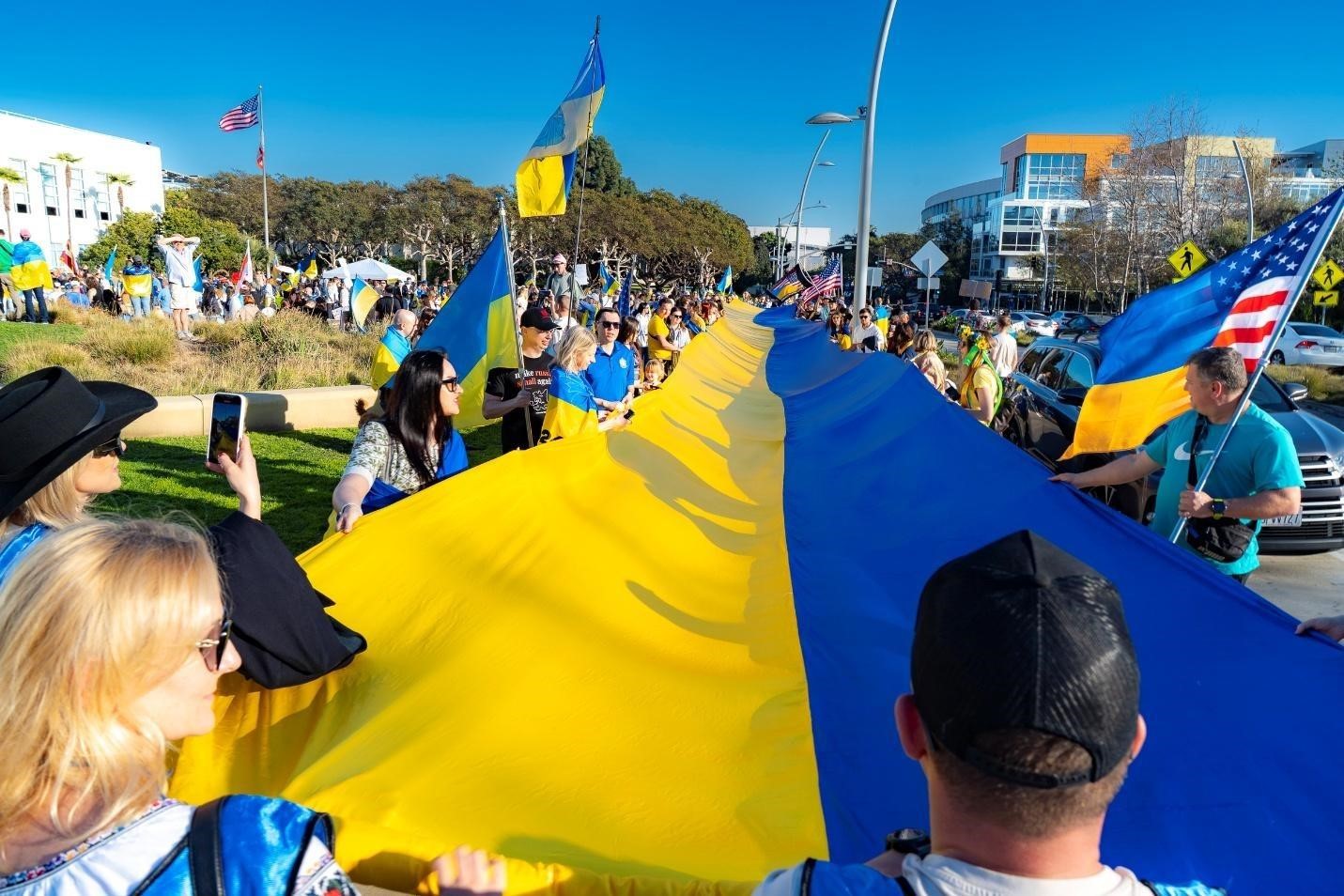 A rally in support of Ukraine in Los Angeles, February 24, 2025. Source
The significance of this election extends beyond who will lead California. The governor will be elected at the same time as members of the House of Representatives, so Becerra’s campaign should serve as a mechanism for mobilizing Democrats in the districts for which Newsom sought to redraw the electoral map. In the spring, party leaders were concerned that an unsuccessful gubernatorial campaign could depress Democratic turnout and put congressional seats at risk. Trump’s endorsement of Hilton, in turn, gives Republicans a recognizable focal point for mobilization even with little chance of winning the governorship. Therefore, a political success for Republicans may consist not only of a Hilton victory, but also of narrowing the usual gap and achieving high turnout among their supporters in competitive districts.
The second test will be which side manages to set the campaign’s agenda. If Becerra turns the vote into a choice between California and the Trump administration, Newsom will be able to present the result as confirmation that his strategy of direct confrontation with the White House is effective. If, however, the Democrat is compelled to base his entire campaign around the issues put forward by Hilton, Republicans may lose the election but still win the battle over defining the key issues. In that case, a Becerra victory would mean only that the Democrats’ partisan advantage remains sufficient to retain power, rather than that voters approve of their course. For the party, this is a fundamental distinction: defending an office by capitalizing on opposition to Trump is considerably easier than restoring confidence in Democrats’ ability to govern large states.
The actions of Newsom’s potential rivals already show the criteria by which they are likely to assess the California result. Harris has endorsed Becerra, thereby politically tying herself to the preservation of the state’s current course. A convincing victory would strengthen her case for rebuilding a broad anti-Trump coalition, while a weak result would associate her with the problems of California’s political establishment. Buttigieg, meanwhile, is campaigning for Democrats in competitive Iowa and urging on the party to win back people who believed Trump’s promises to defend the “forgotten man”—the ordinary citizen whom, in Trump’s words, the elite ignores—and not start new wars. His main argument against Newsom, therefore, may be his ability to expand the Democratic coalition in states where voters genuinely need to be won back. Ossoff currently says he has “zero interest” in the 2028 race and is focused on winning reelection in Georgia, building his campaign around curbing abuses by the White House, tariffs, and cuts to health insurance coverage. However, a victory in a state that backed Trump would itself make him a stronger national contender, regardless of his current denials. Ocasio-Cortez has also not announced a candidacy, but she has already outlined the substance of a potential political platform, including a single-payer healthcare system, a living wage, and workers’ and women’s rights. She could therefore portray weak mobilization in California not simply as Becerra’s failure, but as evidence that continuity without a clear socioeconomic choice no longer inspires the Democratic electorate.
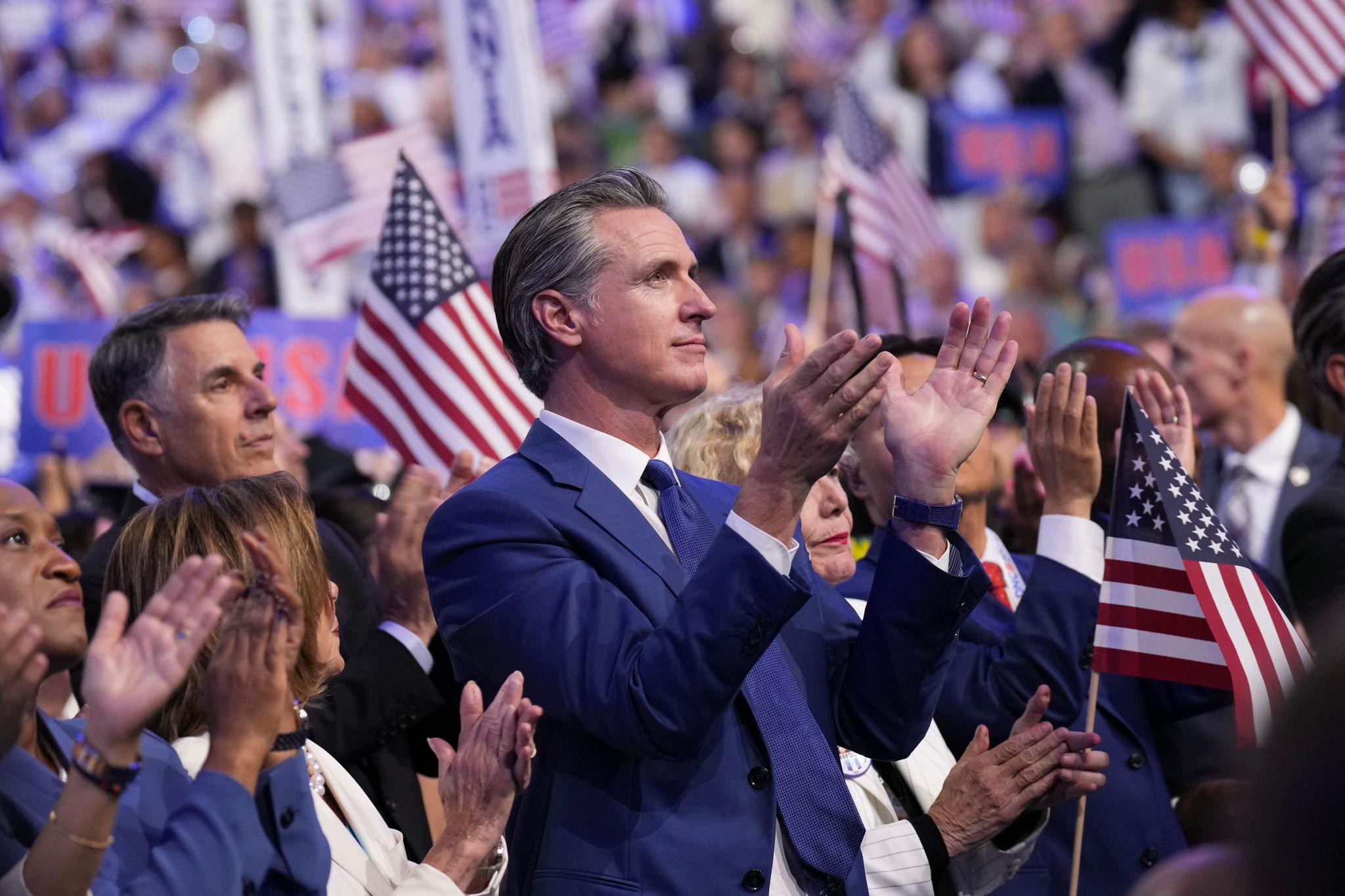 Gavin Newsom during the final day of the Democratic National Convention in Chicago, August 22, 2024. Source
You may be interested