INTERNATIONAL
INFORMATION AND ANALYTICAL
COMMUNITY


+ Join
Support INTERNATIONAL


Ostap Denysenko, a U.S. politics analyst, exclusively for Resurgam
 Democratic Senate candidate James Talarico delivers a speech at a rally at Rich’s Houston in Houston on May 27, 2026. Photo: Danielle Villasana/Getty Images
Analysts tend to believe that Democrats will regain control of the House of Representatives, but there are doubts about whether they will be able to take back the Senate. The electoral environment is currently favorable to Democrats — an unpopular Republican president, rising fuel prices, and increasing inflation. This year, Republicans are on the defensive in the Senate, having to defend 22 seats compared with 12 for Democrats, but even so, regaining control of the Senate looks like a difficult task, as Democrats need to win four seats and lose none. Republicans have an easier path — even if they have only 50 seats, they can always rely on the vice president’s vote, as the vice president is the president of the Senate and has the power to cast the deciding vote when the Senate is evenly divided. The Democrats’ path to regaining control of the Senate is difficult and requires historic victories in some states.
These states include Texas, Maine, Alaska, and North Carolina. Republicans’ positions in these states have weakened noticeably, making them the main targets for Democrats. The article will examine these states, the candidates for the Senate, and their positions.
No Democrat has won a statewide election in Texas since 1994. 2026 may be a turning point. Republicans have chosen Texas Attorney General Ken Paxton as their candidate, who is considered a weak candidate. Only 34% of state residents approve of his performance in office. In 2023, the Texas House of Representatives, where Republicans hold a majority, even voted to impeach Paxton over allegations of corruption, bribery, and abuse of office. He avoided losing his position only because the impeachment vote failed in the state Senate, where the Republican majority was led by Paxton’s then-wife, Angela Paxton. However, in 2025, Angela wrote on X that she had “filed for divorce on biblical grounds” — court records later revealed that the reason for the divorce was Ken Paxton’s adultery. While already serving as the Republican Senate candidate, Paxton travelled to London with his lover for 4 July instead of celebrating the 250th anniversary of the United States at home.
 James Talarico (left) and Ken Paxton (right). Source
Paxton’s Democratic opponent is James Talarico, a member of the Texas House of Representatives and a master’s degree candidate in divinity at Austin Presbyterian Theological Seminary. He was first elected to the House of Representatives in 2018, marking an important stage in his career, as he won his first election in a district that had previously been held by Republicans.
During the primary, his biggest problem was his low name recognition compared with his opponent, Dallas Congresswoman Jasmine Crockett, who had already built her profile in national politics. However, Talarico benefited from the blocking of his interview with Stephen Colbert, which he attributed to fears of the Federal Communications Commission: “He was supposed to be here, but the lawyers at our network, who called us directly, made it clear that we could not have him on the show.”
The incident increased his name recognition, while a disciplined campaign ultimately allowed him to defeat Crockett in the first round of the primary in March, while Republicans needed a runoff and became mired in intraparty disputes for two months.
Talarico has built his campaign around his identity as a Christian and economic populism aimed at the “elite,” hoping these messages will appeal to dissatisfied Republican and independent voters while also mobilizing the Democratic base. He also makes a point of emphasizing that he does not always share the views of his fellow Democrats on certain issues, including the southern border.
James Talarico is making an impressive run as election day approaches. Several polls show him leading Paxton by two percentage points. It is a narrow margin, but polls like these would have been difficult to imagine before, and it was previously hard to imagine any poll from Texas showing a Democrat in the lead.
Winning the support of Latino voters is particularly important in this election. It is worth noting that in 2024, a significant share of Latino voters switched their support to Trump out of frustration with the Democrats, but two years later, many came to regret their choice. The U.S. Latino Business Council conducted a poll and found that seven in ten respondents said tariffs imposed by Trump had negatively affected their businesses. Among those surveyed, Talarico has a seven-point lead over Paxton. Nearly a quarter of those who supported Senator Cornyn in the Republican primary now say they will support Talarico, while more than half say they will support Paxton. Talarico and Paxton are competing for these voters, who could determine the outcome of the election. Another noteworthy point is that Talarico has raised significantly more money from donors than Paxton. Talarico has raised $68.5 million in donations, compared with just $9.2 million raised by Paxton. Paxton’s biggest problem has been that Cornyn’s former donors refuse to contribute to Paxton’s campaign.
The Democratic Party is therefore facing a favorable environment in Texas. They have a strong candidate, while Republicans have chosen an exceptionally controversial and weak candidate. Moreover, the election will take place during a period that is electorally favorable to the party. However, this does not guarantee James Talarico a victory — Texas has voted Republican for a long time, and this has become the norm, so Talarico will have to do a great deal to build a winning coalition for the November election. A victory that could guarantee Democrats control of the Senate.
The choice of the Democratic candidate in this state has turned into the most dramatic storyline of this election cycle. Troy Jackson was not supposed to become the party’s candidate. That position was held by Graham Platner, a Marine Corps veteran who served in the wars in Iraq and Afghanistan and is now running an oyster-farming business. Platner has been actively involved in local politics and represents the progressive wing of the party, which includes Senator Bernie Sanders and Congresswoman Alexandria Ocasio-Cortez. Platner became known for criticizing the Democratic Party establishment and gained significant support among young people through a successful social media campaign. During the campaign, he spoke about fighting the “billionaire class,” universal health insurance, described Israel’s actions in Gaza as genocide, and called for the abolition of ICE (Immigration and Customs Enforcement). Platner’s views are quite left-wing for a state that tends to elect moderate candidates, but he managed to tap into the mood of Democratic voters who had become frustrated by the lack of action from the party’s politicians. All of this allowed Platner to defeat the state’s governor, Janet Mills, in the primary, although she withdrew her candidacy before the primary.
However, the biggest problem for Graham Platner turned out to be the scandals. First, Platner’s old Reddit comments surfaced in which he described himself as a communist, said that white people living in rural areas were stupid and racist, downplayed the problems faced by service members when reporting sexual assault, and urged people to “act like adults” and avoid “passing out” in order to prevent rape. Then photos of his tattoo surfaced, which resembled a Totenkopf. Platner himself said that he had “chosen a menacing-looking symbol with a skull and crossbones from the wall because we were Marines, and the skull and crossbones are a fairly typical military symbol.” Later, he reposted a post on X by far-right blogger Stew Peters, in which Peters criticized Republicans and Democrats over the war in the Middle East, adding his own comment: “As always, there is one thing that unites Republican and Democratic politicians: sending other people’s children to die in pointless wars in the Middle East.” The post was later deleted. Despite these scandals, Platner continued to lead in polls during and after the primary, where he was ahead of Susan Collins. However, allegations of sexual assault made by a woman who had been dating him ultimately brought his campaign to an end.
Democrats had to find a replacement for Platner at short notice, and on 19 June, they chose Troy Jackson, the former president of the Maine Senate.
As a replacement, Jackson satisfied everyone in the party. The progressive wing supported him because he has a good relationship with Platner and a similar platform, which includes higher taxes on the wealthy and universal health insurance. Moreover, he is literally from the working class — before entering politics, he worked as a logger. The party establishment considers him a safe choice because they know him: he spent a total of 14 years in the state Senate, serving as Democratic leader and later as president of the chamber. Most importantly, he has none of the scandals that plagued Platner. The only news about his conduct online concerns an anonymous account on the Bangor Daily News website that he used to criticize Republican Governor Paul LePage over a bill that would have allowed Canadian loggers to work in the state — an issue that launched Jackson’s political career back in the 1980s. It is worth noting, however, that Platner’s scandals have remained an issue for Jackson.
Jackson’s biggest problem is his lack of the charisma that Platner had. And he needs it, because his opponent, Susan Collins, is a political juggernaut. She has represented the state in the Senate for 29 years, setting a record, and plans to continue doing so. Collins criticizes the left-wing platform of Platner/Jackson, emphasizing that it will be paid for by middle- and low-income taxpayers. Like any politician of her stature, Collins has political baggage that makes reelection more difficult. She has always presented herself as a centrist who can go against the decisions of her party and President Trump. This is important because 59% of state residents disapprove of the president’s performance. However, her critics rightly point out that her party-line voting rate in 2025 was 94.6%; she voted to confirm Judge Brett Kavanaugh, who voted to overturn the constitutional right to abortion, and supported a $70 billion bill to ensure funding for federal immigration enforcement agencies. It is worth noting, however, that Collins also voted to confirm Supreme Court nominees put forward by Joe Biden and voted against the appointment of Todd Blanche, Trump’s lawyer, as attorney general.
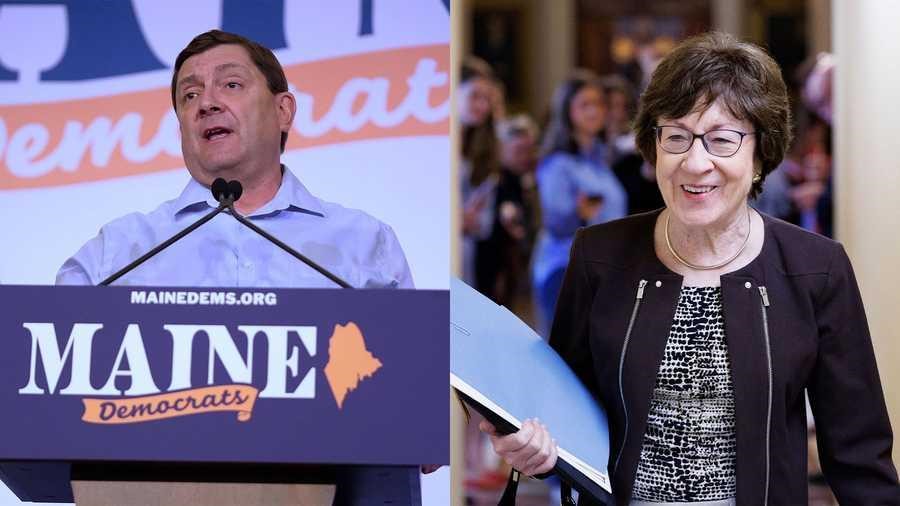 Troy Jackson (left) and Susan Collins (right). Source
Defeating Collins will not be an easy task for Democrats. She has extensive experience, has built strong ties across the state, and has avoided scandals. But the Democrats’ fight is far from hopeless. The election will take place in a favorable political environment, as President Trump’s disapproval rating reaches new highs, and this is weighing on Republican candidates as well.
Alaska is unique. It is the largest U.S. state by area, yet its population is only 737,000, well below one million. This makes it the third least populous state in the country, and Alaska therefore has only one seat in the House of Representatives. That seat is elected statewide through a rather unusual process. All candidates, regardless of party affiliation, compete in the same primary, with the four candidates receiving the most votes advancing to the general election. The general election is then decided through ranked-choice voting. It is also worth noting that Alaska is a red state.
From 1973 to 2022, Alaska’s sole seat in the House of Representatives was held by Republican Don Young. After his death, a special election was held to choose someone to complete the remainder of Young’s term. Democrat Mary Peltola won the election, defeating Sarah Palin in the second round. Peltola repeated her success in November of that year. In 2024, however, Peltola lost the election to Nick Begich III, a member of the influential Begich family, which has deep roots in the state. Despite that defeat, Peltola was the only Democrat to win a statewide election since 2008. It was therefore natural to expect her to become the party’s candidate for governor or Senate. Peltola was persuaded to run for the Senate. Among her advantages is her experience winning statewide elections, as well as her position as a member of the Democratic Party’s conservative wing. She has also repeatedly broken with the party’s position in the House when it came to issues such as the border or arms for Israel.
Peltola’s campaign is built around issues such as affordability, imposing term limits on senators, and protecting local fishermen — fishing is an important part of the state’s economy, accounting for roughly 7% of its GDP. These are fairly typical Democratic positions. However, unlike most Democrats, Peltola supports increasing oil production in the state, which is known for its substantial reserves, as a way to address high fuel and food prices. The state’s geographic location makes it more expensive to transport goods, making the cost of living in Alaska high. As a result, fuel prices have a significant impact on the lives of the state’s residents.
Since the war with Iran began and fuel prices rose, the cost of living has become even higher. This issue is particularly damaging to Dan Sullivan, the Republican senator who is seeking to defend his seat in the Senate. Sullivan became a senator in 2015, and this will be his third Senate election. He focuses more on foreign policy and defense issues and, like Peltola, supports increasing oil production in the state. His problem is Trump’s policies, which have already hit the state, as well as his vote against limiting Trump’s powers over the war in Iran. Sullivan does not always vote the way Trump wants, but it was the war with Iran that had the greatest impact on ordinary Alaskans.
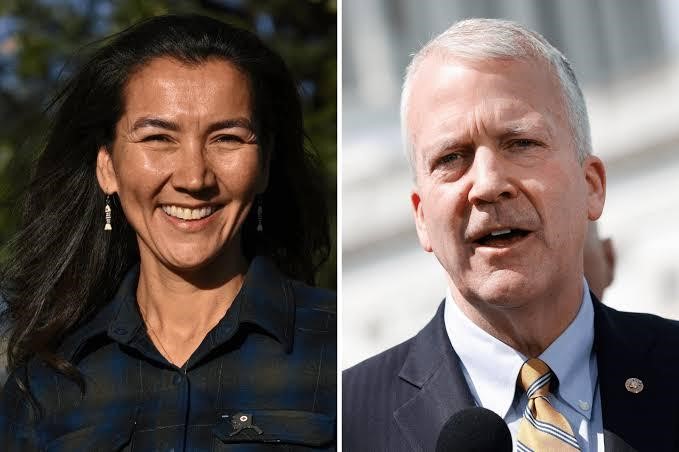 Mary Peltola (left) and Dan Sullivan (right). Source
According to Alaska Survey Research, the state’s most accurate polling firm, Sullivan is trailing Peltola by 1.6% in the final election. This is a narrow margin, but for a red state like Alaska, it is significant, as it could cost Republicans a Senate seat if conditions remain favorable to Democrats. Even so, this does not mean that Sullivan is bound to lose. It will be another close-fought campaign for both candidates.
North Carolina is another example of how Donald Trump’s actions have worked to the Democrats’ advantage.
A year ago, incumbent Senator Thom Tillis announced that he would not seek reelection because of his disagreements with Trump. He did not believe he could win the primary, and given what happened to Senators John Cornyn and Bill Cassidy, he understood the situation correctly. This left an open seat, which Democrats seized on by persuading former North Carolina Governor Roy Cooper to run for the Senate.
An important point is that Cooper is a master of winning elections in the state. From 1987 to 2001, he was elected to both chambers of the North Carolina General Assembly. From 2001 to 2017, he served as the state’s attorney general, and in 2012, Republicans did not even field a candidate against him. From 2017 to 2025, Cooper served as governor of the state. North Carolina is a competitive state, so Tillis should have been Cooper’s strongest opponent. Tillis had served in the North Carolina House of Representatives, where he was speaker, and since 2015 had represented the state in the Senate after taking the seat from the Democrats. Instead, Republicans chose former Republican National Committee Chairman Michael Whatley, who had never run for elected office before. Trump endorsed his candidacy in the primary because of his loyalty.
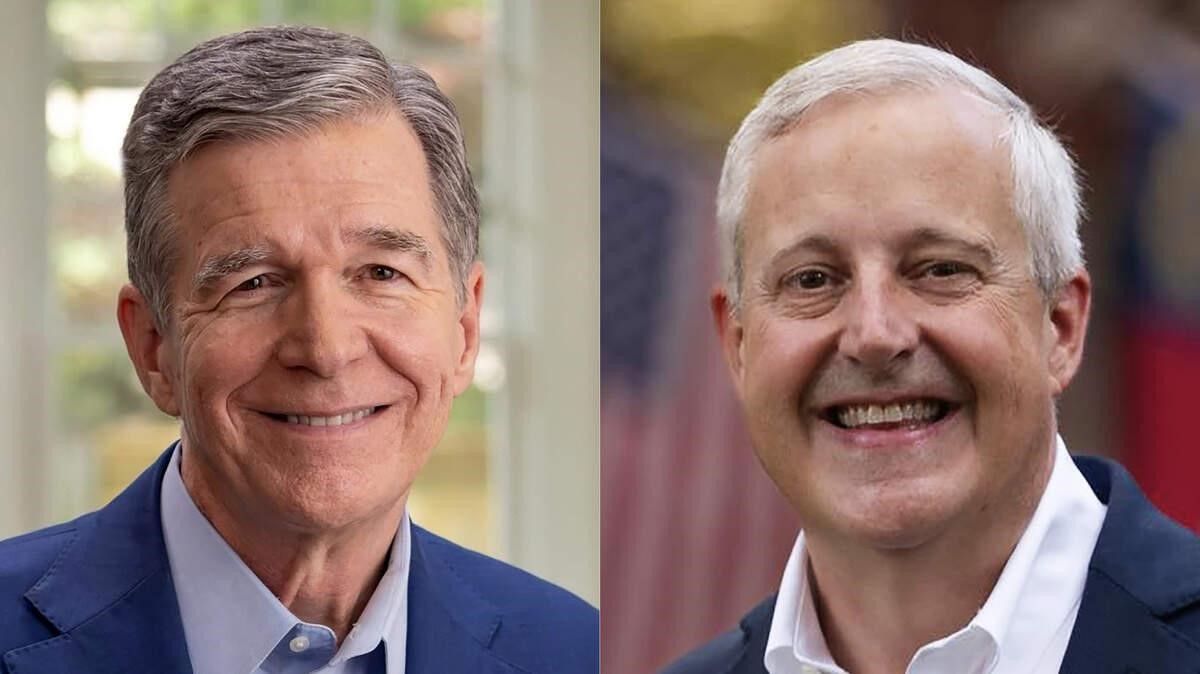 Roy Cooper (left) and Michael Whatley (right). Source
Nebraska is a special case because it clearly demonstrates that Democrats do not need to win every state in order to regain the majority. Nebraska is a deeply red state, but despite this, there is a possibility that Republicans could lose the seat to independent candidate Dan Osborn.
Osborn is a U.S. Navy veteran and a union leader in the state. He already ran for the Senate in 2024, when his opponent was Senator Deb Fischer. Osborn lost to her by 6.67 percentage points. In the previous election, however, Fischer had won by 19%, while Trump carried the state by 20.46%. It is also worth noting that Republicans spent $3 million on the campaign at the time. Given all this, Osborn’s result was considered a major success, so he decided to make another attempt. He is described as a populist focused on protecting small businesses, family farms, and workers.
His main promise is that he will not join either of the Senate’s caucuses, remaining an entirely independent senator. This is convenient for Democrats because they could not count on winning this seat in the first place, so an Osborn victory and a Republican loss would be the ideal outcome for them.
It is worth noting the strategy Democrats adopted in the state. They held their own primary, which was won by Cindy Burbank, who promised to withdraw from the race and followed through on that promise. The purpose was to clear the way for Osborn. Republicans understood what was happening, so a candidate with close ties to the Republican Party also ran in the primary, but lost badly. Later, the Republican-controlled state government tried to force her name onto the ballot, but lost that battle.
Osborn is trying to unseat Republican Senator Pete Ricketts, who served as governor of the state from 2015 to 2023. He became a senator in 2023 after being appointed to finish the term of his predecessor, who had left office early. Ricketts is a MAGA Republican who opposed mask mandates during COVID-19, supported a total abortion ban with no exceptions for victims of incest or rape, opposed environmental protections and gun control, supported the war against Iran, and voted against restrictions on Trump’s powers. However, he does not support Trump’s claims that the 2020 election was “stolen” and criticized the second Trump administration’s plans to sell advanced semiconductors to China.
It is currently impossible to draw any conclusions from the polls, as most of them were conducted by polling firms affiliated with Dan Osborn. In these polls, the independent candidate either leads or trails by a margin of no more than 1%.
 Dan Osborn (left) and Pete Ricketts (right). Source
Money is always an important factor during election cycles. Parties tend to spend more in competitive states or in states where they have a chance to take a seat from their opponent. They usually try to save money in their “safe” states, where victory is all but guaranteed. Unexpected expenses are always a problem.
Regaining control of the Senate is a difficult task for Democrats, but not an impossible one. A year ago, it seemed that the Democratic Party would be able to regain control only of the House of Representatives. However, Donald Trump’s policies have opened a window of opportunity for Democrats to retake the Senate as well. Democrats have made good use of that opportunity and chosen the right candidates to compete for the seats they need, even when those candidates were not favored by the party leadership, as in the case of Graham Platner. However, this does not guarantee victory. A difficult campaign and a tough fight lie ahead, with no guarantee of success. Still, party leaders will be able to say that they made the most of the opportunity.
You may be interested