 INTERNATIONAL
INFORMATION AND ANALYTICAL
COMMUNITY


+ Join
Support INTERNATIONAL



Ihor Shpylka, junior Analyst at the Resurgam Center, specializing in European affairs
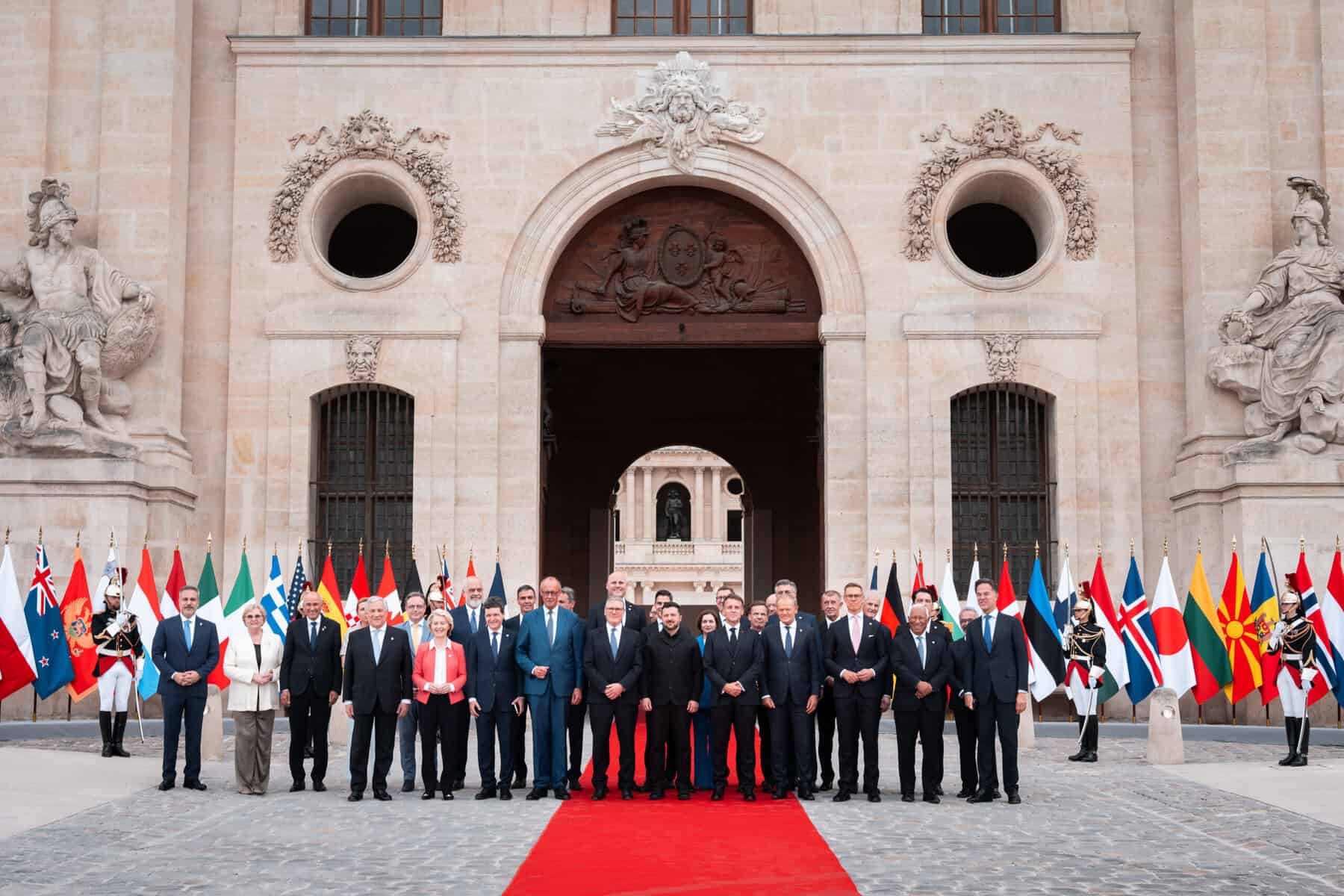 Participants of the “Coalition of the Willing.” Photo: Bundesregierung/Steffen Kugler
On his second day in office as German chancellor, 7 May 2025, Friedrich Merz visited France and Poland. In Paris, at a joint press conference with President Macron, the chancellor stated that Europe’s security and competitiveness require internal unity. “That is why Emmanuel Macron and I have agreed on a new Franco-German push for Europe,” Merz said at the time, commenting on Berlin and Paris’s cooperation on defence projects. A few hours later in Warsaw, the chancellor emphasized Poland’s role in the security of NATO’s eastern flank and pointed to Germany’s commitment to “better protect these European external borders.” Prime Minister Tusk said at the time that he was optimistic about the future of German-Polish relations, noting the need to share responsibility for a “strong Europe.”
Thus, immediately after taking the oath of office, Friedrich Merz outlined the priorities of Germany’s foreign policy, focusing on strengthening ties with key partners within the EU. This approach emerged amid strategic uncertainty caused by the cooling of relations between Europe and the United States following Donald Trump’s return to the White House, the tariff confrontation with the United States, and the Greenland crisis. Friedrich Merz supported greater European autonomy in defence, while the short tour undertaken by the chancellor on 7 May 2025 was a logical step towards restoring and strengthening alliances as alternatives to traditional security guarantees. This was in line with discussions that intensified in February of that year about extending British and French nuclear deterrence to Europe — an idea that Friedrich Merz promoted following the successful Bundestag election and that was backed by the French president in March 2025.
It is precisely the European nuclear umbrella project, as one of the key topics of discussion, that sets the chancellor’s inaugural visit to Paris apart from the traditional visits by German government leaders to the French capital in the first days after taking office (for example, Angela Merkel and Olaf Scholz did the same in 2005 and 2021, respectively). The talks between Friedrich Merz and Emmanuel Macron at the time, which reportedly continued in the following months, have since resulted in France announcing in March 2026 an expansion of its nuclear arsenal and the introduction of a policy of “enhanced deterrence”, which provides for the possibility of deploying nuclear-capable forces on the territory of European allies. Shortly afterwards, Chancellor Merz and President Macron announced in a joint declaration the establishment of a consultative body that will serve as a framework for “doctrinal dialogue and coordination of strategic cooperation” between Germany and France, including on France’s nuclear forces.
Thus, in terms of Germany’s construction of smaller alliances compared with NATO, Paris plays a key role as a guarantor in the process of creating a European nuclear umbrella — a crucial factor amid uncertainty over US nuclear guarantees. France is expanding its nuclear arsenal, while President Macron has identified numerous European allies as interested in joining the French initiative to deploy nuclear deterrence forces. In addition to Germany, Poland, the Netherlands, Belgium, Sweden (which was among the first to join meetings of the aforementioned expert consultation group), Portugal and Denmark expressed a desire to join, while in April it became known that the Czech Republic had a similar interest.
The emergence of such a strategic asset in Paris’s hands inevitably fuels competition between France and Germany for regional leadership. Notably, tensions between Berlin and Paris over several long-running defence projects have also intensified during this period. The Future Combat Air System (FCAS), launched in 2017 and aimed at developing a next-generation fighter jet, was supposed to become Europe’s largest industrial project, but was ultimately derailed in June 2026 after prolonged negotiations. This failure cast doubt on the further development of the Franco-German Main Ground Combat System (MGCS) tank project, also launched in 2017: commenting on the project’s progress, the head of Rheinmetall gave an evasive answer when asked about the risk of France withdrawing from the programme. In addition, a dispute emerged over the delayed Eurodrone programme: France cancelled its planned procurement of the systems through 2035, citing the emergence of cheaper alternatives. This course of defence cooperation between Berlin and Paris prompts a closer look at the alternative partnerships organized by Germany.
As FCAS was falling apart in early June 2026, the head of Italian aerospace and defence group Leonardo said, when asked whether Germany could join the British-Italian-Japanese Global Combat Air Programme (GCAP), that Berlin “would certainly be a particularly valuable partner.” Importantly, German Defence Minister Boris Pistorius had identified participation in international programmes as one option for addressing Germany’s need for fighter jets. He also mentioned the purchase of additional fighter jets from the United States and the possibility of Germany developing its own programme.
Berlin and Rome began moving closer in May and June 2025. On 12 June, as the Italian capital hosted a Weimar+ meeting bringing together France, Germany, Poland, Spain, the United Kingdom and Italy to discuss support for Ukraine and higher defence spending, the German and Italian foreign ministers held talks and signed a declaration to strengthen their strategic partnership, with migration management and security and defence identified as priority areas. This rapprochement came after tensions between Italian Prime Minister Giorgia Meloni and French President Emmanuel Macron over their differing views on the possible deployment of troops to Ukraine. Meloni did not join the leaders of the United Kingdom, Germany, France and Poland in Kyiv on 10 May, and she also stayed out of a phone call with Donald Trump on the sidelines of the summit in Albania. Against this backdrop, Berlin could potentially have acted as a go-between for Italy and an increasingly “autonomist” Europe as they sought to bridge their differences, alongside Macron’s earlier visit to Rome on 3 June. This contributed to deeper cooperation, particularly as France and Germany faced a crisis in their joint defence projects.
By the end of 2025, this Italian-German coordination was also evident in defence cooperation. In early November, shortly before reports emerged that Berlin and Paris were discussing a plan to abandon FCAS, the joint venture established by Rheinmetall and Leonardo in 2024 was reported to have received its first order from the Italian Army — 21 A2CS armoured fighting vehicles.
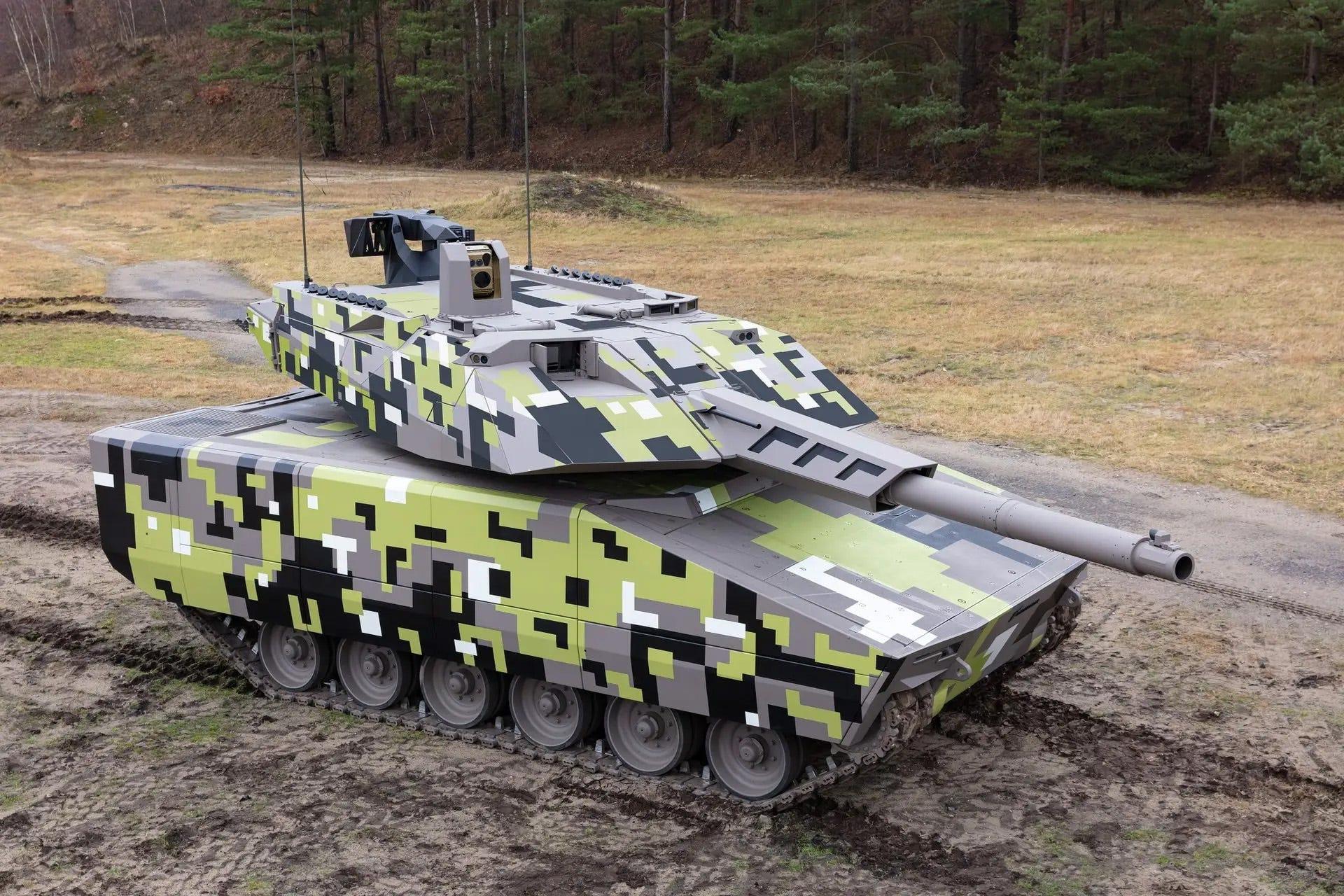 Leonardo Rheinmetall Military Vehicles (LRMV). Source
As the balance of power described above continued to shift, Germany signed a new defence agreement with Poland in June this year. Berlin is interested in strengthening ties with Warsaw as a major logistics hub and a base for coordination and training centres supporting Ukraine. The agreement signed by the two defence ministers, however, goes well beyond logistics. It also covers closer alignment of German and Polish defence policies and cooperation in responding to hybrid threats, including those affecting the security of countries around the Baltic Sea. The document highlights mutual commitments by Berlin and Warsaw to provide assistance in the event of an external attack under Article 5 of the North Atlantic Treaty and Article 42(7) of the Treaty on European Union. This is consistent with the aforementioned approach of building smaller alliances to complement existing defence guarantees amid uncertainty and the threat posed by Russia. Closer ties between the two countries were also reflected in reports that Bundeswehr engineers were participating in Poland’s “Eastern Shield” project to strengthen its borders with Belarus and Russia, including in the Suwałki Corridor area.
Against the backdrop of sabotage incidents in the Baltic Sea, Berlin’s cooperation with the Nordic countries gradually intensified. A key development ahead of Friedrich Merz’s election as German chancellor was the launch of the NATO-led Baltic Sentry mission in Helsinki on 14 January 2025. At the summit, Germany, Denmark, Estonia, Finland, Latvia, Lithuania, Poland and Sweden agreed to strengthen the protection of the Baltic Sea by increasing the number of patrol and warships, drones and reconnaissance aircraft. The mission also includes Commander Task Force Baltic (CTF Baltic), a regional German naval task force focused on threats to underwater infrastructure and Russia’s “shadow fleet”. Notably, Baltic Sentry later served as a template for two initiatives: Eastern Sentry, launched in September 2025 to protect NATO’s eastern flank in response to Russian violations of the airspace of NATO member states, and Arctic Sentry, launched in February 2026 to strengthen efforts to counter Russia and China in the Arctic. These initiatives are also being conducted under NATO auspices, reflecting one of the alliance’s focuses in European security policy: countering hybrid threats and preparing for direct threats from Russia. Importantly, Germany is involved in both Eastern Sentry, by continuing to patrol the airspace of the Baltic states and participating in additional air defence activities on NATO’s eastern flank, and Arctic Sentry, as part of which Berlin deployed an A400M tanker aircraft and four Eurofighter combat aircraft to Iceland in February 2026.
Germany is therefore continuing to work closely with its allies through NATO, which remains an important framework for cooperation among member states. At the same time, Berlin builds closer ties with the Nordic countries beyond the alliance’s established mechanisms. In May 2025, shortly after taking office, Chancellor Merz attended a Nordic 5 summit with Denmark, Norway, Sweden, Finland and Iceland. Merz stressed the close ties between Germany and the Nordic countries, while the discussions on defence policy focused heavily on Baltic Sea security amid Russia’s hybrid attacks and on support for Ukraine.
Norwegian Prime Minister Jonas Gahr Støre visited Germany in July last year, where the two governments announced plans to deepen bilateral cooperation. The Hansa Arrangement, a bilateral defence agreement whose preparation was announced during the visit, was signed by Defence Ministers Boris Pistorius and Tore O. Sandvik on the sidelines of the Munich Security Conference in February 2026. It covers five areas of German-Norwegian cooperation: space-based surveillance and communications, the defence industry, operational cooperation under the Rapid Reinforcement Concept, the use of conventional military forces, and maritime security in the North Sea and Atlantic. Maritime security is arguably the most important part of the German-Norwegian relationship, as the two countries are jointly developing the 3SM long-range naval strike missile and have also held talks on Norway purchasing two German submarines for its navy. The closer ties between Berlin and Oslo also point to a greater German role in the Arctic and North Atlantic. Notably, the agreement was signed shortly before Arctic Sentry was launched.
Germany’s ties with Sweden deserve a closer look. Sweden’s accession to NATO was certainly an important factor, bringing Stockholm into a range of security initiatives, including those mentioned above. But the two countries have also stepped up cooperation on a bilateral level. Just days before Sweden formally joined the alliance in March 2024, the two defence ministers signed a declaration in Stockholm on closer defence cooperation between Germany and Sweden. By the end of 2025, with Baltic Sentry already up and running, Berlin and Stockholm had signed a strategic partnership agreement. Building on the March 2024 declaration, the agreement provides for joint defence industry projects and closer coordination on deterrence and efforts to counter hybrid threats in the Baltic region, the North Atlantic and the Arctic. This cooperation also led to joint military exercises in 2026. In June, German and Swedish forces trained in air-to-air combat and air defence at Ronneby as part of Midsummer Brawl. In September, they practised deploying German forces to Gotland, an island of strategic importance for control of Baltic Sea routes, including those used to facilitate the deployment of NATO member states’ forces.
Against the backdrop of the ongoing Russian-Ukrainian war and Germany’s position on the conflict, it is important to look at Berlin’s partnership with Kyiv. Friedrich Merz’s taking office as chancellor in 2025 was seen as a new impetus for European leadership and change, including because of the new chancellor’s position on support for Ukraine. As mentioned above, on 10 May 2025, Merz, Starmer, Macron and Tusk arrived in Kyiv. Against the backdrop of US pressure for peace talks, their visit demonstrated a united European position in support of Ukraine — an alignment that Berlin had actively promoted.
Germany had a strong interest in building a lasting partnership with Kyiv because of the role Ukraine had taken on during the war. Ukraine was committed to countering Russia, which Europe had come to see as the main threat to regional security after 2022. It also had a powerful army and could contribute to defence technology and innovation. Against this backdrop, Chancellor Merz announced as early as late May 2025 that Germany and Ukraine would develop joint production of long-range missiles. Later that year, during President Zelenskyy’s visit to Berlin, the German government presented a 10-point plan to deepen cooperation with Ukraine, including through joint defence companies. The agreements also envisaged further consideration of purchasing Ukrainian equipment under the European Sky Shield initiative, making this a significant step in strengthening cooperation.
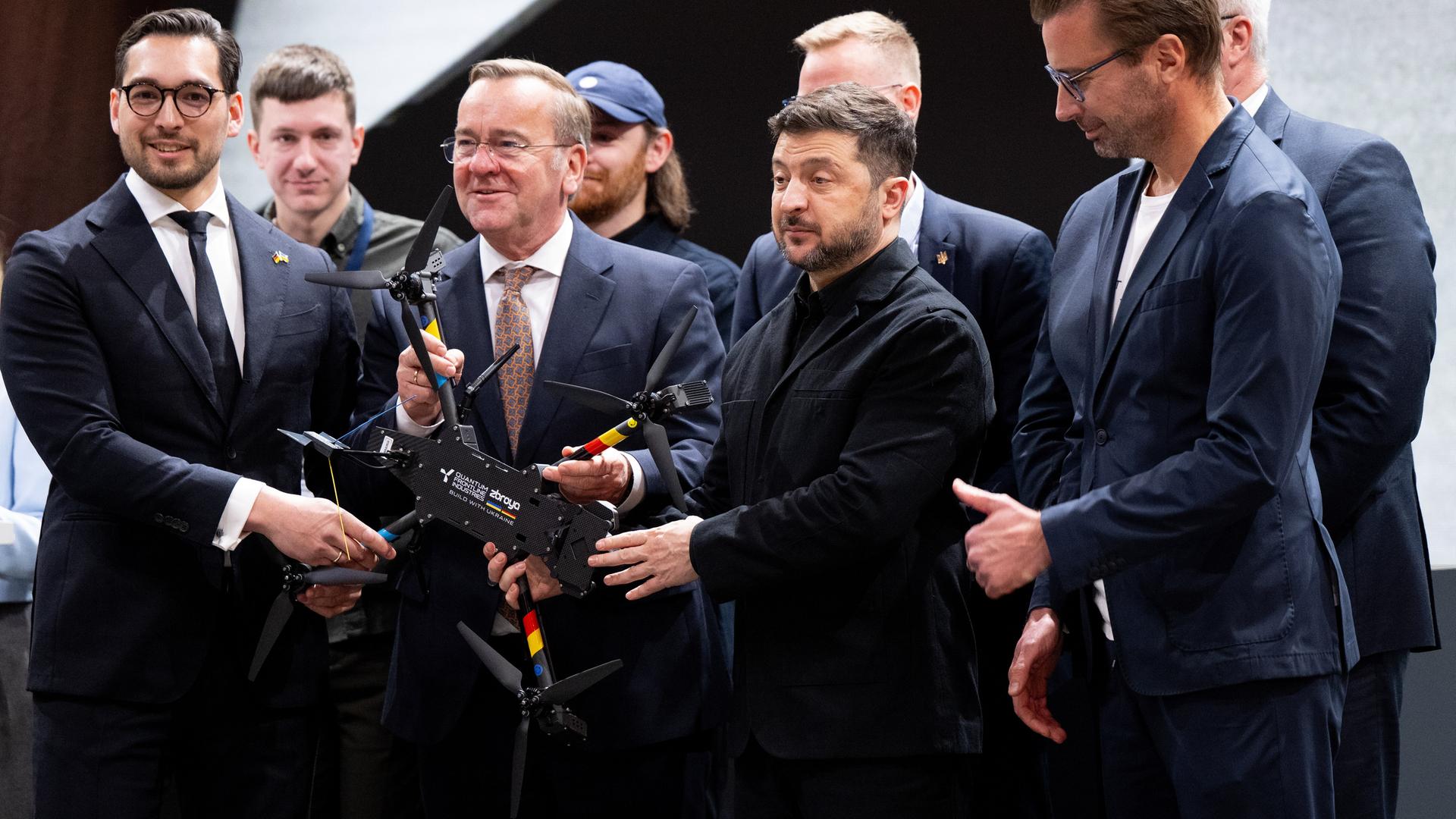 Zelenskyy and Pistorius at the Quantum Frontline Industries facility. Source
Earlier, in June, a memorandum of understanding (MoU) on the development of the Freyja anti-ballistic system was signed on the sidelines of Eurosatory 2026, an international arms exhibition, by Ukraine’s Fire Point, the project’s main contractor, and Germany’s Hensoldt. Fire Point subsequently said it planned to produce an interceptor missile for ballistic missiles by the end of 2026. In July, at a meeting in Paris of the leaders of Denmark, France, Germany, Italy, the Netherlands, Norway, Spain, Sweden, Ukraine and the United Kingdom, the countries announced the creation of an air defence coalition focused on cooperation on the Freyja project.
Once again, the initiative was framed not as a replacement for existing defence systems but as a way of complementing them with new capabilities. This approach fits into the broader concept of “smaller alliances.”
The closer ties between Berlin and Kyiv were also reflected in Germany’s response to the incident at Leipzig Airport in early August 2026, when Ukrainian An-124 aircraft were targeted in an attempted attack. At a joint press conference on 2 September, Interior Minister Dobrindt and Foreign Minister Wadephul stated that Russia was behind the attempted attack and reaffirmed the federal government’s commitment to continuing its support for Ukraine. Their statements amounted to a public accusation that Russia was waging a hybrid war against Germany and Europe more broadly, a position soon backed by NATO Secretary General Mark Rutte. Berlin also plans to step up deliveries of strike drones and IRIS-T missiles to Ukraine. There have also been reports of plans to strengthen cooperation between the Ukrainian and German intelligence services, while Berlin is pushing for new sanctions packages against Russia.
Since Friedrich Merz took office as chancellor, German-Ukrainian cooperation has increasingly focused on defence innovation and has ultimately led to the formalization of a strategic partnership. By the end of summer 2026, this cooperation had resulted in joint work on the Freyja project, with the German side serving as one of its key industrial contractors.
The project is intended not to replace existing defence systems but to complement them with new capabilities. This approach fits into the broader concept of “smaller alliances.”
Amid the crisis of European-US security guarantees, Germany is not abandoning the established European security system based on NATO. Instead, it is complementing it with a network of regional partnerships, some of which have been examined in this article. France is becoming Berlin’s key ally in building a European nuclear deterrence capability, Italy an important avenue for diversifying defence-industrial cooperation and one of Berlin’s allies in intra-European competition, while Poland is emerging as a major logistics hub and one of the pillars of NATO’s eastern flank.
Germany is also actively involved in the Nordic and Baltic dimension of Europe’s security policy and is developing its own cooperation with the countries of Northern Europe both within NATO and at the national level. Ukraine, meanwhile, is becoming increasingly integrated into joint defence and technology projects and is being viewed by Germany as one of its key partners in military and technological innovation.
Thus, a distinctive feature of Germany’s security strategy under Merz is its effort to combine different forms of interdependence, ranging from nuclear deterrence and military commitments to industrial and technological cooperation with European states. In this sense, “smaller alliances” serve Germany not as a means of replacing the existing security architecture, but of adapting it to the current geopolitical environment.
You may be interested