 INTERNATIONAL
INFORMATION AND ANALYTICAL
COMMUNITY


+ Join
Support INTERNATIONAL



Yulian Bardas, political Scientist, Junior Analyst for European Affairs at the Resurgam Analytical Center
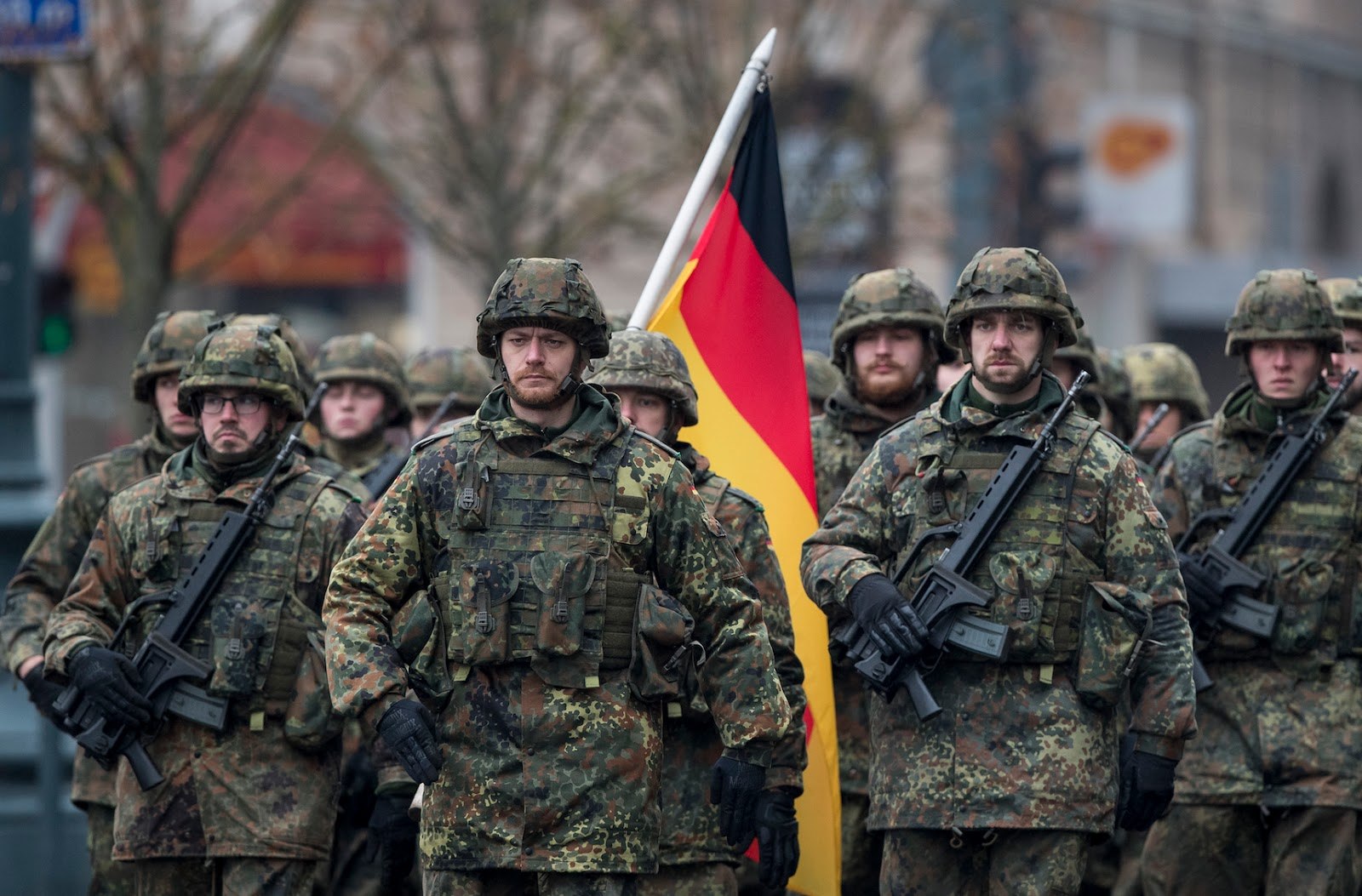 Photo: AP Photo/Mindaugas Kulbis
Since the Bundeswehr was established in 1955, Germany had a system of compulsory military service for all men. The length of service, which had previously been 18 months, was gradually reduced over time, particularly after the end of the Cold War, eventually falling to six months.
Following German reunification and the collapse of the Soviet Union, the Bundestag also decided that maintaining a large army was no longer necessary or financially justifiable, and began gradually reducing its size. While the German armed forces numbered more than half a million personnel in 1990, their size was reduced to 360,000 by 1994 and to 220,000 over the following decade and a half.
In 2011, a decision was made to suspend compulsory military service and transition to a contract-based army. Importantly, conscription was not abolished entirely, as this would have required a constitutional amendment, but rather “frozen” for peacetime. Germany fully transitioned to a professional, contract-based army and a system of voluntary military service. In 2016, the size of the German armed forces fell to a record low of around 176,000 personnel, although it gradually began to increase slightly in the years that followed.
Following the start of Russia’s full-scale invasion of Ukraine, Berlin reassessed its security policy after analysing the military risks and began preparing the country for a gradual return to compulsory military service. Initially, the plan was to increase the size of the armed forces to 260,000 active personnel and 200,000 reservists by 2035 through voluntary recruitment. However, if voluntary recruitment fails to deliver the expected results, the government has not ruled out reintroducing conscription.
Germany currently lacks the necessary infrastructure, including medical examination boards, registration centres and military barracks, to accommodate the required increase in troop numbers. At the same time, there are not enough volunteers willing to join the armed forces. In 2025, the net annual increase in personnel amounted to just 3,000. Meanwhile, the Bundeswehr has still been unable to recruit enough volunteers for the 45th Mechanised Brigade, which is to be stationed in Lithuania.
The German federal government, together with Defence Minister Boris Pistorius, developed and launched a military service reform by passing the Military Service Modernisation Act (Wehrdienstmodernisierungsgesetz). The main elements of the reform include:
Mandatory military registration questionnaire (Fragebogen).
From the beginning of 2026, all German men turning 18 are legally required to complete a detailed digital questionnaire. They must provide the state with information about their health, education, skills and willingness to serve. Under the law, they cannot ignore or refuse to complete the questionnaire. For women, participation in the system is voluntary.
Reintroduction of compulsory medical examinations (Musterung).
Under the law, from mid-2027, young men will be required to attend in-person medical examinations to determine their fitness for service.
Creation of a military service register.
In effect, the state is rebuilding a comprehensive military registration system for all adult men for the first time in more than 10 years.
A legal mechanism for the rapid reintroduction of conscription.
Although military service remains voluntary for now, the law has established a legal and infrastructural framework that can be put into operation. If the Bundeswehr fails to recruit the required number of volunteers (with a target of increasing the size of the armed forces to approximately 260,000 by 2035), the Bundestag will be able to activate compulsory conscription immediately through a separate decision.
Thus, the initial steps of the reform are aimed at restoring the basic military registration infrastructure, assessing the available manpower and establishing a legal safeguard that will allow the state to switch from voluntary recruitment to compulsory conscription without delay if the security situation deteriorates.
Amid a full-scale war in Europe, persistent hybrid threats to NATO and Germany itself, and the possibility that Russia may be preparing for mobilisation and may launch a new act of aggression against the Baltic states, these measures are entirely rational and even somewhat overdue. The German government recognises that, in the event of a war, its armed forces may prove insufficient to effectively counter the Russian military, which numbers nearly 2.5 million personnel. The situation would be even worse if hostilities broke out on NATO territory and reserves could not be mobilised due to a lack of infrastructure. However, while the Bundestag recognises this, Germany’s younger generation sees it as a threat to their own freedom.
 German Defence Minister Boris Pistorius. Source: Associated Press
For the younger generation, filling out questionnaires and undergoing medical examinations are seen as successive steps towards being forcibly drawn into a war effort as a “defence resource” — for a war they may not believe will ever happen. Young people are alarmed by the way government officials communicate with the public, particularly Defence Minister Boris Pistorius, who repeatedly urges society to prepare for war and a possible confrontation with Russia.
For Ukrainians, his words may sound entirely reasonable as a way of mentally preparing society for the worst-case scenario. Germans, however, find them not only shocking but also deeply unsettling. This is a consequence of decades of growing up in a culture of pacifism and the “Never Again” principle. Young people feel that their peaceful future could be overturned by a single government decision.
One important factor behind this is the German education system. Under the Beutelsbach Consensus (Beutelsbacher Konsens) and the principle of educational autonomy for Germany’s federal states, the introduction of centralised patriotic or military education in schools is legally constrained. For decades, civic education (Politische Bildung) has focused on critical thinking and pacifism, while the Bundeswehr’s presence in educational institutions has been tightly restricted due to opposition from teachers’ unions and civilian reservations (Zivilklausel). As a result, the concept of defence resilience has remained largely absent from school discourse, while young people have come to regard freedom and peace as absolute, unconditional givens.
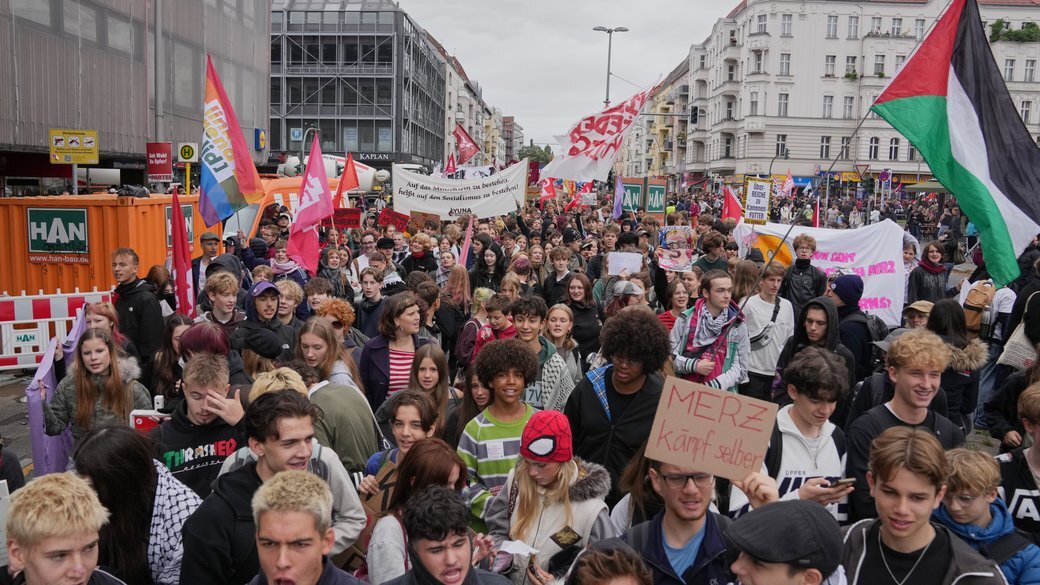
The sentiments of young people are also reflected in the messages on their handmade posters and banners, as well as the slogans they chanted during the protests: “Your war, not ours”, “Send Friedrich Merz to the front”, “Why us and not you?”, “Not a single person or cent for the Bundeswehr”, “The rich want war, the young want a future”, “Send the super-rich to the front lines as cannon fodder”, “Education, not bombs” and “Education, not military medical examinations”. The central message of these protests is “This is not our war”, while some demonstrators also chanted, “Russia is not our enemy”.
 Protests in Germany. Source: AP/Ebrahim Norooz
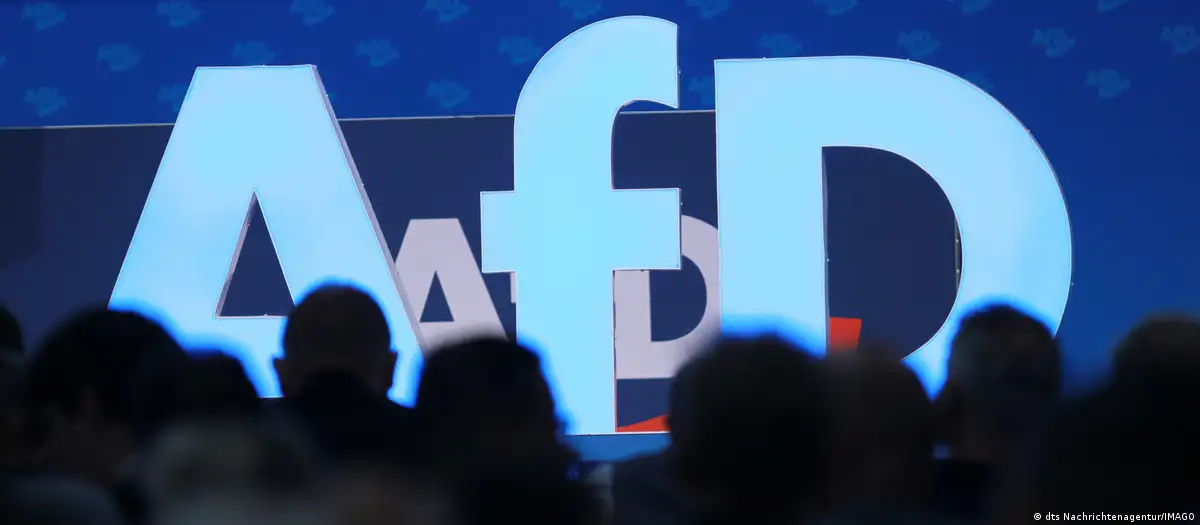
First, there is widespread public distrust of the government, as reflected in polling trends for the governing parties. The pro-Russian Alternative for Germany (AfD) currently leads the polls with around 30% support, while the governing CDU/CSU bloc has fallen to 20%. The situation surrounding Chancellor Friedrich Merz is even more difficult: his personal approval rating has dropped to its lowest level. According to a ZDF poll, which measures favourability and perceived performance on a scale from +5 to -5, Merz scored -1.9 in August, down from -1.5 in July. Most citizens disapprove of the Chancellor’s performance, and discussions about his possible resignation have already begun within his own party. It is against this backdrop of alienation from state institutions that slogans such as “This is not our war” have emerged.
Another challenge is the position of young people, who did not vote for the current coalition and do not share its political course. According to polling data, support for the CDU/CSU among young voters stands at just around 10%, a historic low. This is why protesters believe others should be the ones to fight, while they themselves are unwilling to defend a state whose policies they do not trust.
The second problem lies in the difficult economic situation. The government is significantly increasing the defence budget every year: €62 billion was allocated for this purpose in 2025, €82 billion in 2026, and almost €110 billion has been earmarked for next year. At the same time, the budget deficit compells to cut on social benefits, education and culture. Another systemic failure is the lack of adequate government communication explaining why public funds are being allocated in this way. The authorities are not explaining the new challenges and threats facing the country, so young people see the shift in resources towards defence not as a necessary measure to protect the state, but as an unjustified sacrifice of their own well-being and future. Combined with the broader economic downturn, a lack of trust in the government and the alarming rhetoric of officials, the attempt to gradually reintroduce compulsory military service has become a trigger for citizens who are psychologically unprepared for military service.
In addition, young people often fail to grasp the scale of the threat posed by Russia, living far from the front line and believing that any conflict can be resolved through diplomacy. For many of them, the war is associated only with its direct economic consequences for Germany, such as rising electricity prices and public funds being diverted to aid another country. At the same time, they overlook the fact that this war is a struggle for shared democratic values and freedom, which once helped secure Germans a high standard of living and the protection of their rights.
Russian disinformation also plays a role, having spent years building a hybrid network of influence in Germany. At one time, Russian organisations invested considerable resources in cultivating a positive image of Russia, for example through Gazprom’s sponsorship of the Schalke 04 football club. Despite the ban on Russia Today broadcasting in 2023, disinformation continues to spread through mirror websites and the Doppelgänger network, which imitates established German media outlets and publishes fake stories about the war in Ukraine. Until 2026, the Russian House in Berlin operated officially, using cultural and educational events and language courses as a platform to promote the narratives of the Russkiy Mir (“Russian World”) and as cover for intelligence activities. In addition, Moscow supports the AfD, which publicly urges for an end to military aid to Ukraine, the lifting of sanctions against Russia and the resumption of Russian energy imports, while echoing most of the Kremlin’s narratives about the war almost verbatim.
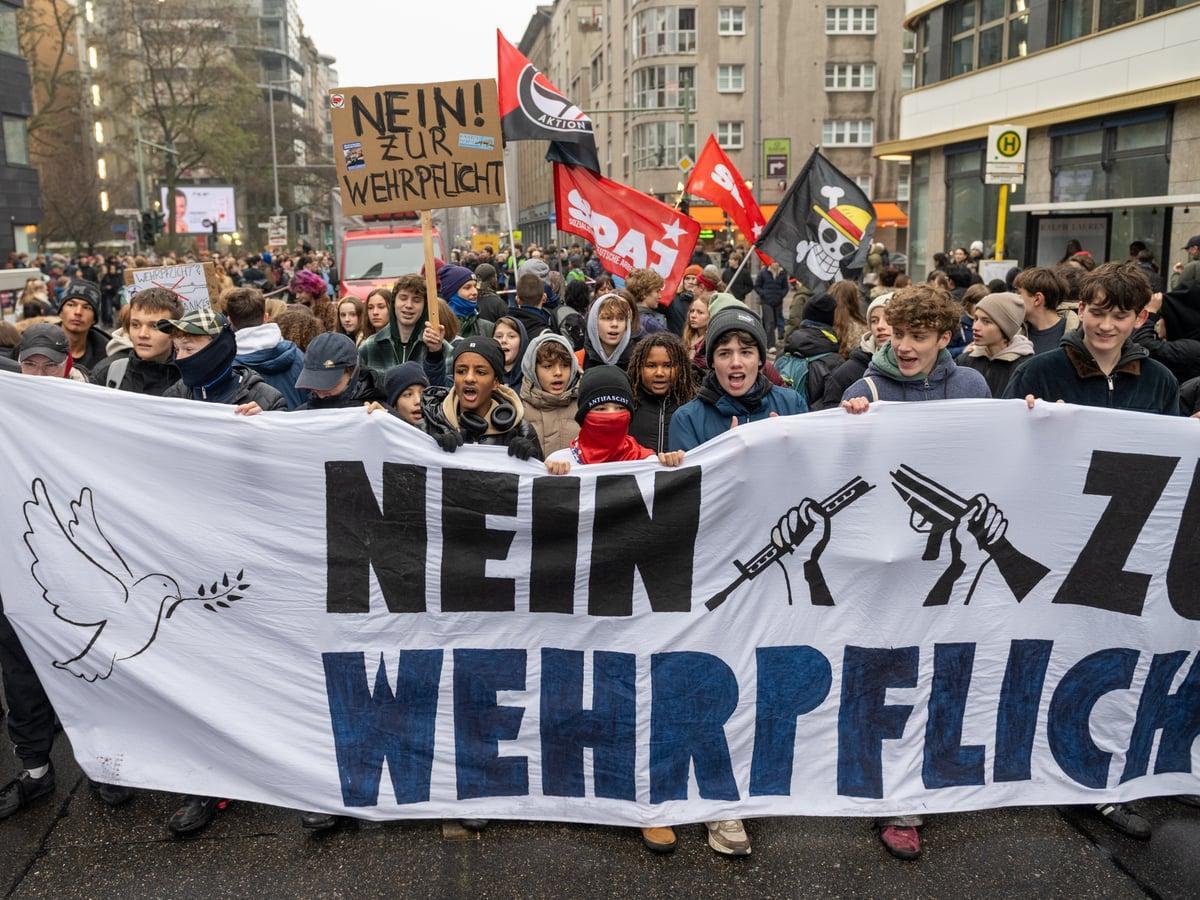
Ultimately, government measures that appear rational in the face of growing military threats have met with fierce domestic resistance, bringing 45,000 school pupils and university students onto the streets in more than 100 cities, although police figures are lower. The September protests marked the peak of a wave of demonstrations that began in 2023 and has recently been growing in scale.
Formally, the organisers of the “School Strike Against Conscription” movement present it as a grassroots initiative led by school pupils. However, investigations suggest that left-wing parties and organisations, such as the Socialist German Workers’ Youth and the German Communist Party, are behind the movement. The protests are also supported by the BSW (Sahra Wagenknecht Alliance), a pro-Russian party, and the left-wing party Die Linke, whose youth wing has called on people to join the demonstrations. For these parties, the protests offer a way to boost their political standing and popularity while justifying the country’s lack of defence preparedness.
 Protests in Germany. Source
According to a Gallup International survey conducted across 45 countries on citizens’ willingness to take up arms to defend their country, Germany performs relatively well. Half of German men say they would be willing to defend their country, a comparatively high figure relative to other countries in Western and Southern Europe. Nevertheless, the Bundeswehr continues to face a recruitment crisis and a deep divide between the government and young people in how they perceive the armed forces.
An effective alternative in this situation is the Scandinavian conscription model, used in Norway and Sweden and considered one of the most effective in the world. Its key to success lies in combining a universal obligation with a rigorous, selective recruitment process, transforming military service from an act of “coercion” or an “encroachment on freedom” into a prestigious status. The obligation is gender-neutral, but only those who successfully pass the selection process are admitted to the armed forces. All 18-year-old citizens are required to complete a detailed digital questionnaire covering their health, education and, most importantly, their personal motivation. As a result, only around 10% of the entire eligible age cohort actually serve. With two to four candidates competing for each available place, the armed forces can meet all their personnel requirements by recruiting highly motivated individuals.
Scandinavian countries have managed to turn military service into an effective means of social and economic advancement. Having military service on a CV offers a significant advantage when applying for civilian jobs, and conscripts are well paid during their service. Although German service personnel also receive generous pay and social benefits, the difference lies in public perceptions. For Norwegians and Swedes, military service is a mark of distinction and status, whereas in Germany the armed forces have long been seen as a career choice for those who have failed to find their place in civilian life.
The state of military infrastructure and equipment also plays an important role. Scandinavian military facilities are modernised and comfortable, while the German Bundeswehr is often associated in the media with outdated barracks, spare-parts shortages, insufficient ammunition stocks and bureaucratic failures. This is a direct consequence of chronic underfunding of the defence budget. The government is now seeking to restore public respect for military service without first implementing deep, visible and systemic reforms within the Bundeswehr itself, which only reinforces public scepticism. Moreover, baseline trust in state institutions is significantly higher in Scandinavia.
As a result, although Norway’s armed forces are relatively small in absolute terms (around 23,000 personnel), the country has a much higher concentration of military personnel relative to its population than Germany. In Norway, the figure stands at around 4.12 military personnel per 1,000 inhabitants (0.41% of the population), compared with just 2.24 per 1,000 inhabitants (0.22%) in Germany.
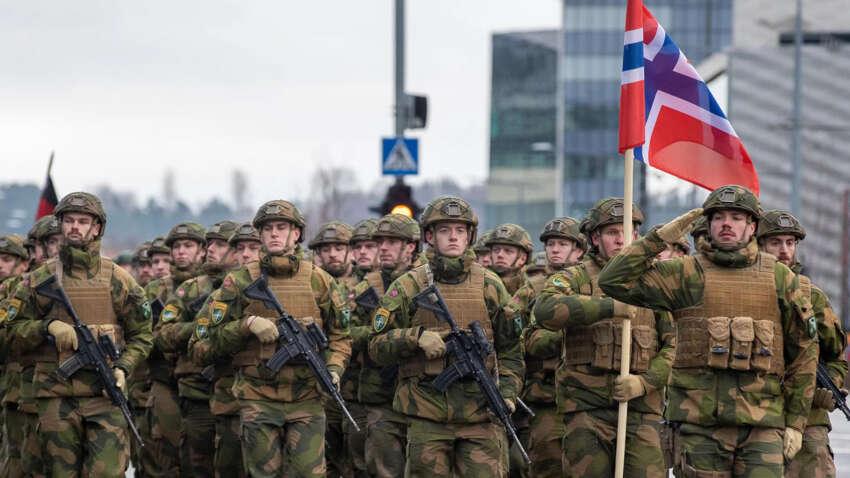 Photo: Mindaugas Kulbis/AP Photo
Germany recognises the threat posed by its small armed forces and is looking for ways to address the problem. The government is taking a cautious, gradual approach, deliberately avoiding the immediate introduction of universal compulsory conscription, as this would further destabilise society, damage the governing parties’ ratings and prove unworkable due to the lack of necessary infrastructure.
However, attempts to reintroduce compulsory military service have exposed deep-rooted systemic problems: years of chronic underfunding of the Bundeswehr, the government’s failure to communicate the new security challenges effectively, and decades of socialisation into a culture of pacifism. Combined with economic difficulties and a lack of trust in the government, these factors have given young people genuine grounds to protest against the state’s actions.
At the same time, this genuine public discontent provides a powerful basis for protest that is being opportunistically exploited by political forces outside the mainstream consensus on strengthening Germany’s defence capabilities. These include both the radical left and the radical right. Radical left-wing organisations and movements support the protests as a way to promote their own anti-capitalist and anti-militarist narratives. For the pro-Russian far-right AfD and the far-left BSW, this is an opportunity to exploit public discontent to undermine support for Ukraine and promote Kremlin narratives.
The societal trends already emerging pose risks to Germany’s defence capabilities. Without effective communication, reforms to the incentives for military service, following the Scandinavian model, and renewed trust in the armed forces, Germany risks being left without the reserves it needs in the event of a major crisis.
You may be interested