 INTERNATIONAL
INFORMATION AND ANALYTICAL
COMMUNITY


+ Join
Support INTERNATIONAL



Diana Lebed, Political scientist and junior analyst at Resurgam, specializing in security dynamics in Central and Eastern Europe (Ukraine–Moldova–Romania–Hungary–Slovakia).
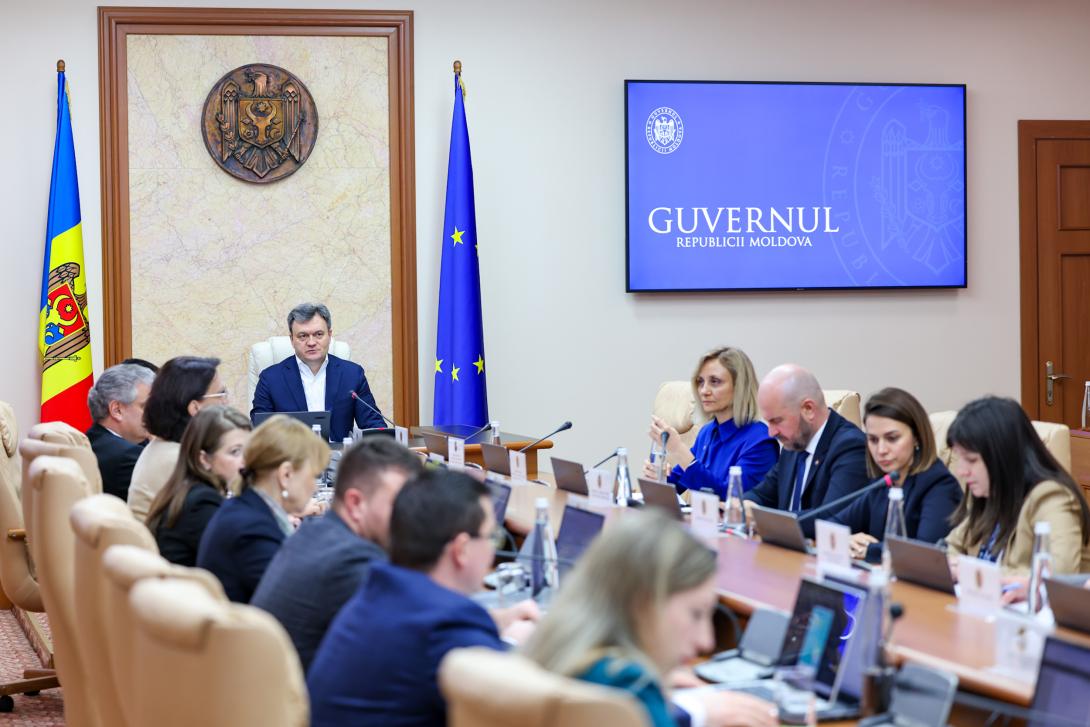 Photo: GOVERNMENT REPUBLIC OF MOLDOVA
On 4 February 2025, the European Commission and the Moldovan government signed a two-year Comprehensive Strategy for Energy Independence and Sustainability with €250 million in funding. The strategy formed the institutional basis for the implementation of two 400 kV high-voltage power lines, which are to integrate the country into the continental European ENTSO-E network.
Moldova's transformations are happening synchronously with Ukraine's efforts, reflecting a shared reality, as in the context of Russian aggression, the technological modernisation of the energy sector has become a matter of national survival rather than economic efficiency.
The Vulcanesti-Chisinau and Balti-Suceava trunk lines play a special role in this process, forming the technical basis for breaking away from the post-Soviet energy supply system, which for decades served as a tool of political influence for Moscow. These projects also create alternative routes that bypass the Transnistrian Moldovan TPP, which produced about 80% of the country's electricity using Russian gas. The cessation of gas supplies on 1 January 2025 makes the launch of these lines critically important for meeting energy needs and testing the diversification strategy launched after the 2021-2022 crisis, when more than 65% of the population was vulnerable to rising electricity bills.
The construction of the 154 km Vulcanesti-Chisinau line connects the southern regions of Moldova with the Romanian network, creating an alternative electricity supply route that bypasses Transnistria and its TPP. As of the end of 2025, 99% of the construction and installation work has been completed, indicating that the facility is ready for commissioning, although additional preparatory work is still ongoing.
The strategic importance of the southern route goes beyond its technical characteristics. The high-voltage line provides stable transmission capacity to meet the critical needs of the power system and opens up the physical possibility of importing electricity from Romania directly to Chisinau, bypassing traditional channels through the separatist region. The completion of the project will allow Moldova to test the effectiveness of its diversification strategy and end the country's dependence on the Transnistrian Power Plant.
The Balti-Suceava line project also forms the northern vector of Moldova's integration into the European energy system and creates a mechanism for economic influence on Transnistria. At the same time, the construction connects Moldova's second largest city, Bălți, with Romanian Suceava, passing only 40 kilometres from Transnistria but completely bypassing its territory, which allows the Transnistrian DPP to be excluded from the national power supply system.
In turn, the construction of this line is accompanied by the modernisation of the Bălți power plant and the development of existing infrastructure, as it is planned to upgrade about 200 substations and replace 10 power transformers with a voltage of 110 kV, which will increase the reliability of the entire power system of the country. The total length of the Balti-Suceava line in Moldova will be 58 kilometres, and the project is planned to be completed in 2027. The Moldovan government has also declared this work to be of national importance, which speeds up administrative processes, including the issuance of permits and the expropriation of the necessary land.
In combination with the southern corridor, by 2027 Moldova will have two independent electricity supply routes from Romania, covering the entire right bank territory. This configuration radically changes the balance of power in relations between Chisinau and Tiraspol. Energy dependence is being transformed from a tool of Transnistria's blackmail against Moldova into a tool of Moldova's pressure on the unrecognised state.
The Transnistrian economy is critically dependent on industrial enterprises that consume huge amounts of electricity and gas. In particular, the Moldovan DRES, the metallurgical plant in Rybnitsa, and the cement plant — all these enterprises cannot function without a stable energy supply. At the same time, Russia is demonstrating instability in financing, delaying payments every three weeks. With the intensification of sanctions pressure, European companies may refuse to accept Russian payments, forcing Transnistria to purchase gas through Chisinau on Moldovan terms.
Chisinau is already using energy levers for political pressure and has set electricity tariffs for Transnistria that reflect the real market value, refusing to subsidise left-bank consumption. This policy creates economic incentives to switch to Moldovan jurisdiction, where access to the European energy market provides more stable conditions. Rising tariffs and energy shortages are creating social pressure on the Tiraspol administration, which could lead to a change in public sentiment regarding the region's orientation.
Moldova's strategic location creates the potential to transform the country into a transit energy hub between Ukraine and the EU. Joint efforts by both states could secure a vertical gas corridor from Greece through Bulgaria and Romania to Moldova and Ukraine, opening up new supply routes and strengthening the EU's energy security. Gas transmission system operators have agreed to reduce tariffs to the border by 25%, and GTSOU has introduced a local discount of 46%, allowing for increased deliveries to underground storage facilities.
At the same time, Moldova's development as an energy hub faces internal challenges. The energy consumption of buildings is twice the European average, and 75% of buildings were constructed before the 1990s with low energy efficiency. Therefore, an effective strategic partnership involves the coordinated development of complementary routes, where Ukraine's experience of synchronisation with ENTSO-E can accelerate Moldova's integration, and joint investments in cross-border infrastructure reduce dependence on Russian energy sources. Mechanisms for crisis management coordination, mutual capacity reservation and a common policy on Transnistria transform energy projects into an instrument of regional stability.
The completion of the Vulcanesti-Chisinau and Balti-Suceava lines creates the technical basis for Moldova's energy independence from Moscow. The first line, which will be commissioned in 2026, will allow the country to switch to European supplies, and the completion of the second by 2027 will finally consolidate this autonomy. For Ukraine, this is an incentive to accelerate its own energy projects and deepen coordination with Moldovan partners.
In the long term, the optimal model envisages an integrated energy space involving Ukraine, Moldova and Romania under the coordination of the EU. In this configuration, Moldovan lines become an element of regional security, and Ukraine will solidify its role as a key hub between Central European and Balkan networks. Despite high institutional requirements, this model is the most resilient in countering Russian energy pressure.
You may be interested