 INTERNATIONAL
INFORMATION AND ANALYTICAL
COMMUNITY


+ Join
Support INTERNATIONAL



Oleksandr Havrylko, Intern at the Resurgam Analytical Center for the African Region.
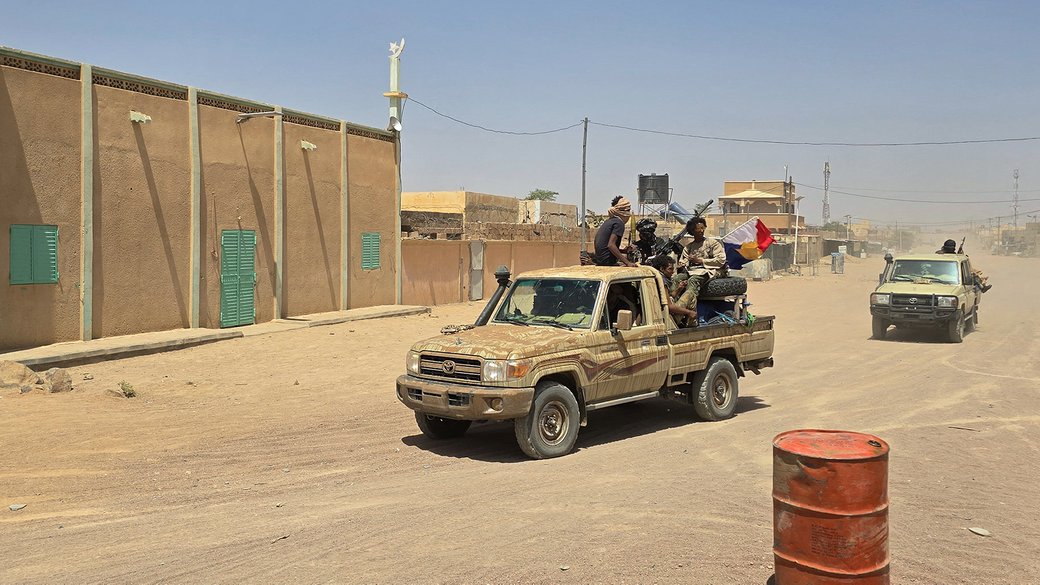 Photo: Getty Images
Mali is home to a large number of armed groups, which have gradually consolidated into three main blocs over the course of the conflict: Tuareg separatists, moderate jihadists, and radical jihadists.
The Azawad Liberation Front (FLA) is a coalition formed on 30 November 2024 from various Tuareg groups that united following Mali’s withdrawal from the Algiers Peace Agreement, which had established a ceasefire between government forces and Tuareg rebels. The FLA seeks to establish Azawad, a Tuareg ethnic state. Tuaregs have actively fought for independence since the 1900s and declared independence in 2012, although it was not recognised by the African Union. Unlike other factions, which are jihadist in nature, the FLA does not seek to impose Islamic law, focusing instead on the struggle for self-determination. The French outlet RFI estimated the organisation’s strength at 3,000–4,000 fighters as of October 2023.
Jama'at Nasr al-Islam wal-Muslimin (JNIM) is a coalition formed in 2017 from Al-Qaeda’s local affiliate and several local jihadist organisations. JNIM includes members of various ethnic groups and tribes, including Tuaregs. The group controls large parts of rural Mali through agreements with local communities, although it does not control major cities. It enforces Islamic law in the territories under its control and identifies this as its primary objective.
Liam Karr, an analyst at the American Enterprise Institute, has noted similarities between JNIM’s approach and that of Hay'at Tahrir al-Sham in Syria, highlighting its ability to build long-term relationships with local communities and its efforts to distance itself from Al-Qaeda in order to shed its terrorist label. JNIM makes extensive use of city blockades to undermine the government's authority by exposing its inability to secure supply routes. According to Al Jazeera, the organisation has approximately 10,000 fighters operating in Mali as well as in neighbouring Burkina Faso and Niger.
Islamic State Sahel Province (ISSP, also known as the Islamic State in the Greater Sahara, ISGS) is an Islamist group that originated from Al-Qaeda. It advocates the full implementation of Islamic law and exercises direct and strict control over the territories it holds. In 2019, the group integrated into the Islamic State network, leading to a split with JNIM and the outbreak of hostilities between the two organisations. The split between ISSP and JNIM was largely driven by their differing approaches to local governance and relations with communities. While JNIM relied on local alliances, ISSP favoured a strategy based on coercion and strict enforcement. The rivalry was further intensified by growing competition for recruits and resources in areas where both groups operated. ISSP also exploits ethnic tensions in its political strategy. In particular, it has adopted a hostile stance towards Tuaregs in an effort to gain support from other communities. According to the American media outlet ADF, ISSP had more than 3,000 fighters as of November 2025.
Since July 2024, following the Malian-Russian offensive in the north, JNIM and the FLA have cooperated in their struggle against the Malian government. According to available estimates, the combined strength of the FLA and JNIM is comparable to that of the Malian Armed Forces (FAMa), numbering around 13,000 personnel, along with approximately 2,000 fighters from Russia’s Africa Corps. The alliance remains in place today, although it is relatively fragile due to the ideological differences between the two organisations.
The formation of the alliance between Tuareg groups and jihadists was probably facilitated by Algeria, whose relations with Mali are characterised by persistent tensions. This assessment is supported by the fact that in April 2026, fighters from the FLA and JNIM were reportedly seen alongside members of the Polisario Front, a Western Saharan organisation widely supported by Algeria. Earlier, in April 2025, the Malian government accused Algeria of shooting down a drone in Malian airspace in order to protect Tuareg separatists (who had themselves initially claimed responsibility for downing the drone before Algeria issued its official statement), which triggered a diplomatic scandal.
Allegations of support for the FLA by France and Ukraine have also been made by Mali and Russia. In February 2026, Russian Foreign Ministry spokesperson Maria Zakharova accused Ukraine of supplying weapons, drones, and training to militant groups in Africa, including in Mali.The pro-Russian outlet Le Gnawo published a report claiming that, in addition to drones, Ukraine had provided Malian insurgents with a range of Soviet-era weapons, including assault rifles, machine guns, and grenade launchers.
The war in Mali has been ongoing since 2012, when Tuareg rebels, along with various jihadist groups (most of which later became part of the JNIM coalition), established control over the northern part of the country. In January 2013, the Malian government requested French military assistance, which led to the launch of Operation Serval. Jihadist groups were pushed back from the capital, Bamako, and expelled from the northern cities of the country.However, the French intervention in Mali failed to stabilise the situation, as it did not manage to fully eliminate the jihadist organisations. These groups gradually expanded their influence deeper into central Mali. By 2020, they had effectively taken control of most rural areas in the centre and north of the country and were able to operate closer to Bamako than they were able before the French intervention.
The mission’s inability to eliminate the jihadist threat became one of the main drivers of growing anti-French sentiment in the country. It is probable that the Malian government also contributed to the spread of anti-French protests, as French forces in Mali occasionally cooperated with Tuareg rebels in the north and at times prevented Malian troops from entering Kidal, the Tuareg stronghold, out of concern for possible violence against the local population. At the same time, a wide-ranging Russian media campaign was underway in Mali, aimed at promoting pro-Russian and anti-French narratives.
In the aftermath of two military coups in Mali in 2020–2021 and the rise to power of the pro-Russian colonel Assimi Goïta, relations between Bamako and Paris deteriorated sharply. One of the factors behind the new leadership’s pro-Russian orientation was the perception that Russian actors, unlike the French, were more willing to label Tuareg groups as extremists without hesitation, thereby supporting the Malian government against all of its opponents.
Amid rising tensions and a diplomatic dispute between France and Mali in January 2022, Emmanuel Macron announced on 4 February the withdrawal of French troops from Mali, which was completed in August of the same year.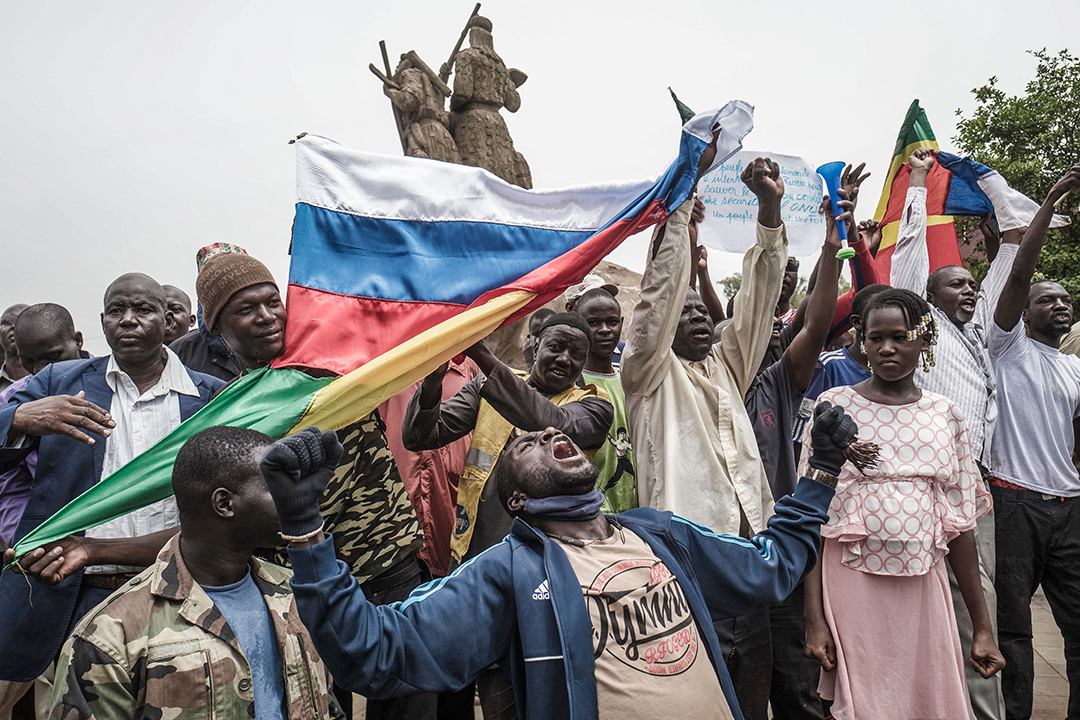 Protesters with Malian and Russian flags during an anti-French demonstration in Bamako, 27 May 2021. Source
Wagner in Africa has encountered the same challenges as French forces, particularly the difficulty of operating in terrain where armed groups rely on high mobility and movement through forested areas across more than 800,000 km² (approximate
size of northern Mali). It is evident that the combined strength of FAMa and the Africa Corps, at around 15,000 personnel, is not sufficient to maintain effective control over such an extensive area. As a result, FAMa’s presence is largely confined to military bases and urban centres.
Government forces are unable to maintain a sustained presence in areas where JNIM, the FLA, and ISSP operate. A significant number of FAMa operations end with troops withdrawing back to their bases, which limits Bamako’s ability to effectively counter the activities of these groups.Another challenge is the lack of effective air support due to limited aviation capacity (around 20 aircraft and 7 helicopters in total) and insufficient fuel supplies to sustain regular sorties.
One of the key moments of the offensive was an ambush by the FLA and JNIM on a Malian-Russian convoy near the town of Tinzaouaten, close to the Algerian border, on 25 July 2024, with the involvement of Ukrainian intelligence services (according to a representative of the Defence Intelligence of Ukraine, “support in intelligence and more”). According to available estimates, 84 Wagner fighters and 47 Malian army soldiers were killed in the attack.In addition, despite the government forces’ advances, in November 2025 JNIM forces were able to impose a blockade on Bamako, underscoring their capacity to operate along strategically important roads across the country.
Overall, Russia’s interests in Mali are divided into three dimensions: geopolitical, resource-economic, and logistical.
From a geopolitical standpoint, Russia is working to build a network of aligned states across the Sahel. In 2023, Burkina Faso, Niger, and Mali established the Alliance of Sahel States (AES). Russian military personnel are present across these countries, where pro-Russian governments came to power following military coups. The three states have also withdrawn from ECOWAS, signalling an effort to form a more explicitly anti-Western regional bloc, consistent with Moscow’s broader vision of a multipolar world and its aim of avoiding international isolation.
An internal Wagner document leaked in 2019 explicitly identifies the expulsion of the United States, the United Kingdom, and France from the region as one of the core objectives of Russian activity.Russian war correspondent Rybar has stated that Russian actors would promote narratives in Africa framing the struggle against French and American presence as legitimate resistance. Russian influence is further reflected in the fact that Russian flags were carried at anti-French protests in Mali.
Russia positions itself as an ally of African states that experienced colonial rule and claims that it has “never been a colonial power.” Its information campaign also draws on the rhetoric of “traditional values” as a counterpoint to Western liberalism.
Continuing its operations even after significant losses at Tinzaouaten, Russia is sending an important signal to other African states: it presents itself as a reliable partner that supports African governments even in the face of setbacks. However, trust in Russian forces within the Malian army remains fragile, as Russian personnel operate outside the formal chain of command and can requisition FAMa equipment without prior coordination, limiting the Malian army’s own ability to conduct operations. In addition, Russian contractors have frequently been accused of reluctance to engage in repelling jihadist attacks. For example, during an attack on Bamako airport, Wagner fighters reportedly did not respond for five hours, despite being stationed directly nearby.
From a resource and economic perspective, access to Malian gold is of strategic importance for Russia. Through illicit channels reportedly organised by Wagner, Russia has been involved in barter schemes exchanging African gold for goods or currency in countries such as China, Iran, and the UAE, with the aim of bypassing Western sanctions. Mali and Russia have signed a memorandum on the development of a new gold mine near Kidal, with an estimated annual output of around 200 tonnes of gold, while Russia’s own annual gold production stands at roughly 300 tonnes. In this context, the most important factors are the untapped gold reserves in the northern part of the country, as western Mali is already served by a number of international companies, leaving limited room for Russian involvement.
Another resource that may be of interest to Russia is lithium: in 2023, Mali and Russia signed an agreement on lithium extraction. From Mali’s perspective, the project is seen as beneficial for the development of its domestic energy infrastructure.
From a logistical standpoint, northern Mali borders Algeria, which has effectively become a regional hub for air transport of dual-use cargo from Russia to countries where the Russian Africa Corps operates, including Mali. The idea that Russia may have been seeking to establish a land corridor between Algeria and Mali helps explain the attempt to capture Tinzaouaten, a border town located along one of the two main roads leading into Algeria.
Wagner’s activities in Mali are highly controversial and often unsuccessful in terms of achieving the strategic objectives outlined above. Their operations are marked by widespread brutality, including attacks on livestock and killings of civilians, which reportedly increased significantly after a decline in personnel quality due to the war in Ukraine and recruitment from prisons.Excessive violence by Russian forces has undermined their standing among local populations, some of whom have come to view JNIM as a protector against abuses attributed to Wagner. This has also contributed to a shift in rhetoric by both JNIM and ISSP, which increasingly frame Russia rather than France as their primary adversary. Among Tuareg communities, hostility toward Russian forces was also widespread, which later created the conditions for the formation of a coalition between JNIM and the FLA and the launch of joint military operations against FAMa and the Africa Corps.
A new chapter of the war began on 25 April 2026 with a large-scale offensive by the FLA–JNIM alliance against government-held territory. The insurgents struck multiple cities in central and northern Mali, as well as airbases near Bamako. While attacks on these areas had occurred before, including on Bamako airport in September 2024, the 25 April offensive was marked by an unprecedented scale, as it was the first time that simultaneous attacks were carried out across many regions of the country, stretching FAMa and the Africa Corps thin.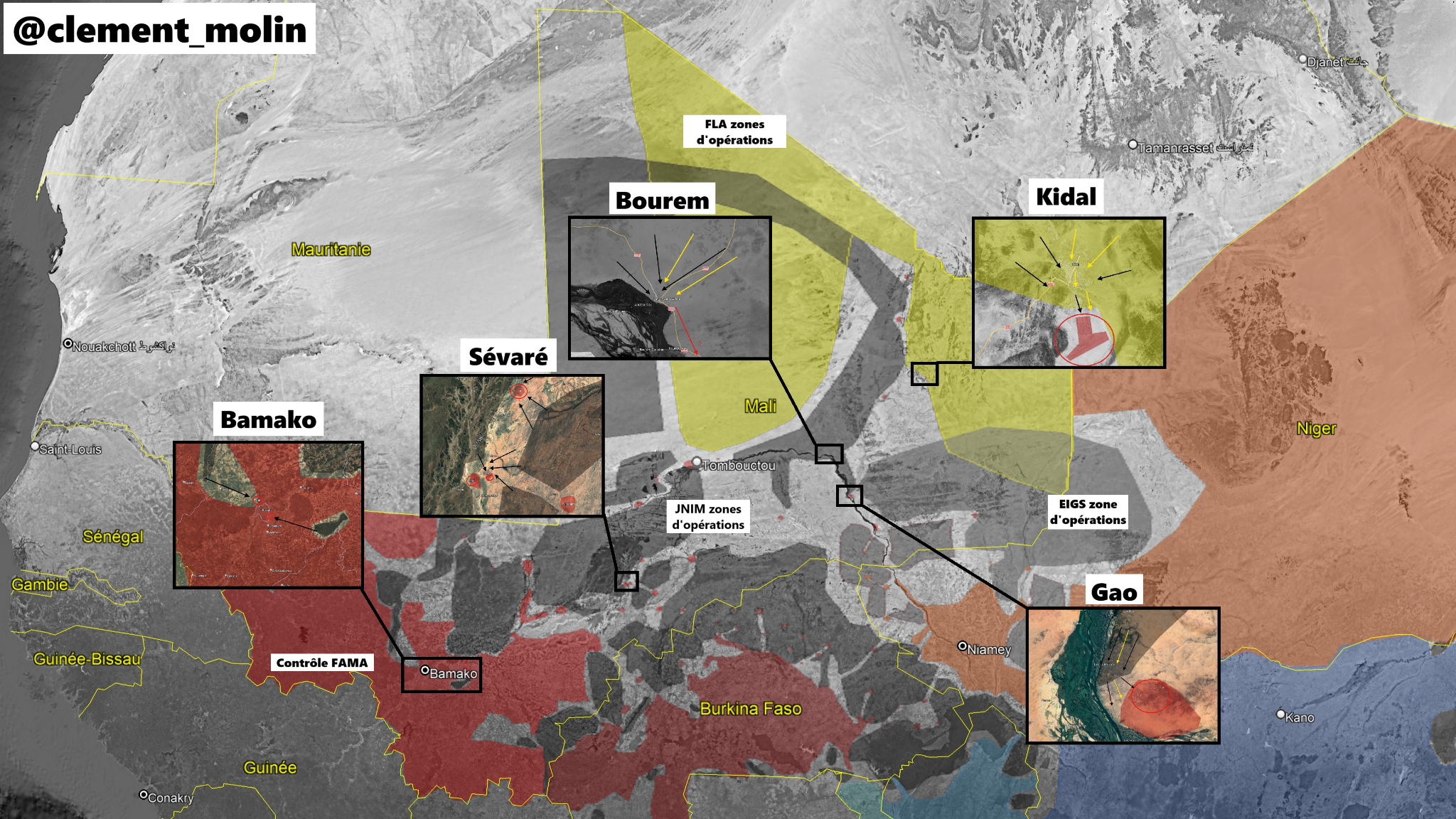 Map showing areas of operation of separatist and jihadist groups (yellow – FLA, black – JNIM, grey – ISGS, red – government-controlled territory) and cities attacked by JNIM–FLA forces on 25 April 2026. Source
The attack was clearly designed to disrupt and delay any coordinated response to the FLA–JNIM offensive.
Against the backdrop of the Tuareg and jihadist offensive, the Islamic State attempted to seize the towns of Menaka and Labbezanga, temporarily taking control of both settlements and encircling local garrisons. According to Reuters, Islamic State fighters entered Menaka virtually without resistance and withdrew from the town on 29 April after clashes with reinforcements from “AK”, which also retook Labbezanga by force on 6 May and reinforced security at the base.
On 2, 4, and 11 May, “AK” released footage of patrols in Menaka, during which no clashes with Islamic State fighters were recorded. Nevertheless, the Islamic State remains a significant actor in the region and continues to pose a persistent threat to all other parties, forcing them to keep part of their forces in reserve. At the same time, the group is currently operating with caution, probably due to a lack of resources for sustained large-scale engagements against FAMa and JNIM.
Separately, the use of FPV drones by FLA forces during the offensive is noteworthy. Shortly after the Battle of Tinzaouaten, Le Monde reported that Tuareg fighters had received training in FPV drone operations from Ukrainian security services. According to the report, some combatants were sent to Ukraine for instruction, while others were trained locally in Mali’s Timbuktu region in the first half of 2024.
In October 2025, Jeune Afrique likewise reported that FLA fighters had undergone specialized FPV drone training conducted in Ukraine. The magazine also noted that fibre-optic drones had been observed in the Tuareg rebels’ arsenal.
During the offensive, JNIM and FLA forces regained control of Kidal, the Tuareg capital, where, according to FLA statements, more than 200 captured fighters from FAMa and “AK” are currently being held. The rebels also took control of the country’s oldest military base in Tessalit, a site of strategic importance due to its location in the Sahara. The base is also a key hub for air operations. An agreement was reportedly reached for the withdrawal of “African Corps” forces toward Gao. The loss of the airbase is expected to complicate air support for Malian forces in the north, forcing aircraft to operate from central Mali. It also gives insurgents greater freedom of movement across the desert, making it easier for them to operate across the region.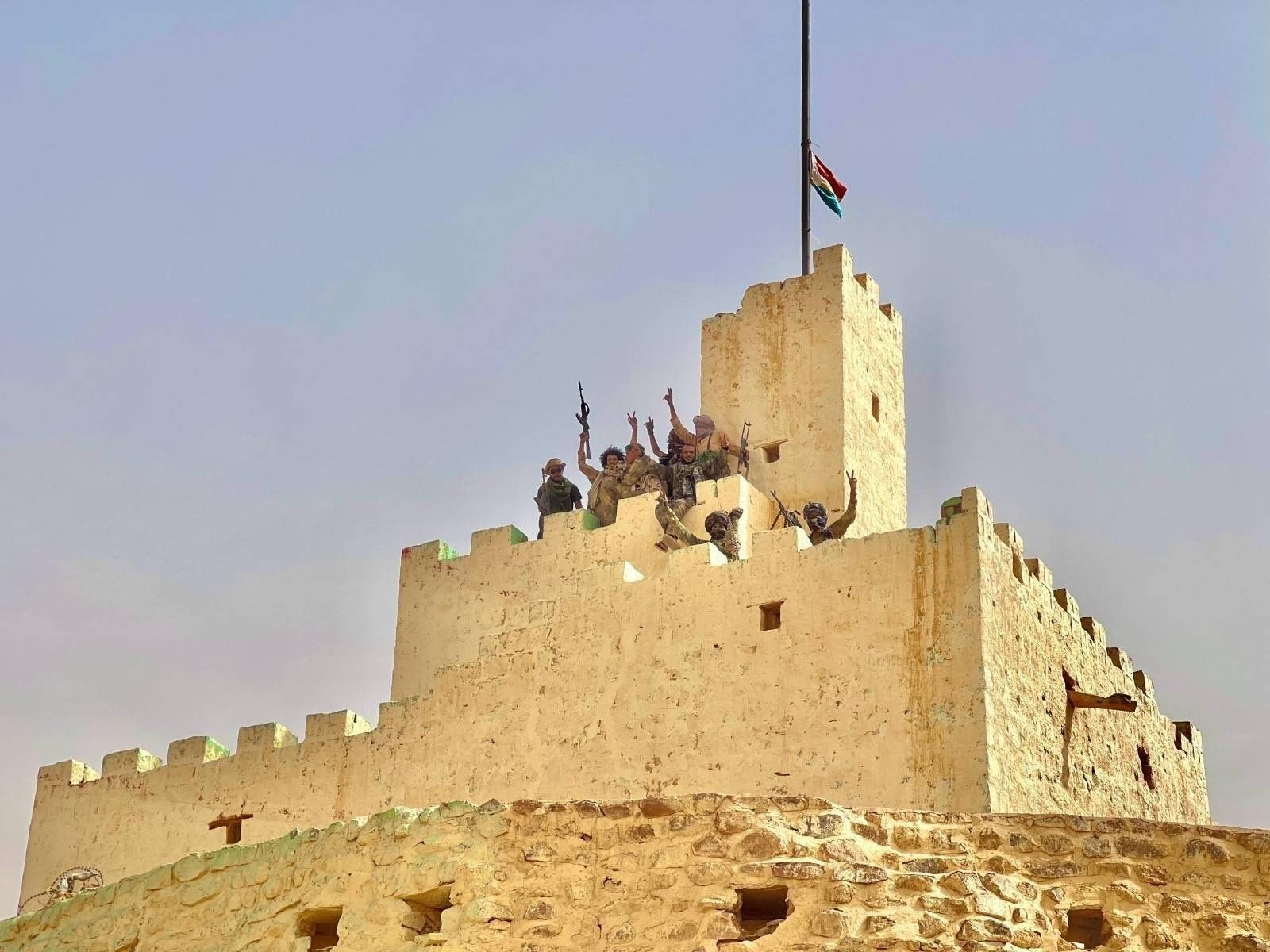 FLA Tuareg fighters in front of the Azawad flag above the fort in Kidal following the withdrawal of the “African Corps”, 27 April 2026. Source
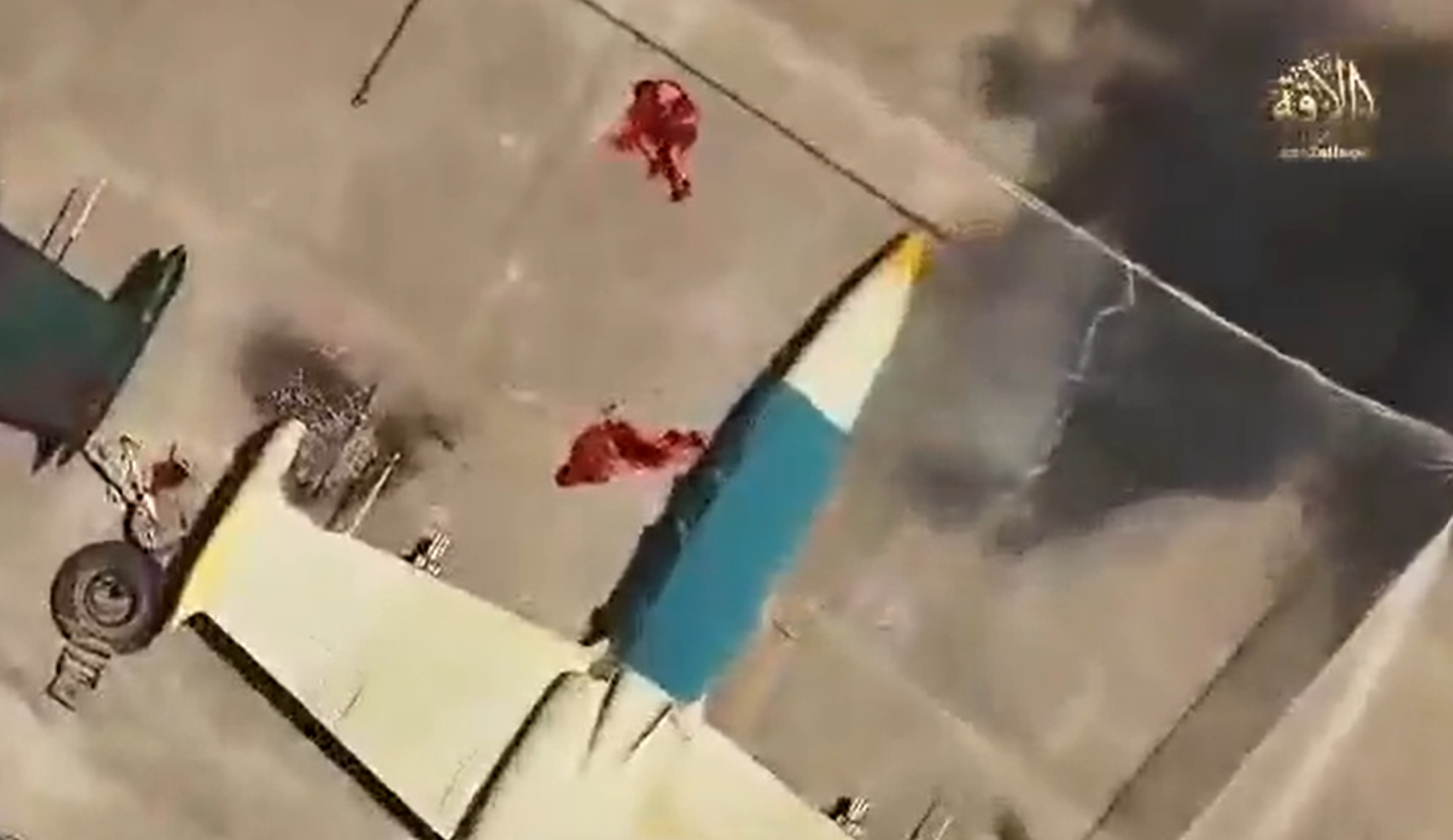 Damaged L-39 aircraft and wounded “African Corps” fighters at the Sevare base, captured by a drone on 25 April 2026. Footage published by JNIM. SourceIn retrospect, it can be concluded that the main objective of the insurgent forces was to establish control over Kidal and the northern territories, while other attacks were largely diversionary in nature, intended to disperse the resources of the Malian army and the “AK” forces and to delay any coordinated response to the offensive.
This assessment is supported by the fact that the attacks on Mopti and Sevare were stopped relatively quickly, while around Bamako, JNIM declared a blockade rather than attempting a direct assault on the city.
Overall, the offensive may be assessed as a success for FLA and JNIM, who, for the first time since 2013, coordinated their forces and launched a joint operation that resulted in the capture of entire towns rather than merely rural areas. They also forced Malian forces and the “African Corps” to abandon four key bases in the north of the country.
However, any further advance is significantly constrained by Russian–Malian air and drone superiority. Russian forces have been conducting sustained airstrikes against FLA–JNIM positions both near Bamako and in Kidal (including an incident in which a local mosque was destroyed), as well as in central Mali. The deployment of some of Russia’s most advanced drones, including the “Garpiya-A1”, has been observed, alongside the newer “Orion” strike drones used against FLA–JNIM forces.The transfer of such advanced systems to Malian forces suggests that Russia prioritizes stabilizing the region. It may also indicate an attempt to offset aviation losses through greater reliance on unmanned systems, particularly given the use of Mi-24 helicopters to escort fuel and food convoys bound for Bamako amid the JNIM blockade.
Since the counteroffensive against ISIS and the capture of the Bourem base—an important position for securing the northern withdrawal—large-scale attempts to seize cities have effectively not been observed. In northern Mali, “African Corps” forces continue to employ their usual level of brutality, with reports of deliberate slaughter of Tuareg livestock.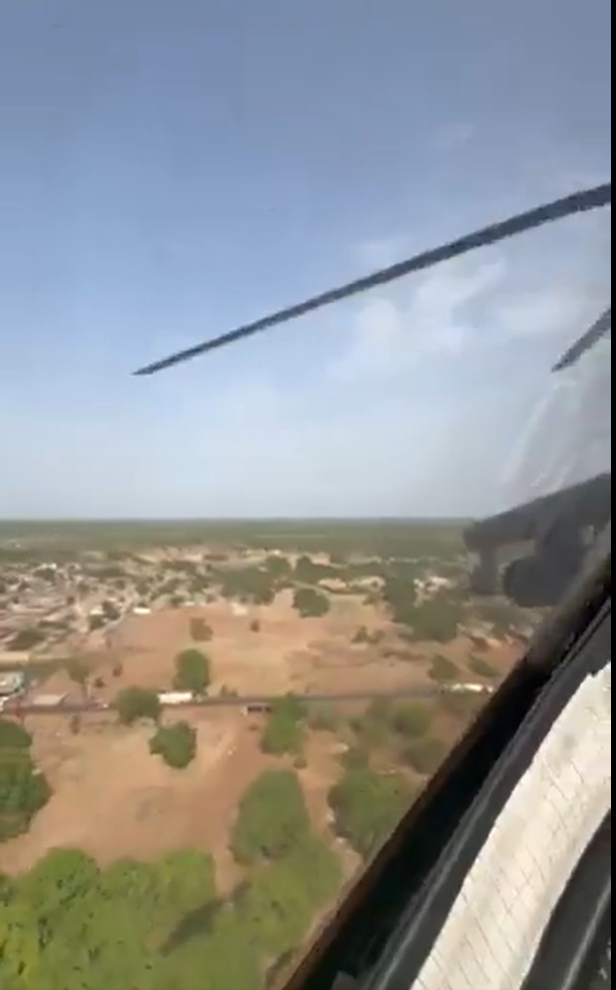 Cockpit view from an “African Corps” Mi-24 during a convoy escort mission near Bamako, 1 May 2026. Source
Following the initial wave of attacks on key northern cities, the insurgents shifted their focus to a blockade of Bamako, carried out through strikes on vehicles travelling to and from the Malian capital. In particular, a geolocated JNIM ambush on a convoy of vehicles around 25 km south-west of Bamako represents one of the deepest attacks attributed to the group to date.There are also footages of similar ambushes to the east and north of the capital, indicating a sustained and consistent pattern of blockade activity. In addition to targeting transport routes, JNIM has been actively mining roads leading to Bamako. The “African Corps” has repeatedly published footage of improvised explosive devices being cleared along these routes.Attacks have also been recorded against power transmission lines linking Bamako to the country’s largest hydroelectric dam. It is worth noting that FAMa airstrikes have likewise damaged transmission infrastructure supplying electricity to the capital.
Senegalese transport operators refuse to carry cargo to Mali, disrupting supplies of a wide range of goods (such as oil, flour, and rice) that are shipped to Mali in transit via Senegal.
Markets receive only 60% of their usual supply of goods, while prices for a wide range of products (including potatoes, fish, milk, etc.) have increased by 20% to 75%.
Strict blackouts are imposed in Bamako, with an average of 15 hours per day without electricity, and in some districts power outages last 2–3 consecutive days. On 5 June, the blackouts even reached the presidential residence.
Such a blockade has less military significance and instead creates pressure on the civilian population, aiming to spread disloyalty toward the Goïta government and the Russian contingent. On 21 May, anti-Russian slogans appeared in Bamako (“Russia is a traitor”, “Russia kills Mali”, “Russia, leave Mali”), painted on walls in red paint. The emergence of such graffiti effectively confirms the success of JNIM’s efforts to undermine support for the current government.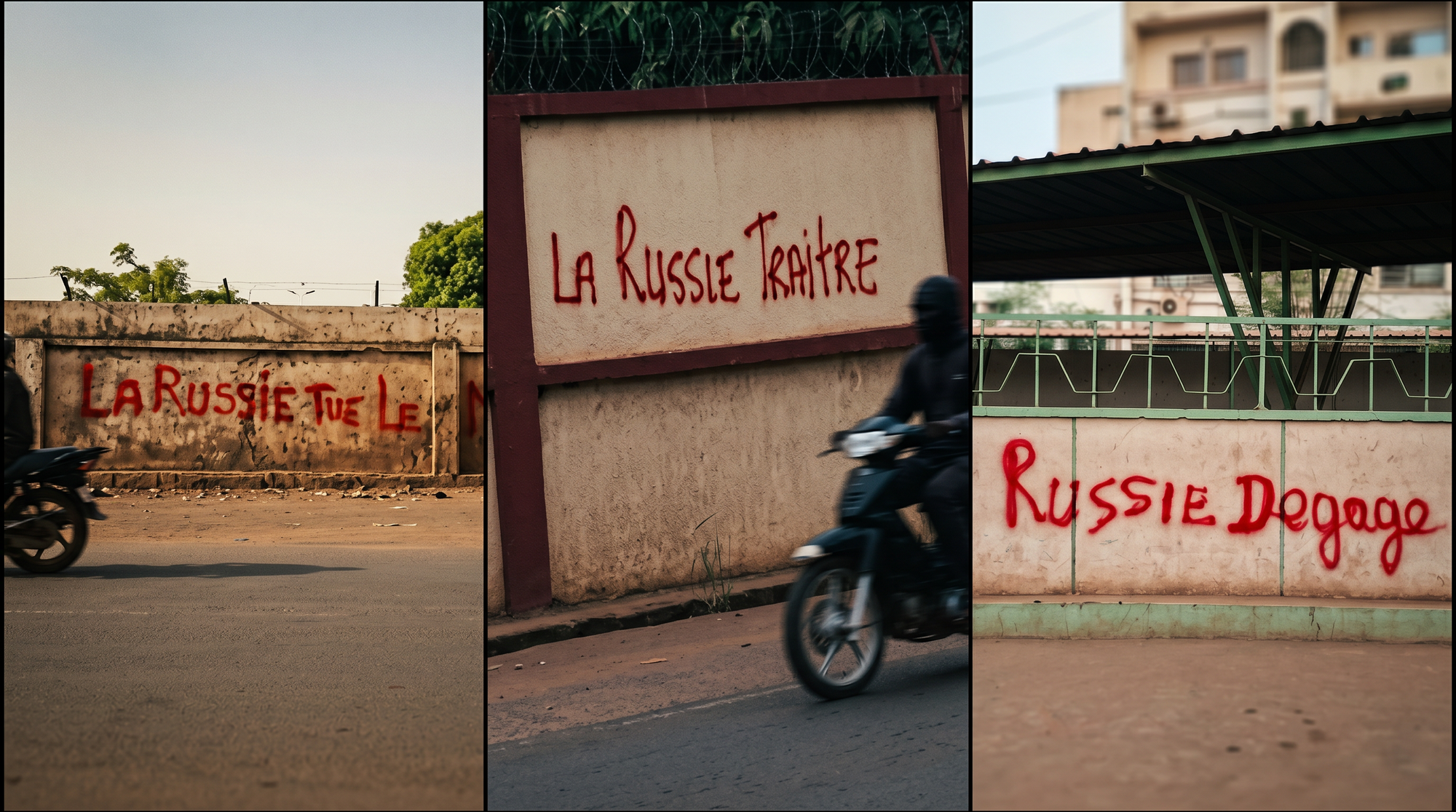 Anti-Russian slogans on the streets of Bamako that appeared on 21 May 2026. Source
Due to the widespread use of forests by insurgent forces for the movement and deployment of their units, the Malian government designated most forested areas across the country as a “military interest zone”, warning that all civilians found in these areas would be treated as targets by FAMa.
Such measures reflect the search for new, increasingly harsh approaches amid the government’s inability to counter the JNIM–FLA offensive. They are also expected to cause significant harm to the civilian population, potentially further eroding the regime’s popularity.
Meanwhile, jihadist forces focus on undermining morale within the ranks of the Malian army and encouraging desertion. On 13 June, JNIM announced the release of more than 200 FAMa soldiers, to whom the group reportedly provided transport and money to facilitate their return home.
Taking into account the number of forces available to FAMa and the JNIM–FLA coalition, it can be concluded that, under the requirement to maintain sufficient garrisons for defensive operations in urban areas and to secure airbases, FAMa and the “African Corps” are unable to assemble a force capable of conducting a large-scale counteroffensive to clear rural areas without exposing key population centres to risk.The insurgents, in general, benefit from operating across a vast area and from the ability to concentrate their forces at selected locations. At the same time, FAMa are forced to maintain a continuous presence in a number of key towns and cities.
Such a balance of forces may potentially shift in favour of JNIM and FLA, as:
JNIM expands its recruitment campaign in the south, addressing local populations in their native language;
FLA carry out general mobilisation, calling on “all sons of Azawad” to join its ranks;
According to reports from media outlets affiliated with FLA, a trend has emerged of officers defecting from FAMa and joining FLA together with their units. Between 12 and 14 June, reports surfaced of three such cases of defection: a lieutenant colonel and a colonel in Gao, as well as a commander of a pro-government Tuareg group in Menaka. These reports cannot currently be independently verified.
Overall, all these factors indicate preparations for a new large-scale offensive against areas under the control of Bamako. As part of preparations for upcoming operations, JNIM have also announced a financial reward for the head or for precise information on the whereabouts of Assimi Goïta and two key FAMa officers. It can be assumed that JNIM plans to replicate the scenario of the 25 April offensive, when the assault began simultaneously with a strike on the command structure.
If recruitment campaigns are successfully implemented and significant levels of desertion within the ranks of FAMa are confirmed, the coalition of separatists and jihadists could achieve a numerical advantage over pro-government forces. However, insurgent offensive operations in the south and centre of the country would remain significantly constrained by air support from Malian and “African Corps” air assets.
Air forces are able to conduct a high number of sorties over short distances from airbases in Bamako and Sévaré.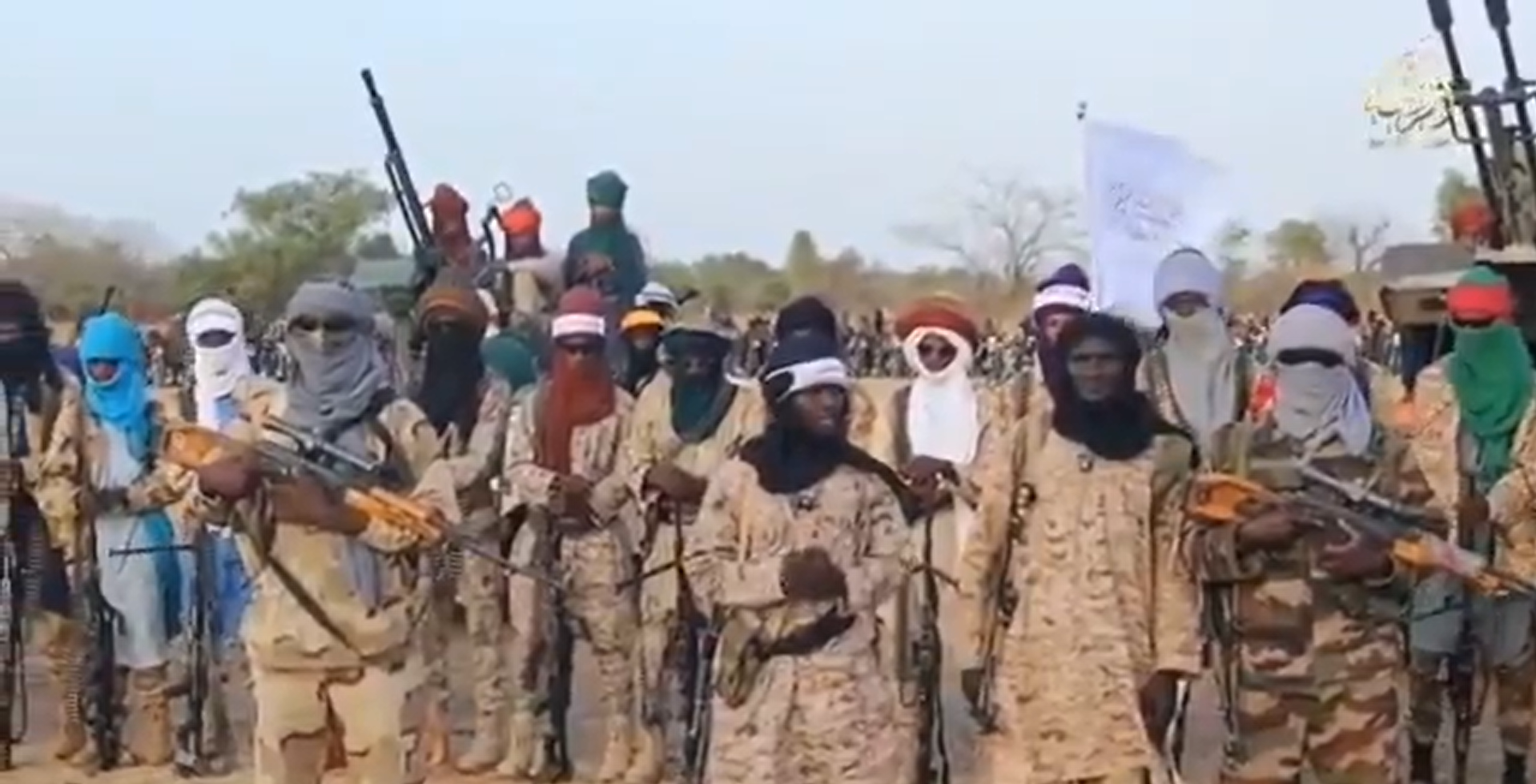 JNIM fighters during what is claimed to be preparations for future operations. Video published on 11 June. Source
The successful offensive by the Tuareg–jihadist coalition dealt a significant blow to Russia’s strategic interests in the region:
The establishment of insurgent control over the city of Kidal effectively puts an end to Kremlin plans to gain access to Malian gold, as the largest accessible gold reserves are located in that region, and a project to develop a mine with annual output of 200 tonnes of gold was planned specifically near Kidal. Moreover, other gold mining sites located in the central part of the country are increasingly threatened by ongoing hostilities or direct insurgent raids. In response, the Malian government has announced a suspension of all gold production from 15 June to 30 September 2026, a move that is expected to weaken Russian efforts to bypass Western sanctions and finance the operations of the “African Corps” (“AK”). Gold mining taxes account for more than 50% of Mali’s budget revenues, and these funds are also used to cover the costs of Russian forces operating in the country. Control over northern goldfields could allow the insurgents to secure additional financing. FLA imposes taxation on artisanal miners operating in areas under their control; such miners number around 700,000 across Mali, with a significant concentration near Kidal, and the gold is reportedly channelled through routes into Algeria. This provides the insurgents with additional resources for continued operations against both the Malian government and “AK” forces, posing a long-term threat to Russia’s presence in the country.
In the north of the country completely cuts off access to Algeria, which is used by Russia as a hub for military air transport, and makes it impossible to establish a land corridor for the supply of resources required to sustain the operations of “AK” in Mali, Niger, and Burkina Faso, compelling Russian forces to continue relying on long alternative routes that complicate logistics. The key route currently used by Russian forces runs through Guinea: aircraft arrive in Conakry, are unloaded, and the cargo then has to travel approximately 700 km overland to Bamako.
For Ukraine, the success of FLA serves as further evidence of the capability of the Defence Intelligence of Ukraine (HUR) to support effective anti-Russian insurgent activity that disrupts Russian sources of funding. Despite condemnations by ECOWAS countries over alleged Ukrainian interference in African affairs, the effectiveness of the assistance provided by Ukraine may facilitate potential cooperation with insurgent groups in other states where Russian forces operate.
In addition, it represents a symbolic demonstration of readiness to undermine Russian interests anywhere, including far beyond Ukraine’s immediate neighbourhood. The effectiveness of Ukrainian weapons and expertise could also become a basis for increased interest among African states in concluding agreements in the defence sector—a potential source of revenue for Ukraine’s defence industry and a means of expanding Ukrainian influence in Africa in opposition to Russia.
A key factor is the ability to support local actors, as illustrated by the FLA case, since this experience may prove important for Ukraine’s future involvement in training forces for counterterrorism operations in other countries.
Beyond the direct consequences affecting Russia’s operational situation in Mali, the inability to halt the insurgent offensive also carries broader geopolitical implications. In effect, the success of FLA and JNIM signals an inability on the Russian side to guarantee stability and security in a country where Russian forces and advisers are deployed.
The success of the JNIM–FLA coalition may also pose a challenge to other pro-Russian regimes. This is reflected in an intelligence document from Burkina Faso dated 30 May, which refers to the possibility of an AES and Russian intervention in Mali, as well as a potential spread of hostilities onto Burkinabe territory.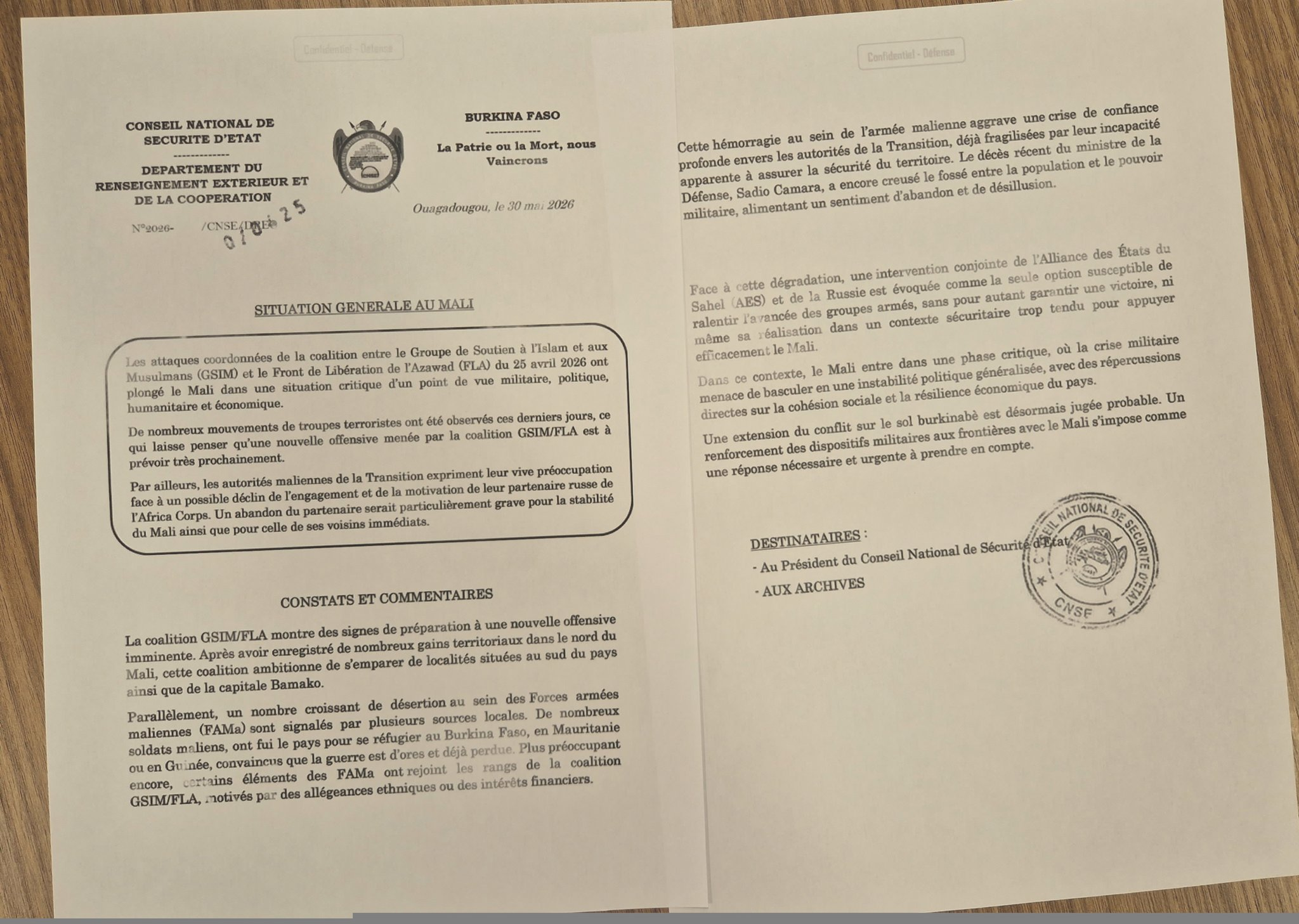 An intelligence document from Burkina Faso assessing the situation in Mali, dated 30 May 2026. Source
Based on the available information, three main scenarios for the development of events in Mali may be outlined:
Insurgent victory. In this scenario, FLA and JNIM carry out successful mobilisation, and their alliance holds. As a result, they leverage numerical superiority and begin a new offensive campaign that repeats the scenario of the 25 June offensive: coordinated attacks across different parts of the country aimed at tying down Malian forces in parallel with an attempt on senior military leadership. The offensive may be focused either directly on Bamako or on northern cities such as Gao and Timbuktu. Taking into account the low morale within FAMa and the declining popularity of the government among the population, the capture of major cities by insurgents became a trigger for the collapse of Goïta’s regime. Regardless of the initial focus of the offensive, the objective of the campaign is the overthrow of the pro-Russian government. In the event of insurgents taking Bamako, an escalation of hostilities between JNIM and the Islamic State can be expected, as well as their spread into neighbouring Burkina Faso and Niger, where JNIM currently maintains limited activity. In the best possible outcome, power in Mali is formed by a JNIM–FLA coalition; in the worst, FLA declares an independent Azawad state, breaking the alliance between the two organisations. The scenario is broadly similar to events in Syria in late 2024, where a formerly al-Qaeda-affiliated faction (as JNIM is) came to power following a successful offensive. A key condition is JNIM’s shift away from jihadism and the abandonment of attacks beyond the three AES countries, in order to avoid triggering external intervention and to increase the chances of international recognition of a potential new government. In this scenario, Russia’s entire regional presence comes under threat.
Guerrilla warfare. In the event of the failure of the mobilisation campaign or the onset of a significant military intervention by pro-Russian Burkina Faso and Niger, the new JNIM–FLA offensive fails: major cities remain under the control of the Malian government. At the same time, the situation does not change fundamentally. The insurgents continue conducting raids in rural areas and expanding their control over them.Pro-government forces remain unable to assemble sufficient strength to carry out full-scale clearance operations and establish sustained control over these territories. In this case, the conflict drifts into and settles into a phase of guerrilla warfare. In effect, the war returns to the tempo observed prior to 25 April 2026: periodic insurgent raids and blockades on government-controlled areas. Whether the JNIM and FLA coalition holds or collapses is not a decisive factor for the nature of the guerrilla war, provided that neither organisation experiences an internal split. The main battlefield becomes the outskirts of Bamako, where the blockade continues, while Malian forces will likely attempt to re-establish control over northern gold mines. The Russian “African Corps” continues its operations in the region, and Russian influence remains resilient.
Insurgent defeat. The preconditions for this scenario include the premature collapse of the JNIM and FLA coalition, accompanied by escalating internal contradictions within both organisations. Due to their structure, which includes a large number of different ethnic groups and smaller organisations, JNIM and FLA begin to fragment. Triggers for this fragmentation may include the inability to integrate southern Malian ethnic groups into the structure of JNIM, internal disputes following a defeat in a future offensive, or the elimination by Malian forces of a number of key figures within JNIM and FLA. Once dispersed, the separatists and jihadists are no longer able to conduct large-scale operations. FAMa, with support from the “African Corps” (“AK”), defeat smaller insurgent groups one by one and gradually begin to re-establish control first over lost cities, bases, and mines in the north, and later over rural areas. However, hostilities would continue for a prolonged period due to the country’s vast territory and the number of insurgent organisations. For Russia, this scenario would support an expansion of influence in Africa and enable the scaling up of gold extraction in the country to the previously planned level of 200+ tonnes per year.
You may be interested