 INTERNATIONAL
INFORMATION AND ANALYTICAL
COMMUNITY


+ Join
Support INTERNATIONAL



Kostiantyn Hlushko, staff analyst and reviewer at the "Resurgam" Center for Northern European Policy
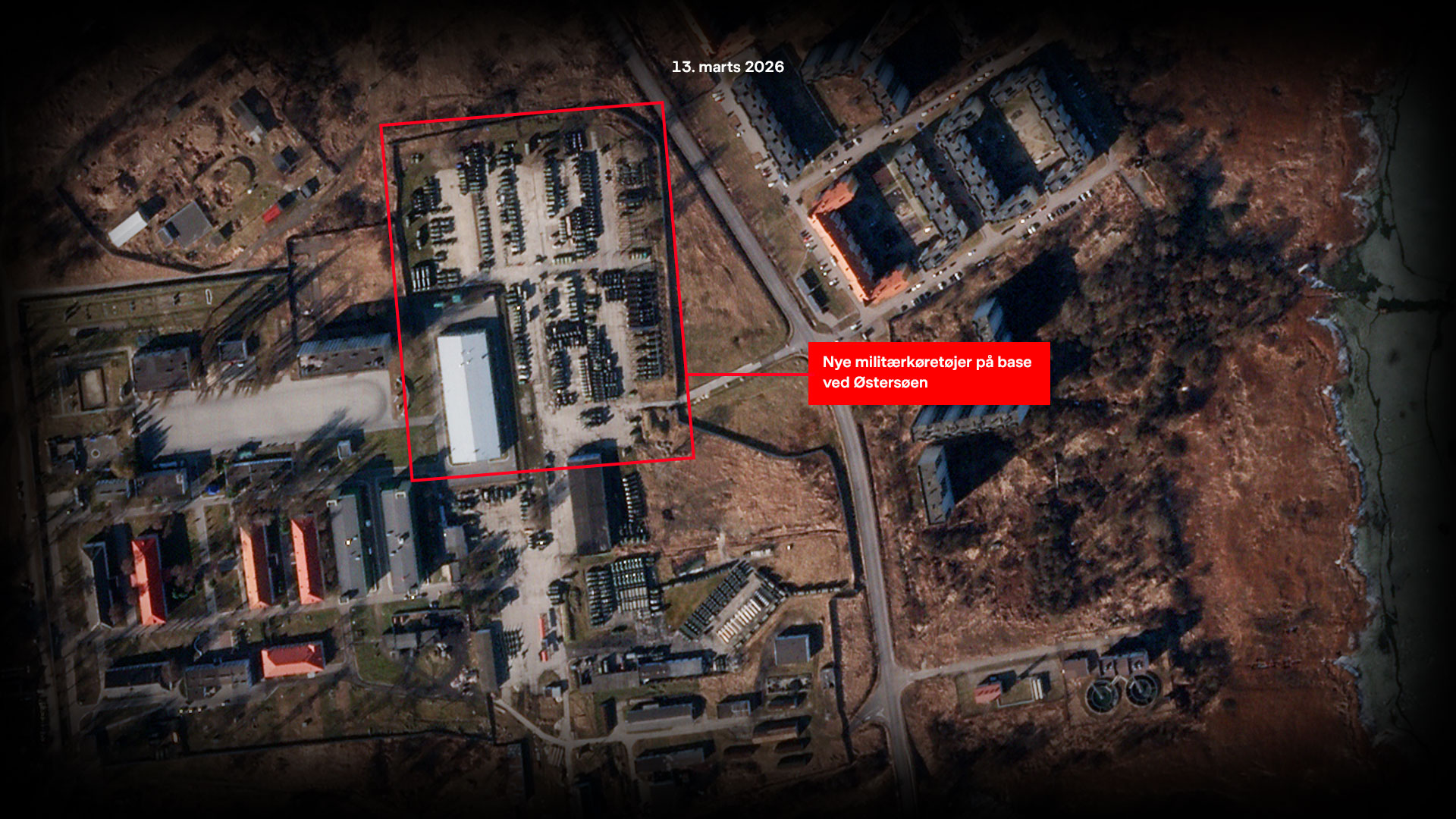 New military vehicles at a base in Kaliningrad. Source:
On 10 June, several Nordic media outlets and an Estonian media outlet jointly published an investigative report presenting evidence of Russia's significant military build-up along NATO's northern and eastern flanks. On the same day, alongside NATO exercises in the Baltic Sea, the Russian Navy conducted a limited exercise in the region, practising unguided rocket launches, bombing runs, and missile strikes against more than 50 targets, thereby demonstrating its military presence. On 12 June, Sweden's Defence Commission published a report warning that Russia could, in the near future, undertake limited military action against a NATO member state to test Alliance cohesion and its willingness to honour its collective defence commitments.
We examine Russia's preparations for a possible confrontation with NATO and assess the readiness of the Nordic countries.
According to the investigation Russia is carrying out preparatory work in five areas near NATO's borders: Pechenga (11 km from Norway), Kandalaksha (110 km from Finland), Petrozavodsk (less than 200 km from Finland), Luga (145 km from Estonia), and Kaliningrad, the Russian exclave between Poland and Lithuania.
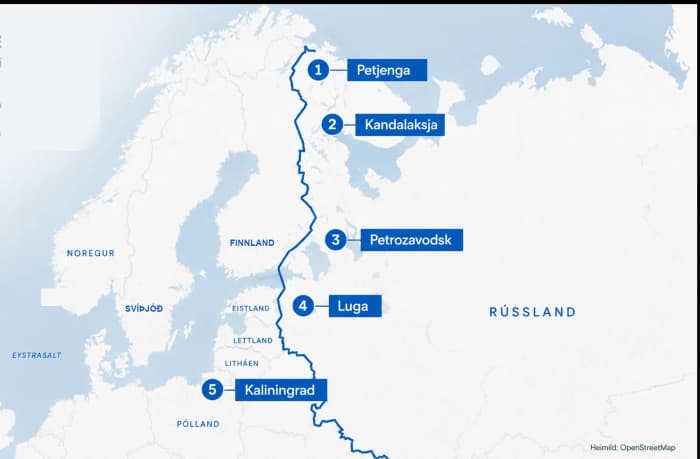 Military bases covered in the investigation. Source:
Russia has been clearing forests to expand its military infrastructure, building warehouses, maintenance workshops for equipment, and barracks, while refurbishing old military bases and establishing new ones. Particularly noteworthy is a new base for a railway brigade in Pechenga, as Russia will probably rely on rail transport for the rapid redeployment of personnel. Railways remain Russia's cheapest and most efficient means of quickly transferring troops and equipment over long distances. The new barracks will be able to accommodate up to 115,000 personnel, including 80,000 along the border with Finland, up from 20,000 previously.
Russia has made the most significant progress in developing its base infrastructure in Pechenga, where the number of personnel is expected to increase from 4,000 to 17,000. In Kandalaksha, an artillery brigade is planned to be stationed, capable of striking targets at long distances in the event of a war. Significant changes are also taking place in Petrozavodsk. While there was previously no permanent military presence there, an army corps of around 16,000 personnel is now expected to be deployed.
However, Kaliningrad drew our greatest attention, where the personnel strength is expected to increase from 3,000 to 7,000, while the amount of military equipment continues to grow. As we have previously noted, Kaliningrad could serve as the launch point for an operation to seize the strategically important islands of Gotland and Bornholm. In addition, the Kaliningrad region is adjacent to the Suwałki Corridor — a narrow stretch of land between Poland and Lithuania that provides the Baltic states’ land connection to the rest of NATO, the importance of which is discussed in this article.
A significant factor limiting Russia’s ability to attack NATO countries is the war in Ukraine. However, according to Sweden’s Defence Commission, the Kremlin could launch limited military operations if it considers the “political conditions favourable”, even without having a clear military advantage. As for Russia’s ability to initiate a full-scale war, NATO assessments differ.
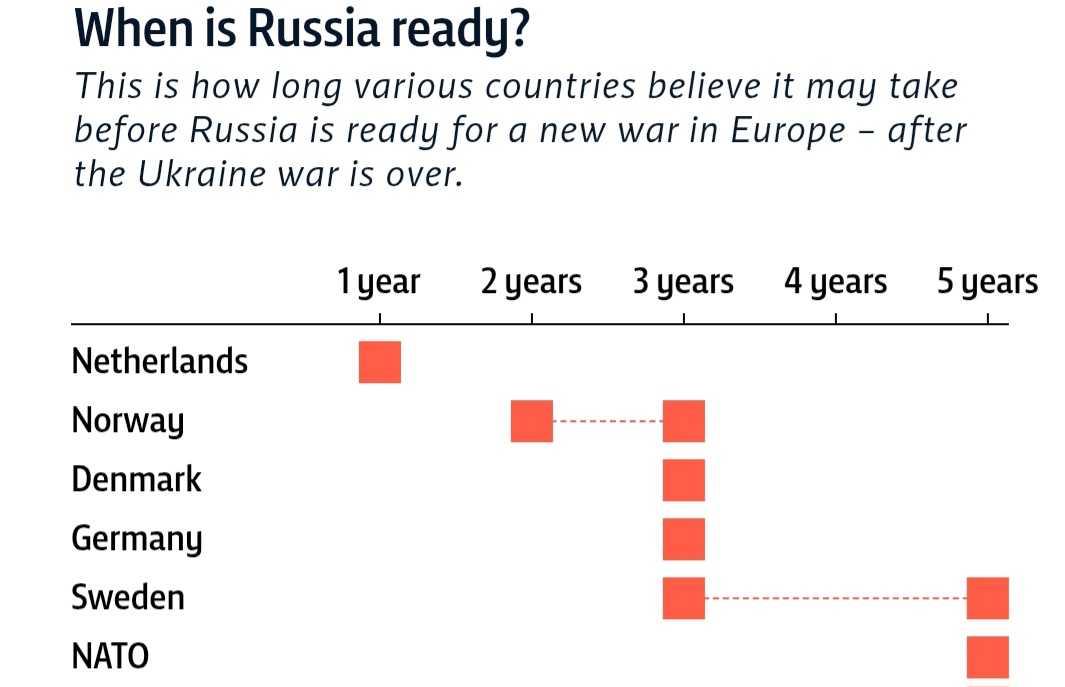 An assessment of the number of years Russia would need to prepare for its next war, after the end of the war against Ukraine, produced by Norway’s public broadcaster. Source:
Despite the scale of Russia’s planned expansion of its military presence, any assessment of the security situation depends not only on Moscow’s intentions but also on how prepared the countries in the region are for a potential attack.
In Finland, which is most exposed to the potential build-up of Russian forces along the border, the authorities have reacted in a restrained manner. Defence Minister Antti Häkkänen said he is aware of Russia’s activities and that Finns have nothing to worry about, while President Alexander Stubb stated that he does not believe Russia will launch an attack while the war in Ukraine is ongoing. However, such statements are more likely aimed at avoiding unnecessary public concern than at downplaying the threat. Across Finland, civil defence shelters have been built nationwide, the armed forces are preparing for drone warfare, and cooperation with Ukraine in the defence industry is actively under way.
In addition, last year Finland withdrew from the Ottawa Convention banning anti-personnel mines, and on 17 June its parliament adopted legislative amendments enabling discussions on extending the French nuclear umbrella to the country. On 8 June, the establishment of NATO’s Forward Land Forces (FLF Finland) base in Finland was announced, with Sweden already agreeing to deploy up to 1,200 troops. Furthermore, on 17 June Finland and Sweden signed an agreement allowing police forces from both countries to operate in each other’s border areas without a separate request in the event of a serious threat to life and health. Although the agreement is primarily intended for emergency response in border regions, it may also be relevant in the event of a military crisis. In particular, if an attack on Finland were to trigger the evacuation of part of the civilian population to Sweden — as already happened during the Winter War (1939–1940) and the Continuation War (1941–1944) — the involvement of law enforcement authorities from both countries could facilitate coordination of this process.
At the same time, Finland remains vulnerable to drone attacks, and in the event of a war Russia will certainly use them in large numbers.
Sweden, which does not share a land border with Russia, has been preparing for a potential confrontation with Russia since 2015, gradually increasing its defence spending, strengthening its defence industry, improving the interoperability of its forces with allies, and building stockpiles of grain and medical supplies that would be critically needed in the event of a war. In addition, the country is actively studying Ukraine’s experience in countering Russia, while its defence industry is already offering low-cost but effective solutions.
At the same time, according to Sweden’s Defence Commission, preparations need to be accelerated, as Russia is expected to further escalate its activities, including through hybrid attacks, while in the event of a conventional war with Russia Europe would have to rely predominantly on its own capabilities. In addition, Sweden has not yet withdrawn from the Ottawa Convention and does not have as extensive a network of fixed civil defence shelters as Finland. An indication of Russia’s intensified hybrid warfare activities can be seen in recent approaches by Russian fighter jets near Sweden’s border, to which Sweden responded by scrambling its own aircrafts.
In the case of Denmark, the authorities are acting in a similar way to Finland: responding to threats in a restrained manner, preparing for a potential confrontation, in particular through cooperation with Ukraine, as well as through preparations for reform of conscription and military service.
However, Denmark would also face a number of challenges in terms of potential defence. First, mainland Denmark is relatively small, which would make it critically dependent on NATO allies’ support if it were required to defend, for example, Bornholm or any of its other islands. Second, Donald Trump has not abandoned his claims regarding Greenland, which forces Denmark to spread its already limited resources in order to protect its sovereignty. Third, Denmark has been facing a shortage of personnel in its navy for more than a decade. Although the navy is currently attempting to bring back former service members who have left, there is no guarantee of success. In addition, like Finland, Denmark is vulnerable to drone attacks.
Norway, aware of the threats, has in recent years concluded a number of bilateral security agreements with allies and has also been actively cooperating with Ukraine in the defence industry sector.
At the same time, Norway’s key challenge remains the limited number of military personnel. While Russia plans to deploy 17,000 soldiers in Pechenga, only around 800 Norwegian troops are currently stationed on the other side of the border, as part of a brigade with a total strength of 1,500 personnel. The planned increase of this brigade to 3,000–5,000 personnel will continue until 2033, while the creation of additional brigades is expected even later. Norway’s Chief of Defence, Eirik Kristoffersen, has acknowledged that, Norway is struggling to match Russia’s pace. In addition, Norway lacks a sufficient number of fixed civil defence shelters.
A full-scale Russian attack on the Nordic countries is currently unlikely, as Russia remains heavily engaged in the war against Ukraine, which absorbs a significant share of its military and material resources. Despite current conditions that are favourable to Russia, including reduced US engagement in European defence and insufficient preparedness among the Nordic countries, the ongoing construction of new bases and expansion of military presence indicate that Russia is also not fully ready for a direct confrontation with NATO.
At the same time, a significant increase in hybrid attacks against the Nordic and Baltic countries can be expected, including Russian military provocations. For example, Russia could use drones to strike Ukrainian defence production facilities located on their territory, framing this not as an attack on a NATO country but as an operation against a Ukrainian defence industry site, thereby testing the allies’ readiness for a collective response under conditions of deliberately created legal and political ambiguity. In addition, an attack on the Nordic or Baltic countries in the short period following the end of the Russia–Ukraine war cannot be ruled out.
Despite the scale of Russia’s planned expansion of its military presence, any assessment of the security situation depends not only on Moscow’s intentions but also on how prepared the countries in the region are for a potential attack.
In Finland, which is most exposed to the potential build-up of Russian forces along the border, the authorities have reacted in a restrained manner. Defence Minister Antti Häkkänen said he is aware of Russia’s activities and that Finns have nothing to worry about, while President Alexander Stubb stated that he does not believe Russia will launch an attack while the war in Ukraine is ongoing. However, such statements are more likely aimed at avoiding unnecessary public concern than at downplaying the threat. Across Finland, civil defence shelters have been built nationwide, the armed forces are preparing for drone warfare, and cooperation with Ukraine in the defence industry is actively under way.
In addition, last year Finland withdrew from the Ottawa Convention banning anti-personnel mines, and on 17 June its parliament adopted legislative amendments enabling discussions on extending the French nuclear umbrella to the country. On 8 June, the establishment of NATO’s Forward Land Forces (FLF Finland) base in Finland was announced, with Sweden already agreeing to deploy up to 1,200 troops. Furthermore, on 17 June Finland and Sweden signed an agreement allowing police forces from both countries to operate in each other’s border areas without a separate request in the event of a serious threat to life and health. Although the agreement is primarily intended for emergency response in border regions, it may also be relevant in the event of a military crisis. In particular, if an attack on Finland were to trigger the evacuation of part of the civilian population to Sweden — as already happened during the Winter War (1939–1940) and the Continuation War (1941–1944) — the involvement of law enforcement authorities from both countries could facilitate coordination of this process.
At the same time, Finland remains vulnerable to drone attacks, and in the event of a war Russia will certainly use them in large numbers.
Sweden, which does not share a land border with Russia, has been preparing for a potential confrontation with Russia since 2015, gradually increasing its defence spending, strengthening its defence industry, improving the interoperability of its forces with allies, and building stockpiles of grain and medical supplies that would be critically needed in the event of a war. In addition, the country is actively studying Ukraine’s experience in countering Russia, while its defence industry is already offering low-cost but effective solutions.
At the same time, according to Sweden’s Defence Commission, preparations need to be accelerated, as Russia is expected to further escalate its activities, including through hybrid attacks, while in the event of a conventional war with Russia Europe would have to rely predominantly on its own capabilities. In addition, Sweden has not yet withdrawn from the Ottawa Convention and does not have as extensive a network of fixed civil defence shelters as Finland. An indication of Russia’s intensified hybrid warfare activities can be seen in recent approaches by Russian fighter jets near Sweden’s border, to which Sweden responded by scrambling its own aircrafts.
In the case of Denmark, the authorities are acting in a similar way to Finland: responding to threats in a restrained manner, preparing for a potential confrontation, in particular through cooperation with Ukraine, as well as through preparations for reform of conscription and military service.
However, Denmark would also face a number of challenges in terms of potential defence. First, mainland Denmark is relatively small, which would make it critically dependent on NATO allies’ support if it were required to defend, for example, Bornholm or any of its other islands. Second, Donald Trump has not abandoned his claims regarding Greenland, which forces Denmark to spread its already limited resources in order to protect its sovereignty. Third, Denmark has been facing a shortage of personnel in its navy for more than a decade. Although the navy is currently attempting to bring back former service members who have left, there is no guarantee of success. In addition, like Finland, Denmark is vulnerable to drone attacks.
Norway, aware of the threats, has in recent years concluded a number of bilateral security agreements with allies and has also been actively cooperating with Ukraine in the defence industry sector.
At the same time, Norway’s key challenge remains the limited number of military personnel. While Russia plans to deploy 17,000 soldiers in Pechenga, only around 800 Norwegian troops are currently stationed on the other side of the border, as part of a brigade with a total strength of 1,500 personnel. The planned increase of this brigade to 3,000–5,000 personnel will continue until 2033, while the creation of additional brigades is expected even later. Norway’s Chief of Defence, Eirik Kristoffersen, has acknowledged that, Norway is struggling to match Russia’s pace. In addition, Norway lacks a sufficient number of fixed civil defence shelters.
A full-scale Russian attack on the Nordic countries is currently unlikely, as Russia remains heavily engaged in the war against Ukraine, which absorbs a significant share of its military and material resources. Despite current conditions that are favourable to Russia, including reduced US engagement in European defence and insufficient preparedness among the Nordic countries, the ongoing construction of new bases and expansion of military presence indicate that Russia is also not fully ready for a direct confrontation with NATO.
At the same time, a significant increase in hybrid attacks against the Nordic and Baltic countries can be expected, including Russian military provocations. For example, Russia could use drones to strike Ukrainian defence production facilities located on their territory, framing this not as an attack on a NATO country but as an operation against a Ukrainian defence industry site, thereby testing the allies’ readiness for a collective response under conditions of deliberately created legal and political ambiguity. In addition, an attack on the Nordic or Baltic countries in the short period following the end of the Russia–Ukraine war cannot be ruled out.
Russia’s growing military build-up near NATO borders indicates that the northern direction is increasingly acquiring strategic importance for the Kremlin. After the end of the war against Ukraine, Northern Europe could become one of the key regions of confrontation between Russia and NATO. At the same time, Russia’s main challenge today remains a lack of capacity, while the Nordic countries face a shortage of time. The Kremlin is not yet ready for a direct confrontation with NATO, while the countries of the region have not yet completed their preparations for a potential conflict. This creates a window of opportunity that both sides are seeking to exploit in order to strengthen their respective positions.
Kostiantyn Hlushko, staff analyst and reviewer at the "Resurgam" Center for Northern European Policy
You may be interested