 INTERNATIONAL
INFORMATION AND ANALYTICAL
COMMUNITY


+ Join
Support INTERNATIONAL


Dmytro Yaselnyi, analyst at the NGO Spalakh
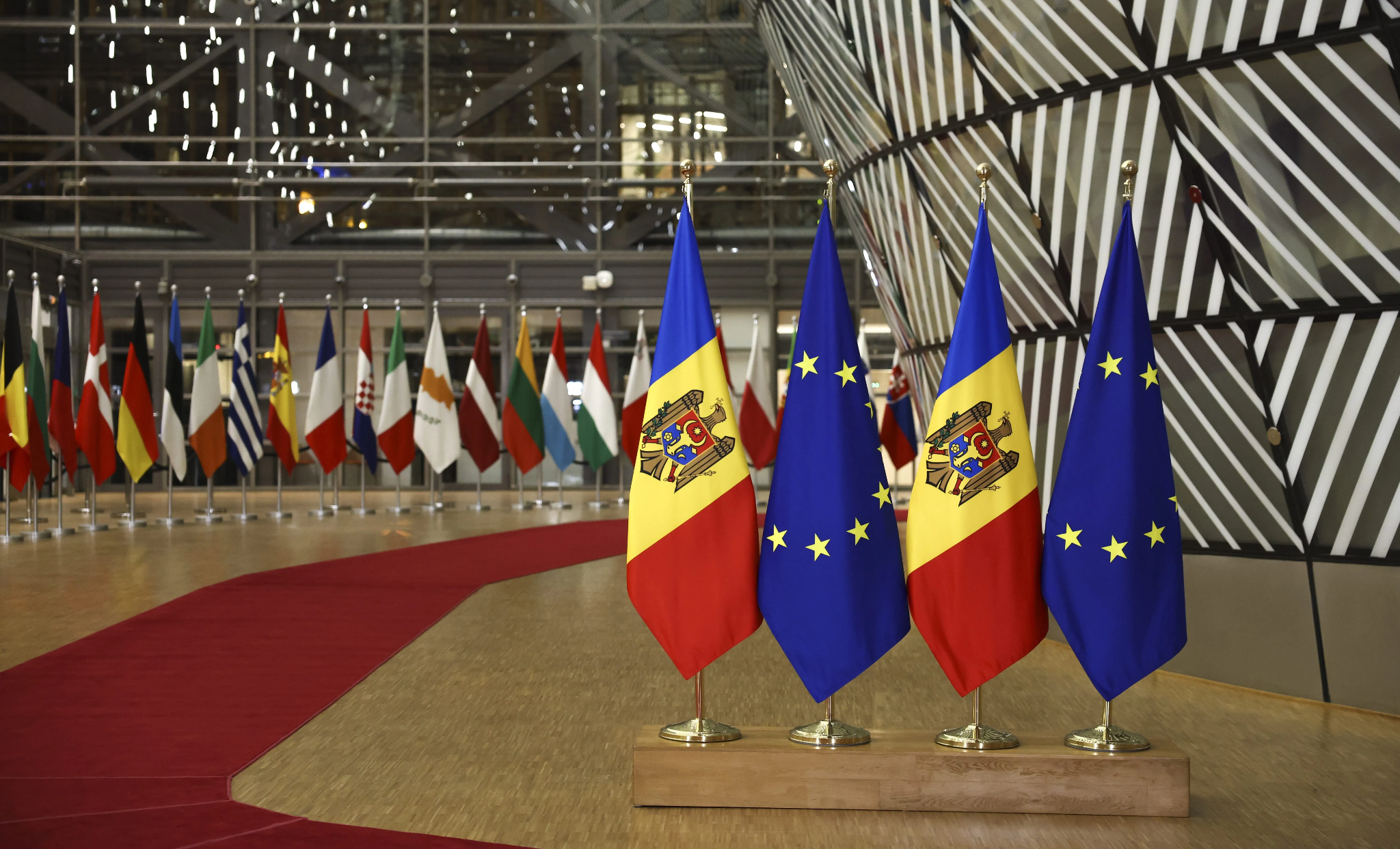 Photo: The New Union Post
Moldova signed its Association Agreement with the European Union on 27 June 2014, and it entered into force later that year. Chisinau also secured visa-free travel to the EU, which took effect in April 2014. On paper, everything seemed promising. In reality, however, progress was far less convincing.
The second half of the 2010s did not bring Moldova any closer to EU membership. Vlad Plahotniuc, the oligarch who led the Democratic Party of Moldova, exercised extensive control over influential members of parliament, judges, prosecutors and much of the country's media landscape, earning him the nickname "the Master of Moldova". Plahotniuc strongly supported the federalisation of Moldova and closer ties with Russia, and used his political influence to advance both.
Under these conditions, no incentives from the European Union could trigger meaningful reforms. State institutions formally existed, but in practice they functioned largely as a façade of European integration. Tellingly, this period also saw the largest financial scandal in Moldova's modern history. According to investigators, members of Plahotniuc's inner circle used an offshore scheme to siphon off around $1 billion, while in November 2014 the National Bank exhausted its foreign exchange reserves. The cost ultimately fell on Moldovan taxpayers, turning the scandal into a symbol of the country's systemic corruption.
Maia Sandu's victory in the 2020 presidential election, followed by the PAS party's parliamentary majority, made it possible to form a government without relying on coalition partners, launch an ambitious anti-corruption campaign, reform the judiciary, and breathe new life into Moldova's European integration process. The reforms progressed more slowly than expected due to resistance from the post-oligarchic system, and Sandu's first term was not enough to fully establish the rule of law. Even so, the country's overall direction changed fundamentally. It was this domestic turnaround, combined with the geopolitical shock of February 2022, that gave Moldova the opportunity it had lacked for years. After President Maia Sandu signed the country's application for EU membership on 3 March 2022, Moldova was granted EU candidate status alongside Ukraine on 23 June 2022.
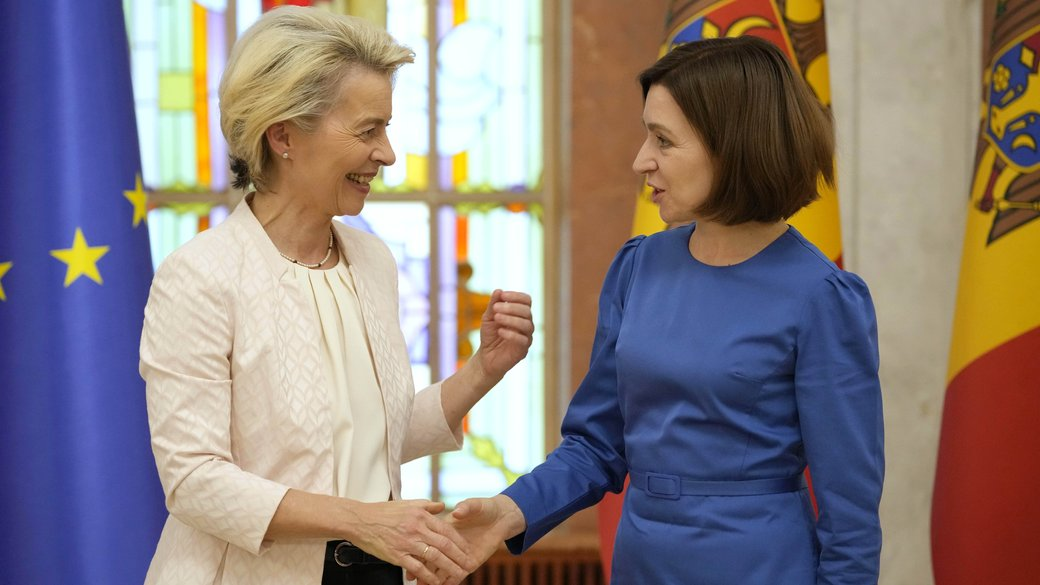 Moldovan President Maia Sandu and European Commission President Ursula von der Leyen during a press conference in Chisinau. Photo: AP/Andreea Alexandru
Formal accession negotiations with Moldova and Ukraine were launched in 2024. However, the substantive negotiating process remained blocked for a long time by Hungary. Moldova found itself caught in the dispute through no fault of its own, effectively becoming a hostage to a conflict that was not of its making.
That changed after Hungary's long-serving prime minister, Viktor Orbán, lost the election to the rising politician Péter Magyar. On 15 June 2026, the EU officially opened the first negotiating cluster, "Fundamentals", for both Moldova and Ukraine, followed by the sixth cluster, "External Relations", in July. We will return later to Ukraine's performance in fulfilling its commitments – or, more precisely, its lack of progress.
The Transnistrian conflict is, of course, nothing new. It dates back to September 1990, while the active phase of the war ended in 1992. Although Transnistria is internationally recognised as part of Moldova, it remains a de facto pro-Russian enclave hosting Russian "peacekeepers" who, in reality, function as an occupying force.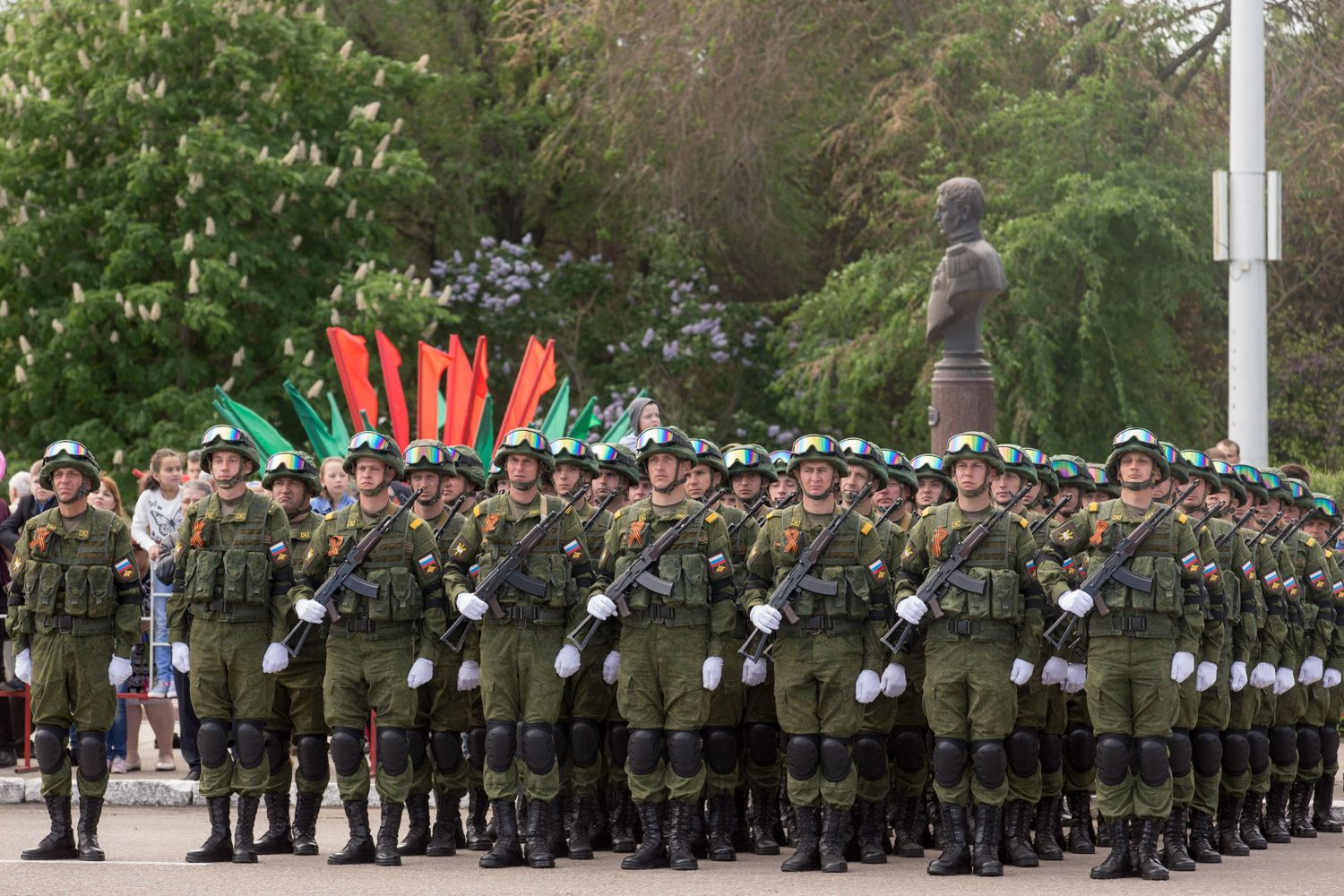 Russian Armed Forces personnel during a military parade in Tiraspol in 2017. Photo: Getty Images
In March 2026, the Moldovan government presented a comprehensive vision for the region's reintegration in Brussels. The document enshrines a key principle: Transnistria will not be granted any special status within a unified Moldova. At the same time, it explicitly states that reintegration and EU accession may proceed at different speeds, meaning that EU law will not be applied on the left bank of the Dniester on a temporary basis. The document, however, sidesteps the central practical challenge. It offers no concrete answer to the question of how Russian troops are to be withdrawn.
At first glance, the challenge appears to be the same as Ukraine's. Yet the distinction is crucial: both Moldova and Ukraine have territories beyond the effective control of their central governments, but the nature and scale of the problem are fundamentally different. Transnistria is a localised frozen conflict with clearly defined geographical boundaries and predictable actors. Ukraine, by contrast, is confronting the ongoing full-scale occupation of a significant part of its territory, where the front line remains fluid. Moldova may plan for reintegration in relative stability, whereas Ukraine is compelled to address the same challenge in the midst of an existential war.
In practice, European integration is first and foremost about reforms. This is where one of the most significant asymmetries between the two countries becomes evident.
Moldova's relatively small size – with a population of just around 2.5 million and a territory roughly 18 times smaller than Ukraine's – gives its government a clear administrative advantage. The 2025 parliamentary election, in which PAS once again secured a majority, provided Chisinau with another window of opportunity to pursue difficult but necessary reforms, and it has made use of that opportunity. EU officials have repeatedly noted that Moldova is advancing faster than Ukraine in several key areas of reform. According to the latest assessments, Ukraine has implemented 87% of the reforms required under its Association Agreement with the EU, compared with 93% for Moldova.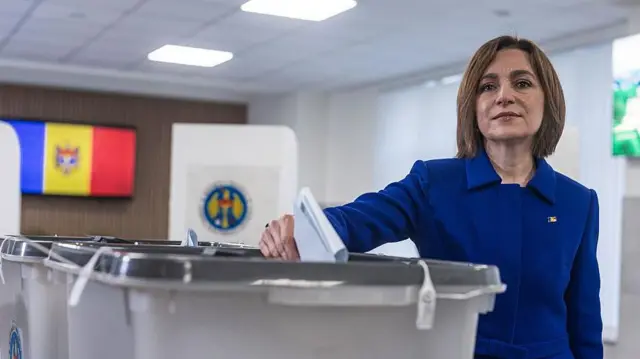 Moldovan President Maia Sandu casts her vote at a polling station during the parliamentary election in Chisinau. Photo: Vladislav Culiomza/Reuters
Moldova, by contrast, has already implemented a number of concrete reforms, including several of those identified as priorities for 2025–2027. The most significant include judicial reform through the introduction of integrity vetting for judges and prosecutors, the overhaul of the Superior Council of Magistracy and the Superior Council of Prosecutors, the digitalisation of customs procedures and public services, as well as a far-reaching energy reform aimed at ending the country's long-term dependence on Russian gas, shifting to market-based procurement, and deepening integration with the EU's energy market.
At the same time, the fight against high-level corruption remains the government's most problematic area. It will now become the responsibility of the next cabinet, as Moldova's government resigned on 4 July 2026 over a major corruption scandal. The political consequences are unlikely to spare either the ruling PAS party or President Maia Sandu.
Although the difference in the pace of European integration is not dramatic, and Moldova is by no means on the verge of joining the EU, it nonetheless highlights a profound gap in the capacity to integrate into the Union between a country pursuing reforms under conditions of relative stability and one doing so amid an ongoing war, nationwide mobilisation, the destruction of critical infrastructure, and immense pressure on both the executive and legislative branches. This is by no means an excuse for Ukraine, as the lack of sufficient political will among lawmakers and government officials has prevented the country from offsetting the challenges posed by its geopolitical circumstances.
Romania is Moldova's strongest advocate in Brussels. Its support is both broad and highly practical. First, through joint meetings of parliamentary committees, Bucharest shares its own experience of aligning national legislation with EU law, reforming the judiciary, and making effective use of EU funds – experience it gained during its own accession process and after joining the European Union in 2007.
Second, within the EU institutions, Romanian MEP Siegfried Mureșan, Chair of the EU–Moldova Parliamentary Association Committee, is one of Chisinau's most vocal advocates in Brussels. Meanwhile, Romanian President Nicușor Dan reaffirmed his unequivocal support for the European integration of both Moldova and Ukraine at the informal EU summit in April 2026.
Finally, Romania has already translated the entire body of EU legislation and regulatory documents into Romanian, effectively saving Chisinau months of purely technical work that would otherwise have been required to translate this vast body of documents.
It is important to stress that, as long as the EU keeps Moldova and Ukraine on the same accession track, this arrangement also indirectly benefits Ukraine. That advantage is likely to be temporary, however. There are already growing signals from within the EU that the informal Moldova–Ukraine pairing should be split into separate negotiation tracks once the first negotiating cluster has been opened. European Commission President Ursula von der Leyen hinted at this rather clearly in June.
Siegfried Mureșan, mentioned above, has also argued explicitly that integrating a smaller country – clearly referring to Moldova – is an "easier task" for the EU than integrating Ukraine. This may too be interpreted as a signal that Brussels may eventually decouple the two accession processes.
What, then, is Moldova's "Plan B"? In January 2026, during a British podcast interview, President Maia Sandu said: "If there were a referendum, I would vote for reunification with Romania. Look at what is happening around Moldova today. Look at what is happening in the world. It is becoming increasingly difficult for a small country like Moldova to survive as a democracy, as a sovereign state and, of course, to resist Russia."
At the same time, public opinion suggests that most Moldovans do not support such a scenario. According to an IMAS poll conducted in June 2025, 62% of respondents opposed reunification with Romania, while only 28% were in favour. For that reason, the government in Chisinau remains committed to the conventional path of European integration.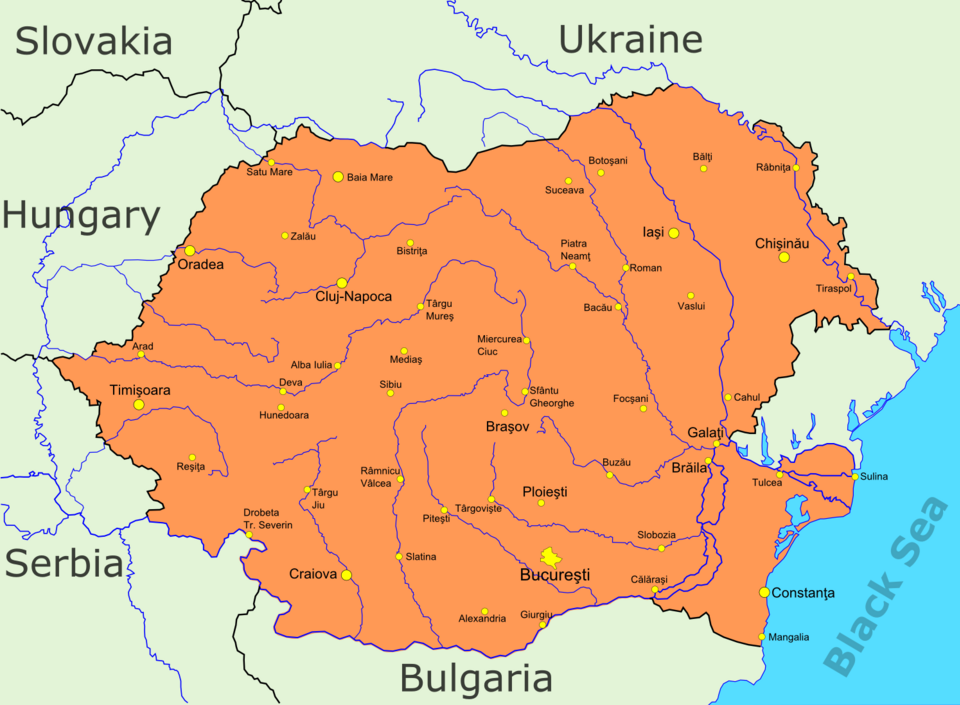 Hypothetical map of a unified Romania and Moldova, including Transnistria. Illustration from open sources
The very existence of this option strengthens Chisinau's position in its negotiations with Brussels. Reunification is certainly not a fringe idea; rather, it serves as Moldova's de facto "Plan B": the country's incorporation into Romania, an EU member state, which would effectively result in Moldova's automatic accession to the Union.
This is far from a new idea. It has long been at the core of the Unirea movement and other unionist groups in Moldova. For now, however, it is difficult to assess how feasible such a scenario is in the foreseeable future. Even the 2024 referendum on enshrining Moldova's European integration course in the Constitution passed by the narrowest of margins: 50.35% in favour versus 49.65% against.
These figures serve as a reminder that Moldova's pro-European consensus is real, but fragile, and that the more radical path to EU membership through reunification with Romania is unlikely to gain sufficient public support among Moldovans.
Moldova's fragile consensus on European integration is not the only challenge it faces. According to European Pravda, the autonomous region of Gagauzia — which, under Moldovan law, has the right to secede if Moldova reunifies with Romania (as early as 2014, 98.9% of participants in a consultative referendum supported the region's right to declare independence in such a scenario) — consistently votes for pro-Russian parties.
In March 2025, the incumbent Bashkan (the head of Gagauzia), Evghenia Guțul, was detained by Moldovan law enforcement authorities. Chisinau is trying to contain this source of destabilisation without further radicalising the Gagauz population. Whether it can maintain that balance remains an open question in Moldova's domestic politics.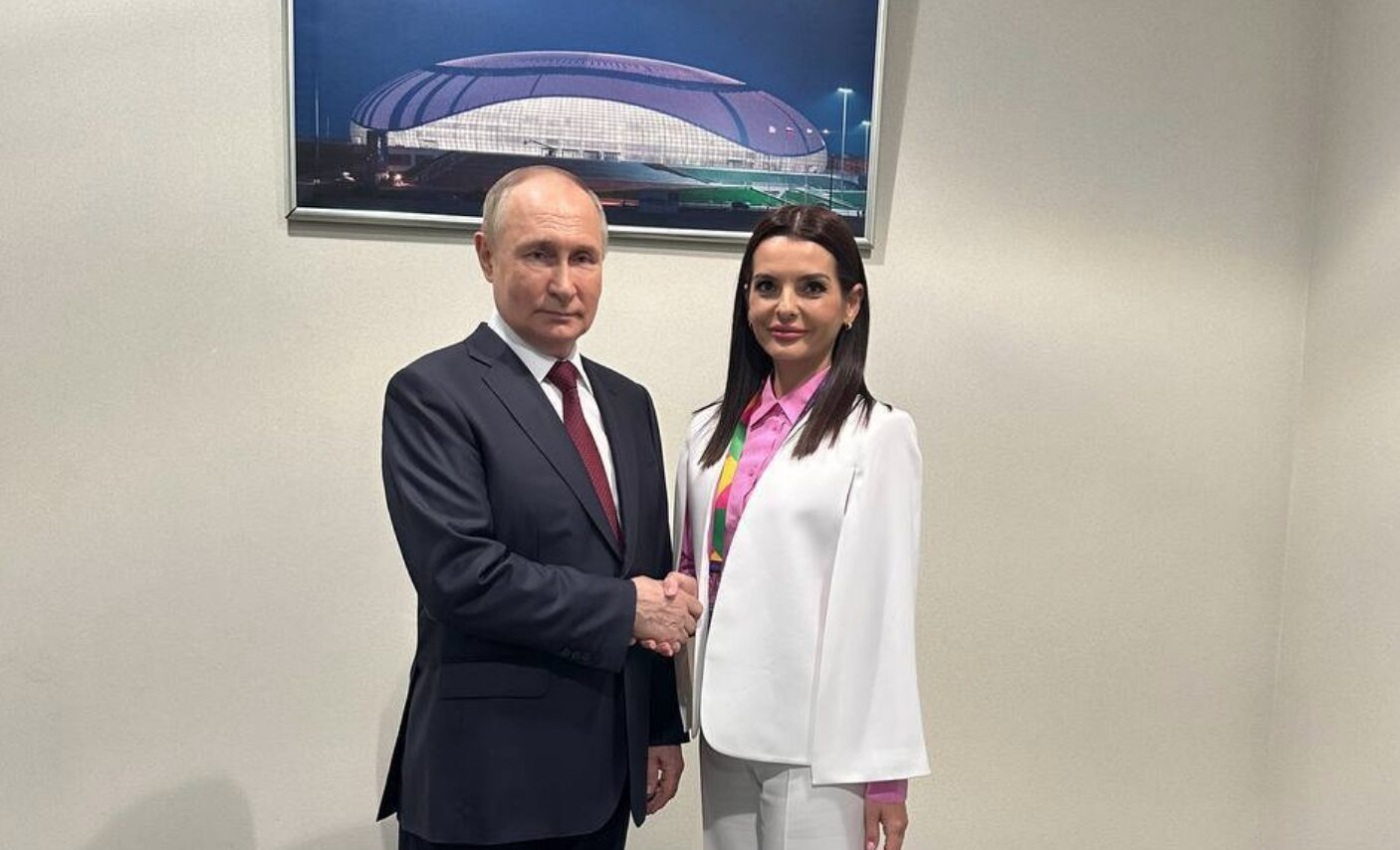 Russian President Vladimir Putin and former Bashkan of Gagauzia Evghenia Guțul. Photo: Evghenia Guțul/Telegram
Moldova's European integration trajectory disproves several common assumptions:that poverty is an insurmountable obstacle to EU membership, that an unresolved territorial conflict automatically blocks the accession process, or that a post-Soviet state burdened by a legacy of systemic corruption cannot meet Brussels' requirements.
In just five years, Moldova has gone from being a state captured by an oligarch to what EU officials now describe as a "top performer". It has achieved this not because conditions were favourable, but despite them. The Transnistrian conflict remains unresolved, Gagauzia continues to be a persistent source of instability, and pro-Russian networks inside the country have by no means disappeared. Yet the political will to reform, reinforced by sustained external support, has so far proved stronger than these constraints. At least for now…
You may be interested