 INTERNATIONAL
INFORMATION AND ANALYTICAL
COMMUNITY


+ Join
Support INTERNATIONAL



Liza Linden, junior Analyst at the Resurgam Center, specializing in European affairs. Specialization: Germany; Russian influence in Europe.
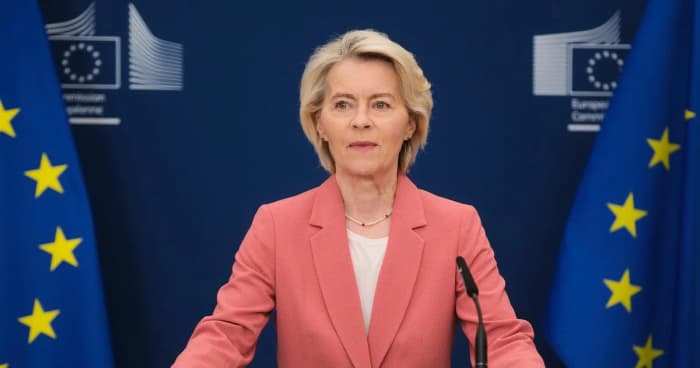 Photo: Associated Press
Ursula von der Leyen followed in her father’s footsteps by pursuing a career in European politics. Over the 20 years following her accession to Germany’s CDU (Christian Democratic Union), she steadily climbed the political ladder, beginning at the state level. Between 2003 and 2019, she was elected to the Bundestag four times, headed three federal ministries, and became Deputy Chair of the CDU at the federal level.
During her election campaigns as a CDU candidate, von der Leyen cultivated the image of a “modern Christian democrat” who combined family values with support for women’s active participation in the labour market. This image made the party more attractive to educated women in urban areas. At the state level, she advocated greater independence of families from the state, while after moving to the federal level she supported a larger role for the state, gender equality, and reforms. It was a natural evolution: as a mother of seven children, Ursula von der Leyen could hardly avoid advocating greater state support for other families.
As federal minister for family affairs from 2005 to 2009, she introduced parental benefits (Elterngeld), expanded paternity leave, and advocated quotas for women on corporate supervisory boards. She was subsequently appointed federal minister of labour and social affairs (2009–2013), where she laid the groundwork for the introduction of quotas for women in business and a statutory minimum wage. Both measures were implemented after her departure from office.
By contrast, the Ministry of Defence — a portfolio von der Leyen personally requested from Chancellor Angela Merkel — proved less successful and contributed to a decline in her approval ratings. She continued to pursue her social justice agenda within the Bundeswehr (Germany’s armed forces): childcare support for military personnel was expanded, and inclusivity modules were incorporated into basic training. However, expectations were different. Her task was to make the Bundeswehr a more attractive employer in order to increase recruitment, and in this regard she fell short. Nevertheless, she received praise for increasing defence procurement spending, which rose dramatically from €6 billion to €32 billion.
As a result, over the course of 15 years in politics, von der Leyen became a prominent political figure. Her approval ratings increased both among the German public and within the CDU, which is why Chancellor Merkel entrusted her with three ministerial portfolios during that period. She also became the only politician to serve in all four Merkel governments. For example, in April 2011, her approval rating surpassed Merkel’s (52% compared to 48%).
However, in the run-up to her appointment as president of the European Commission, she faced her strongest criticism. The Bundeswehr was experiencing shortages at all levels, external consultants were being paid hundreds of millions of euros, and conservatives within the CDU opposed reforms they believed diluted the party’s identity. Nevertheless, von der Leyen was regarded as a team player, capable of building consensus and remaining committed to her core political principle: ensuring Germans’ access to public goods as a fundamental standard of living. It was this consistency and ability to work within a team that enabled her to withstand the impact of scandals and declining approval ratings and ultimately emerge as a candidate for the presidency of the European Commission.
Ursula von der Leyen as president of the European Commission
She was elected president of the European Commission in a context in which the expected Spitzenkandidaten (“lead candidate”) mechanism had broken down — a procedure under which a vote for a party would also count as a vote for its candidate for Commission President, meaning that the leader of the winning European Parliament party would become commission president.
In this context, von der Leyen emerged as a “compromise candidate”, as she had experience, enjoyed respect on the European stage, and represented the moderate wing of the CDU. Key factors in her selection also included the agreement of Emmanuel Macron, her knowledge of European politics, and the positions of key EU member states.
On 19 July 2019, her candidacy was supported by 383 Members of the European Parliament (with a required minimum of 374), including the European People’s Party, liberals, social democrats, and Members from Eastern Europe. She offered committed cooperation to three political groups by:
advocating a CO₂ tax;
committing to climate-neutral industrial production by 2050;
and calling for a Europe-wide minimum wage.
These pledges were important in securing the votes of Green, centre-left, and liberal MEPs. In the end, despite criticism of von der Leyen’s record at the Ministry of Defence, the outcome was determined by political balance and intergovernmental bargaining rather than approval ratings.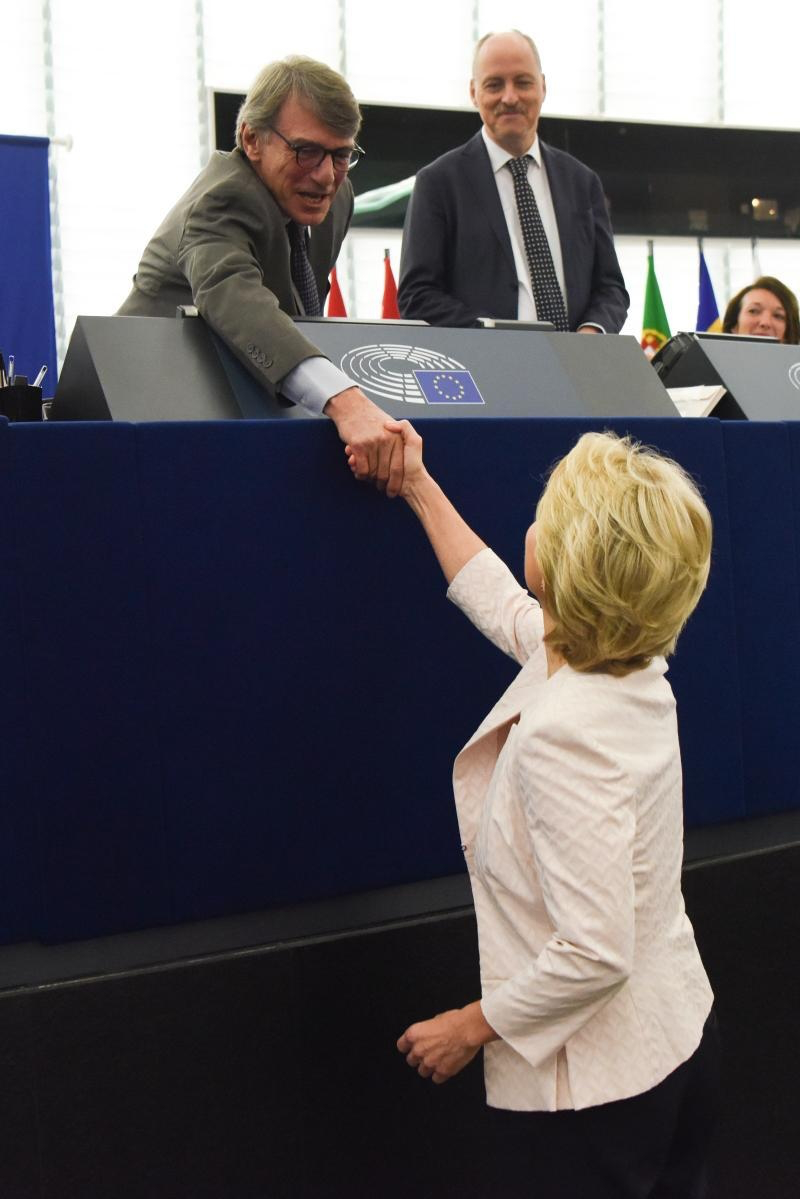 Ursula von der Leyen shakes hands with the president of the European Parliament at the time after he announces the voting results. Source
Germany became the only one of the 27 EU member states to abstain in the vote on von der Leyen’s appointment. Domestically, only 41% of Germans surveyed approved of her taking the position, while 35% disapproved. At the same time, all major parties criticised her appointment, describing her as controversial and ineffective, and considering the bypassing of the lead candidate procedure entirely unacceptable.
The powers and responsibilities of the President of the European Commission include setting the agenda, allocating portfolios among commissioners, and deciding on their resignation, as well as overseeing the implementation of EU legislation and managing the EU budget. Importantly, the European Commission is the only EU institution that represents the Union in international relations, which gives the position considerable geopolitical weight. However, let us now examine the main areas of her efforts.
In the field of migration policy, she rapidly reshaped the EU asylum reception system. The changes included fast-track border procedures, deportation as an option at the end of an asylum process, and initial screening for health and security purposes. A “mandatory solidarity mechanism” was introduced: member states were required either to accept asylum seekers or to contribute financially on their behalf.
In recent years, she has also made frequent visits to Middle Eastern countries to encourage them to help control migration flows in exchange for financial investment. These measures have been assessed as having limited effectiveness, as refugees increasingly choose alternative routes, often more dangerous ones.
The Green Deal was the cornerstone of her political agenda. Its objectives included achieving climate neutrality by 2050, increasing the share of renewable energy, and strengthening energy autonomy. Over six years, as a result of these reforms, the share of renewable energy increased by 13%, EU emissions were reduced by approximately 32–33%, and the share of fossil fuels in electricity generation fell to a historic low of around 29%.
However, progress on the Green Deal has been accompanied by high costs, bureaucracy, and dependence on both China and Russia. At the same time, the issue of dependency — exemplified by the reduction of Russian gas imports — was addressed relatively quickly: its share fell from 48% to 13% over four years, with a complete phase-out planned by 2027.
As von der Leyen took office on the eve of the COVID-19 pandemic, social protection for Europeans once again moved to the forefront. In line with the social justice principles often associated with her, the EU coordinated the largest joint vaccine procurement in its history, acquiring nearly one billion doses, and advanced initiatives on a minimum wage.
During her second appointment in 2024, she also insisted that member states submit both a male and a female candidate in order to improve gender balance in the EU’s senior leadership. As a result, the share of women increased from 24% to 40%.
The most significant change within the European Commission under von der Leyen has been the strengthening of its geopolitical and defence agenda, which had previously remained marginal due to reliance on the United States, although even before 2022 she had been advancing greater EU autonomy within the transatlantic framework. At the start of her second mandate, von der Leyen appointed the first-ever EU Commissioner for Defence, a symbolic step signalling that the field had become sufficiently important to warrant a dedicated team.
Her task was to strengthen existing and establish new interregional strategic partnerships. For this reason, she launched the Global Gateway initiative — €400 billion in investments in countries of the Global South in the fields of energy, transport, and education. This was also driven by the need to secure greater access to rare earth materials and reduce dependence on China.
In 2026, she also stated that nuclear energy should make a return to Europe — the same energy source she had previously criticised.
Territorial claims by the White House regarding Greenland, criticism of the European Union as an ideologically misguided ally, Russian and American interference in European elections, and Russian hybrid operations within the EU have strengthened von der Leyen’s doubts that the current international order may be preserved. As a result, at the Munich Security Conference in 2026, her message became more assertive: “We are increasing defence spending by 80% compared to pre-war levels, because the defence of the EU is an obligation, not an option.”
Europe’s agency over the past four years of her leadership has increased, which is also reflected in quantitative terms. For example, with her support, the European Commission presented the “ReArm Europe” plan, which envisages mobilising up to €800 billion to increase defence spending by member states. However, the effectiveness of this programme remains difficult to assessnow, as it faces resistance from several countries and is only beginning to gain momentum.
At the same time, the EU failed to form a unified position on the war in Iran or to propose its own plan, despite von der Leyen’s strong ambition to turn the European Commission into a geopolitical actor. Following the strikes on Iran, she and the president of the European Council merely urged for maximum restraint. This suggests that Europe is affected by the consequences of the war but remains little more than an observer, while von der Leyen’s position has become more declarative than consolidating.
As much of her career has been built around the development of social standards, von der Leyen has also extended this principle into the economic sphere. The large-scale NextGenerationEU recovery fund was introduced after the COVID-19 pandemic to support the green transition, competitiveness, and innovation capacity. Von der Leyen has also sought to simplify doing business in the EU, with the aim of reducing regulation, ensuring equal access, and harmonising rules across the 27 member states. According to the European Commission, this may reduce business costs by €37.5 billion per year.
To diversify energy suppliers, the EU signed contracts for oil and gas imports with Norway and countries in the Middle East. The most prominent agreements are those concluded by the European Commission with countries in South America and India in 2026. The EU abolished tariffs on 92% of imports from MERCOSUR (mainly agricultural products), while MERCOSUR removed tariffs on 91% of EU exports (automobiles, parts, chemicals, and wine). For the EU, this provides critical access to raw materials (such as lithium and copper) essential for the green transition.
A Free Trade Agreement (FTA) has been signed with India, along with separate agreements on investment protection and security (Security and Defence Partnership). For the EU, tariffs have been eliminated or significantly reduced on 97% of European exports.
In contrary, the agreement concluded between the United States and the EU after Donald Trump returned to the White House did not receive German support and was criticised across the political spectrum. Under the deal, the United States imposes a 15% tariff on EU goods, while the EU removes all tariffs on imports from the United States. Although widely criticised, the agreement was seen as a way to avoid a full-scale trade war with the United States, in which Trump had threatened 30% tariffs.
This was presented as further evidence that von der Leyen is capable of choosing unpopular but effective measures that, in the long term, may serve to safeguard Europe’s interests.
Over seven years as president of the European Commission, Ursula von der Leyen has developed a distinctive, centralised leadership style. Key decisions are often prepared by a narrow circle of advisers. Her approach has been shaped by successive crises, including COVID-19, Russia’s war against Ukraine, and the energy crisis. She operates on the logic of “first stabilise the situation, then address political nuances.” However, as a “consensus candidate,” her decisions remain broadly calibrated and balanced.
Among her achievements are rapid access to vaccines, multi-billion-euro investments in ensuring more equal access to EU benefits and in defence, the protection of the digital market, and the freezing or reduction of funding for countries that block European decisions.The parties that supported her in 2019 repeated their success in 2024, which suggests that her political profile remains both consistent and in demand.
She is also credited with maintaining a balance in ensuring that top EU positions reflect the Union’s geographic, gender, and party diversity, with portfolios such as foreign affairs, defence, and partnerships with third countries being held by representatives from Poland and the Baltic states.
Conflicts have also followed Frau von der Leyen. She has faced three motions of no confidence (all of which failed). She has been in conflict with both the left and right wings of the European Parliament, which have accused her of overstepping her mandate, concluding an unfavourable agreement with the United States, and conducting non-transparent vaccine procurement.
Her most public confrontation was with Viktor Orbán. For von der Leyen, it was a priority to bypass his veto power, as the Hungarian government blocked more than half of foreign policy decisions and the renewal of sanctions against Russia, encouraged other countries (such as Slovakia) to adopt similar blocking tactics, undermined consensus on support for Ukraine, and threatened the EU’s ability to function — thereby also calling into question her role as a leader.
Together with the European Commission, she developed mechanisms to circumvent this blocking, including the freezing of funds, financial “incentives,” the use of qualified majority voting, and political isolation. However, the issue was ultimately resolved by elections in Hungary, after which the President of the Commission reportedly expressed relief that the EU had overcome a problematic political actor.
Thus, the situational nature of her election as president of the European Commission did not reduce von der Leyen’s confidence in the need to further centralise power. She acts as a unifying element at the supranational level and primarily values loyalty. In her second Commission, she appointed commissioners and vice-presidents with similar outlooks: pro-European, consolidating, and supportive of a course towards greater EU autonomy from the United States.
Her presence at least partially fills the EU’s leadership vacuum. In 2023, she was named the world’s most powerful woman by Forbes. Von der Leyen also serves as a driving force behind more active policy-making and a redefinition of the EU’s role, although this is still not sufficient to ensure that institutional decisions are implemented evenly across the Union. What remains is to assess the extent to which her approach is effective and beneficial for Ukraine’s defence capabilities.
Even before 24 February 2022, von der Leyen outlined a set of priorities: tough sanctions, unity with the United States and allies, full support for Ukrainian democracy, and preparedness for Russia’s use of energy resources as a tool of coercion.
After Russia’s full-scale invasion of Ukraine in 2022, Ursula von der Leyen immediately began work on Ukraine’s path towards EU membership. She stated that Ukraine should become a member of the European Union and that the Ukrainian people belong to the European family of nations. Under her leadership, the Commission became a driving force behind granting Ukraine candidate status and preparing accession negotiations, framing enlargement as a key geopolitical instrument for countering Russia.
At her most recent joint event with the president of Ukraine in May 2026 in Armenia, she once again supported the opening of negotiation clusters, which had previously been blocked by Hungary.
Her leadership has shaped the EU’s response to the crisis. Her understanding of European integration and of the price Ukraine pays for freedom became the foundation on which she built subsequent ideas and deployed instruments to implement them within the competences of the European Commission.
The Commission played a key role in repurposing the European Peace Facility to finance military assistance to Ukraine — for the first time, the EU indirectly funded lethal weapons for a country under attack. One of the central policy initiatives was REPowerEU: a rapid reduction of dependence on Russian gas through supplier diversification, energy efficiency, and the acceleration of renewable energy development.
Researcher Elena Baccarini, in the journal West European Politics, analysed von der Leyen’s rhetoric during the first months of Russia’s full-scale invasion, noting that it has since become more flexible while retaining the same substantive content:
With Russia’s invasion of Ukraine, a crisis of the international order in which autocracies challenge democracies has emerged;
Normative and democratic approaches are struggling to adapt to emerging threats;
Donald Trump is seen as a symptom of a United States that no longer views Europe as an ally, but instead pursues ad hoc alliances without moral frameworks or long-term stability.
The EU, therefore, needs to strengthen itself through internal investment, a renewed strategy, and a more critical view of the world. This space for reflection is provided, in part, by Ukraine, that resists Russia’s invasion. Supporting Ukraine is a priority for the European Union and for Ursula von der Leyen herself, who sees Ukraine as an actor who has the potential to fill Europe’s geopolitical and defence vacuum.
By dividing Ursula von der Leyen’s activities regarding Ukraine into separate areas, we examined the way her position has been translated into pro-Ukrainian initiatives:
1. Economic dimension:
Structured support of €50 billion in grants and loans until 2027 (Ukraine Facility);
Opening of alternative trade routes through EU countries after Russia’s blockade of the Black Sea;
Phase-out of Russian energy imports;
A mechanism to use windfall profits from frozen ~€210 billion in assets of the Russian Central Bank (mainly held in Euroclear) to finance Ukraine through a G7 scheme;
Von der Leyen’s unprecedented proposal to use the cash balances of frozen Russian central bank assets as collateral for a €90 billion loan (to be repaid by Ukraine only if Russia pays reparations);
2.Geopolitical dimension:
Her personal recommendation to grant Ukraine candidate status, which was achieved within four months;
The opening of a EU Defence Innovation Office in Kyiv to facilitate the exchange of battlefield experience;
Promotion of the “Coalition of the Willing” to strengthen Ukraine’s negotiating position during peace talks.
3.Military dimension:
Support for ammunition production, with the first tranche provided in March 2023;
Advocacy for the use of the European Peace Facility to finance lethal weaponry (€6.1 billion);
Twenty sanctions packages, each of which was announced by von der Leyen.
4.Humanitarian dimension:
Promotion of the Temporary Protection Directive, allowing Ukrainian refugees to receive protection without individual asylum procedures;
Removal of tariffs and quotas for Ukrainian exporters;
Establishment of the International Centre for the Prosecution of the Crime of Aggression in The Hague, which she proposed at the EU–Ukraine Summit in February 2023;
Freezing of Russian oligarchs’ assets across all 27 member states.
Over four years of full-scale war, von der Leyen visited Ukraine ten times. Among heads of state and government, only Andrzej Duda visited more frequently, making fourteen visits.Beyond their symbolic significance, her trips have had a pragmatic purpose. During her visits, she announced many of the initiatives listed above.
Von der Leyen also visits Ukraine with her delegation on every anniversary of the war. In the public sphere, many of the most important announcements concerning support for Ukraine are accompanied by her image and speeches, as she is the initiator of these initiatives.
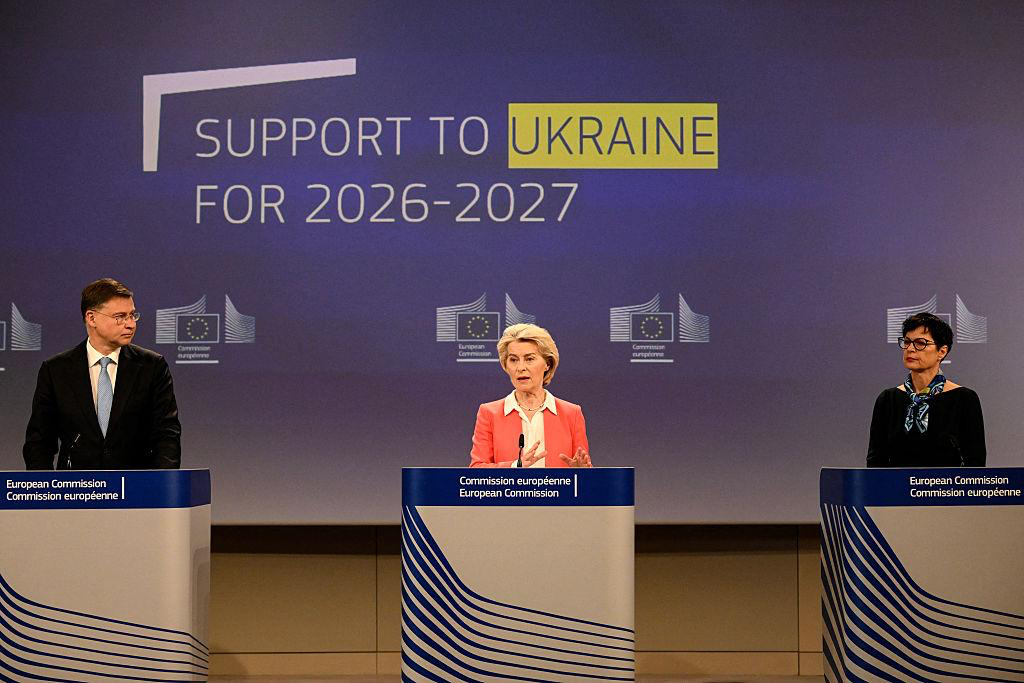 Presentation of the €90 billion financial assistance package in Brussels. Source
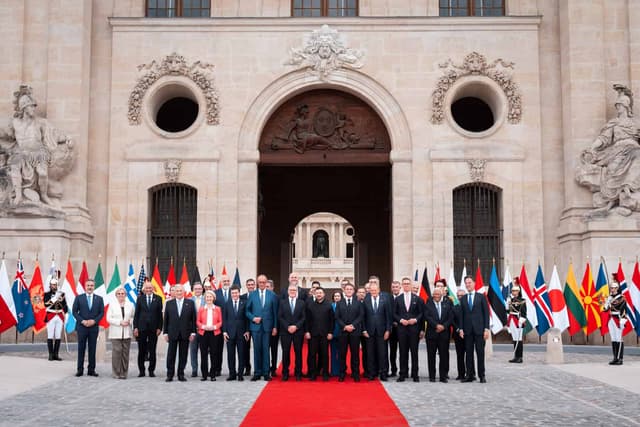
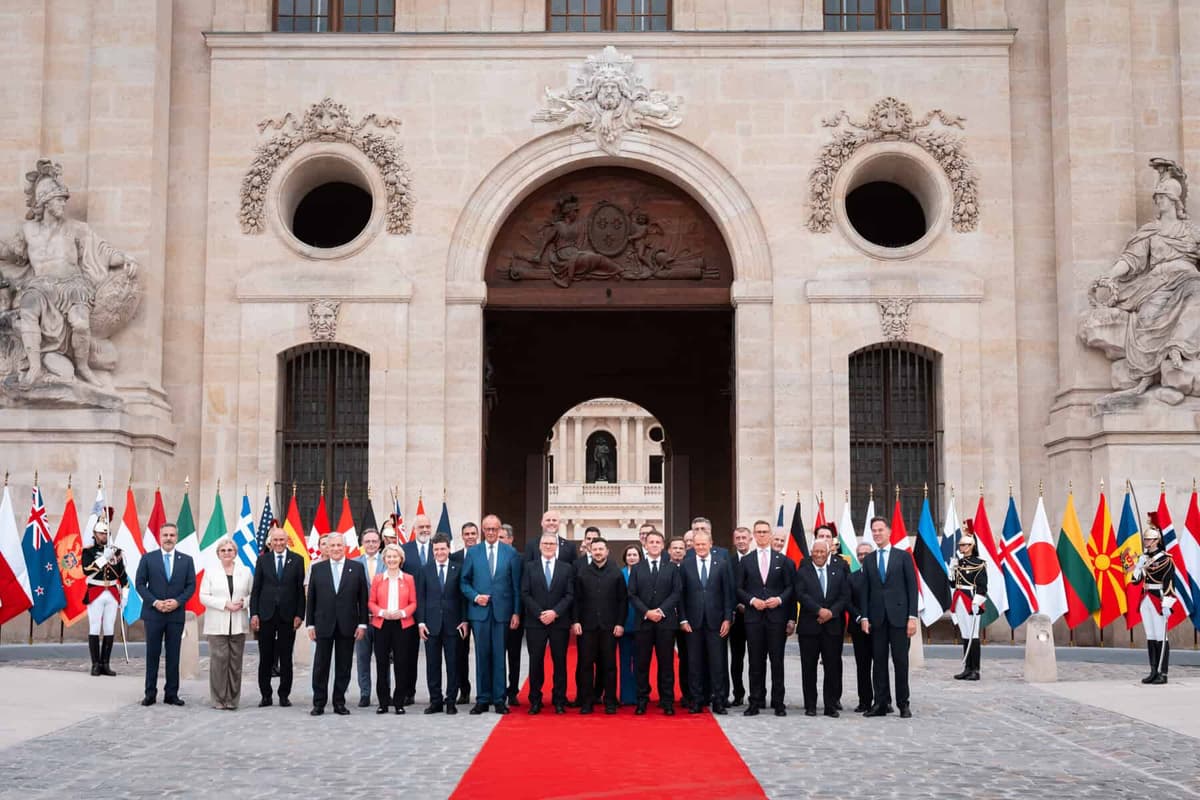
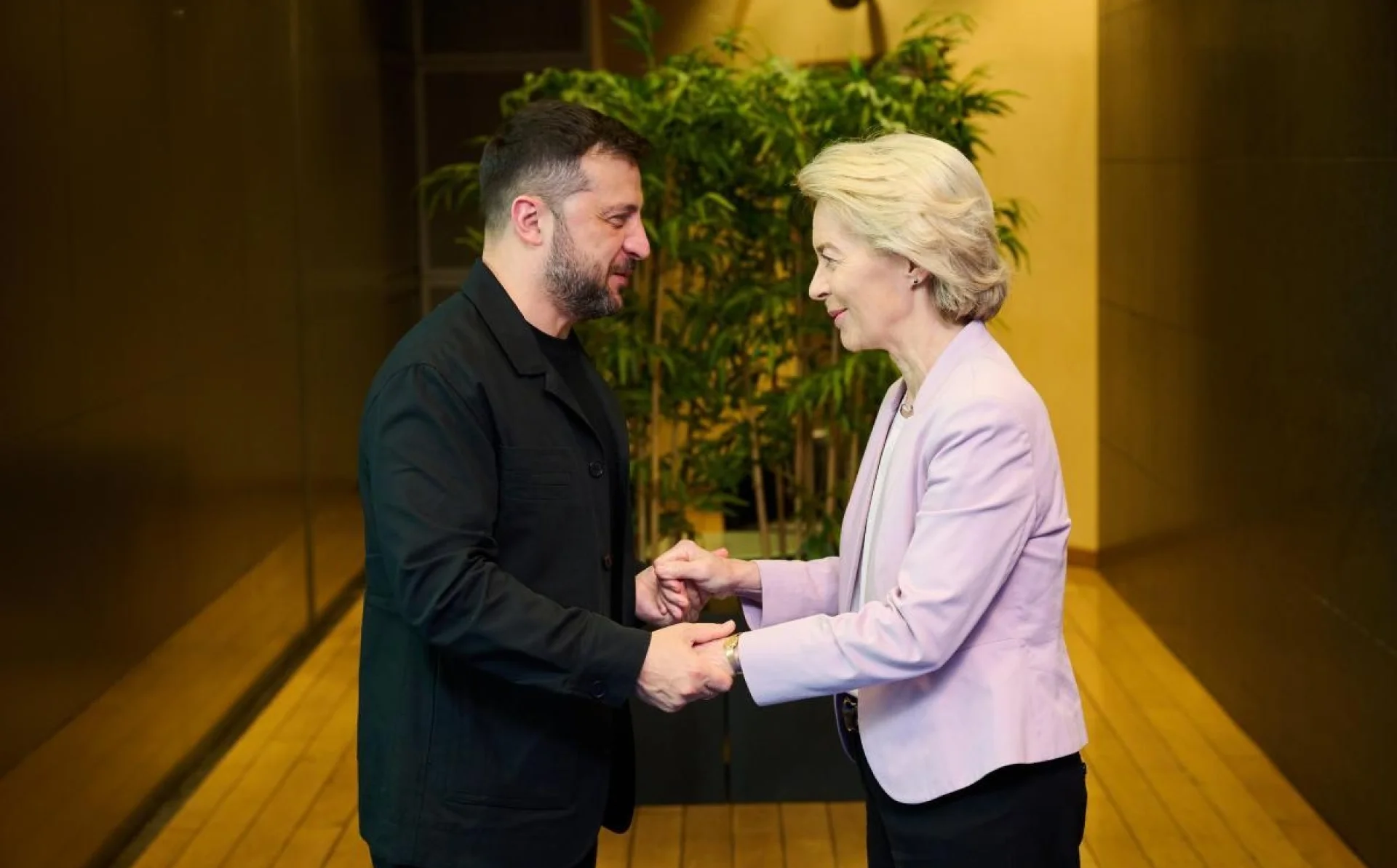
At the European Political Community summit in Yerevan in May 2026, von der Leyen and the president of Ukraine, Volodymyr Zelenskyy, discussed the “Drone Deal” project — a security cooperation framework aimed at scaling up UAV and drone production. Investment in Ukrainian manufacturing would make European support not “packaged” but systemic, which is a necessity given Russia’s advantage in manpower and military resources. Integration of Ukraine into the European defence framework would also facilitate technology exchange and reduce costs.
Not all EU member states share the shift towards greater European actorness. For example, von der Leyen personally had to push for the €90 billion loan to Ukraine backed by frozen Russian assets, while also proposing alternatives in the form of new EU debt issuance for Ukraine. “Since pressure is the only language the Kremlin responds to, we can also increase it,” von der Leyen said.
Many countries hoped to overcome Belgium’s resistance, which was based on legal and financial concerns. However, at the EU summit in December 2025, member states were unable to override the veto, and an alternative in the form of new debt was adopted instead. Von der Leyen’s role in advocating for this option is undisputed, as she consistently insisted on securing funding for Ukraine under all circumstances.
Von der Leyen has repeatedly stated that Ukraine has offered direct, face-to-face negotiations, and that it is therefore Russia that must prove it wants negotiations for peace rather than to prolong the war. Overall, von der Leyen’s rhetoric shows an evolution without reversal: the firmness of her position on Russia increases from phase to phase (from a “difficult partner” to a “permanent threat to Europe as a whole”), while the peace discourse appears not as a replacement for sanctions, but alongside them.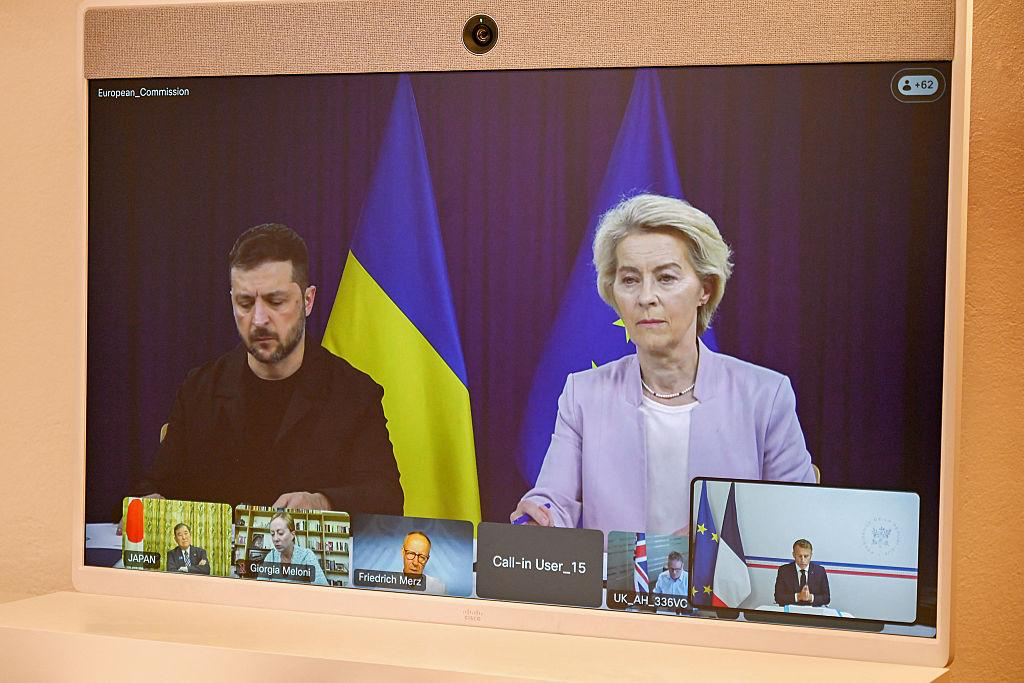
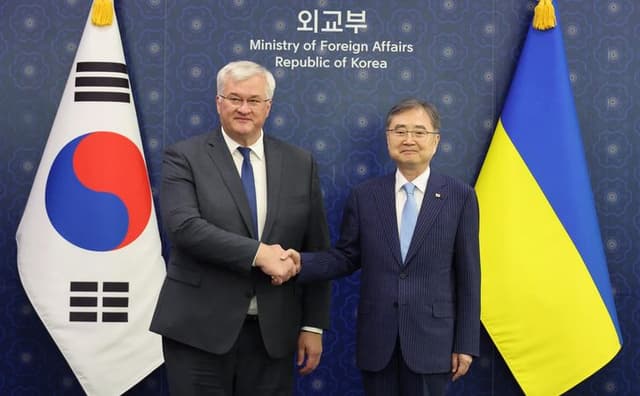
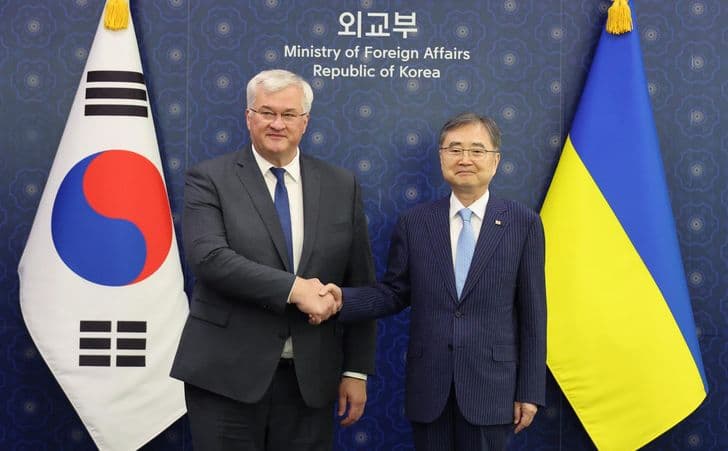
 Before and after photos from the “Coalition of the Willing” video conference (17 August 2025), held in Brussels. Source
Under von der Leyen, the role of president of the European Commission has ceased to be purely economic and integrative in nature. The European Commission has begun to make full use of its powers, driven both by von der Leyen’s ambitions and by the erosion of the rules-based international order. Her contribution lies in having seized the initiative in time and managed to build an institutional apparatus that requires her final say, as well as in developing her own foreign policy course, which has moved Europe out of the United States’ shadow.
As a result, Ukraine has received long-term financial, political, and social aid, which at the current stage of relations is evolving into a joint defence sector — something previously unprecedented even within the EU itself. Von der Leyen has created a framework in which support for Ukraine is treated as inevitable and must be ensured by any available means.
This has taken shape through her assuming the role of a de facto European “chancellor”, who regularly visits Ukraine and announces new packages of sanctions, assistance, and cooperation initiatives. Any initiative aimed at strengthening Ukraine’s defence capabilities increasingly originates in the offices of the European Commission.
It is possible to answer affirmatively the question of whether she governs the European continent. Her influence extends beyond the EU through support for Ukraine in its defensive war, sanctions against Belarus and Russia, the development of relations with Caucasus countries, financial agreements with India, and arrangements on transit and refugee distribution with the EU’s neighbours.
Through the concentration of power, Ursula von der Leyen has the resources to shape a new world order in which Europe remains the last continent to combine democratic values with political realism. However, her influence is determined not only by her position, but also by the size of the population, the number of member states, their GDP, and the status of the EU as one of the world’s wealthiest markets.
At the same time, her post is an elected one, which allows her to set the course for Europe’s future but not to guarantee it, as each new round of EU elections can disrupt an already fragile balance of power in favour of a stronger Europe. Nevertheless, the appointment of the first EU vice-commissioner for defence, the placement of representatives from the Baltic and Nordic states in key security roles, hundreds of billions of euros in defence investment, and closer ties with Ukraine are creating a new framework in which the EU is increasingly accustomed to operating, even if some still question the need for greater geopolitical agency.
Contact with her is invaluable not only because she has a clear Eurocentric orientation, but also because she is able to implement it through the European Commission. In her value compass, she also assigns Ukraine a central role.
From a Ukrainian perspective, von der Leyen can be described as a principled but pragmatic figure who has evolved in her position from a European bureaucrat into a leader of Europe, setting a trend towards greater geopolitical agency and seeking to advance it across all levels of governance. She currently appears as someone capable not only of safeguarding democracy but also of responding to its challengers, for example through the development of a common defence framework and the financing of Ukraine.
She takes a critical stance towards countries that deviate from democratic principles and rewards those that demonstrate their commitment to them.
Taking into account her involvement in the war in Ukraine and her significant mandate, deepening cooperation between Ukraine and the EU appears to be a logical step. This may be implemented through the creation of an office of Ukrainian experts in Brussels, which would advise her cabinet on geopolitical directions related to defence and Russia’s cognitive warfare.
Combined with substantial resources, von der Leyen’s influence, and Ukrainian experience, such a setup may enable the development and full implementation of programmes, taking a Ukrainian prism into account.
In conclusion, Europe appears weak only because it has not yet fully managed to make use of its power. Von der Leyen uses that power and strengthens Europe, but her efforts are not sufficient on their own. Geopolitical agency requires a realistic assessment of one’s own power, and Ursula von der Leyen is among those who fulfilled this requirement as early as 2022.
Her task is to bring others under her wing through persuasion, and Ukraine is already helping her in this regard by providing time.
You may be interested