 INTERNATIONAL
INFORMATION AND ANALYTICAL
COMMUNITY


+ Join
Support INTERNATIONAL


 Reuters
China considers the South China Sea its ‘internal’ sea and therefore claims many islands in the region. These islands are mostly Philippine. This is a simple explanation for the recent aggressive actions of Chinese ships and military exercises near these islands.
But a more complicated explanation is that China wants to break the ‘chain of containment’ built by the Americans from Taiwan through the Philippines to the Japanese islands.
Although China is building up its navy, unlike the US, it is logistically trapped in relatively small areas of the Southeast and East China Seas. For possible aggressions against Taiwan or something similar, China needs to increase its own manoeuvrability. And for this, it is necessary to break this half-ring of containment. And it is in this aspect that China has chosen the weakest of the options: a direct attack on Taiwan, aggression against powerful Japan, or the Philippines, which is mediocre in military power and political ties.
It is in the direction of the ‘disputed’ territories with the Philippines that the main creeping movement of China's advancement for the ‘semi-ring’ is taking place: from constant violation of Philippine water and airspace, threats, to the creation of ‘artificial islands’ to push the boundaries of the coastline and have closer ‘strongholds’ and logistics points.
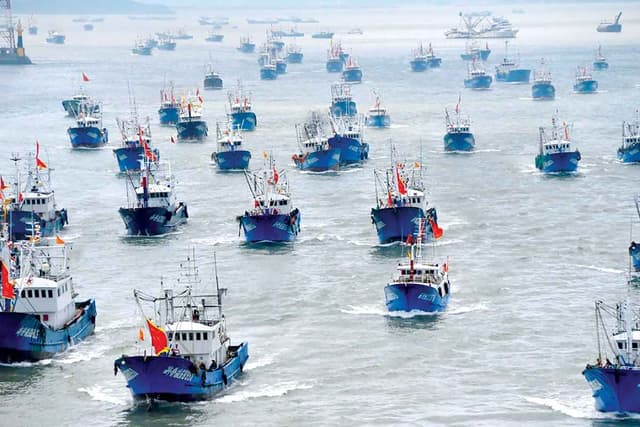
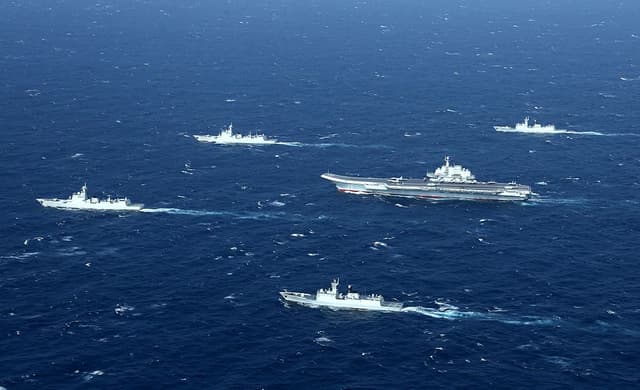
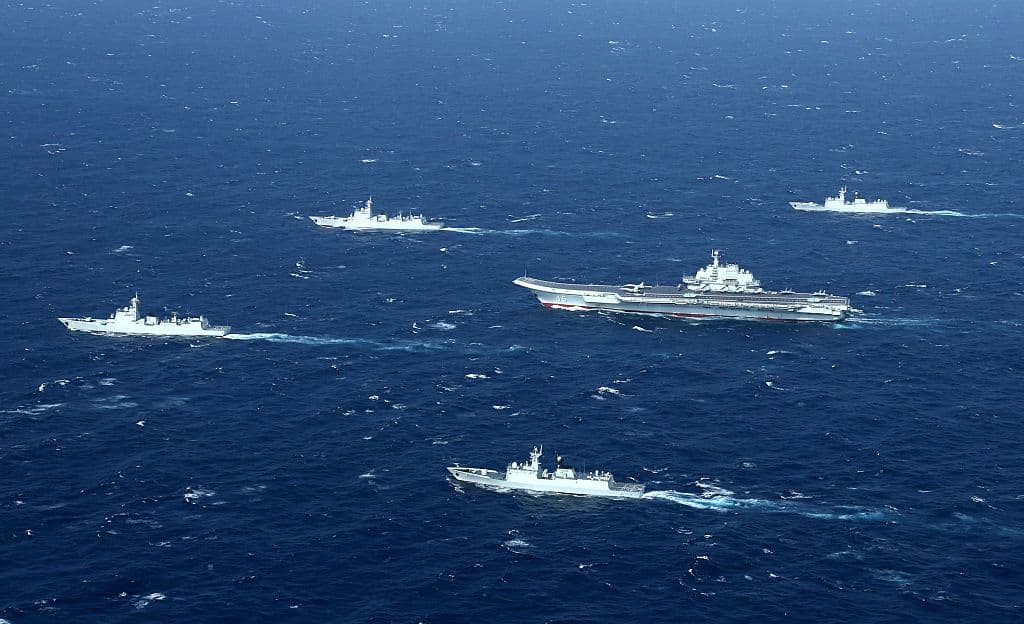
Among the most recent was a clash between Chinese and Philippine naval vessels. Several Philippine ships were delivering food supplies to its border islands, which China ‘considers its own’. A Chinese ship rammed and damaged a Philippine vessel and fired water cannons at them. After that, the Philippines warned of the risks of confrontation and provided information that more than 130 Chinese warships were positioned on the border with the Philippines.
The international community reacted to China's sharp increase in aggressiveness towards the Philippines in the following way:
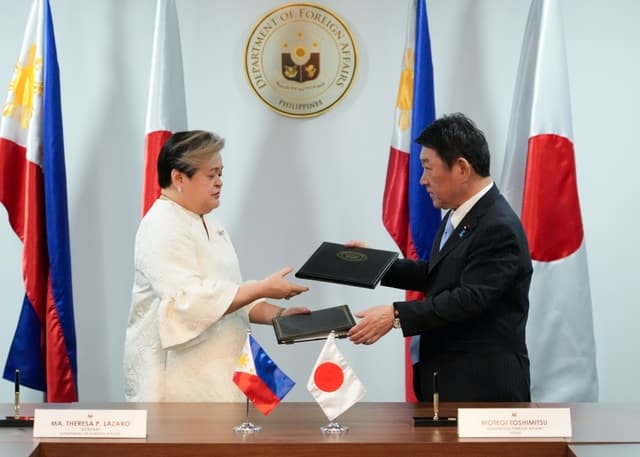
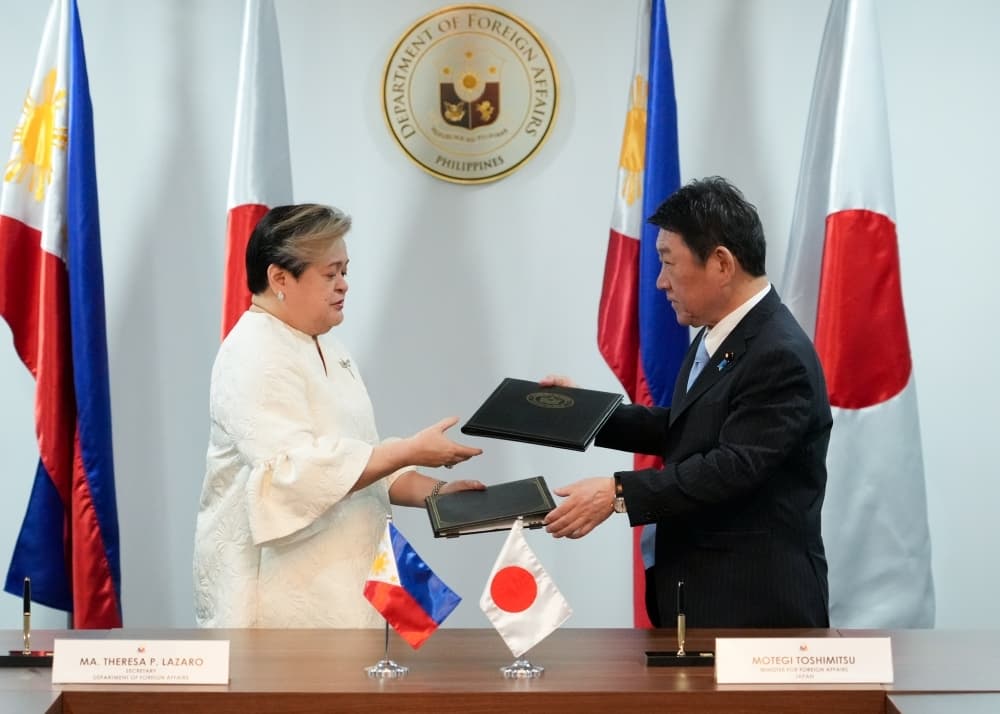
Japan is preparing to place its contingent in the Philippines, and Japan has also transferred monitoring and tracking equipment for Chinese ships;
The Philippines and Australia signed agreements on joint patrolling of the South China Sea;
U.S. Secretary of Defence Lloyd Austin visited the Philippines and confirmed that under the 1951 defence treaty (the Philippines allowed the deployment of U.S. bases in exchange for protection), Washington would defend the island nation in the event of an armed conflict.
But yesterday, China's foreign minister said in a telephone conversation with his Philippine counterpart that ‘any miscalculation by the Philippines will force China to “defend itself”.’ Not long ago, the Philippine ambassador to the United States warned that ‘a major armed conflict’ between China and his country could break out at any time.
So, while everyone is watching and waiting for a major aggression against Taiwan, China is conducting a hybrid offensive against some small islands in the Philippines to break the ‘ring of containment’ and gain a corridor from the inland seas to the ocean. And from the point of view of logic, this makes sense.
A direct attack, even with a significantly superior force, on the large and militarised island of Taiwan is fraught with a series of risks: an awkward and limited area for manoeuvring an attack, a powerful army with compact echeloned defences, Taiwan's ability to reach some of Communist China's naval bases, stronger international support, and so on.
Instead, a creeping offensive with intimidation, the construction of artificial islands, and attempts to annex disputed islands could break China's sea containment ring, provide a corridor to the ocean, and increase the possibility of military manoeuvres in general, and then act against Taiwan.
In turn, the Atlantic Council analytical publication emphasised that Moscovia and China are not two separate problems for the United States, but one big one.
From this we can conclude that one way to prevent a ‘great war with China’ is to demonstrate the uselessness of attempts to reshape internationally recognised borders in the world. To do so, Moscovia must be punished accordingly, whilst Ukraine must regain control of its internationally recognised territory.
China's semi-ring of containment with US bases and allied countries:

 @IndoPac_Info
This is a piece of territory claimed by China. This territory includes more than a hundred islands. Through control of these islands, China wants to create a way out through the island corridor between Taiwan and the Philippines, and another between the Philippines and Malaysia/Brunei:
 Photo: The strategis
This is how China's average artificial islands look like as ‘naval’ strongholds to exercise control and ensure creeping expansion. Additionally, China believes that once an artificial island is created, it has the right to count the coastline from it:
 Getty Images
 Getty Images
 Getty Images
You may be interested