INTERNATIONAL
INFORMATION AND ANALYTICAL
COMMUNITY


+ Join
Support INTERNATIONAL



Kostiantyn Hlushko, staff analyst and reviewer at the "Resurgam" Center for Northern European Policy
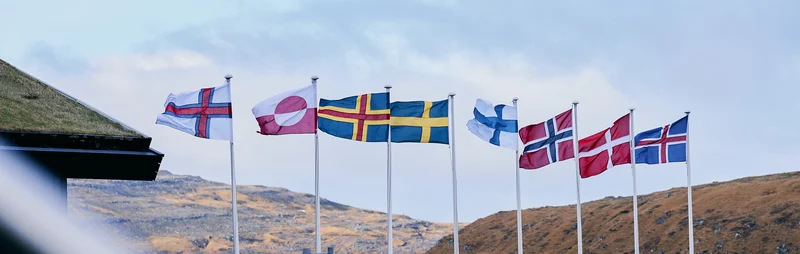 Flags of the Faroe Islands, Greenland, the Åland Islands, Sweden, Finland, Norway, Denmark and Iceland. Photo: Gwenael Akira Helmsdal Carre/norden.org. Source
This is largely made possible by Nordic cooperation, one of the oldest forms of regional cooperation, based on the geographical, historical and cultural unity of the Nordic countries. Its aim is to strengthen the Nordic community within a “strong Europe” and protect Nordic interests and principles around the world.
This cooperation covers a wide range of areas. The Nordic Investment Bank (NIB) supports investment in development, while the Nordic Development Fund (NDF) and the Nordic Environment Finance Corporation (NEFCO) finance projects aimed at addressing climate change. Defence cooperation is coordinated by NORDEFCO, while political cooperation takes place through the Nordic Council at the interparliamentary level and the Nordic Council of Ministers at the intergovernmental level.
At the same time, Nordic cooperation is not limited to institutional frameworks. Sweden and Finland provided Denmark with counter-drone equipment after Russian drones entered Danish airspace, which Finnish President Alexander Stubb described as a concrete example of Nordic cooperation. Sweden’s decision to deploy fighter jets and naval vessels to patrol the Finnish-Russian border was described by Finnish Defence Minister Antti Häkkänen as an integral part of Nordic cooperation.
The article examines the origins and contemporary forms of Nordic cooperation, its transformation, and prospects for its future development.
The origins of Nordic cooperation date back to the late nineteenth century, when transnational networks began to emerge among professionals and civic organisations in the Nordic countries. These networks later became the foundation for systematic regional cooperation. Regular meetings of Nordic lawyers, first held in 1872 with the aim of harmonising legislation and fostering a common legal culture, played a particularly important role.
The dissolution of the Swedish-Norwegian Union in the early twentieth century strained relations between the two nations. However, at a moment of crisis — the outbreak of the First World War — the kings of Denmark, Sweden and Norway held a meeting, at which they established a common position: neither the Entente nor the Triple Alliance would succeed in drawing them into the war. This event gave new impetus to cooperation. In the 1920s, civic organisations known as Norden emerged in five Nordic countries. They continue to promote cooperation, contacts and mutual understanding across the region, operating also in the autonomous territories of Greenland and the Faroe Islands (within the Kingdom of Denmark) and the Åland Islands (within Finland).
During the interwar period, more than 160 meetings were held among scholars, lawyers, teachers and other members of the intellectual community from the Nordic countries. The 1930s marked the beginning of intergovernmental and interparliamentary cooperation. It was during this decade that the tradition of regular meetings between the prime ministers and foreign ministers of the Nordic countries emerged — a practice that continues to this day.
The onset of the Cold War contributed to the institutionalisation of Nordic cooperation. In 1952, Denmark, Sweden, Norway and Iceland established the Nordic Council, an interparliamentary cooperation body. Finland, previously been kept from joining by the USSR under the policy of Finlandisation, which is explored in greater detail in our article, joined three years later. In 1962, these Nordic countries signed the Helsinki Treaty, which determined the framework for their cooperation. Nine years later, they created an intergovernmental cooperation body — the Nordic Council of Ministers.
Greenland, the Faroe Islands and the Åland Islands, while not being independent states or parties to the Helsinki Treaty, participated in the work of Nordic institutions under special arrangements. The Faroe Islands and the Åland Islands joined the Nordic Council in 1970, while Greenland joined in 1984, with their representatives included in the Danish and Finnish delegations, respectively. Within the Nordic Council of Ministers, they can put forward proposals but do not participate in voting.
These institutions contributed to the development of cooperation across a wide range of areas, including economic policy, the labour market, culture, education and science, transport and communications, as well as environmental protection. Among the Nordic Council's initiatives was the establishment of the Nordic Passport Union in 1952–1954, which allowed citizens of the Nordic countries to travel freely between them without passport controls, as well as to live and work throughout the region.
Between 1970 and 1990, the Nordic countries began establishing joint financial institutions. In 1975, Denmark, Finland, Iceland, Norway and Sweden founded the Nordic Investment Bank (NIB), an international financial institution that invests in the development of communications, transport infrastructure and services, clean technologies, industry, and small and medium-sized enterprises in the Nordic countries and, since 2005, the Baltic states. In 1988, the same countries established the Nordic Development Fund (NDF), which invests in climate change mitigation and adaptation measures in low-income and fragile countries. In 1990, the Nordic Environment Finance Corporation (NEFCO) was established. It is an international financial institution that uses financial instruments to advance Nordic environmental interests, particularly by scaling up green solutions developed by Nordic companies and financing the green transition in Eastern Europe.
During the 1990s and 2000s, the Nordic countries began deepening scientific ties under the auspices of the Nordic Council of Ministers. In 1997, the research institute Nordregio was established. It specialises in regional development and planning, providing policymakers with tools and analytical data to address societal challenges. In 1999, Nordic Energy Research was founded to promote research and build knowledge to address societal challenges in the energy sector across all Nordic countries. In 2004, the Nordic Innovation Centre was established to promote entrepreneurship, innovation and competitiveness in the countries of the region. A year later, NordForsk was founded to provide funding for joint scientific research in the Nordic countries and the development of research infrastructure.
After 2008, the rationale behind Nordic cooperation began to change. Since joint institutions for economic, scientific and environmental cooperation were already in place, the main focus gradually shifted towards defence.
The impetus for this shift came from a report by Thorvald Stoltenberg, a former Norwegian foreign and defence minister, which he prepared at the request of the Nordic countries' foreign ministers and presented in 2009. The report highlighted the need to deepen cooperation in areas such as aerial surveillance, maritime monitoring of the Arctic, responses to cyberattacks and natural disasters, and military cooperation in transport, medical support, education, armaments and military training grounds.
As a result, two security cooperation frameworks were established in 2009. Nordic Defence Cooperation (NORDEFCO) is a framework for direct military cooperation between the defence ministries and armed forces of the Nordic countries. The second framework is Haga cooperation, established to facilitate cooperation among the Nordic countries in the field of civil defence, that is, preparing the civilian population to protect themselves, their property and the state from attacks during wartime.
In 2024, Sweden became the last Nordic country to join NATO. This did not lead to a scaling back of Nordic cooperation; on the contrary, it created additional opportunities to deepen cooperation in the field of security. A notable example was the participation of Swedish, Norwegian and Finnish military personnel in exercises in Greenland in March 2026 as a show of solidarity with Denmark amid US claims to the island.
Thus, the development of Nordic cooperation demonstrates the emergence of a distinctive model of regional interaction that predates the establishment of its modern institutions. Initially, shared practices and contacts between societies laid the foundations for mutual trust, which states later built upon when establishing interparliamentary, intergovernmental, financial, scientific and security cooperation mechanisms. The resilience of this model therefore stems not from the constancy of its substance, but from its ability to incorporate new areas of cooperation into an already established system of interaction. This has allowed the Nordic countries to maintain a distinct regional framework even after transitioning to a common Euro-Atlantic security space.
The previous section examined how Nordic cooperation developed and the mechanisms through which it is implemented. However, the mere existence of institutions and frameworks does not explain why this system maintains its coherence and continues to evolve. We have identified three principles underpinning Nordic cooperation: consensus and national control; Nordic added value; and the non-exclusivity of Nordic cooperation.
Consensus and national control mean that joint decisions are made with the agreement of the participating states, and that Nordic cooperation does not involve transferring powers to a supranational body to determine national policies. This is particularly evident in the work of the Nordic Council of Ministers: although its decisions become binding once unanimously adopted by all five Nordic countries, several safeguards are in place. If a decision requires parliamentary approval under a country's constitution, this must be communicated before the decision is adopted, and it becomes binding on that country only after parliamentary approval. Decisions are not automatically binding on the Faroe Islands, Greenland and the Åland Islands; they apply to these territories only with their consent, in accordance with their respective self-government acts. The Nordic Council may issue recommendations to the Nordic Council of Ministers and the governments of the Nordic countries.
This allows the Nordic countries to deepen cooperation without relinquishing control over their own decisions or being obliged to act against their own positions. In this way, they can benefit from cooperation in areas where their interests align.
The concept of “Nordic added value” as a characteristic of Nordic cooperation emerged in the 1990s. It refers to engaging the Nordic level of cooperation when joint action produces results that individual states would find more difficult to achieve on their own. It is based on pooling resources and expertise, coordinating efforts, sharing infrastructure, or building a broader database and knowledge base. For example, NordForsk requires projects applying for funding to involve partners from at least three Nordic countries, or from two Nordic countries and one autonomous territory. Another example is the Nordic Investment Bank, a joint financial instrument through which pooled capital enables the bank to finance long-term projects on a broader regional scale. The Nordic Environment Finance Corporation operates on a similar principle, financing green investments.
Thus, Nordic cooperation enables states to strengthen their own capabilities by pooling resources, expertise, and infrastructure.
The non-exclusivity of Nordic cooperation means that participation in Nordic formats does not restrict states from taking part in other international organisations. Finland’s and Sweden’s accession to NATO demonstrated this: following their accession to the Alliance, Nordic defence cooperation within NORDEFCO not only continued but also became one of the mechanisms for deepening cooperation within NATO. For example, on 5–6 May 2026, the defence ministers of the Nordic countries met in Trøndelag, Norway, within the NORDEFCO framework to discuss military mobility, airspace cooperation, as well as unmanned systems and countermeasures against them as elements of strengthening NATO’s defence.
The special status of Greenland, the Faroe Islands and the Åland Islands has remained a subject of debate for decades, particularly regarding the expansion of their rights and representation and the achievement of greater equality with the five Nordic states. Although the Åland Document was adopted in 2007, allowing Greenland, the Faroe Islands and the Åland Islands to chair meetings of the Nordic Council, participate in the work of its committees and working groups, and independently accede to decisions of the Nordic Council of Ministers, the Helsinki Treaty has not been revised since 1996. As a result, their overall status has remained unchanged: they are still not parties to the treaty and have not been granted equal rights to those of the five Nordic states.
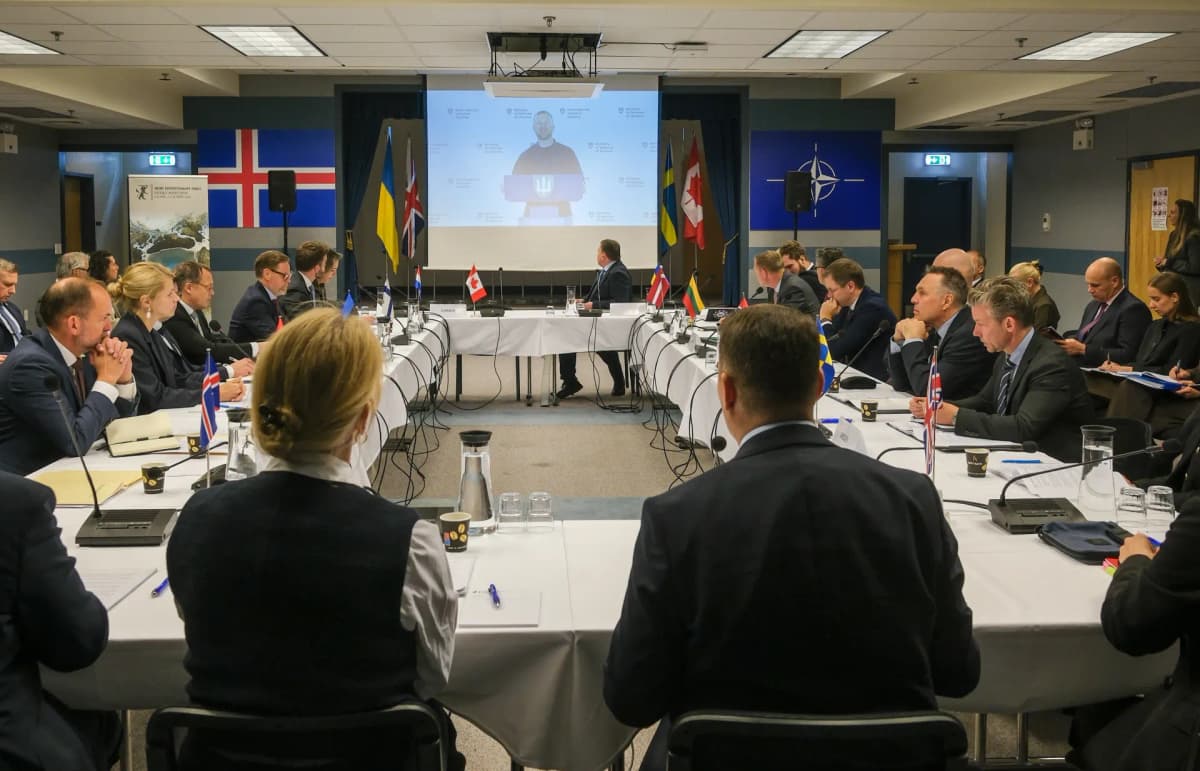
This dispute became most pronounced at the beginning of the current decade. Representatives of Greenland, the Faroe Islands and the Åland Islands were not invited to the Nordic Summit on Security and Competitiveness in Stockholm, held on 13–14 May 2024, and to the Nordic–Ukraine Summit on the sidelines of the Nordic Council session on 28 October 2024, as security and foreign policy fall within the remit of Denmark and Finland. In response, Greenland announced a boycott of future meetings of the Nordic Council and the Nordic Council of Ministers until it was recognised as an equal participant, and subsequently skipped the Nordic Council session in Reykjavík. At that session, the Faroe Islands stated that both cooperation bodies would lose their value to them if they were not treated as equals.
For Denmark and Finland, the problem is that Greenland and the Faroe Islands regard equal status within Nordic cooperation institutions as part of their path towards independence from Denmark, while the Åland Islands see it as a way to expand their autonomy within Finland. Under the existing rules, Denmark and Finland were not obliged to grant these territories equal status, meaning that neither country had violated any rules.
However, US claims to Greenland and Russia’s hybrid warfare against the Nordic countries, along with previous crises, are prompting the Nordic countries to strengthen their unity and mutual assistance. Moreover, Greenland and the Faroe Islands are held back from declaring independence by their economic dependence on Denmark. It is therefore in Denmark’s interest to grant them equal rights and create favourable conditions for them. On the one hand, this eases tensions and integrates them into joint cooperation within the Kingdom of Denmark; on the other, it preserves their economic dependence on Denmark. One example of this approach is Denmark’s decision to provide Greenlanders with free healthcare in Denmark at the Danish government’s expense starting in 2027.
Therefore, driven by security and economic considerations, Denmark and Finland, together with Sweden, Iceland and Norway, agreed to make concessions, and the process of revising the Helsinki Treaty began. Finland and the Åland Islands jointly held the presidency of the Nordic Council of Ministers in 2025, while Denmark and the Faroe Islands did so in 2026. In 2026, a representative of the Åland Islands became Vice-President of the Nordic Council, while the leaders of all three territories began receiving invitations to Nordic prime ministers’ meetings in 2025.
Beyond the de facto elevation of the autonomous territories’ status, solidarity was also reflected in concrete security decisions and a shift in political approaches. Denmark began strengthening security cooperation with both Greenland and the Faroe Islands.
Thus, disputes over the status of the autonomous territories do not undermine the main achievement of decades of Nordic cooperation: it has created a political and institutional framework that enables the countries of the region to coordinate their positions quickly, share responsibilities and provide practical support to one another in times of crisis. This is why, as the security environment changes, Nordic cooperation is not losing its relevance but is instead gradually expanding into new areas and involving an increasing number of participants.
Nordic cooperation, which has developed over more than a century, has proven resilient enough to preserve regional unity even amid a fundamental shift in the security environment. Russia’s aggression against Ukraine, hybrid attacks and rising tensions surrounding Greenland have not weakened Nordic ties but have instead created additional incentives for coordination and mutual assistance.
At the same time, current challenges have exposed the limitations of the model established in the 20th century. The special status of Greenland, the Faroe Islands and the Åland Islands is increasingly at odds with their actual role in Nordic cooperation, prompting a revision of approaches to their representation and the launch of a process to update the Helsinki Treaty. Thus, the crisis has become not only a test of Nordic unity but also a catalyst for institutional change.
The future of Nordic cooperation will largely depend on its ability to reconcile these two processes: preserving the unity of the five Nordic countries as its historical foundation while adapting the system to the growing role of the autonomous territories. If this adaptation takes place without exacerbating internal disagreements, the current security crisis may become not a period of weakening for Nordic cooperation, but a stage in its further deepening and expansion.
Kostiantyn Hlushko, staff analyst and reviewer at the "Resurgam" Center for Northern European Policy
You may be interested